



Understanding Board of Directors Compensation Startup Essentials


Attracting top-tier talent to your startup’s board of directors is essential for navigating the complexities of early-stage growth. Finding the right individuals to guide your company requires a strategic approach to compensation. This is especially important for startups, where traditional corporate models might not be suitable. This section explores the key elements of board compensation within the startup environment.
The Startup Compensation Landscape: Equity First, Cash Follows
Startups often operate with limited cash. This financial reality requires a different approach to board compensation, often referred to as “equity first, cash follows.” Early-stage startups may not be able to offer substantial cash salaries to board members.
Equity compensation becomes the primary tool for attracting and retaining qualified directors. This model emphasizes equity over cash, a common practice due to limited cash reserves. How to master compensation for board members offers valuable insights.
As the company grows and secures more funding, cash compensation can increase.
Balancing Equity and Cash: A Strategic Approach
Finding the right balance between equity and cash requires careful consideration. Several factors come into play:
- Startup’s stage of funding
- Industry
- Specific expertise of the board member
The perceived value of the equity should also be weighed against the immediate financial needs of potential directors.
Aligning Compensation With Value Creation
Effective board compensation isn’t solely about the amount. It’s about aligning incentives with the startup’s success. This means structuring packages that motivate directors to actively contribute to growth and long-term value. Performance-based incentives, such as vesting schedules tied to milestones, can be effective tools.
Considerations for Different Startup Stages
The ideal compensation structure changes as the startup evolves. In the pre-seed or seed stage, equity often forms the majority of the package. As the company secures Series A funding and beyond, cash components become more significant, supplementing the equity stake.
Building a Competitive and Sustainable Compensation Strategy
A successful board compensation strategy balances attracting high-quality directors with the startup’s financial realities. This involves a thoughtful approach that considers both short-term and long-term goals. By strategically using equity and cash, startups can build a motivated and well-equipped board. Adjustments can be made as the company’s financial position improves. This ensures your startup can attract and retain the best board members throughout its growth.
Equity vs. Cash: Building Smart Compensation Packages
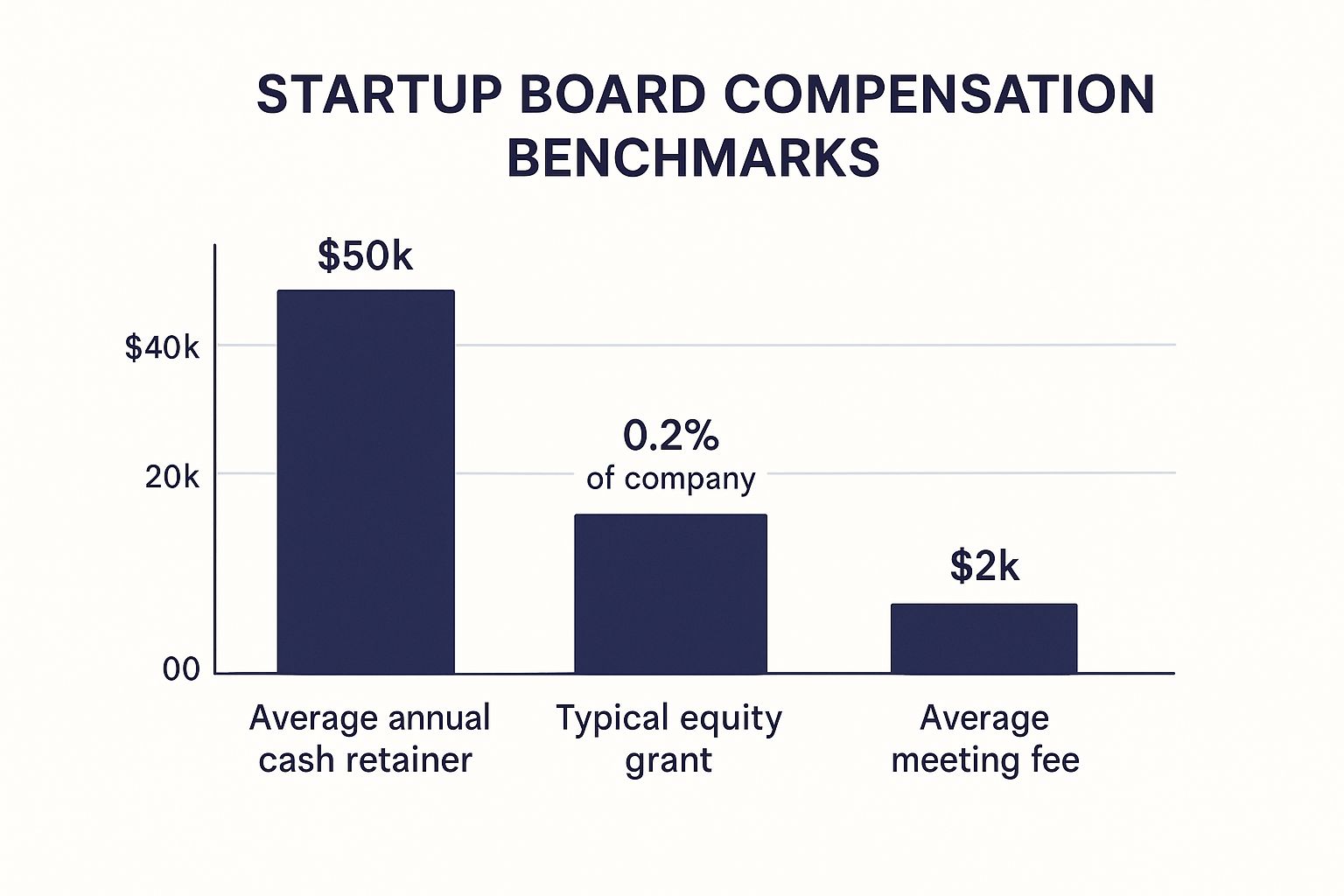

The infographic above illustrates average benchmarks for startup board compensation. This includes annual cash retainers, equity grants, and meeting fees. As shown, equity often makes up a bigger part of the package, especially early on. This highlights how important equity is for attracting and keeping experienced directors when cash is tight.
Striking the Right Balance: Equity vs. Cash Compensation
Creating the right compensation package for a startup’s board of directors means balancing equity and cash. This balance changes based on things like the startup’s stage and finances. Early-stage startups, often short on cash, lean heavily on equity. This gives directors a share of the company’s potential success.
However, as a startup grows and gets more funding, cash becomes more important. This allows for a competitive package that attracts experienced directors who might need a steady income.
The Power of Equity in Early-Stage Startups
For early-stage startups, equity is the main draw. It’s the potential for big returns if the company does well. This appeals to directors who accept higher risk for potentially higher rewards. It also ties their interests to the company’s success.
This doesn’t mean there’s no cash involved. A smaller cash retainer shows commitment and covers basic board-related expenses. This could be anywhere from $5,000 to $50,000 annually, depending on the company’s finances and the director’s experience.
The Evolving Role of Cash as Funding Increases
As startups get more funding, from Series A onward, compensation increases with the company’s value and available cash. This allows for higher cash retainers, possibly reaching $100,000 or more annually for established companies.
Equity is still important. But the percentage offered might decrease as the company’s overall value grows. This is normal; a smaller piece of a much larger pie can still be a substantial return. Finding the right balance is key.
To help visualize how equity and cash compensation typically shift based on a startup’s funding stage, let’s look at the following table:
Equity vs Cash Compensation by Startup Stage
Comparison of typical equity percentages and cash compensation across different funding stages
| Funding Stage | Typical Equity % | Cash Retainer Range | Total Annual Value |
|---|---|---|---|
| Pre-Seed/Seed | 0.5% – 2% | $5,000 – $25,000 | Highly Variable, Primarily Equity-Driven |
| Series A | 0.25% – 1% | $25,000 – $75,000 | Significant Equity with Increasing Cash |
| Series B | 0.1% – 0.5% | $50,000 – $125,000 | Cash Component Becomes More Prominent |
| Series C+ | <0.25% | $75,000+ | Primarily Cash with Performance-Based Equity |
As you can see, the emphasis shifts from equity to cash as the company matures and gains access to more capital. The total annual value becomes more predictable and less reliant on future potential.
Setting Equity Percentages and Vesting Schedules
The right equity percentage depends on factors like the startup’s stage, the director’s role and experience, and overall dilution. A typical range for early-stage startups is 0.25% to 1%, but this can change.
Vesting schedules, which determine when a director fully owns their equity, are important for long-term commitment. A common approach is a four-year vesting schedule with a one-year cliff. This means the director gets 25% of their equity after a year, with the rest vesting monthly over the next three years.
Building a Comprehensive Compensation Strategy
A good board compensation package isn’t just about the numbers. It’s about creating a strategy that aligns with the company’s growth. This means understanding market trends, looking at what competitors offer, and regularly reviewing and adjusting compensation as the startup changes. By carefully balancing equity and cash, startups can attract experienced directors who offer valuable guidance and help achieve long-term success. A well-structured compensation package is an investment in the company’s future.
How Funding Stages Shape Your Compensation Strategy

Your startup’s funding stage has a major impact on how you compensate your board of directors. It’s not simply about how much money you have; it’s about your overall approach. Each stage, from bootstrapping to Series C and beyond, has its own set of factors to consider. This section explores how funding influences compensation and offers guidance for structuring a competitive package.
The Bootstrapped Beginning: Equity Is King
In the pre-seed or seed stage, resources are scarce, making equity the most valuable currency. Cash flow is typically tight, so offering substantial cash compensation is often impossible. Therefore, equity becomes the primary incentive for attracting seasoned board members. The promise of future returns ties their interests directly to the company’s performance. It’s like everyone being on a small fishing boat; everyone benefits when the nets are full.
The potential return – the value of those shares – hinges significantly on the collective effort of the entire crew.
Series A and Beyond: Balancing Act
As your startup secures Series A and subsequent funding rounds, the dynamic changes. Higher valuations and healthier cash reserves allow for more competitive compensation. Cash retainers become increasingly common, supplementing equity grants. This reflects both the lower risk associated with a more mature company and the evolving financial needs of board members.
Think of it this way: with Series A funding, you can afford a larger boat and a base salary for your crew. But they can still share in the increased profits from the expanded fishing capacity. This balanced approach attracts top talent while preserving founder equity. You might find this relevant: How to master fractional CFO selection.
The Strategic Timing of Compensation Upgrades
It’s crucial to strategically time any adjustments to your board compensation. These changes often align with funding milestones. For example, the shift from a mostly equity-based package to one with a stronger cash component often occurs after a successful Series A round. This signals growth and stability to potential and current board members.
Moreover, your startup’s financial health and stage also indirectly impact board compensation through the company’s overall compensation framework. As startups progress, increased capital and valuations often allow for more robust compensation packages.
Communicating Compensation Changes
Clear communication is essential when modifying compensation structures. Transparency builds trust and ensures everyone understands the reasons for the change. Be prepared to explain how the new structure benefits both the company and its board members.
This might involve outlining performance metrics linked to equity vesting or emphasizing the company’s long-term value. Open dialogue fosters a positive and productive relationship with your board. A successful compensation strategy considers both current needs and anticipates future requirements as your startup expands.
Navigating Today’s Board Compensation Landscape
The startup environment is constantly in flux, requiring board compensation packages to remain competitive. Attracting and retaining top board members hinges on understanding current market trends. This means recognizing how rising startup valuations and competition for talent, particularly in thriving sectors like AI and fintech, influence director expectations.
Market Forces and Rising Benchmarks
Increased startup valuations, often fueled by substantial funding rounds, impact board compensation. As company value rises, so does the perceived value of equity grants, potentially increasing expectations for cash retainers. The competition for seasoned directors is intense, especially in high-growth areas like AI and fintech, where specialized knowledge is highly valued. This demand can push compensation benchmarks higher as companies vie for the best board members. For example, a director with a proven track record in AI might command a higher equity stake or cash retainer than a director with a broader background.
Industry Trends and Competitive Positioning
Some industries lead compensation innovation, setting new standards that others follow. Startups must understand competitor offerings, both within and outside their specific industry. Board compensation is also influenced by overall industry trends and market conditions. The surge in AI startup funding has significantly impacted startup salaries. Increased funding often translates to higher salaries to attract and retain talent across various roles. This requires a proactive approach to compensation, anticipating market changes and adjusting strategies to remain attractive to potential board members.
Balancing Competitiveness and Financial Prudence
While competitiveness is essential, startups must balance it with financial responsibility. Excessive board compensation can strain resources and dilute founder equity. A strategic approach is necessary, aligning compensation with value creation. For instance, performance-based incentives, such as equity vesting tied to milestones, can motivate directors while safeguarding the company’s financial health. This ensures compensation becomes an investment in future success, not merely a cost.
Adapting to Market Shifts
The board compensation landscape is in constant motion. Startups must be adaptable, regularly reviewing benchmarks, assessing the competitive environment, and adjusting packages as needed. This could involve increasing equity, offering higher retainers, or introducing new benefits to reflect market changes or increased demands on board members. This flexibility helps attract qualified directors to guide the company through different growth stages. Building a strong board demands a dynamic compensation strategy that balances current market realities with the company’s long-term vision.
Legal Requirements And Compliance Made Simple

Navigating the legal complexities of board compensation for startups can feel overwhelming. However, a clear understanding of the key requirements and potential issues can simplify the process, protecting both your company and your directors. This section outlines the essential legal and compliance considerations for startup board compensation.
Securities Law Considerations for Equity Grants
Offering equity to board members is a common practice in startups. This practice falls under securities laws, meaning equity grants must comply with regulations like those outlined in the Securities Act of 1933 and the Securities Exchange Act of 1934.
For instance, you’ll need to consider registration requirements or exemptions like Rule 701, which allows private companies to issue securities to employees, directors, and consultants under specific conditions. Proper documentation, including stock option agreements and grant notices, is crucial.
Documentation: Protecting Your Company and Directors
Comprehensive documentation safeguards both your company and your board of directors. Clearly defined agreements outlining the terms of compensation are essential. These should include vesting schedules, performance metrics, and change-of-control provisions.
These agreements should be reviewed by legal counsel to ensure compliance with all applicable laws and regulations. A well-drafted agreement, for example, clarifies what happens to a director’s equity in the event of an acquisition.
Board Approval Processes: Ensuring Legality and Transparency
A transparent and legally sound board approval process for compensation decisions is vital. This typically involves a formal resolution approved by the board, clearly documenting the compensation package’s terms and conditions.
This process not only ensures compliance but also builds trust and accountability within the board. A detailed record of the decision-making process is essential for demonstrating compliance with legal and regulatory requirements.
Common Legal Pitfalls and Avoidance Strategies
Several legal pitfalls can snare startups when compensating their board of directors. One common mistake is failing to properly document equity grants, which can lead to future disputes. Another is non-compliance with securities laws, potentially resulting in penalties and legal action. Insufficient board approval processes can also raise questions about the legitimacy of compensation decisions.
To avoid these issues, consult with experienced legal counsel specializing in startup board compensation. This proactive approach can save you time, money, and potential legal difficulties in the long run. They can provide expert guidance on securities laws, ensure proper documentation, and establish robust approval processes.
Tax Implications: Understanding the Impact on All Parties
Different compensation structures have varying tax implications for both the company and the directors. Cash compensation, for example, is treated as regular income for the director and a deductible expense for the company.
Equity-based compensation, on the other hand, has more complex tax implications involving capital gains and potential tax advantages. Understanding these implications is crucial for designing a tax-efficient compensation package for everyone involved.
Actionable Frameworks for Compliance and Efficiency
A compliant and efficient compensation program requires a structured approach. Begin by defining a clear compensation philosophy aligned with your startup’s stage and objectives. Next, conduct thorough benchmarking to understand market rates for board compensation in startups, ensuring your offers are competitive.
Finally, collaborate with legal counsel to develop standardized agreements and processes that streamline compensation administration while maintaining compliance. This structured approach helps attract and retain top talent while minimizing legal and administrative burdens.
Implementing Board Compensation That Actually Works
Turning the theory of board of directors compensation into a practical strategy requires a well-defined implementation plan. This involves creating a compensation package tailored to your startup’s unique situation, securing buy-in from the board, and establishing clear policies for future growth. This section offers a practical framework for effective implementation, from benchmarking to ongoing management.
Designing Compensation Packages: A Tailored Approach
Creating a board compensation package that works involves a deep understanding of your startup’s needs and the market landscape. This starts with benchmarking. Researching compensation practices at similar startups, particularly within your industry and funding stage, provides a crucial foundation. This research helps set competitive rates that attract top talent. You might be interested in: How to master fractional executive selection.
Next, define the specific roles and responsibilities of your board members. A clear role definition clarifies expectations and allows for a more targeted compensation structure. For example, a board member leading a specific committee might receive a higher retainer or additional equity grants.
Finally, consider the mix of equity and cash. The balance should reflect your startup’s stage and financial health. Early-stage startups often emphasize equity, while later-stage companies might offer more cash retainers.
Presenting Proposals and Gaining Board Buy-In
Once you have a draft compensation package, presenting it effectively to the board is crucial. Transparency is essential. Clearly explain the rationale behind the proposed structure, including the benchmarking data and the reasons for the equity/cash split. Highlight how the package aligns with company goals and director responsibilities.
Be prepared to answer questions and address concerns. Open communication builds trust and increases the likelihood of board approval. This ensures everyone understands and supports the proposed structure.
Establishing Clear Policies For Future Directors
While flexibility is important in the fast-paced startup world, setting clear policies provides a framework for future board additions. These policies might outline the typical equity range for different roles, standard vesting schedules, and the process for reviewing and adjusting compensation.
This forward-thinking approach streamlines future board appointments and maintains consistency. Having a clear process in place makes it easier to onboard new directors and ensures fair compensation practices.
Tools and Systems For Managing Compensation
As your startup scales, managing board compensation becomes more complex. Implementing effective tools and systems simplifies administration and tracking. This might involve using specialized software like Carta to manage equity grants, track vesting schedules, and generate reports.
These tools improve accuracy, reduce administrative burden, and ensure compliance with legal requirements. Using appropriate software can significantly streamline the compensation process.
Balancing Individual Contributions and Standardized Structures
While it’s important to recognize individual contributions, standardized structures ensure fairness and transparency. Consider establishing clear criteria for determining compensation adjustments based on performance or added responsibilities.
This could involve tying equity vesting to milestones or offering bonuses for exceptional performance. This approach rewards individual efforts while maintaining equity among board members. Finding the right balance is key for a successful compensation strategy.
Adapting and Adjusting Compensation As You Grow
Board compensation isn’t static. It should evolve alongside your startup. Regularly review and adjust compensation packages to remain competitive and reflect changes in the market, your company’s performance, and individual director contributions.
This proactive approach helps retain experienced directors and attract new talent as your startup grows. It also ensures that compensation aligns with the changing demands of your business. A dynamic strategy fosters a strong, engaged board.
To help guide you through the implementation process, we’ve created a checklist outlining key actions, timelines, and stakeholders for each phase:
Board Compensation Implementation Checklist
Step-by-step implementation guide with timeline and key considerations for each phase
| Implementation Phase | Key Actions | Timeline | Stakeholders |
|---|---|---|---|
| Benchmarking & Analysis | Research industry compensation trends and best practices. Analyze internal needs and director roles. | 1-2 Months | HR, Legal, CEO |
| Package Design | Develop tailored compensation proposals. Determine equity/cash split. Outline vesting schedules. | 2-4 Weeks | Compensation Committee, Legal |
| Board Presentation & Approval | Present proposals to the board. Address questions and secure buy-in. Finalize agreements. | 2-4 Weeks | Board of Directors, CEO |
| Policy Development & Implementation | Create formal compensation policies for future directors. Integrate policies into governance documents. | 1-2 Months | Legal, HR |
| Ongoing Management & Review | Regularly review and adjust compensation based on performance and market conditions. Leverage compensation management tools. | Ongoing | Compensation Committee, HR |
This checklist helps ensure a structured approach to implementing board compensation. Regular review and adaptation are key to maintaining a competitive and effective compensation strategy.
Key Takeaways
Building a successful startup requires a strong board of directors. Attracting experienced directors requires a competitive compensation strategy. This section summarizes key takeaways for mastering board compensation, providing a roadmap for founders to implement immediately. We’ll cover practical steps, timing, communication, and ongoing management.
Equity vs. Cash: Striking a Balance
- Early Stages (Pre-Seed/Seed): Equity is paramount in the initial stages. With limited cash flow, equity compensation is the primary incentive, offering directors a stake in the company’s potential upside. A small cash retainer ($5,000-$25,000 annually) demonstrates commitment and helps cover basic expenses.
- Growth Stages (Series A and Beyond): The balance shifts as funding increases. Higher valuations allow for stronger cash retainers ($50,000-$125,000+ annually). Equity grants may decrease proportionally as company value grows. A smaller percentage of a much larger pie can still be very rewarding.
Compensation Strategy by Funding Stage
- Pre-Seed/Seed: Prioritize equity with minimal cash.
- Series A: Offer more substantial cash retainers while keeping meaningful equity stakes.
- Series B and Beyond: Gradually increase cash components and refine equity percentages, considering market trends and company performance.
Legal and Compliance Essentials
- Securities Law Compliance: Equity grants must comply with all applicable securities laws. Consult legal counsel for compliance and proper documentation of stock options, vesting schedules, and other terms.
- Transparency and Documentation: Protect your company and directors with clear agreements outlining compensation terms, vesting schedules, and change-of-control provisions.
- Board Approval Processes: Formal board-approved resolutions demonstrate transparency and legal validity in compensation decisions.
Putting Compensation into Practice
- Benchmarking: Research compensation trends for similar roles at comparable startups in your industry and funding stage. This informs a competitive package.
- Clear Policies: Develop guidelines for future director additions. Outline typical equity ranges and processes for review and adjustment to ensure fairness and consistency.
- Ongoing Management: Regularly review and adjust compensation as the startup evolves and the market shifts. This demonstrates responsiveness and helps retain valuable board members.
Recognizing Compensation Problems
- Recruitment Challenges: Difficulty attracting qualified directors suggests your compensation may not be competitive.
- High Turnover: Frequent board member changes can indicate dissatisfaction with compensation or company direction.
- Low Engagement: Disengaged directors may not feel incentivized by the current compensation structure.
Measuring Board Success
- Director Satisfaction: Gauge director satisfaction with compensation and overall board experience through surveys or interviews.
- Board Performance: Evaluate the board’s effectiveness in achieving strategic objectives. A well-compensated board should actively drive company success.
- Competitive Positioning: Regularly benchmark your compensation against market data to attract and retain top talent.
Are you ready to build a high-performing board? Shiny offers a fractional executive marketplace, connecting startups with experienced executives for 5 to 25 hours a week. With over 650 vetted executives across various industries, Shiny provides a cost-effective, flexible solution to access top-tier talent. Learn more: Shiny Fractional Executive Marketplace