



Navigating Change in the Business World
Change is a constant companion in business. Disruptive technologies, evolving markets, internal restructuring, and shifting workforce dynamics keep organizations in a perpetual state of flux. This is especially true in fast-paced sectors like SaaS, FinTech, and HealthTech. Managing this constant change effectively is crucial. A poorly handled transition can negatively impact productivity, employee morale, and ultimately, the bottom line. Understanding the core principles of change management is essential for survival and success.
Change management itself has evolved significantly. It’s moved beyond simple project management to a more people-centric approach. Early top-down models often missed the human element. Today, effective change management prioritizes communication, empathy, and stakeholder engagement. It leverages principles from organizational psychology and behavioral science to understand how individuals and teams process and adapt to change. An effective approach minimizes disruption, fosters buy-in, and empowers employees to embrace new directions.
Whether you’re a startup founder building a leadership team, an entrepreneur navigating rapid growth, or an established SMB optimizing operations, understanding change management best practices is critical. This article explores eight powerful strategies to not only weather change but also harness its power to propel your organization forward. These adaptable practices offer valuable insights for businesses of all sizes across diverse industries. Get ready to transform your approach to change and unlock new levels of organizational agility and success.
Kotter’s 8-Step Change Model
Navigating organizational change can be challenging. For startups, small and medium-sized enterprises (SMEs), and even large corporations in fast-paced industries like SaaS, FinTech, and HealthTech, adapting to market shifts and internal growth is essential for survival. One established framework for successfully implementing change is Kotter’s 8-Step Change Model. Developed by Harvard Business School professor John Kotter, this model offers a structured, step-by-step approach to guide organizations through transformation.
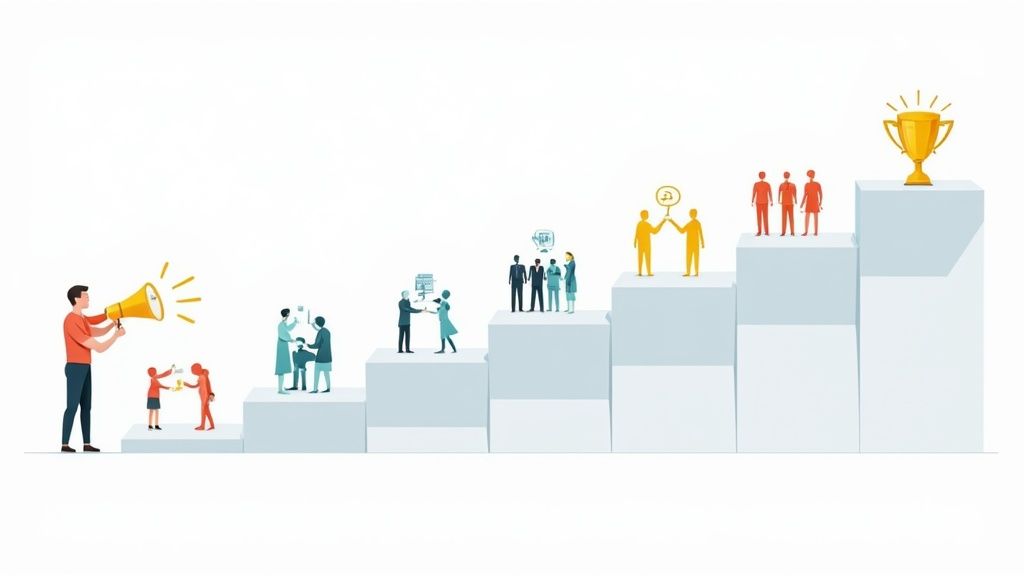

This model is considered a best practice because it addresses both the emotional and practical aspects of change. It acknowledges that transformation requires more than just a new strategy; it requires a shift in mindset and company culture. Kotter’s focus on building a strong team, creating a sense of urgency, and integrating changes into the company culture are vital for long-term success.
Key Features and Benefits
- Sequential Steps: The eight steps provide a clear roadmap, simplifying the change process. This is particularly helpful for entrepreneurs and startup founders.
- Focus on Preparation: Kotter emphasizes the importance of establishing a foundation before implementing change. This proactive approach reduces resistance and increases stakeholder buy-in.
- Communication and Buy-In: The model highlights the human element of change and stresses clear, consistent communication to build consensus and motivate teams.
- Planning and Implementation: The model covers both planning and execution, offering a complete framework for managing the entire change process.
Pros and Cons of Kotter’s Model
Here’s a quick look at the advantages and disadvantages:
| Pros | Cons |
|---|---|
| Clear, step-by-step roadmap | Can be time-consuming to implement all eight steps |
| Emphasis on buy-in and communication | Assumes a linear progression, which isn’t always practical |
| Addresses emotional and situational aspects | May not suit fast-paced environments requiring rapid changes |
| Anchors changes in organizational culture | Less effective for bottom-up change initiatives |
Real-World Examples
Kotter’s model has been successfully used by many organizations, including:
- British Airways: The airline transformed from a struggling government entity to a customer-focused company.
- Microsoft: The company experienced a significant cultural shift under Satya Nadella.
- Philips Electronics: The organization transitioned from a technology-focused company to a customer-centric one.
Tips for Implementation
- Don’t Rush the Early Stages: Invest time in building a strong coalition and establishing a sense of urgency.
- Build a Strong Coalition: Create a team of influential individuals who can support the change and drive momentum.
- Communicate Effectively: Ensure communication is consistent, clear, and frequent. Transparency is key.
- Celebrate Short-Term Wins: Recognizing and celebrating small victories helps maintain momentum and reinforces positive change.
Popularity and Evolution
John P. Kotter introduced the 8-Step Change Model in his 1996 book Leading Change. It has become a core element of change management, further amplified through Harvard Business Review publications and Kotter International, Kotter’s consulting firm.
You might also want to explore executive recruitment models, often a critical component of organizational change. Articles on building high-performing teams are also valuable, as teamwork is crucial for successful change implementation. For additional resources, browse our sitemap. This model provides a strong framework for managing change, enabling sustainable growth and success.
Navigating Change With the ADKAR Model
Successfully adapting to change is vital for any organization’s growth, especially for startups and SMBs. The ADKAR model offers a practical, individual-focused approach to change management, making it a powerful tool for businesses across various sectors, including SaaS, FinTech, and HealthTech.
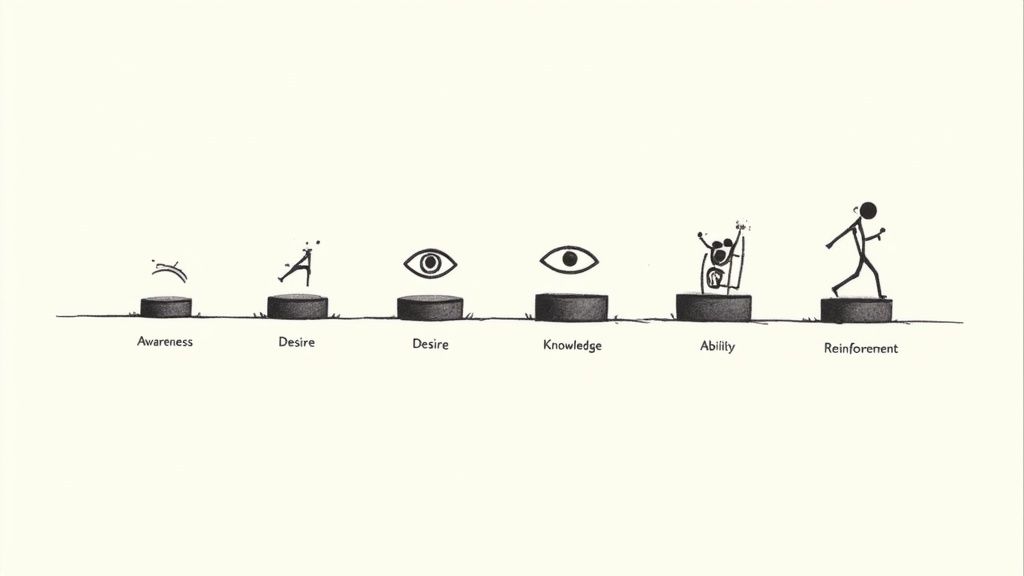
Developed by Prosci founder Jeff Hiatt, the ADKAR model isn’t just a top-down strategy. It’s a goal-oriented framework centered on the individual’s experience of change. It highlights five sequential outcomes essential for successful adoption:
- Awareness: Understanding the why behind the change.
- Desire: Actively supporting and wanting the change.
- Knowledge: Possessing the know-how to implement the change.
- Ability: Being capable of putting the change into practice.
- Reinforcement: Sustaining the change with ongoing support.
ADKAR recognizes that organizational change happens one person at a time. Addressing individual needs at each stage minimizes resistance and fosters buy-in.
Why ADKAR Stands Out
ADKAR’s strength lies in its direct approach to individual resistance, a frequent hurdle in change initiatives. By focusing on each employee’s psychological journey, it pinpoints areas for change management efforts, simplifying roadblock identification. This granular approach is especially valuable for smaller businesses where individual contributions have a greater impact.
Features and Benefits of ADKAR
- Individual-Centric: Emphasizes the individual’s change experience.
- Step-by-Step Process: Each stage builds upon the last, providing a clear path.
- Measurable Objectives: Sets specific, quantifiable goals for change activities.
- Simple Communication: Easy to grasp and explain to all stakeholders.
Pros and Cons of ADKAR
| Pros | Cons |
|---|---|
| Addresses individual resistance | May oversimplify complex organizational dynamics |
| Provides clear focus areas | Less focus on systemic/structural changes |
| Easy to understand and communicate | Requires resources for individual needs assessment |
| Identifies specific barriers to adoption | Sequential nature may not reflect all adoption rates |
ADKAR in Action
Major organizations such as General Motors, Intel, and Luxottica have successfully implemented the ADKAR model for diverse initiatives. These range from new manufacturing systems to digital transformations, highlighting the model’s versatility across industries and scales.
Implementing ADKAR: Tips for Success
- Assess: Evaluate individuals’ current ADKAR stage.
- Communicate Effectively: Tailor messaging to each stage’s needs.
- Progress Sequentially: Address each stage thoroughly before moving on.
- Gather Feedback: Monitor progress and identify areas for improvement.
ADKAR’s Rise to Prominence
The ADKAR model, popularized by Jeff Hiatt and Prosci’s change management programs, gained recognition through his book, “ADKAR: A Model for Change in Business, Government and our Community.” It remains a widely used framework for organizations navigating the complexities of change.
The Value of ADKAR
By prioritizing the individual, ADKAR offers a practical and effective approach to change management. It provides a clear roadmap for managing the human element of change, ensuring the successful implementation of new initiatives in startups, SMBs, and established companies alike.
Lewin’s Change Management Model
Successfully navigating organizational change is critical, especially for startups and SMBs. Kurt Lewin’s Change Management Model, a fundamental concept in organizational development, offers a straightforward yet effective framework for understanding and implementing change. This three-stage process—Unfreeze, Change, and Refreeze—provides a structured approach, particularly valuable for companies seeking cost-effective leadership solutions and navigating growth in sectors like SaaS, FinTech, and HealthTech.

This model emphasizes that change is a process, not a single event. It begins with Unfreezing, establishing the need for change and challenging the current status quo. This involves overcoming resistance and fostering a willingness to embrace change. Think of it as preparing the soil for a new plant. Clear communication about the reasons for change and addressing employee concerns are essential during this phase.
The second stage, Change, is where the actual transformation happens. New processes, systems, or behaviors are implemented. Strong leadership, clear communication, robust support, and thorough training are vital for a smooth transition during this phase. Imagine nurturing the seedling, providing the resources it needs to thrive.
Finally, Refreeze involves solidifying the new state and integrating the changes into the company culture. This stage aims to stabilize the organization after the change, making the new ways of working the standard. New control systems and norms reinforce the changes and prevent reverting to old habits. Think of this as helping the plant take root and flourish.
Features and Benefits
- Simple Three-Stage Process: Easy to understand and implement, even without dedicated change management specialists.
- Focus on Preparation and Stabilization: Addresses both the initial groundwork (Unfreezing) and the long-term sustainability (Refreezing).
- Based on Force Field Analysis: Helps identify driving and restraining forces for a more effective change process.
Pros
- Simplicity and ease of understanding
- Applicable to various organizational changes
- Emphasis on preparation and reinforcement
Cons
- Potentially too simple for complex changes
- “Refreeze” may not suit agile organizations requiring constant adaptation
- Limited focus on the emotional aspects of change
Real-World Examples
- Shell Oil: Used Lewin’s model during a major restructuring to manage the transition.
- Procter & Gamble: Applied the model for cultural transformation initiatives, shifting company values and behaviors.
- Healthcare Organizations: Leveraged the model for implementing Electronic Medical Records (EMR) systems, managing complex changes.
Tips for Implementation
- Unfreezing: Create a compelling case for change, explaining the “why” and addressing potential resistance.
- Change: Provide ample support and training to equip employees with the necessary skills and knowledge.
- Refreeze: Establish new control systems and norms to reinforce changes and prevent a relapse to old habits.
Lewin’s model gained prominence through his work as a German-American psychologist and his contributions to organizational development literature. Early management consultancies in the 1950s and 1960s further popularized the model, solidifying its status. Consider how visuals can enhance change communication, especially in remote work environments. Read also: Leveraging Visuals for Effective Communication. For more on site structure and image resources, see: https://useshiny.com/image-sitemap-1.xml.
Despite its simplicity, Lewin’s model remains relevant. It provides a valuable framework for entrepreneurs facing executive recruitment challenges, helping manage new leadership integration and drive organizational change. Its straightforward approach benefits startups and SMBs seeking cost-effective change implementation and a strong foundation for future growth.
Understanding The McKinsey 7-S Framework
The McKinsey 7-S Framework is a valuable tool for businesses navigating organizational change. Developed by McKinsey consultants and popularized by the book “In Search of Excellence,” this framework helps organizations achieve successful transformations. It ensures alignment across seven key internal elements, creating a holistic approach. This is particularly relevant for startups, SMBs, and companies in fast-paced industries like SaaS, FinTech, and HealthTech, where adapting to change is vital for survival and growth.
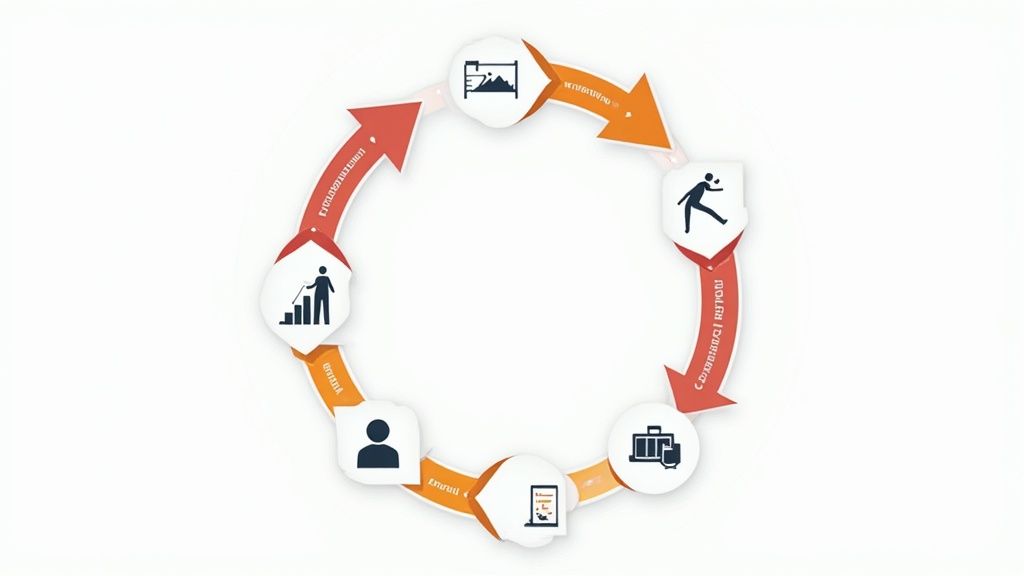
The 7-S model categorizes these elements into “hard” and “soft” factors:
Hard Elements
These are generally easier to define and manage directly. They include:
- Strategy: The organization’s action plan for reaching its objectives.
- Structure: The company’s hierarchy and reporting structure.
- Systems: The established processes and procedures used to run the organization.
Soft Elements
These are less tangible, culturally driven, and often require more subtle management. They include:
- Shared Values: The organization’s core principles and beliefs (centrally located in the model, highlighting its importance).
- Style: The leadership approach and overall company culture.
- Staff: The employees and their skills and abilities.
- Skills: The specific competencies and expertise within the organization.
The framework emphasizes the interconnectedness of these seven elements. A change in one area will undoubtedly affect the others. For instance, a shift in strategy (hard element) will likely require adjustments to staff skills (soft element) and supporting systems (hard element). Overlooking these connections can lead to resistance, inefficiencies, and ultimately, unsuccessful change initiatives.
Why This Framework Matters
The 7-S model provides a comprehensive perspective, reminding leaders to consider the broader impact of change across all dimensions. This is especially important for startups and SMBs, which may have limited resources to deal with the unintended results of poorly planned changes. For organizations experiencing rapid expansion or industry shifts, the framework offers a useful lens for assessing current weaknesses and planning for future achievements.
Real-World Applications
The 7-S model’s effectiveness is evident in well-known corporate transformations:
- IBM (1990s): Lou Gerstner’s transformation of IBM involved significant changes across all seven elements, including strategy, structure, and a new customer-focused culture.
- Apple (Late 1990s): Steve Jobs’ return to Apple resulted in fundamental changes in strategy, product development, and company culture, demonstrating how aligning the 7 S’s can revitalize a struggling business.
- Siemens: Siemens has leveraged the 7-S framework to guide various restructuring efforts, illustrating its adaptability across different industries.
Advantages and Disadvantages
| Feature | Advantages | Disadvantages |
|---|---|---|
| Overview | Comprehensive view | Complex to implement fully |
| Perspective | Recognizes both formal and informal aspects | No sequential roadmap |
| Impact | Identifies ripple effects | Time-consuming assessment |
| Analysis | Useful for gap analysis | Doesn’t address external factors |
Implementing the 7-S Framework
- Begin with Shared Values: Define your organization’s core principles to guide the change process.
- Utilize as a Diagnostic Tool: Analyze existing alignment and identify areas for improvement before making changes.
- Develop Action Plans: Create detailed plans to address misalignments within each element.
- Regularly Review and Adjust: Monitor the impact of changes and modify your plans as needed for continued success.
By understanding and applying the McKinsey 7-S Framework, businesses can increase the probability of successful change implementation, promoting development, innovation, and long-term sustainability.
Bridges’ Transition Model: Guiding Your Team Through Change
Change is inevitable, especially in fast-paced industries like startups, SaaS, FinTech, and HealthTech. Restructuring, new technologies, and shifting markets drive growth, but they also present human challenges. Announcing a change isn’t enough; managing the transition is key to success. William Bridges’ Transition Model provides a valuable framework for navigating this process. It emphasizes the human element, making it a best practice for any organization, particularly for maximizing the impact of executive leadership.
Bridges’ model distinguishes between change – the external event (like a merger, new software, or leadership change) – and transition – the internal psychological process people go through as they adapt. Successful change implementation requires understanding and supporting employees through three transition phases:
- Ending/Losing/Letting Go: This phase involves acknowledging the loss of old ways of working. It’s a time of confusion, anxiety, and even resistance. Validating these emotions is crucial.
- The Neutral Zone: This is the in-between period. It’s characterized by uncertainty and a potential dip in productivity. However, it’s also a time for creativity and innovation.
- The New Beginning: This phase marks acceptance and energy around the new reality. It involves embracing new roles and processes, leading to increased productivity and engagement.
Why Bridges’ Model Matters
Unlike approaches focused solely on the mechanics of change, Bridges’ model delves into the emotional aspect. This is especially relevant for executive leadership transitions, which significantly impact team dynamics and organizational culture. By understanding these psychological transitions, executives can lead and support their teams more effectively. For startups and SMEs, this means smoother transitions and faster adaptation to new strategies.
Benefits of the Transition Model
- People-Focused: Prioritizes employee well-being, leading to increased buy-in.
- Structured Approach: The three-phase model offers a clear roadmap.
- Emphasis on Support: Highlights the need for leadership to provide resources and emotional support.
- Improved Communication: Facilitates transparent communication, reducing uncertainty.
Pros and Cons of Bridges’ Model
| Pros | Cons |
|---|---|
| Addresses the emotional impact of change | Less focus on tactical implementation |
| Supports employee transitions | Requires time investment for support |
| Recognizes individual transition paces | Measuring progress can be challenging |
| Provides guidance for each phase | Demands high emotional intelligence |
Real-World Applications
Organizations like Hospira (during a merger), Bristol-Myers Squibb (during leadership transitions), and Mayo Clinic (during healthcare transformations) have used Bridges’ Transition Model, demonstrating its effectiveness.
Practical Tips
- Acknowledge Loss: Openly address what is being left behind.
- Neutral Zone Support: Provide resources and clear communication during uncertainty.
- Mark Transitions: Use rituals to signify endings and new beginnings.
- Clarify the 4 P’s: Communicate the Purpose, Picture of the future, Plan, and each person’s Part.
Origins and Continued Relevance
William Bridges introduced this model in his 1991 book, “Managing Transitions.” William Bridges Associates, along with HR practitioners, continue to advocate for this approach.
By applying Bridges’ Transition Model, organizations can navigate change effectively, minimize disruption, and empower employees to thrive. This results in a more resilient and successful organization.
Prosci’s PCT Model: Balancing People, Change, and Project Management
Successfully navigating organizational change is critical, especially in dynamic sectors like SaaS, FinTech, and HealthTech. Prosci’s PCT Model provides a structured approach to change management, emphasizing the crucial human element. This makes it a valuable tool for businesses of all sizes, from startups to large enterprises. This model stands out because it offers a comprehensive framework that integrates the human aspect of change with both project management and organizational change management, ultimately leading to greater success for your initiatives.
Prosci’s PCT Model highlights three core areas for successful change:
- Individual Change Management: This focuses on empowering individuals to adapt to and embrace changes. It uses the ADKAR model (Awareness, Desire, Knowledge, Ability, Reinforcement) to guide individuals through the change process. This is especially important for startups and SMBs integrating new leadership or implementing significant strategic or operational changes.
- Organizational Change Management: This addresses the overall impact of change on the organization’s structure, culture, and processes. This is vital for companies undergoing major transformations, like implementing new technologies or expanding into new markets.
- Project Management: This concentrates on the technical aspects of change, including planning, execution, and delivery. It ensures projects are completed on time and within budget. Effective project management is essential for startups and SMBs aiming for efficient scaling.
Features and Benefits
The integrated approach of the PCT Model offers several advantages:
- Phased Approach: The model provides a clear, phased approach – preparing, managing, and reinforcing change – allowing for systematic change management.
- ADKAR Integration: By incorporating the ADKAR model, the PCT Model prioritizes individual transitions, driving adoption and minimizing resistance.
- Tools and Templates: Prosci offers a variety of tools and templates, including ROI calculators and assessment tools, to streamline the change management process and justify investments in change management activities.
- Balanced Approach: This balanced approach ensures both technical and human aspects of change are considered, increasing the likelihood of successful implementation.
Pros and Cons of the Prosci PCT Model
Pros:
- Comprehensive and well-structured methodology
- Backed by research and practical application
- Ready-to-use tools and templates
- Balances technical and human aspects
Cons:
- Can be resource-intensive
- Requires specialized training (though beneficial for larger changes)
- May be overly structured for smaller organizations
- Associated costs for tools and training
Real-World Applications of the PCT Model
The PCT Model has been successfully implemented by numerous organizations, including:
- Nestlé’s global transformation initiatives
- Honeywell’s enterprise-wide system implementations
- Many Fortune 500 companies for digital transformation projects
These cases highlight the model’s effectiveness in managing large-scale, complex changes.
Implementing the PCT Model: Tips for Success
- Impact Assessments: Identify affected stakeholders and tailor communication accordingly.
- Communication & Sponsorship Roadmaps: Ensure clear, consistent messaging.
- ROI Calculators: Demonstrate the value of change management.
- Change Champions Network: Empower internal advocates for change.
Prosci: The Driving Force Behind the PCT Model
Prosci, a research and consulting organization, popularized the PCT Model through its certification programs, methodology, and the book Best Practices in Change Management.
By focusing on the human side of change, the PCT Model enables organizations to navigate transitions effectively, reduce resistance, and achieve desired results. While it requires investment in training and tools, the benefits of a well-managed change process can significantly outweigh the costs, particularly for companies experiencing rapid growth or substantial transformation.
Agile Change Management
In today’s business world, sticking to traditional change management methods can be a real problem. These older, linear approaches just don’t cut it anymore. Agile Change Management offers a fresh perspective, borrowing the best parts of agile software development to make organizational transformations smoother. Instead of a rigid plan, it emphasizes flexibility, constant feedback, and continuous improvement. This allows companies to adapt and experiment, recognizing that change is rarely straightforward.
This is especially important for startups, small and medium-sized businesses (SMBs), and companies in fast-moving sectors like SaaS, FinTech, and HealthTech. These businesses need to be able to react quickly to market shifts and internal changes.
Why Agile Change Management Matters
For any organization looking for strong leadership and executive talent, agile change management is essential. It offers a responsive way to integrate new leaders, restructure teams, and carry out strategic shifts. Startups and SMBs, often working with limited resources, can benefit significantly. This agile approach helps them handle the challenges of growth, ensuring new executives can quickly make a difference.
Features and Benefits
Agile Change Management relies on:
- Iterative Approach: Changes are rolled out in small steps, allowing for continuous learning and adjustments.
- Adaptability: Plans are seen as flexible guides, not strict rules, so adjustments can be made as needed.
- Continuous Improvement: Regular feedback loops keep changes aligned with what stakeholders need.
- Experimentation: Teams are encouraged to try new things, learn from mistakes, and iterate quickly.
- Collaboration: Cross-functional, self-organizing teams work together to drive change.
Pros and Cons
| Pros | Cons |
|---|---|
| Adaptable to changing needs | Can lack structure for those used to traditional methods |
| Reduces risk through incremental changes | Challenging to implement in highly regulated industries |
| Promotes stakeholder engagement | Requires a cultural shift |
| Delivers value quickly | Can be difficult to manage governance and compliance |
Real-World Success
Several companies have successfully adopted Agile Change Management:
- ING Bank: ING’s move to an agile organizational structure, with self-managing teams and decentralized decision-making, has been widely praised.
- Spotify: Their “squad model,” using autonomous, cross-functional teams, is a well-known example of agile organizational design.
- Microsoft: Microsoft’s transformation under Satya Nadella, using agile principles to boost innovation, shows how this approach works even in large organizations.
Practical Implementation Tips
- Start Small: Begin with pilot projects and small change teams.
- Visualize Progress: Use tools like Kanban boards to track progress.
- Regular Retrospectives: Hold regular meetings to identify areas for improvement.
- Minimum Viable Changes (MVCs): Break down big changes into smaller, testable MVCs.
- Safe Environment: Foster a culture where experimentation and learning from mistakes are encouraged.
Evolution and Growth
Agile Change Management took off as the ideas in the Agile Manifesto, originally for software, were applied to organizational change. Authors like Jason Little, who wrote Lean Change Management, helped develop and spread this approach. Tech companies, already using agile in software development, were among the first to adopt it for wider organizational change. You might find more information on sites like this video sitemap.
Read also: Scaling Agile Change Management Across the Organization. This method provides a strong alternative to traditional change management, especially for organizations dealing with fast growth and change. By embracing agility, businesses can better respond to market changes, integrate new leaders effectively, and achieve lasting success.
Nudge Theory For Change Management
Nudge Theory presents a fresh perspective on change management, shifting from enforced mandates to subtle influence. Instead of dictating changes, it focuses on understanding decision-making processes and crafting “choice architectures” to gently guide individuals towards desired outcomes. This is particularly relevant for startups, SMBs, and fast-paced sectors like SaaS, FinTech, and HealthTech, where adaptability and employee buy-in are vital.
Rather than imposing top-down directives, Nudge Theory recognizes that small environmental adjustments can significantly impact behavior. This respects individual autonomy and minimizes the resistance often associated with traditional change management.
How It Works
Nudge Theory draws upon behavioral economics and cognitive psychology. It acknowledges that people aren’t always rational and are susceptible to cognitive biases, social norms, and the presentation of choices. By understanding these influences, organizations can subtly “nudge” individuals towards desired behaviors without limiting their choices.
Key Features and Benefits
- Subtle Interventions: Emphasizes suggestions and positive reinforcement over mandates.
- Choice Architecture: Designs the environment and presentation of options to influence decisions.
- Cognitive Bias Awareness: Utilizes understanding of decision-making processes to guide choices.
- Preservation of Autonomy: Respects individual freedom, fostering greater acceptance of change.
- Cost-Effective: Requires less investment than large-scale training or restructuring.
Real-World Examples
- Google’s Cafeteria Redesign: By strategically placing healthier food options more prominently, Google encouraged healthier choices without restricting options.
- UK’s Behavioral Insights Team (BIT): This “Nudge Unit” has improved tax collection, organ donation sign-ups, and energy conservation through nudges. For instance, adding a sentence to tax letters mentioning high local payment rates significantly increased compliance.
- Hand Hygiene in Healthcare: Prominent hand sanitizer dispensers and visual cues have proven effective in improving hand hygiene among staff.
Pros and Cons
Pros:
- Reduced change resistance
- Cost-effective implementation
- Respect for individual autonomy
- Compatibility with other change management methods
- Sustainable behavior change
Cons:
- Potential for manipulation if not transparent
- Difficulty measuring impact due to subtle effects
- Requires understanding of behavioral economics
- May not be suitable for large-scale systemic change
- Cultural differences can impact effectiveness
Tips For Implementation
- Default Options: Make the desired behavior the default.
- Social Proof: Highlight adoption by respected peers or leaders.
- Simplify Processes: Reduce cognitive load during change.
- Immediate Feedback: Provide positive reinforcement for desired behaviors.
- Transparency: Be open about the use of nudges to build trust.
Popularized By
- Richard Thaler and Cass Sunstein – Nudge (2008)
- UK Behavioral Insights Team (BIT)
- Daniel Kahneman’s work on behavioral economics
Why Nudge Theory Matters
In the dynamic world of startups and growing businesses, adaptability is essential. Nudge Theory provides a cost-effective and respectful way to influence behavior, reducing resistance and fostering positive reinforcement. Its emphasis on subtle interventions aligns with the need for agility and employee engagement, making it a valuable tool for leaders managing constant change.
8-Point Change Management Best Practices Comparison
| Model | Complexity (🔄) | Resources (⚡) | Outcomes (📊) | Ideal Use Cases (💡) | Advantages (⭐) |
|---|---|---|---|---|---|
| Kotter’s 8-Step Change Model | Moderate to High | High | Clear step-by-step roadmap guiding deep cultural change | Large organizations undergoing top-down change; structured transformations | Established process with strong focus on communication and buy-in |
| ADKAR Change Management Model | Moderate | Moderate | Targeted individual change and reduced resistance | Organizations focusing on individual behavior and barrier identification | Direct focus on individual needs with clear, sequential goals |
| Lewin’s Change Management Model | Low to Moderate | Low | Simple, foundational change with clear stages | Simple or moderately complex change initiatives; initial change efforts | Easy to understand and apply; clear three-phase process |
| McKinsey 7-S Framework | High | High | Holistic alignment of seven organizational dimensions | Complex organizations requiring gap analysis and multi-dimensional alignment | Provides a comprehensive view and effective gap analysis |
| Bridges’ Transition Model | Moderate | Moderate | Smooth psychological transitions with focused support | Situations with significant emotional impact; internal transitions | Deep insights into human and emotional aspects of change |
| Prosci’s PCT Model (People, Change, Triangle) | High | High | Integrated change addressing people, process and tech | Large-scale transformations involving multiple change dynamics | Comprehensive structure with ready-to-use tools and templates |
| Agile Change Management | Moderate | Moderate | Iterative, adaptable change with quick delivery | Fast-paced environments; dynamic organizations needing rapid adaptation | Flexible approach with continuous feedback and improvement |
| Nudge Theory for Change Management | Low to Moderate | Low | Subtle behavior shifts with sustainable impact | Initiatives requiring gentle influence (e.g., public policy, culture shifts) | Cost-effective, preserves autonomy while steering decisions |
Leading Through Change: A Practical Guide
Change is inevitable in business. Adapting to new technologies and shifting market demands is crucial for any organization hoping to not just survive, but thrive. This section explores key change management principles, drawing insights from established models like Kotter’s 8-Step Model, ADKAR, Lewin’s Model, McKinsey 7-S, Bridges’ Transition Model, Prosci’s PCT, Agile Change Management, and Nudge Theory.
Building a Foundation for Change
A successful transformation starts with open communication. Clearly explain the why, the what, and the how of the change to all stakeholders. Actively engage your team, encouraging feedback and addressing concerns. Consistent communication and active listening build trust and encourage buy-in.
Adapting and Learning
Change management is an ongoing process. Regularly evaluate the effectiveness of your initiatives and be ready to adjust your strategy. Promote a growth mindset within your organization, encouraging experimentation and learning from both successes and failures. Use data-driven decision-making to track progress and pinpoint areas for improvement.
Future Trends in Change Management
Several key trends are shaping the future of change management. The growing adoption of Agile methodologies emphasizes iterative development and continuous improvement. Artificial Intelligence (AI) and Machine Learning (ML) offer opportunities to automate aspects of change management, providing data-driven insights and personalized support. Finally, prioritizing employee well-being and resilience is becoming increasingly vital for navigating change’s complexities.
Key Takeaways for Successful Change
- Strong Leadership: Effective change requires strong leadership to guide the process, communicate the vision, and empower employees.
- Open Communication: Transparency and open communication are essential for building trust and ensuring everyone is aligned.
- Flexibility and Adaptation: Be ready to adapt your approach based on feedback, data, and changing circumstances.
- Culture of Learning: Cultivating a culture of learning, resilience, and adaptability is essential for long-term success.
Successfully navigating change is essential for organizational survival and growth. By embracing these change management best practices, your organization can not only weather change, but thrive in it. Ready to transform your organization and unlock its full potential? Shiny offers a fractional executive marketplace connecting startups with experienced leaders. Access a network of over 650 vetted executives across 40+ industries, including SaaS, FinTech, HealthTech, and more, for 5 to 25 hours a week. This flexible, cost-effective solution provides high-level expertise without the overhead of full-time hires. Drive growth and navigate change with confidence. Visit Shiny to learn more and connect with the executive talent your business needs.