



The High Stakes of Executive Transitions: Why Onboarding Matters


Leadership transitions are pivotal moments for any organization. The arrival of a new executive presents both exciting possibilities and inherent challenges. A well-structured executive onboarding checklist can significantly influence a company’s future direction. Conversely, a poorly handled transition can lead to setbacks that impact not only the new executive but the entire team and organizational performance.
The Cost of Failed Transitions
When executive onboarding is ineffective, the consequences can be extensive. A lack of clear guidance and integration can quickly lead to decreased team morale and reduced productivity. This can manifest in missed deadlines and strategic misalignments. A new leader struggling to acclimate can also create uncertainty among team members, hindering progress and stifling innovation. For further insights into navigating leadership changes, check out this helpful resource: How to master leadership transitions.
The Benefits of Successful Onboarding
A structured and comprehensive executive onboarding process sets the stage for a successful transition. This goes beyond simple introductions and paperwork. It’s about strategically integrating the new executive into the company’s culture, values, and daily operations. A smooth transition empowers the new leader to quickly build strong relationships, understand the organization’s nuances, and effectively contribute to achieving key business objectives.
Looking for best practices? General customer onboarding best practices offer valuable insights that can be adapted for executive transitions, providing a framework for a successful process.
The Impact on Retention and Satisfaction
Effective onboarding plays a crucial role in executive retention and job satisfaction. A positive onboarding experience significantly contributes to overall job satisfaction. According to Gallup, employees who experience a better onboarding process are 2.6 times more likely to be satisfied with their work. While specific data on executive onboarding might be limited, this general trend highlights the importance of a seamless transition, including a deep understanding of company history, culture, and key stakeholder relationships.
Why a Checklist is Essential
A comprehensive executive onboarding checklist acts as a roadmap for both the incoming leader and the organization. It ensures all crucial aspects of the transition are addressed, from pre-arrival preparations to long-term integration strategies. The checklist serves as an indispensable tool for mitigating potential issues and maximizing the likelihood of a successful and impactful leadership transition. This proactive approach replaces the old “sink-or-swim” mentality with a structured integration program that protects your investment in top leadership talent.
Pre-Arrival Mastery: Setting Your Executive Up For Success

The success of a new executive often depends on the work done before they even step through the door. This pre-arrival phase sets the tone for their tenure and is crucial for effective executive onboarding. Think of it like an orchestra: the conductor prepares the musicians before the performance. Similarly, organizations must orchestrate a seamless pre-arrival experience. This not only showcases organizational excellence but also sets the stage for a productive working relationship.
Personalized Onboarding Journeys
Effective executive onboarding starts with personalization. Consider the incoming executive’s background, experience, and any potential knowledge gaps. Create an onboarding journey that acknowledges their existing expertise while addressing areas where they might need extra support. A seasoned executive, for example, will need a different onboarding experience than someone new to a leadership position. This tailored approach leads to a smoother and more effective transition.
Preparing The Team
Pre-arrival preparation isn’t just about the executive; it’s also about the team. Communicate the executive’s arrival, their initial focus, and address any team concerns. This fosters a welcoming environment and encourages collaboration from the start. A positive transition is key.
Practical Pre-Arrival Frameworks
A structured pre-arrival framework proactively addresses crucial logistical and strategic elements. This includes setting up technology access, preparing comprehensive briefing materials, and scheduling initial meetings with key stakeholders. Doing this minimizes initial hurdles, allowing the executive to focus on building relationships and understanding the organization’s dynamics. Unfortunately, structured onboarding is often lacking. Only 24% of organizations have a strategy for onboarding internal hires into new roles. Furthermore, 41% of employers believe a lack of structured onboarding negatively impacts their company.
First-Day Impressions
First impressions matter. A well-planned first day includes introductions to key team members, a tour of the facilities, and a clear agenda. A welcome package and dedicated workspace further demonstrate the organization’s commitment to the new leader. This positive first impression lays the groundwork for a strong and productive working relationship.
Communication Strategies
Clear communication before arrival is vital. Introduce the executive to key stakeholders via email or virtual meetings. Ensure communication channels are established early on. This builds anticipation and positions the incoming leader for credibility and immediate impact. These small details significantly contribute to a successful onboarding experience.
First 30 Days: The Critical Executive Onboarding Checklist
The first month in a new executive role is crucial. It sets the tone for long-term success and impact. This period is about more than just understanding the job; it’s about forging key relationships, immersing yourself in the company culture, and building a foundation of credibility. A well-structured executive onboarding checklist is vital for effective navigation of these first few weeks. Interested in learning more? Check out this resource: How to master the executive onboarding process.
Balancing Information and Connection
New executives face a deluge of information about the company. Simultaneously, they must prioritize building strong relationships with key stakeholders. Striking this balance is paramount.
It’s akin to learning a new language. You need to grasp the vocabulary (information) but also engage in conversations with native speakers (stakeholders). This two-pronged approach ensures a deeper understanding of the nuances within the organization.
Understanding the Internal Dynamics
Every organization has its unique internal dynamics. New executives must learn to interpret these often unspoken rules and relationships. This understanding is critical for navigating the political landscape without getting caught in pre-existing conflicts. Careful observation, attentive listening, and strategic relationship-building are crucial skills.
Building Credibility Strategically
Establishing credibility is essential, yet it requires a nuanced approach. New executives must demonstrate their expertise without appearing overconfident or overstepping boundaries. Early wins can certainly boost credibility, but building trust and rapport within the team are equally, if not more, important for long-term success.
Structuring the First 30 Days
The first 30 days should be a structured period of activity focused on four key areas: Key Relationships, Business Knowledge, Decision Authority, and Performance Expectations. Each week should have dedicated goals within these areas.
For instance, week one could concentrate on meeting direct reports and grasping a high-level overview of the business. In contrast, week four might shift focus to clarifying decision-making processes and establishing initial performance objectives.
To illustrate a potential structure for this crucial period, the following table outlines key activities week by week:
The following table, “First 30 Days Executive Onboarding Activities,” offers a comprehensive breakdown of critical activities, meetings, and knowledge transfers during the first month of an executive’s onboarding:
| Week | Key Relationships | Business Knowledge | Decision Authority | Performance Expectations |
|---|---|---|---|---|
| 1 | Meet direct reports; Initial meetings with key stakeholders | Overview of company history, values, and current strategic goals | Clarify reporting structures and immediate decision-making responsibilities | Discuss initial goals and expectations; Establish regular check-in meetings |
| 2 | Deepen relationships with direct reports; Initiate meetings with external partners | Immerse in operational reviews of key departments | Participate in key decision-making meetings; Begin to identify areas for improvement | Set short-term project goals; Review initial progress |
| 3 | Team-building activities with direct reports; Engage in cross-functional meetings | Review financial performance and key business metrics | Lead a minor decision-making process; Seek feedback on leadership style | Present initial findings or recommendations; Solidify short-term goals |
| 4 | Formal feedback sessions with direct reports; Cultivate relationships with mentors | Deep dive into specific business challenges and opportunities | Clarify long-term decision-making authority; Develop a decision-making framework | Establish clear performance metrics; Outline a 90-day plan |
This structured approach facilitates rapid integration and allows new executives to make significant contributions quickly. The initial investment in onboarding, both in terms of cost and time, can be substantial. However, the potential return is significant. The average cost to train an employee is around $1,678, yet companies investing in robust training programs see a 24% increase in profit margins. This demonstrates that effective onboarding, though demanding upfront, leads to long-term financial gains.
For executives, onboarding is even more critical, laying the groundwork for leadership success. A good plan includes understanding company history, performance expectations, and fostering key relationships. Given that only 12% of employees feel their company excels at onboarding, there’s significant room for improvement. This initial phase of executive onboarding represents an investment that yields substantial dividends in the long run.
Days 31-90: From Learning to Leading With Confidence
The first month in a new executive role is all about absorbing information and making initial connections. But the real test of successful executive onboarding comes between days 31 and 90. This is where an executive transitions from learning to leading, truly making the role their own. This phase requires a delicate shift from observation to action, and organizations need to actively support this transition.
Establishing a Leadership Voice
During this time, the executive starts actively shaping their team and contributing to strategic initiatives. They begin to implement their leadership style, communicating their vision and expectations. It’s critical for the organization to create a supportive environment where the executive can find their voice without disrupting established workflows. This might include offering mentorship programs, facilitating open communication, and creating opportunities for the executive to present ideas to key stakeholders.
Securing Early Wins
Identifying and achieving quick wins is key for building the executive’s credibility and demonstrating their value. These don’t need to be huge overhauls; even small but impactful achievements build momentum and reinforce confidence. These successes might range from streamlining a process to securing a new client, or implementing a small-scale project aligned with the executive’s expertise.
Navigating Resistance
New ideas and strategies often meet resistance. The executive must learn to navigate these challenges effectively. This means understanding the source of the resistance, clearly communicating the benefits of proposed changes, and building consensus among stakeholders. Organizational support in the form of resources and change management training can be incredibly helpful.
Building Cross-Functional Alliances
Strong leadership relies on building solid relationships across different departments. Days 31-90 are the perfect time to forge these cross-functional alliances, promoting collaboration and breaking down silos. This includes active participation in cross-departmental meetings, identifying key people in other areas, and seeking collaborative opportunities on shared projects. These alliances are essential for future success.
Balancing Operational and Strategic Contributions
This period also involves finding the right balance between managing day-to-day operations and contributing strategically. While keeping daily operations running smoothly is important, the executive should gradually dedicate more time to strategic initiatives that drive long-term growth. The organization can help by providing clear expectations, delegating operational tasks where possible, and including the executive in high-level strategic discussions.
Setting Performance Expectations and Feedback Mechanisms
Clear performance expectations should be set early on. However, days 31-90 provide a good opportunity to revisit and refine these expectations based on the executive’s initial performance and integration. This period should also include regular feedback sessions, offering constructive criticism and guidance. This continuous feedback is essential for ongoing improvement and helps ensure the executive is on track to meet their goals and the organization’s objectives. By implementing these strategies, organizations can create a smoother transition, empowering the new executive to thrive and make a lasting impact.
Tailoring Your Executive Onboarding Checklist: Internal vs. External
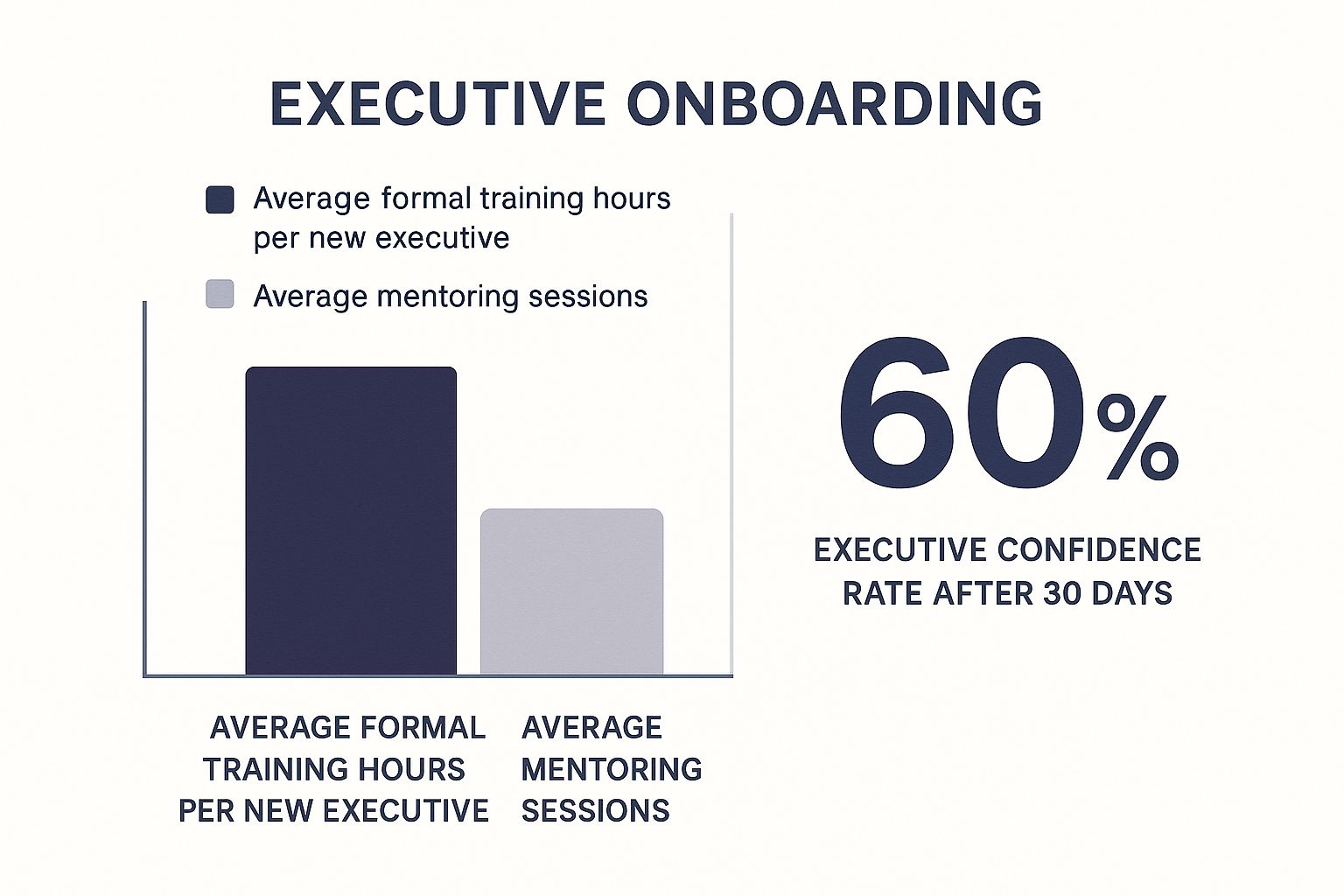

The infographic above illustrates some interesting data. Comparing average formal training hours and mentoring sessions for new executives against their confidence levels after 30 days, it reveals a key insight. A balance of formal training with personalized support, such as mentoring, correlates with higher executive confidence.
This data highlights a crucial point: your executive onboarding checklist needs to be adaptable. The needs of an internally promoted executive differ significantly from those of an external hire. A one-size-fits-all approach simply won’t cut it when it comes to successful executive transitions.
The Nuances of Internal Promotions
Internal promotions, while seemingly straightforward, present unique onboarding challenges. The promoted executive already understands the company culture and has institutional knowledge. However, they still need to transition effectively from their previous role and establish a new level of authority with their former peers.
Perhaps most importantly, they need to bring a fresh perspective to their new position. This often means a conscious shift in mindset and behaviors. For example, someone promoted from within a department needs to solidify their role as the leader of the entire team, moving beyond the “former colleague” dynamic. This might involve adjusting communication styles, establishing clear expectations, and actively seeking feedback.
Navigating External Appointments
External hires, on the other hand, face a different set of hurdles. Acclimating to a new organizational culture, building relationships from scratch, and establishing credibility without alienating existing teams are all key challenges. They’re also entering a new landscape of internal politics and power dynamics.
This situation requires a focused onboarding approach to building trust and understanding the inner workings of the organization. Pairing an external hire with a “culture buddy”—a designated colleague who can provide insights into the company’s unwritten rules and norms—can be extremely helpful.
Checklist Modifications For Success
To address these distinct transition needs, your onboarding checklist requires specific modifications. The following table summarizes key differences in approach for internal promotions versus external hires.
To help illustrate these differences, let’s examine a comparison of the two approaches:
| Onboarding Element | Internal Promotion Approach | External Hire Approach | Common Pitfalls |
|---|---|---|---|
| Focus | Shifting mindset and expanding scope of influence | Cultural acclimation and relationship building | Assuming prior knowledge for internal hires; neglecting cultural integration for external hires |
| Key Activities | Leadership development programs; peer-to-leader transition coaching | Introductions to key stakeholders; cultural immersion activities | Focusing too much on technical skills; overwhelming with information |
| Metrics | Influence on team dynamics; adoption of new leadership behaviors | Stakeholder feedback; network development | Measuring success solely on short-term results; overlooking cultural fit |
| Support | Mentorship from senior leaders; peer support groups | Assigned mentor or buddy; structured integration plan | Lack of clear expectations; insufficient support |
This table provides a clear framework for adapting your onboarding process. It highlights the distinct needs of each type of executive transition, allowing you to tailor your approach for optimal success.
For further insights and best practices, you might find this resource helpful: How to master executive onboarding for modern leadership success.
By tailoring your executive onboarding checklist, you provide the targeted support each new leader needs to thrive. This customized approach not only facilitates a smooth transition but also maximizes the impact of your new leadership talent. A well-structured executive onboarding plan is a crucial investment in the future of your organization.
Measuring Success: Is Your Executive Onboarding Working?
After implementing your executive onboarding checklist, how do you know if it’s truly effective? Evaluating success requires a multifaceted approach. It’s about looking at the whole picture, not just time-to-productivity. You need to analyze both quantitative data and qualitative feedback to truly understand your program’s impact.
Quantitative Metrics That Matter
While time-to-productivity is a common metric, it only offers a limited snapshot. More insightful quantitative measures include:
- Goal Achievement: Track progress towards pre-defined 90-day and annual goals. This offers concrete evidence of integration and impact.
- Stakeholder Surveys: Use quantitative surveys to gauge stakeholder perceptions of the executive’s performance and integration.
- Decision-Making Effectiveness: Analyze the quality and timeliness of decisions during the first six months to see how quickly they’re grasping the business.
- Retention Rates: While not solely due to onboarding, tracking retention rates for executives hired within a certain timeframe can reveal long-term program effectiveness.
Qualitative Assessments For Deeper Insights
Numbers tell one side of the story. Qualitative assessments offer a richer, more nuanced understanding.
- Executive Interviews: Regular check-in interviews offer insights into the executive’s challenges, successes, and overall experience. These conversations can uncover hidden issues.
- 360-Degree Feedback: Gathering feedback from superiors, peers, and direct reports provides a holistic view of integration and performance.
- Observational Data: Documenting interactions in meetings and daily activities can reveal patterns and insights other methods miss.
Milestone Check-Ins and Ongoing Refinement
Structured milestone check-ins throughout the first year provide regular opportunities to assess progress and adjust as needed. These check-ins should involve discussions around both quantitative and qualitative data.
Leading organizations continuously refine their onboarding approach based on data and feedback. This ensures the executive onboarding checklist stays relevant, effective, and aligned with goals.
Looking for support in building a strong leadership team? Shiny offers a fractional executive marketplace connecting startups with experienced executives. Learn more about how Shiny can help your startup grow.