



Think of an executive recruiting firm as a specialized matchmaker for your company's most critical leadership roles. They don't just find résumés; they blueprint, source, and secure the high-impact executives who will define your company's future. It's a strategic partnership designed to de-risk the immense pressure of filling C-suite and board-level positions.
But is this traditional, high-cost model the only way? For growing businesses, a more agile solution is often the smarter move. This guide will walk you through the world of executive recruiting and introduce you to fractional leadership—a faster, more flexible alternative.
The Strategic Role of Executive Recruiting Firms


Hiring a top executive is one of the most consequential decisions you can make. The right leader can accelerate growth and inspire innovation. A poor fit, on the other hand, leads to costly setbacks and cultural disruption. Executive recruiting firms exist to tilt the odds in your favor, dramatically increasing the probability of a successful, long-term placement.
Unlike general staffing agencies, these firms concentrate exclusively on senior leadership. They operate less like a job board and more like a strategic consultancy, diving deep into your company's vision, challenges, and culture to build a precise profile of the ideal leader.
Beyond the Public Job Market
A key advantage executive search firms offer is their access to passive candidates. These are the A-players—high-performing executives who are successful in their current roles and not actively looking for a new job. You won't find them browsing LinkedIn ads.
Recruiting firms cultivate vast, confidential networks to identify and approach these top-tier professionals discreetly. Think of them like a luxury real estate agent with a pocket full of off-market listings; they find the perfect fit for a discerning client with very specific needs.
The Retained Search Model
The most common way to engage a top-tier executive recruiting firm is through a retained search. In this model, your company pays an upfront fee to secure the firm's exclusive services for a specific search. This fee, typically a percentage of the executive's first-year compensation, guarantees a dedicated team and a comprehensive, confidential process.
This model is the go-to for:
- Large corporations needing to fill C-suite positions with absolute confidentiality.
- Private equity firms looking to place proven leaders into their portfolio companies to drive growth or turnarounds.
- Organizations seeking highly specialized roles where the talent pool is exceptionally small.
To give you a clearer picture, here's a quick summary of what traditional executive recruiting looks like.
Traditional Executive Recruiting At A Glance
| Aspect | Description |
|---|---|
| Engagement Model | Primarily retained search, requiring an upfront fee and exclusivity. |
| Candidate Pool | Focuses on passive candidates—top performers not actively job hunting. |
| Process | Deeply consultative, involving market mapping, competitor analysis, and multi-stage vetting. |
| Typical Roles | C-suite (CEO, CFO, CTO), Board of Directors, VPs, and other senior leadership. |
| Client Profile | Large corporations, private equity firms, and organizations with highly specialized needs. |
This table highlights the high-touch, dedicated nature of the traditional model. It's a significant investment because it signifies a deep partnership.
A retained search ensures the recruiting firm invests significant resources—market mapping, competitor analysis, and multi-stage vetting—to deliver a shortlist of impeccably qualified candidates.
The demand for this specialized service is booming. The global executive recruiting market is a massive industry, with the U.S. market alone projected to hit $10.3 billion in revenue in 2025. This trend is set to continue, with the market expected to expand globally at a compound annual growth rate of 6.5% through 2033, according to DataInsMarket.com. This growth is fueled by the increasing complexity of modern business and the fierce competition for specialized executive talent.
This traditional, high-touch model has long been the gold standard for securing permanent leadership. While it's incredibly thorough, its deliberate pace and significant financial commitment raise an important question: is it always the right solution for every company, especially those that value speed and flexibility? For more on this, you might be interested in our deep dive on what makes for expert executive recruiters. Understanding this foundation is key as we explore the specific processes, costs, and modern alternatives available today.
The Retained Executive Search Process Explained
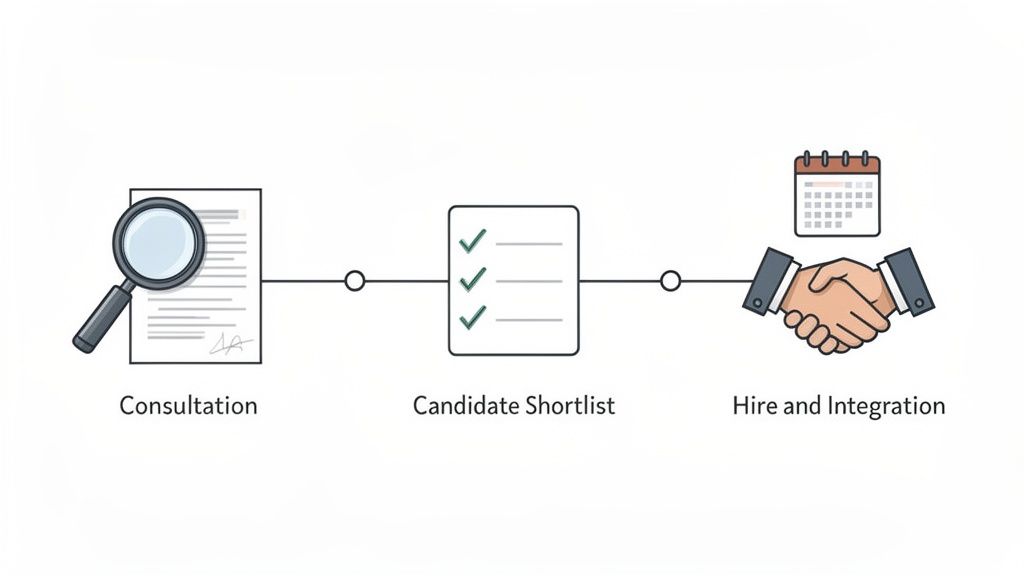
Engaging a top-tier executive recruiting firm for a retained search is a major commitment of both time and money. The process is designed to be incredibly thorough—its entire purpose is to de-risk a critical hire and find a perfect long-term fit.
Think of it like commissioning a custom-built race car. You wouldn't just grab parts off a shelf. You'd work closely with engineers to blueprint every component and test each system with obsessive detail. A retained search follows that same structured, bespoke philosophy. This methodical approach usually takes anywhere from three to six months, reflecting the deep research and vetting required.
Phase 1: Deep-Dive and Strategy Blueprint
The process kicks off not with calls to candidates, but with a deep, consultative discovery phase. The firm’s partners immerse themselves in your business to understand the role far beyond a generic job description. They dig into your company culture, strategic goals, competitive landscape, and the specific hurdles this new leader must clear. This is about defining the role's DNA—the exact mix of skills and leadership style required for success. From this, they create a detailed position specification that becomes the blueprint for the search.
Phase 2: Market Mapping and Candidate Identification
With the blueprint locked in, the firm begins identifying potential candidates. This is where their deep industry networks and research shine. They map the market, pinpointing top performers at your competitors and in adjacent industries who fit the profile. This stage is proactive and confidential. Recruiters make discreet calls to passive candidates—those high-achievers who are crushing it in their current roles. It's a delicate dance of presenting an opportunity that gets the best talent intrigued enough to listen.
Key activities include:
- Comprehensive Market Research: Identifying which companies house the best talent.
- Confidential Sourcing: Quietly tapping into proprietary networks to approach potential candidates.
- Initial Screening: Conducting preliminary conversations to gauge interest and confirm qualifications.
Phase 3: Rigorous Vetting and Shortlist Presentation
Once a longlist is assembled, the firm launches an exhaustive vetting process. This goes beyond résumés to include multiple in-depth interviews, competency assessments, and preliminary reference checks. The goal is to whittle down the field to a highly qualified shortlist of three to five individuals who are skilled and a strong cultural fit. The firm then presents detailed profiles on each finalist to your hiring committee, saving you hundreds of hours of screening time. They remain involved through final interviews, offer negotiations, and onboarding to ensure a smooth transition.
A retained search is fundamentally an intelligence operation. The firm's value lies in its ability to uncover and engage elite leaders who would otherwise remain inaccessible.
How Much Does an Executive Search Really Cost?
Let's address the elephant in the room: cost. Engaging a traditional executive recruiting firm is a serious financial commitment. The industry-standard model is built around a high-cost, high-commitment fee structure tied directly to the candidate’s compensation.
Typically, the fee is 25% to 35% of the executive's total first-year guaranteed compensation. For a senior leader with a $300,000 salary plus a guaranteed bonus, the search firm’s invoice could easily top $100,000. But it’s not just the total amount that matters; it’s how you pay that fee.
The Standard Retained Fee Model
With a retained search, the fee is usually broken down into non-refundable installments. This structure guarantees the firm's commitment but places all the initial financial risk on your company.
Here’s how it typically plays out:
- First Installment: Paid at the beginning to officially kick off the search.
- Second Installment: Due when the firm presents the shortlist of candidates, usually 30 to 60 days in.
- Final Installment: Paid once your chosen candidate accepts the offer.
This means you could be out two-thirds of the total fee—potentially over $60,000—long before your new hire starts their first day.
For a growing company, this non-refundable, phased payment model demands serious financial planning. It locks you into a long and expensive process, whether or not you land the perfect fit.
Comparing Leadership Hiring Costs
The steep price of a retained search is just one piece of the puzzle. When weighing your options, you must consider the total investment of money, time, and internal resources. A retained search is incredibly thorough, but it's also notoriously slow. Other approaches offer a different balance of speed, cost, and risk.
Here's a quick side-by-side comparison:
| Hiring Method | Typical Cost | Time to Hire | Key Benefit |
|---|---|---|---|
| Traditional Retained Search | 25-35% of 1st Year Compensation | 3-6 Months | Deep vetting and access to passive candidates. |
| In-House Recruiting | Internal team salaries + tools | Varies Greatly | Full control over the process and brand messaging. |
| Fractional Executive Marketplace | Flexible hourly or project rates | 1-3 Weeks | Speed, cost-efficiency, and on-demand expertise. |
This comparison clarifies that while executive recruiting firms offer unparalleled depth, their model doesn't fit every company's needs. For startups and SMBs that need immediate impact without a massive upfront investment, an agile solution like a fractional executive marketplace is often a much smarter fit.
When a Traditional Firm Isn't the Right Fit

The traditional retained search model has long been the gold standard for finding permanent, C-suite leaders for established corporations. But for a fast-growing business, that powerful engine isn't always the right vehicle for the road ahead.
The very things that make the traditional model so thorough—its deliberate pace, high cost, and singular focus on one full-time hire—can become major roadblocks for startups and SMBs where speed, agility, and smart capital allocation are survival skills.
The Pain Points of a Slow and Costly Process
A $100,000+ fee, with a large portion paid upfront, is a tough pill to swallow for a company that needs every dollar flowing into product development or customer acquisition. That financial strain is compounded by the timeline.
A typical search drags on for four to six months. That’s half a year with a massive leadership vacuum. Critical projects stall, key decisions are delayed, and the company loses precious momentum—all while you wait for the "perfect" permanent hire.
Imagine this: engaging a traditional firm can be like buying a commercial bakery when all you really need is an expert pastry chef to design a new menu for a few days a week. It’s a huge, long-term commitment of resources for what might be a specific, immediate need. You get the whole building when all you really needed was the expertise.
When Agility Outweighs Permanence
Not every leadership gap calls for a full-time, permanent hire. Many pressing business challenges are project-based or demand a specific skill set for a limited time.
Here are a few common business pain points where a full-time executive is simply overkill:
- Urgent Leadership Gaps: Your VP of Sales just left. You need a seasoned pro to stabilize the team and rebuild the pipeline now, not six months from now.
- Specialized Projects: You're gearing up for a Series B fundraise and need a CFO who lives and breathes that world, but only for the next quarter.
- Testing a New Role: You suspect a Chief Marketing Officer could ignite growth, but you aren't ready to commit to a full-time salary until you prove the ROI.
In these cases, the goal is to get top-tier expertise in the door quickly and flexibly. The traditional model wasn't built for this kind of surgical, on-demand support. This is where the concept of fractional leadership becomes a much smarter, more adaptive solution.
Fractional leadership allows you to bring on C-suite talent without a C-suite budget, filling critical gaps with precise expertise exactly when you need it most.
This modern approach tackles the supply-and-demand problem in the executive market. With top-tier talent becoming scarcer, as noted in these recruiting industry trends on IBISWorld, competition is fierce. Fractional marketplaces bypass this bottleneck entirely, offering instant access to a vetted network of on-demand experts.
How a Fractional Executive Marketplace Works
What if you could tap into world-class executive talent completely on your own terms? That’s the promise of a fractional executive marketplace. This model changes the game for startups and SMBs, offering a smarter way to build a leadership team.
Instead of a six-figure, six-month search for a full-time hire, a marketplace connects you with a vetted C-suite leader for a flexible commitment—often just 5 to 25 hours per week. The entire process is built for speed. You can onboard the right expert in days, not months.
The Power of On-Demand Expertise
Think of a fractional executive marketplace as a specialized toolkit for your business. It's a curated platform of proven, independent leaders. When you need a specific tool—say, a CFO to prepare you for a fundraise or a CMO to map out your go-to-market strategy—you can grab the right one for exactly as long as you need it.
This on-demand approach offers several key advantages over traditional executive recruiting firms:
- Immediate Impact: Fill a critical leadership gap in days, maintaining your business momentum.
- Cost Efficiency: Get C-suite brainpower without the burden of a full-time salary, benefits, and equity.
- Total Flexibility: Engagements are built around your needs, whether it's a short-term project, ongoing advisory, or interim leadership.
- A Diverse Talent Pool: Access a huge range of specialists from every function and industry.
For a deeper dive into how this all works, check out our comprehensive guide to fractional hiring. It’s a model that empowers companies to be far more agile and strategic.
A Tech-Driven Matching Process
Modern fractional marketplaces aren't just digital Rolodexes; they are sophisticated platforms that use technology to make the matching process precise and efficient. By using data and algorithms, these platforms can quickly connect you with the ideal executive based on their industry experience, specific skills, and even cultural fit.
The real value of a marketplace is its ability to blend human vetting with technological precision. Every executive is thoroughly screened for a proven track record, but technology is what finds the perfect match for your unique business challenge in record time.
This tech-forward approach is shaking up the recruiting landscape. As noted by industry experts, tech-enabled platforms can access a 50% larger talent pool, close searches 15% faster, and boast accuracy rates three times higher than traditional methods. You can discover more about how technology is reshaping C-suite recruitment trends on trisourceusa.com.
How It Works: A Step-by-Step Overview
Getting an expert through a fractional executive marketplace is refreshingly straightforward:
- Define Your Need: Outline your specific challenge and the expertise you require, from a fractional CFO for financial modeling to a fractional CMO to scale your marketing.
- AI-Powered Matching: The platform’s tech analyzes your requirements and instantly matches you with a shortlist of pre-vetted executives with the right background.
- Review and Connect: Review detailed profiles of your matched candidates, including past wins and deep expertise, then schedule introductory calls directly through the platform.
- Onboard and Execute: Once you find the perfect fit, the platform handles contracts and payments. Your new fractional executive can get started right away, making an impact from day one.
Choosing the Right Leadership Hiring Strategy
You’ve seen the two main paths for hiring senior talent: the slow, deliberate world of traditional executive recruiting firms and the faster, on-demand model of a fractional marketplace. Which one is right for you?
The best choice depends on your company's specific situation. To decide, honestly assess your needs around three key factors: budget, timeline, and scope.
A Simple Framework for Your Decision
Your answers will point you in the right direction. It's about matching the solution to the problem.
- Urgency: If you need an expert making an impact next week, a six-month retained search is a non-starter.
- Budget: If a six-figure, non-refundable fee makes you sweat, it's time to look at more flexible payment models.
- Scope: If you need a pro to guide a fundraise or a rebrand—not run a department forever—a full-time hire is overkill.
This decision tree helps visualize how speed, flexibility, and cost should guide your choice.
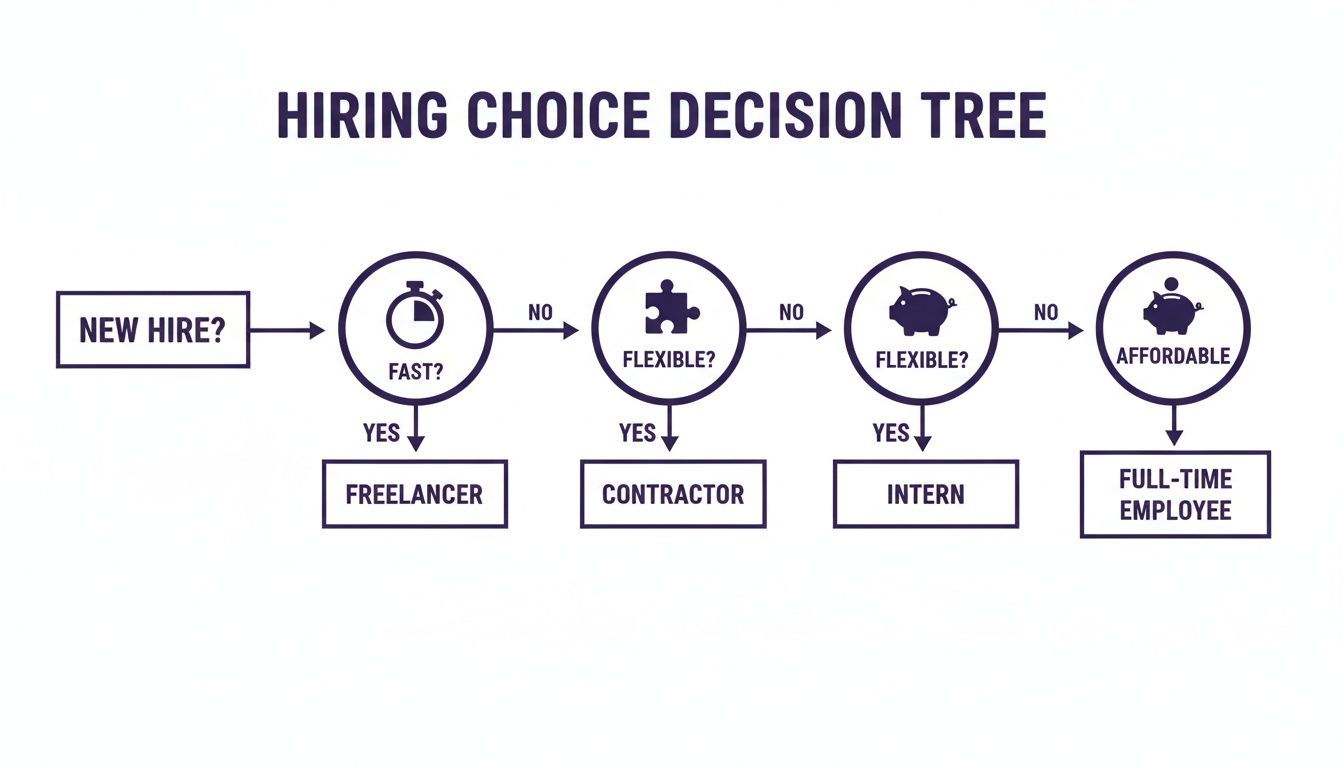

As the chart makes clear, when your top priorities are speed, adaptability, and cost-efficiency, the fractional model is the obvious choice.
Building Your Leadership Team Smarter
If you need immediate, flexible, and budget-friendly expertise, it's time to explore a modern approach. The old-school way isn’t the only path to top-tier talent.
For a deeper dive into the traditional players, check out our guide on the best executive search firms and see how they stack up against newer alternatives.
When your business needs to move fast without breaking the bank, fractional leadership isn't just an alternative—it's a strategic advantage. It allows you to access the right expertise at the precise moment you need it most.
By looking beyond the rigid structure of the old model, you can build a leadership team that's as agile and resilient as your business. It's time to discover how an on-demand partner can deliver the C-suite impact you need, on terms that make sense for your business today.
Your Top Questions About Executive Hiring, Answered
If you're thinking about bringing on a senior leader, you probably have a lot of questions. Below, we tackle some of the most common questions founders ask when weighing their options between a traditional recruiting firm and a flexible, modern approach like a fractional marketplace.
How Long Does an Executive Search Take?
A traditional retained search is a marathon, not a sprint, typically taking three to six months. This timeline is packed with deep market research, confidential outreach, and intense vetting. On the flip side, a fractional executive marketplace is all about speed. Because the talent is already vetted and ready for flexible engagements, you can find and onboard a proven C-suite leader in as little as one to three weeks.
What’s the Real Difference Between a Retained and Contingency Search?
It boils down to payment and partnership.
- Retained Search: This is the premium, exclusive service. You pay a non-refundable fee (25-35% of first-year salary) in installments, guaranteeing the firm's full attention on a critical role.
- Contingency Search: The recruiter only gets paid if you hire their candidate. It's more transactional and common for mid-level roles, not the C-suite.
Fractional marketplaces operate differently, skipping hefty fees for straightforward hourly or project-based rates that a growing business can actually afford.
When Should I Hire a Fractional Executive Instead of a Full-Time One?
A fractional executive is your secret weapon when you need C-suite brains without the C-suite price tag or long-term commitment. It's the perfect move if you need to:
- Plug an unexpected leadership hole, fast.
- Bring in hyper-specialized skills for a key project, like a fundraise or product launch.
- "Try before you buy" by testing a new executive role to see the impact before committing to a full-time hire.
Ultimately, it’s about getting immediate impact with maximum flexibility.
Ready to fill your leadership gap with a proven, on-demand expert? Shiny connects you with a curated network of vetted fractional executives in days, not months. Explore our talent and schedule a consultation today.