


Nine months after launch, a founder has shipped the product, signed 40 paying teams, and watched churn start to rise. Her two co-founders disagree about which metrics matter, while the board asks when the company will add a CFO. Her gut asks a more urgent question: would five hours of senior finance help each week lead to the next stage, or is it time to commit to a full-time executive?
That tension defines fractional leadership. Capital is finite, the next 18 months may determine whether the company raises a Series A or changes direction, and the executive decision often arrives before the company has enough data to make it comfortably. The answer isn't “part-time” or “full-time.” It depends on the actual hours required, how those hours are scheduled, what the fully loaded cost looks like, and how the engagement is structured legally.
The Founder's First Question About Fractional Hours
The founder's problem isn't that she lacks ambition. She lacks certainty. A full-time CFO could bring daily presence, stronger board communication, financial controls, and fundraising support, but a rushed hire could consume scarce cash before the business understands what the role really needs to accomplish.
A fractional executive creates a different option. Instead of buying an entire executive seat, the company buys a defined block of senior judgment. That block might cover cash reviews, runway modeling, board preparation, and a finance operating cadence without committing immediately to a permanent salary, benefits package, equity grant, and long-term employment relationship.
The mistake is treating the decision as a simple price comparison. A five-hour engagement isn't a cheaper version of a full-time CFO. It solves a narrower problem. If the founder needs a weekly financial review and a board-ready forecast, fractional finance may fit. If the company needs daily cash management, investor calls, hiring, controls, and team leadership, the same five hours will create frustration on both sides.
The decision rule: Buy fractional leadership for a defined business outcome, not for the emotional comfort of having an executive title on the org chart.
Four filters make the decision practical:
- Actual workload: What must the executive do each week, and what can the founder or an internal operator own?
- Scheduling math: Can the work fit into protected blocks, or does it require constant availability?
- Fully loaded cost: What will a full-time hire cost after benefits, payroll taxes, equity, recruiting, equipment, and severance exposure?
- Legal shape: Is the person an independent contractor, a service provider under a professional services agreement, or an employee through a PEO or EOR?
The right answer may also change. A company can start with a fractional executive, document the workload, and later convert to full-time when the scope becomes persistent. That approach turns a vague hiring bet into a measured operating decision.
What Fractional Hours Actually Mean
Fractional hours are both a scheduling unit and a pricing lever. A company contracts for a recurring block of senior executive time each week or month, usually with a defined scope, recurring cadence, and ceiling on billable hours. The executive's hourly rate may exceed the apparent hourly cost of a full-time salary, but the company limits its total exposure.
That cap is the important part. A full-time executive brings a 40-hour floor, plus benefits, equity, payroll obligations, recruiting costs, and potential severance. A consultant usually delivers a scoped project, hands over the work, and leaves. An interim leader fills a full-time seat for a defined period while the company searches for a permanent replacement.
Fractional leadership sits between consulting and interim management. It is ongoing, recurring, and senior, but it isn't designed to provide unlimited availability. A fractional CFO might attend the weekly cash meeting, maintain the forecast, prepare board materials, and advise the founder throughout a financing process. A consultant might build the model and hand it over. An interim CFO might own the entire finance function every working day.
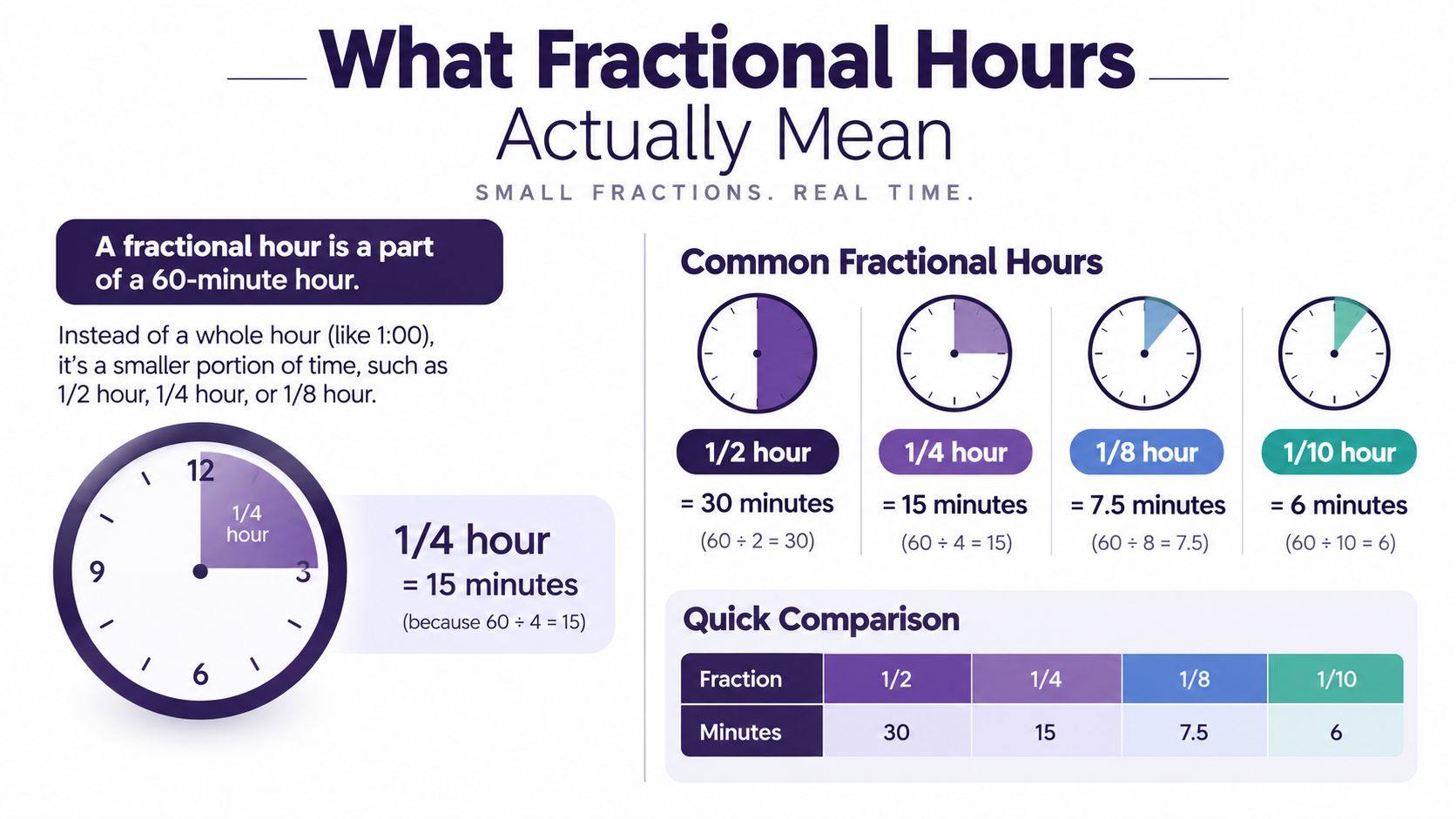

A practical guide to fractional hiring should begin with the scope, not the title. Ask what decisions the executive will make, which deliverables they will own, and how much access the team needs.
Here's the counterintuitive economics. The same senior operator might cost $300 per fractional hour, yet cost $0 per full-time hour once severance is added if the company ends the relationship before the role produces value. The comparison isn't meant to suggest that full-time executives work for free. It shows why the cap matters more than the headline rate. A higher hourly price can still be rational when the company needs only a focused slice of senior expertise and wants to preserve the option to expand, pause, or convert the engagement.
Common Engagement Models From 5 to 25 Hours a Week
The 5 to 25 hour band works best when each tier maps to a business outcome. Founders shouldn't choose a number because it fits the budget spreadsheet. They should choose the smallest commitment that gives the executive enough room to produce the result.
| Hours/Week | Typical Role | Core Deliverable | Actual Hours Billed |
|---|---|---|---|
| 5 to 7 | Fractional advisor | Board preparation, one weekly decision session, and targeted executive guidance | Usually close to the contracted block when the scope stays narrow |
| 10 to 12 | Fractional CFO or CMO | Cash reviews, runway modeling, audit preparation, positioning, or launch strategy | Often expands when the executive must absorb substantial context |
| 18 to 21 | Fractional CRO or COO | One-channel revenue ownership or an operating-system buildout | Practitioners may bill beyond the advertised cap when execution becomes hands-on |
| 25 | Embedded fractional operator | Broad functional leadership with a defined transformation mandate | A realistic upper boundary before the role starts resembling a full-time appointment |
Five to seven hours suits a working CEO who needs a senior sounding board, a monthly board-prep cycle, and one focused session each week. It doesn't suit a finance leader expected to reconcile accounts, manage a team, and answer investor questions between meetings.
Ten to twelve hours can support a recurring operating rhythm. A fractional CFO can review cash weekly, maintain runway assumptions, prepare audit materials, and flag decisions that require founder attention. A fractional CMO can sharpen positioning and build a launch plan, but shouldn't be expected to own every channel, campaign, and agency relationship.
At 21 hours per week, the engagement becomes materially more embedded. A fractional CRO can drive one channel with enough continuity to inspect pipeline quality, coach deals, and establish reporting. A fractional COO can stand up operating routines, fix handoffs, and work with an internal manager. Twenty-five hours is usually the practical ceiling, especially when the executive already knows the founder and accepts the commitment.
The advertised schedule often understates the actual load. A posting may ask for 15 hours, while the practitioner bills 18 to 22 because meetings, context-switching, preparation, and follow-up consume time that founders forget to count. The gap isn't automatically unreasonable, but it must be visible.
Buy the deliverable you can name. If you can't describe what the executive will produce inside the hour block, the budget is probably masking an undefined role.
Scheduling and Time Allocation Best Practices
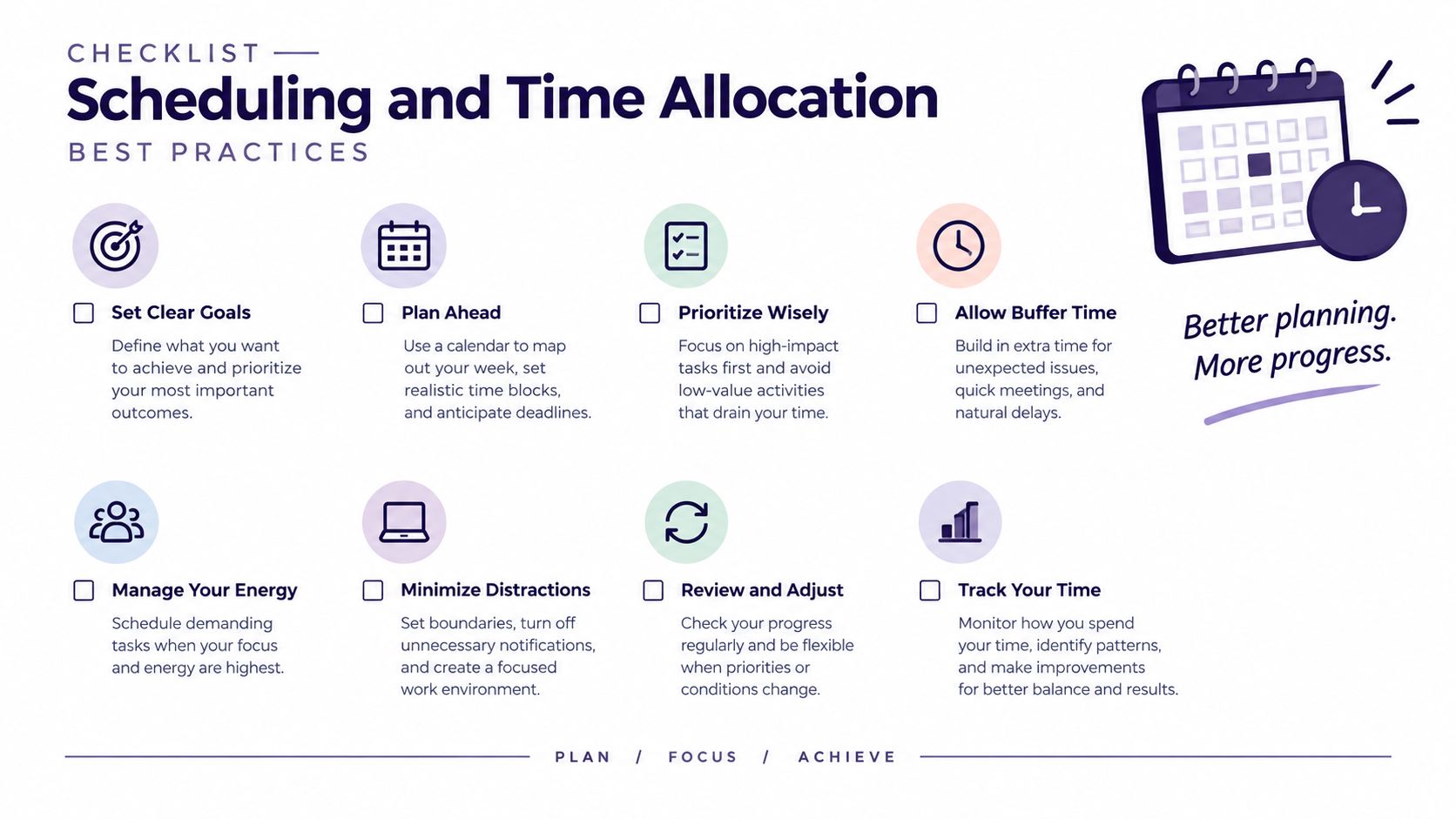
Fractional work fails when the executive becomes permanently reachable without being formally resourced. The solution is an operating cadence that protects attention and makes excess demand visible.
Block the work before the engagement begins. Two half-days can work well for a strategic operator, while a finance leader may need a recurring review window plus a separate deep-work block. Keep strategic work distinct from reactive availability. If every hour can be interrupted, the company will pay for context-switching instead of decisions.
Write down what fits inside the contracted hours:
- Included work: Weekly leadership meetings, named deliverables, decision reviews, and agreed preparation.
- Excluded work: Unplanned projects, repeated executive search support, broad team management, and emergency availability.
- Escalation work: Fundraising, crisis response, or a major systems implementation that requires a new scope and a new hour tier.
Use a short weekly written update, a shared decision log, and a quarterly scope reset. The update should show completed work, blocked decisions, upcoming priorities, and hours used. The decision log prevents the executive from re-litigating the same issue across multiple Slack threads.
Any month where actual time exceeds contracted hours by more than 20% should trigger a direct conversation. The choices are straightforward: remove work, move to the next tier, or begin planning an internal hire. Don't let “just this once” become the operating model.
Asynchronous churn deserves special attention. A Slack thread can pull a fractional executive into a two-hour response loop without anyone deciding that two hours of work has been requested. Set communication windows, identify true emergencies, and define an SLA-style expectation for normal responses. For more practical guidance, see this resource on time management for executives.
Pricing and Cost Comparisons Against Full-Time Hires
Pricing only becomes useful when founders connect it to capacity. A fractional CMO or CFO typically bills $175 to $400 per hour, and a 15-hour-per-week engagement can represent roughly $11,400 to $26,000 per month, based on the cited industry benchmark in fractional executive cost guidance.
A US-based full-time VP or C-suite hire may carry a $220,000 to $400,000 base salary, with 25% to 35% loaded overhead for benefits, payroll taxes, equity, recruiting fees, and equipment. That produces an all-in annual range of roughly $275,000 to $540,000, or $23,000 to $45,000 per month.
| Engagement Model | Monthly Cost Range (USD) | Weekly Hours | Best For |
|---|---|---|---|
| Fractional executive at $175 per hour | Approximately $11,400 at 15 hours per week | 15 | Defined strategic or functional ownership |
| Fractional executive at $400 per hour | Approximately $26,000 at 15 hours per week | 15 | High-seniority, specialized executive work |
| Full-time VP or C-suite hire | Approximately $23,000 to $45,000 fully loaded | 40-hour floor | Daily leadership, team building, and broad accountability |
The fractional option buys flexibility, controlled burn, and access to concentrated expertise. It gives up daily presence, accumulated institutional knowledge, and the bandwidth to participate in every team interaction. The full-time option buys continuity and organizational depth, but the company pays for capacity even when the workload is uneven.
Don't compare an hourly rate with a salary and stop there. Compare the work. A fractional finance leader who owns cash visibility and board reporting may be the right purchase while the company is still defining its finance function. A full-time CFO becomes more compelling when the role requires daily execution, team development, fundraising ownership, and long-term institutional memory.
The break-even point is directional, not universal. Below roughly 25 to 30 hours per week of sustained executive need, fractional leadership usually wins on cost. Above that threshold, full-time employment usually becomes more economical because the company is paying for so much recurring capacity. A consultant rate calculator can help model scenarios, but the final decision should follow the workload rather than the spreadsheet alone.
Legal and Contract Considerations for Fractional Work
The contract should make the operating model explicit. Founders commonly choose among a 1099 independent-contractor arrangement, a professional services agreement, or an interim employment arrangement through a PEO or EOR. The classification risk lives in the relationship, not just the label. Control over schedule, exclusivity, tools, reporting lines, and day-to-day direction can all matter, so counsel should review the arrangement for the relevant jurisdiction.
A professional services agreement should connect to a concise scope-of-work exhibit. That exhibit should name the executive's deliverables, decision rights, meeting cadence, hour cap, renewal terms, and termination process. If the role can expand, the agreement should explain how additional hours are approved instead of allowing informal requests to become implied obligations.
Review the protective clauses before the first invoice:
- IP assignment: Confirm that company-specific work product, models, documentation, and processes belong to the company.
- Confidentiality: Define protected information, permitted access, return or deletion obligations, and handling of sensitive data.
- Non-solicit language: Specify any employee or customer restrictions and their duration, subject to applicable law.
- Indemnification: Clarify responsibility for third-party claims, professional errors, and unauthorized actions.
- Conflict rules: Identify competing engagements and information barriers where the executive serves multiple clients.
Billing mechanics also create avoidable disputes. Timekeeping systems often convert minutes into decimal fractions using quarter-hour increments. One institutional example records 1 to 7 minutes as 0.00 hours, 8 to 22 minutes as 0.25 hours, 23 to 37 minutes as 0.50 hours, 38 to 52 minutes as 0.75 hours, and 53 to 59 minutes as 1.00 hour, as shown in the UTSA timesheet guidance. Federal pay rules also treat the quarter hour as the largest fraction permitted for crediting irregular or occasional overtime, with odd minutes rounded to the nearest quarter-hour under the applicable rule at 5 CFR 551.521.
That rounding can simplify administration, but it can also hide small blocks of work. Define whether admin, CRM updates, preparation, and pitch decks are billable before the engagement starts.
Startup Case Examples in Action
The strongest fractional engagements are narrow enough to govern and important enough to matter. The following scenarios show how the hour commitment should connect to the outcome.
A Series A SaaS company loses its controller mid-quarter. Instead of hiring a permanent finance chief under pressure, it brings in a fractional CFO for 18 hours per week. The executive closes the books, rebuilds the reporting pack, and prepares the next board update inside three weeks. The company buys continuity during a finance gap, not a permanent seat.
A HealthTech startup commits 12 hours per week to a fractional CMO before a hospital-pilot launch. The executive sharpens positioning, aligns the sales narrative with the pilot's buying committee, and creates the launch plan. The engagement is focused on go-to-market strategy rather than full ownership of every marketing channel.
An ecommerce brand with $4 million in annual recurring revenue hires a fractional COO for 25 hours per week after changing suppliers. The operator rebuilds inventory routines, clarifies purchase-order ownership, and establishes exception reporting. Stockouts fall from 9% to under 2% in one quarter, according to the scenario provided for this article.
| Startup Profile | Role | Hours/Week | Monthly Cost Range | Measured Outcome |
|---|---|---|---|---|
| Series A SaaS company | Fractional CFO | 18 | Not specified | Books closed and board update prepared inside three weeks |
| HealthTech startup | Fractional CMO | 12 | Not specified | Positioning and launch strategy prepared for a hospital pilot |
| Ecommerce brand at $4 million ARR | Fractional COO | 25 | Not specified | Stockouts reduced from 9% to under 2% in one quarter |
The shared pattern is more useful than any individual story. Each company bought a specific outcome for a defined hour commitment. None started by asking how to fill an executive seat. They asked what capability was missing, what the executive needed to deliver, and how much access the business could support.
A real engagement should make that same logic visible in writing. If the outcome can't fit in a scope-of-work exhibit, the company probably isn't ready to choose its hours.
When Fractional Hours Are the Right Move
Use this Monday-morning decision rule: choose fractional hours when the work fits a defined deliverable, your runway is under 18 months, or you need senior access faster than a 90-day executive search allows.
Three green lights point toward fractional leadership:
- The scope survives limited bandwidth: The executive can achieve the outcome through scheduled reviews, focused work, and clear decision rights.
- Someone internal can steer priorities: A founder, COO, or functional manager can resolve trade-offs each week.
- The budget supports the engagement: There is room for a $6,000 to $20,000 monthly commitment without starving the rest of the business.
Three red flags point toward full-time hiring:
- Daily firefighting dominates the role: The executive must respond continuously rather than work through a defined cadence.
- Authority depends on constant presence: The person needs to attend every standup, coach the team in real time, or manage daily execution.
- The function touches more than 30% of the company: The role has broad dependencies that make a narrow hour cap artificial.
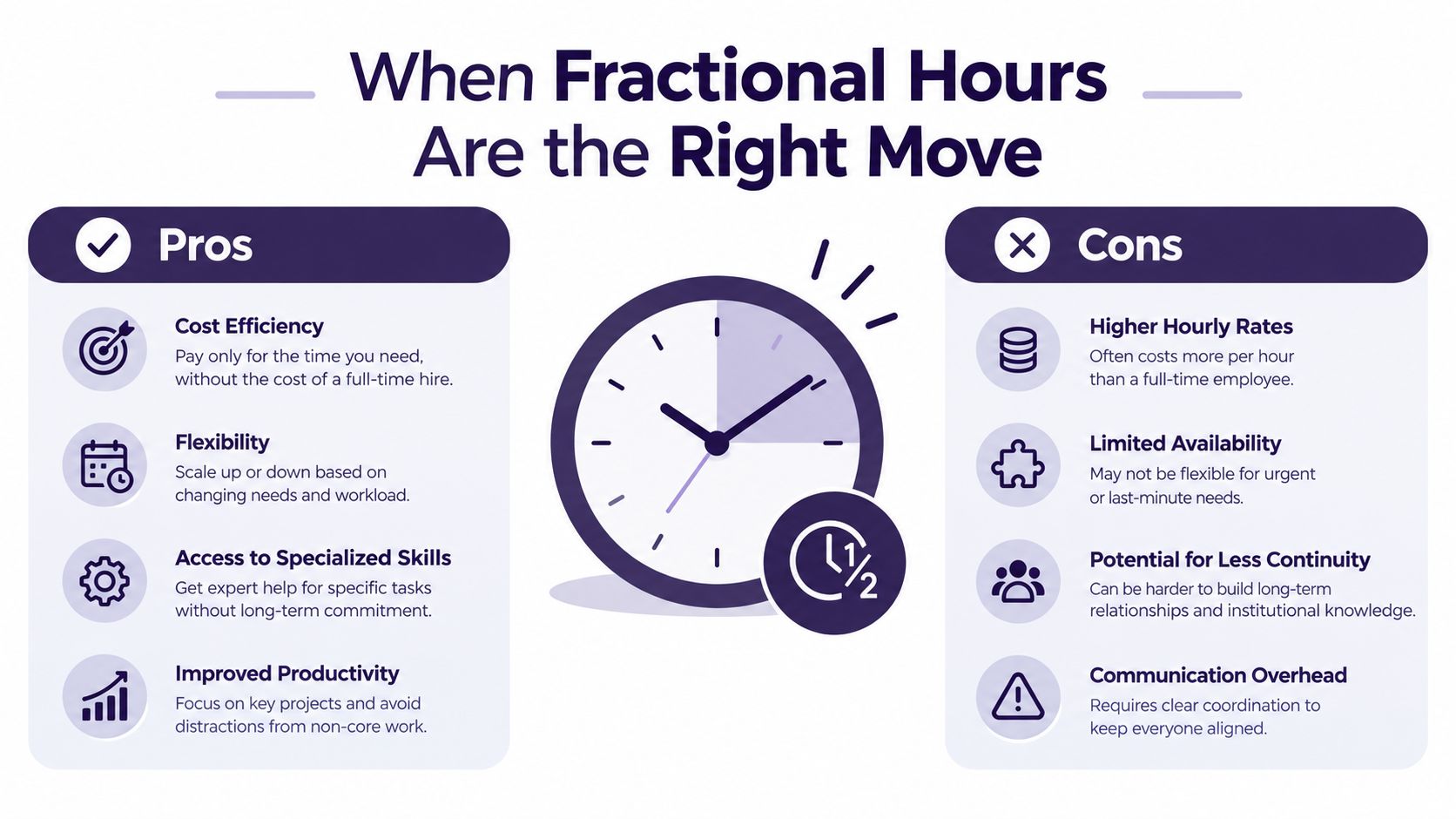

Fractional hours aren't a statement of faith about headcount. They're a risk allocation choice. You trade salary certainty and daily presence for flexibility, and that trade only works when the scope is sharp enough to govern. Shiny can help match that scope with an executive who fits the function, hour commitment, and stage of the business.
Shiny connects startups with experienced fractional executives for focused engagements across finance, marketing, sales, operations, and other functions. Visit Shiny to explore available executive support or schedule a consultation about the right fractional-hours model for your company.