


Companies that contacted an inbound prospect within an hour were more than 60 times as likely to qualify the inquiry as companies waiting at least a day, according to a Harvard Business Review study summarized by Voiso. That measures qualification, not closed revenue, but it exposes a practical problem: buyers can spend more time waiting for sellers than evaluating them.
To shorten your sales cycle, remove those waits before asking reps to make more calls. For a small B2B team, the biggest opportunity may be clearer routing, fewer founder approvals, or information buyers can access without booking another meeting.
Benchmarks to Measure Your Cycle Against
The Gong-reported average B2B sales cycle was 68.7 days in 2024, down slightly from 69.3 days in 2023, according to Acto's B2B sales statistics compilation. That's a reference point, not a deadline your buyers should meet.
A sales cycle tracked inside your CRM also isn't the buyer's entire purchasing journey. According to 6sense's Buyer Experience Report, as reported by Chief Outsiders, the average B2B buying cycle fell to 10.1 months in 2025, from 11.3 months in 2024. Buyers may research, build internal agreement, and consider alternatives before your team creates an opportunity.
Sales cycle benchmarks to compare against
| Benchmark | Value | Context |
|---|---|---|
| Average B2B sales cycle, 2024 | 68.7 days | Down from 69.3 days in 2023, Gong-reported |
| B2B SaaS deals above $100,000 | 84 days, median | 2024 benchmark compilation |
| Enterprise deals above $250,000 | 192 days, average | 2024 benchmark compilation |
| Average B2B buying cycle, 2025 | 10.1 months | Down from 11.3 months in 2024, 6sense |
The deal-size benchmarks distinguish expensive, complex purchases from a blended average. Contract value, industry, procurement requirements, and the number of decision-makers all affect the comparison. Don't treat an average and a median as interchangeable, either: unusually slow deals can pull an average upward.
Establish your own baseline
Pull deals closed during the last 90 days as a practical reporting window. Calculate elapsed days from opportunity creation to close, then separate won and lost outcomes so fast disqualifications don't disguise slow wins.
Segment new business from expansions and renewals. Compare the segment closest to your usual deal size with the relevant reference, and record both average and median elapsed time.
Measurement rule: Write down your starting point before changing the process. Keep win rate and deal value beside cycle length so a faster number doesn't conceal worse selling.
How to Map Your Cycle Stage by Stage
Your CRM stage names tell you where deals sit. Stage history tells you where buyers and sellers lose time. Export that history from HubSpot or Salesforce rather than relying on reps' recollections.
Use this mapping sequence to turn a pipeline report into an operating diagnosis.
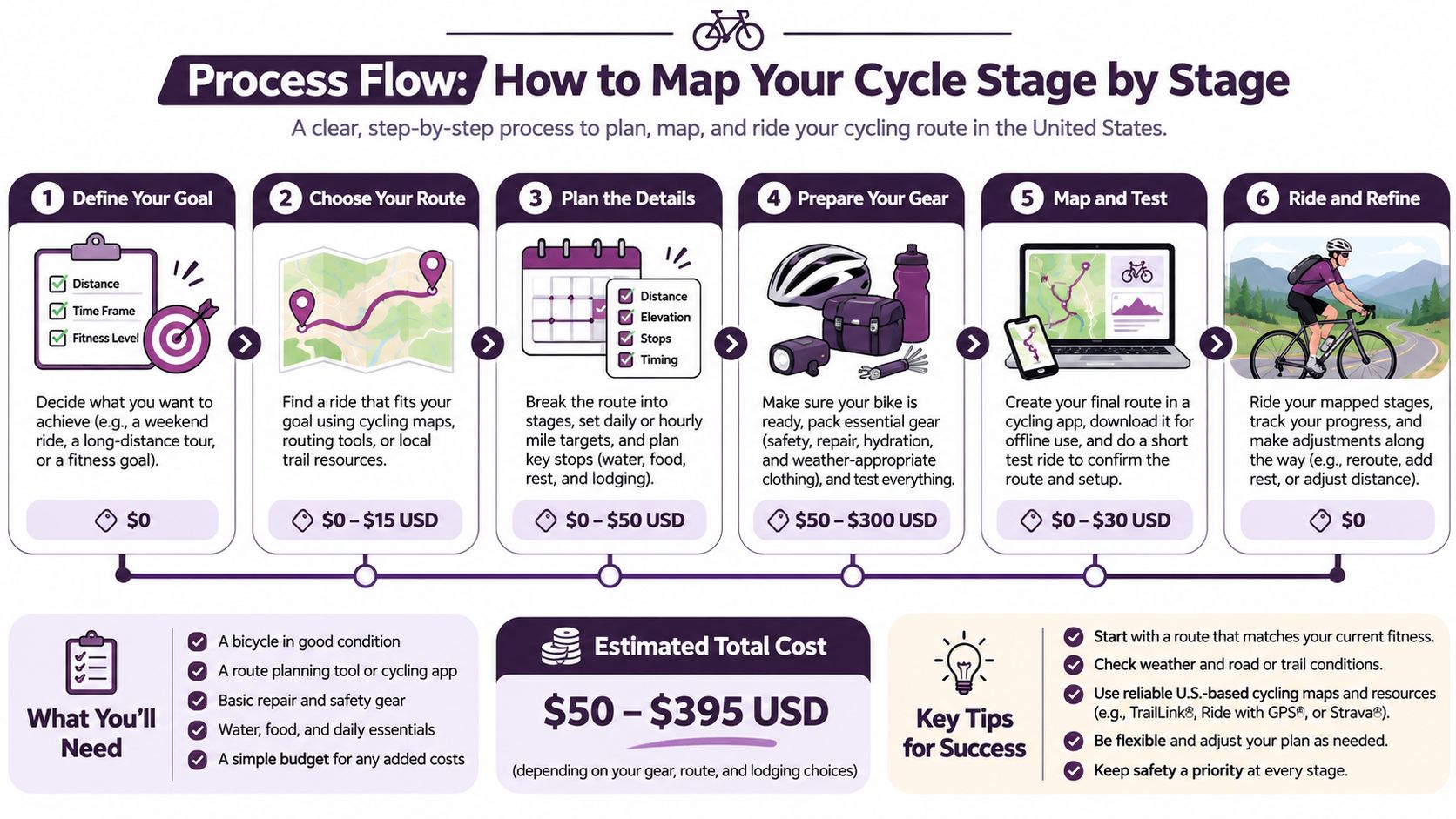

List the actual stages. Include qualification, discovery, proposal, legal, procurement, and close where they apply. Define the buyer evidence required to enter each stage, not just the activity a seller completed.
Calculate stage medians. Use the same recent closed-deal window as your baseline, separating wins and losses. Missing timestamps need cleanup before you draw conclusions.
Flag concentrated waiting. Compare each open opportunity's stage age with its segment's median. Separate time spent doing necessary evaluation from time spent waiting for an answer.
Count buyer touchpoints. McKinsey reported that B2B buying journeys expanded from about 5 distinct marketing and sales touchpoints to as many as 10, according to Dad's Growth Lab's buyer-journey compilation, which also reports the deal-size benchmarks above. Mark interactions that merely repeat information another colleague already collected.
Name every handoff owner. Record who sends the context, who accepts responsibility, and what information travels with the deal. Use a consistent sales pipeline structure so marketing and sales don't maintain incompatible definitions.
Tag stalled opportunities. As an initial management rule, inspect deals older than twice their stage median. Give each a reason code, a named owner, and a dated next action.
Read the map before prescribing a fix
Say a hypothetical journey averages 69 days, including 18 days before qualification. That points toward lead handling, not an immediate need to cut prices or hire sellers.
I'd use any stage consuming more than a third of the journey as an investigation trigger, not a universal health standard. A healthy map makes necessary review time explainable and leaves no stalled deal without ownership.
Respond to Every Inbound Lead Within the First Hour
A same-day reply sounds responsive. It can still mean a buyer waits through most of their working day while another vendor starts a useful conversation.
A Harvard Business Review audit submitted test leads to 2,241 U.S. companies; only 37% responded within an hour, while 23% never responded, according to Vida's account of the study. The related qualification findings distinguish prompt contact from sending an eventual reply.
Lead response windows and qualification impact
| Response window | Share of companies | Qualification impact |
|---|---|---|
| Responded within one hour | 37% of companies | Nearly 7 times more likely to qualify than companies waiting another hour |
| Average reply among companies that answered within 30 days | Not a share measure; average was 42 hours | No separate qualification estimate reported |
| Waited 24 hours or longer | Share not reported | One-hour responders were more than 60 times more likely to qualify |
| Never responded | 23% of companies | No qualification through a response during the study period |
These are qualification findings, not promised revenue multipliers. They justify making response ownership explicit, rather than treating every inbound inquiry as something someone will eventually pick up.
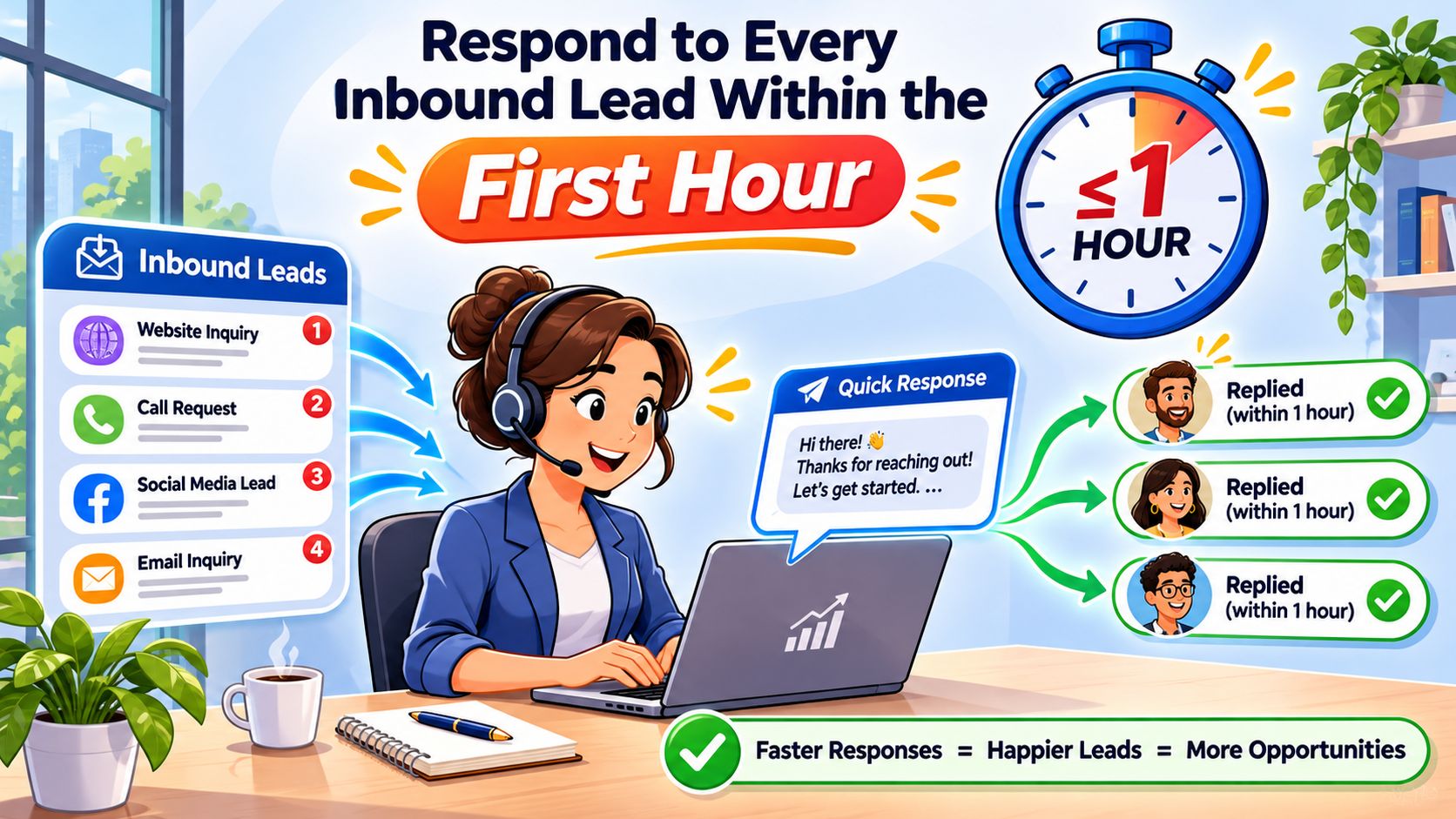
Make speed an operating rule
- Assign an owner and backup. A shared inbox is a destination, not an accountable person.
- Route automatically. Connect form submissions to CRM assignment and a notification the owner monitors.
- Set working-hours coverage. Use a one-hour human-response target, with explicit arrangements for evenings, weekends, and absences.
- Review exceptions weekly. Inspect submission and first-human-reply timestamps, including leads reassigned between colleagues.
An automatic acknowledgment can confirm receipt, but it shouldn't count as a human reply. A useful response answers the buyer's question or proposes an appropriate next step.
Founder-led teams need this discipline because inbound demand competes with hiring, delivery, and finance work. A fractional revenue leader can establish routing and accountability without making the founder approve every inquiry.
Run a simple operational test: inspect your last 20 inbound leads. Check actual human-response delays, then identify whether the problem was detection, assignment, availability, or follow-through.
Qualify Prospects Early and Route Them Right
Before offering a customized demo, establish whether there's a purchase to help with. Curiosity deserves a useful response, but it doesn't automatically justify founder time or a personalized proposal.
Ask questions that change the route
- Problem. What are you trying to fix, and what happens if you leave it unresolved?
- Budget. Is funding available, or who could authorize it?
- Authority. Who evaluates the options, and who signs off?
- Timing. What event or deadline makes a decision necessary?
A practical starting rubric is 0 for unknown, 1 for plausible, and 2 for confirmed on each answer. As a proposed operating rule, route totals below 4 to nurture, totals of 4–5 to exploratory discovery, and totals of 6–8 to a senior seller within one business day.
Those thresholds are a starting design, not a validated prediction model. Allow an override for strategically relevant accounts, but require a written reason so exceptions don't become the normal process.
Before automating the rubric, document the fields and routing logic. LeadBeast's guide can help you find the right qualification platform once you know what the software needs to enforce.
Protect expensive selling time
Consider an illustrative composite, not a documented client: a 12-person SaaS company whose founder books a demo for every form submission. The founder spends two weeks exchanging messages with prospects who have neither a budget nor access to a decision-maker.
Adding a brief qualification conversation before customized demos changes the allocation of time. Prospects without a buying path receive relevant resources and nurture; those with a named owner and decision date receive the founder's attention.
That doesn't mean junior reps should interrogate buyers or reject anyone without an approved budget. They should distinguish a real funding process from vague interest and capture what remains unknown.
Qualification should determine the next useful action, not manufacture reasons to keep every lead in the pipeline.
Review the criteria quarterly against closed-won deals. Use sales funnel optimization to check whether your filters protect capacity or accidentally exclude buyers who need help building a business case.
Let Buyers Self-Serve the Low-Risk Steps
Requiring a call for every question doesn't make a purchase consultative. It makes the buyer coordinate calendars to obtain information you could have made available immediately.
Gartner's 2025 survey found that 67% of B2B buyers preferred a buying experience without a sales representative, according to Sales.co's B2B sales statistics compilation. That's a reason to offer autonomy, not to remove human support from consequential decisions.
Separate information access from judgment
| Let buyers self-serve | Keep assistance available |
|---|---|
| Pricing structure and standard packages | Business-case validation |
| Technical documentation | Integration scoping |
| Standard security questionnaire responses | Buyer-specific security exceptions |
| Standard contract template | Procurement negotiation |
| Implementation overview | Change management planning |
Security materials need sensible access controls. Publish general policies openly where appropriate, but protect sensitive reports and avoid presenting standard questionnaire answers as a substitute for reviewing unusual requirements.
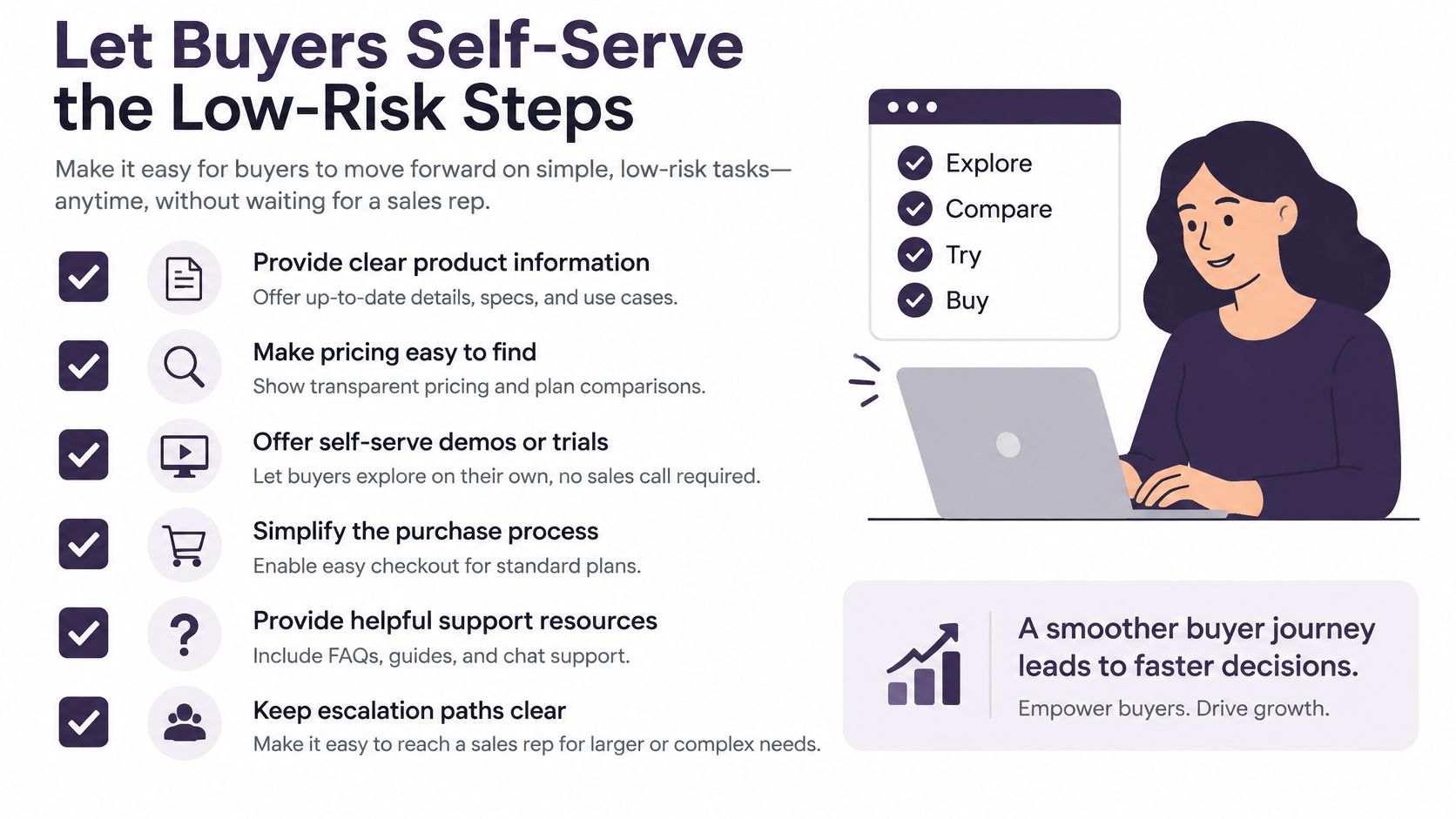
Test whether buyers can finish
List every point where a prospect must book a meeting to obtain information. Review the associated requests and mark which could have been satisfied by an accurate, maintained document.
Then remove a gate and observe completion. Can the buyer compare packages, assess technical fit, or understand onboarding without asking someone to translate the page?
- Measure completion. Track whether buyers finish the relevant task, not merely whether they visit the resource.
- Capture unresolved questions. Repeated clarification requests reveal missing or confusing information.
- Keep an escape route. Give buyers a clear way to reach a person when their situation doesn't fit the standard answer.
A founder shouldn't need to explain the standard implementation sequence on every deal. Senior attention belongs where uncertainty or commercial risk requires judgment.
Before publishing, ask: Which decisions carry enough risk that a senior person must participate, and which are just information gaps wearing a meeting invitation? A fractional sales executive can help draw that boundary without becoming another mandatory approval point.
Streamline Follow-Up and Close Deals Faster
A follow-up should help the buyer complete an agreed action. If it only asks whether they've read your previous email, you haven't given them much reason to respond.
Replace reminders with a shared closing process
Send a same-day recap. Record the decision, next action, owner, and agreed date. Keep unresolved questions separate from confirmed commitments so nobody mistakes discussion for approval.
Build a mutual close plan. Use a shared Google Sheet or document covering legal review, procurement, security sign-off, the authorized signer, and the target signature date. Ask the buyer to confirm dependencies rather than accepting a seller-created schedule as fact.
Escalate exceptions with a purpose. As an initial operating rule, bring deals exceeding twice their stage median to the sales manager within a week. Escalation should secure help with a specific blocker, not create another internal status meeting.
Provide review materials early. Make the contract, security package, and implementation overview available before the buyer's reviewers need them. Assign document owners and version dates, using sales enablement practices to keep sellers from sending obsolete copies.
Make the reply easy. Ask one actionable question and propose a date. For example, ask whether procurement can review the remaining liability clause by Thursday, rather than requesting a general update.
Work the blocker, not the inbox
Say a deal has spent three weeks in legal review. Another reminder to the champion won't resolve a disputed contract clause; a focused call with procurement and the appropriate legal contacts might establish an acceptable position.
Don't involve executives merely to signal importance. Bring them in when they can approve an exception, resolve competing priorities, or accept risk.
Track follow-up reply rate and days from proposal to signature weekly. If replies fall, inspect relevance and rewrite the message before increasing frequency.
Pick One Fix and Start This Week
Choose the bottleneck that leaves qualified buyers waiting longest. Assign response ownership if inquiries sit untouched, introduce written qualification if unsuitable deals consume demos, or publish a maintained resource if buyers repeatedly request the same explanation.
Don't launch every change together. You'll struggle to tell which intervention helped, and the team will have more administrative work before it has a better process.
Give senior help a defined assignment
Use a 30-day diagnostic, followed by a 45-day action plan, as a proposed engagement structure. Review routing, qualification, CRM discipline, pipeline reviews, and stage delays, then concentrate implementation on the most consequential constraint.
An industry compilation from Sci-Tech Today reports measurable fractional-executive results within 30–45 days, versus six to nine months for traditional executive hiring. Treat those estimates as directional industry claims, not delivery guarantees.
Permanent hiring also deserves care. A founder-postmortem report covering 80 Series A and B companies puts the median total cost of a failed VP hire at 27 times base salary; it also reports that 47% of VP hires at Series B–C startups were replaced within 18 months.
Test fit without avoiding accountability
A fractional leader lets you assess senior capability on limited hours before deciding whether a permanent role is justified. Define expected outcomes in advance, including pipeline coverage, forecast accuracy, stage conversion, and who owns implementation.
Shiny connects companies with fractional executives who can lead this work. Companies can find and hire a fractional executive in days, not months, and ramp hours up or down as needs change.
Hiring control remains important. For CFO matches, we facilitate the match, then the client completes the final round of vetting and decides whether to hire that CFO.
Start small: Give the leader a measurable constraint to remove, not a vague mandate to accelerate revenue.
Shiny offers access to fractional executive leadership for companies that need senior judgment without committing to a full-time hire. Visit Shiny to explore your options and book a consultation to map your sales cycle, identify the biggest source of waiting, and choose the first fix.