


Level Up Your Strategy in 2025
Strategic planning is no longer optional; it’s essential for survival. From nimble startups to established corporations, a well-defined strategy acts as a guiding compass, leading organizations toward sustainable growth and success. The evolution of strategic thinking, from its military origins to modern iterative frameworks, has profoundly shaped how businesses operate and compete. But what defines an effective strategy in 2025? It’s the ability to anticipate the future and drive change, not just react to it.
Traditional strategic planning often relied on rigid, long-term plans. However, the rapid rise of Agile methodologies and the accelerating pace of technology require a more dynamic and adaptable approach. Understanding the core principles of strategic frameworks, from internal strengths and weaknesses to external macro-environmental factors, is crucial for navigating today’s complex business environment. These frameworks, honed over decades of practical application, provide powerful tools for decision-making, resource allocation, and achieving ambitious goals.
This article will explore ten powerful strategic planning examples, showcasing both time-tested methodologies and cutting-edge approaches. Whether you’re a startup founder building a scalable business, a small business owner aiming for expansion, or part of a large enterprise navigating industry disruption, these frameworks will equip you with the strategic tools needed to thrive in 2025 and beyond.
Understanding Strategic Frameworks in the Modern Business Landscape
Ten strategic frameworks will be examined, offering valuable insights into effective planning. These frameworks provide a structure for analyzing the current situation, setting objectives, and developing action plans. They offer a systematic approach to strategic thinking, helping organizations to:
- Clearly define their vision and mission
- Identify and analyze key stakeholders
- Assess their competitive landscape
- Develop robust strategies for growth and innovation
Implementing Strategic Frameworks for Long-Term Success
Implementing these frameworks effectively is just as important as understanding their theoretical underpinnings. This involves:
- Adapting frameworks to your specific context: A one-size-fits-all approach rarely works. Tailor the framework to your organization’s unique needs and circumstances.
- Fostering a culture of strategic thinking: Encourage all team members to think strategically, contributing to the planning process.
- Regularly reviewing and updating your strategy: The business environment is constantly evolving. Stay agile and adapt your strategy as needed.
By embracing a dynamic and adaptable approach to strategic planning, organizations can position themselves for success in 2025 and beyond. Regardless of your industry, from SaaS and FinTech to HealthTech and beyond, these frameworks can provide the strategic foundation for achieving your long-term goals.
1. Balanced Scorecard (BSC)
The Balanced Scorecard (BSC) is a strategic planning and management system. It helps organizations translate their vision and strategy into actionable objectives and measurable results. Instead of relying solely on traditional financial metrics, the BSC incorporates a more holistic view of performance.
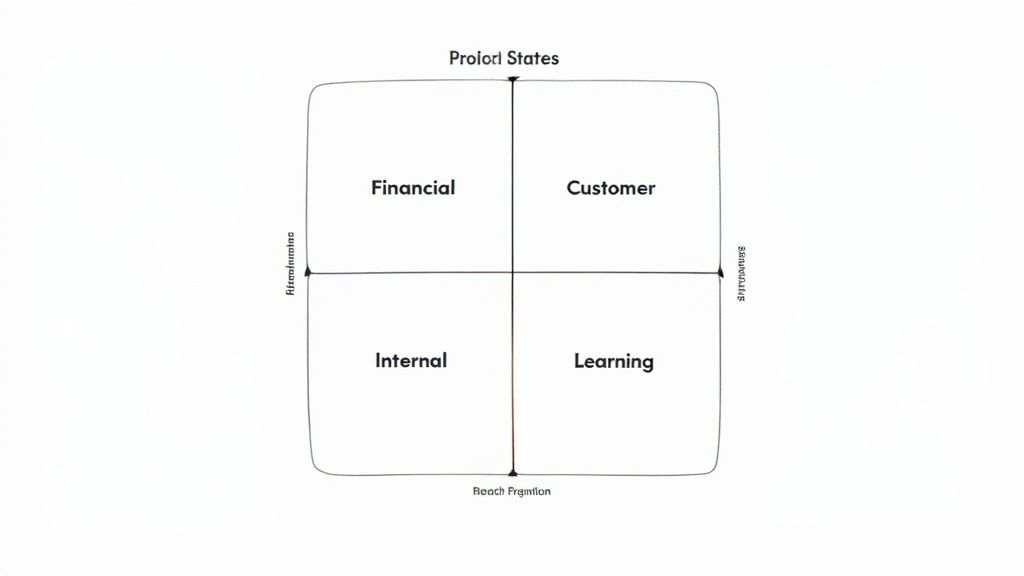

This framework encompasses customer satisfaction, internal processes, and learning & growth, making it a valuable tool for organizations of all sizes. Whether you’re a startup, a small or medium-sized enterprise (SME), or a larger corporation, the BSC can help you achieve sustainable growth. It’s relevant across diverse industries, from SaaS and FinTech to HealthTech.
The Four Perspectives of the BSC
The BSC framework is built upon four interconnected perspectives:
- Financial: This perspective uses traditional financial measures such as revenue growth, profitability, and return on investment (ROI). It addresses the question: How should we appear to our shareholders?
- Customer: This perspective focuses on metrics related to customer satisfaction, retention, and market share. It considers the question: How should we appear to our customers?
- Internal Processes: This perspective evaluates the efficiency and effectiveness of core operational processes. It asks: At what business processes must we excel?
- Learning & Growth: This perspective assesses the organization’s ability to innovate, adapt, and improve. It addresses the question: How will we sustain our ability to change and improve?
These perspectives are linked together in a “strategic map.” This map visually represents the cause-and-effect relationships between objectives. For example, improvements in employee training (learning & growth) can lead to improved process efficiency (internal processes). This, in turn, can result in higher customer satisfaction (customer) and ultimately, increased profitability (financial).
Real-World Examples of BSC Success
The BSC’s effectiveness has been demonstrated through numerous case studies. Mobil (now ExxonMobil), once facing declining profitability, implemented the BSC and climbed from last to first in industry profitability. Duke Children’s Hospital used the framework to reduce costs by $30 million while simultaneously improving patient outcomes. Cigna Property and Casualty Insurance also leveraged the BSC, transforming from significant losses to industry-leading profits.
Development and Growth of the BSC
Developed by Robert Kaplan and David Norton, professors at Harvard Business School, the BSC gained prominence through their work and articles in the Harvard Business Review. The Balanced Scorecard Institute further contributed to its widespread adoption, providing resources and training. The framework resonated with businesses seeking a more comprehensive approach to strategic management beyond solely financial performance.
Advantages and Disadvantages of the BSC
Pros:
- Provides a holistic view of performance.
- Aligns activities with strategic vision.
- Facilitates communication of strategy.
- Enables data-driven decision-making.
Cons:
- Can be complex and time-consuming to implement.
- May require significant cultural change.
- Risk of overemphasis on metrics.
- Requires consistent leadership commitment.
Tips for BSC Implementation
- Executive Alignment: Secure buy-in from leadership.
- Limited Metrics: Focus on 20-25 key performance indicators (KPIs).
- Leading and Lagging Indicators: Use both types of indicators.
- Regular Review: Conduct quarterly reviews and adjustments.
The Balanced Scorecard is a valuable tool for strategic planning and execution. It provides a structured and comprehensive approach for organizations of all sizes. For startup founders, SMEs, and businesses seeking effective leadership, the BSC offers a framework for aligning the entire organization, driving performance, and achieving strategic goals. Its emphasis on multiple perspectives ensures a balanced approach to growth. While implementation requires careful planning, the potential benefits of the BSC make it a worthwhile investment for organizations seeking long-term success.
2. SWOT Analysis
SWOT Analysis is a fundamental strategic planning method used to assess internal and external factors impacting an organization or project. It stands for Strengths, Weaknesses, Opportunities, and Threats, creating a simple but effective structure for understanding your current position and potential future. This makes it an invaluable tool for startups, small to medium-sized businesses, and even large corporations navigating competitive markets.
The core of a SWOT analysis is its 2×2 matrix format. This simple visualization allows for easy sorting of internal factors (Strengths and Weaknesses) and external factors (Opportunities and Threats). Strengths represent internal advantages, such as a strong brand reputation or a highly skilled workforce. Weaknesses are internal limitations, like outdated technology or a lack of marketing knowledge.
Opportunities are positive external factors that could be used for growth, such as emerging markets or new technological advancements. Threats are external negative factors that could hinder progress, like increasing competition or changing government regulations.
Practical Applications of SWOT Analysis
The simplicity and adaptability of SWOT analysis contribute to its widespread use. It can be applied to various organizational levels, from evaluating an entire company to assessing specific projects. Furthermore, it can be conducted individually or in groups, encouraging collaborative strategic thinking.
Real-World Examples:
- Amazon: Amazon regularly uses SWOT analysis to assess potential new markets, identifying opportunities and threats before investing significant resources.
- Tesla: Tesla used SWOT analysis to identify opportunities in the renewable energy sector, helping them become a leader in electric vehicles and sustainable energy solutions.
- Starbucks: When planning international expansion, Starbucks uses SWOT analysis to understand local market dynamics, cultural differences, and potential competition.
Advantages of Using SWOT Analysis
- Easy to Understand: The simple matrix format makes SWOT analysis accessible to everyone, regardless of their experience in strategic planning.
- Cost-Effective: Conducting a SWOT analysis doesn’t require specialized software or expensive consultants.
- Comprehensive View: By considering both internal and external factors, SWOT provides a complete view of the organization’s environment.
- Identifies Competitive Advantages: Analyzing strengths and weaknesses relative to opportunities and threats helps find areas where the organization can excel.
Disadvantages of Using SWOT Analysis
- Potential for Vague Results: Without careful thought and specific data, a SWOT analysis can produce unclear outcomes that don’t offer clear direction.
- Potential for Bias: Confirmation bias and groupthink can distort the analysis, resulting in inaccurate or incomplete assessments.
- Static Analysis: The business world is constantly changing, and a SWOT analysis captures only a moment in time. Regular updates are necessary.
- Lacks Prioritization: SWOT analysis identifies factors but doesn’t prioritize them or provide guidance on addressing them. You might be interested in: Our guide on Strategic Decision-Making Framework.
Tips for an Effective SWOT Analysis
- Be Honest: Acknowledging weaknesses is essential for developing effective strategies.
- Diverse Perspectives: Including perspectives from various departments and levels provides a more complete understanding.
- Use Facts: Avoid generalizations and use data and evidence to support your claims.
- Action-Oriented Planning: Use insights from the SWOT analysis to develop actionable strategies and implementation plans.
History and Relevance of SWOT Analysis
The SWOT framework is often attributed to Albert Humphrey of the Stanford Research Institute in the 1960s. Its later adoption and refinement by management consultants, especially at McKinsey & Company, solidified its place as a standard strategic planning tool. Today, SWOT analysis is taught in almost all business schools worldwide.
SWOT analysis remains relevant and widely applicable. It provides a vital starting point for strategic thinking, enabling organizations to assess their internal capabilities and external environment to make informed decisions and achieve success.
3. OKRs (Objectives and Key Results)
OKRs (Objectives and Key Results) are a valuable goal-setting framework. They help organizations define measurable objectives and track their progress. This approach is particularly useful for startups, SMBs, and rapidly scaling companies. Dynamic industries, such as SaaS, FinTech, and HealthTech, can benefit from the alignment, agility, and growth OKRs promote. This structured approach to goal setting is a vital tool for leadership and team management.
OKRs work by combining ambitious, qualitative Objectives (the what) with 3-5 specific, measurable Key Results (the how). Think of the Objective as the overall goal. Key Results then define how you’ll measure progress toward that goal. For example, an Objective might be “Become the leading provider of cloud-based accounting software for small businesses.” A corresponding Key Result could be “Increase market share by 15%.” OKRs emphasize transparency, fostering a shared understanding of strategic priorities. Objectives and Key Results are typically shared across the organization.
Key Features of OKRs
- Ambitious, qualitative Objectives paired with measurable Key Results: This provides clear direction and tangible metrics.
- Typically follows quarterly cycles with annual themes: This ensures regular progress checks and adaptability.
- Transparent sharing of goals throughout the organization: This fosters accountability and alignment.
- Designed to stretch capabilities (expecting 60-70% achievement): This encourages teams to push boundaries and strive for ambitious goals, fostering innovation and rapid growth.
Pros of Using OKRs
- Alignment: Teams work together toward common goals, maximizing efficiency.
- Ambition: The framework promotes a culture of aiming high.
- Measurable Progress: Key Results offer quantifiable data to track progress and make adjustments.
- Adaptability: The quarterly cycle allows adjustments based on changing conditions.
Cons of Using OKRs
- Tunnel Vision: Overemphasis on OKRs can cause neglect of other important business aspects.
- Gaming Metrics: Teams might prioritize hitting numbers over creating genuine value.
- Cultural Adaptation: Successful implementation requires organization-wide buy-in.
- Difficulty Level: Balancing ambitious goals with achievable ones can be challenging.
Real-World Examples of OKR Use
- Google: Google has used OKRs since 1999, attributing much of its growth to the framework.
- LinkedIn: LinkedIn used OKRs to accelerate its development cycles and improve product delivery.
- Twitter: Twitter adopted OKRs to improve operational focus and navigate rapid scaling.
Tips for Implementing OKRs
- Limit Objectives: Focus on 3-5 objectives per team/individual per quarter.
- Set Ambitious, Achievable Goals: The “sweet spot” is 60-70% achievement.
- Measurable Key Results: Define what success looks like for each key result.
- Regular Reviews: Monitor progress weekly and conduct thorough quarterly reviews.
History and Popularization of OKRs
Andy Grove, former CEO of Intel, popularized OKRs. John Doerr, a venture capitalist at Kleiner Perkins, later championed them. Doerr introduced OKRs to Google, and the company’s subsequent success contributed to their widespread adoption. OKRs provide a proven framework for setting and achieving ambitious goals. They’re especially relevant for businesses seeking rapid growth and needing alignment between strategic vision and execution. By focusing on measurable outcomes and transparency, OKRs empower teams to drive impactful results.
4. Blue Ocean Strategy
Blue Ocean Strategy presents a compelling approach to strategic planning. It’s especially valuable for startups and businesses hoping to disrupt existing markets or create entirely new ones. Instead of competing in crowded “red oceans,” where competition is fierce and profit margins are thin, Blue Ocean Strategy encourages businesses to create “blue oceans“—uncontested market spaces filled with opportunity. This strategy is particularly relevant for startups and SMBs in dynamic sectors like SaaS, FinTech, and HealthTech, where innovation and differentiation are essential for survival and success.

At its core, Blue Ocean Strategy focuses on value innovation: simultaneously pursuing differentiation and low cost. This isn’t about being slightly cheaper or a bit better than the competition. It’s about creating a significant leap in value for buyers, making the competition practically irrelevant. This is achieved through the Four Actions Framework:
- Eliminate: Which industry-standard factors should be eliminated?
- Reduce: Which factors should be reduced below the industry standard?
- Raise: Which factors should be raised above the industry standard?
- Create: Which factors should be created that the industry has never offered?
The Strategy Canvas, a visual tool, helps businesses map their current value curve against competitors and pinpoint opportunities for differentiation. The Six Paths Framework provides a structured approach to reconstructing market boundaries and uncovering untapped potential.
Real-World Examples
- Cirque du Soleil: Cirque du Soleil eliminated animal acts and star performers. They reduced the emphasis on humor and thrill, while raising the artistic and theatrical nature of the performance. This created a sophisticated, intellectual experience, effectively reimagining the circus for adults.
- Nintendo Wii: The Wii created a new market for casual, motion-controlled gaming. It did this by eliminating complex gameplay and expensive hardware, reducing graphical power, and raising ease of use and family appeal. This created an interactive and engaging experience for a wider audience.
- Yellow Tail: Yellow Tail simplified wine selection and marketing. The company eliminated complex jargon and prestigious vineyards. They reduced marketing spend on traditional channels, while raising the ease of selection and approachability. The result was a fun, easy-drinking wine experience for casual consumers.
Pros of Blue Ocean Strategy
- Escapes intense competition in crowded markets.
- Creates new demand instead of fighting for existing customers.
- Results in offerings with distinct value propositions.
- Often leads to higher profit margins and increased growth potential.
Cons of Blue Ocean Strategy
- High risk of failure when creating new markets.
- Difficulty predicting consumer response to novel offerings.
- Success attracts imitators quickly.
- Requires significant creative thinking and market insight.
Tips for Implementation
- Start by mapping your current value curve against competitors using the Strategy Canvas.
- Question industry assumptions about what customers truly value.
- Apply the eliminate-reduce-raise-create grid rigorously to identify opportunities for value innovation.
- Test your innovation with early adopters before a full-scale launch.
Popularity and Evolution
Blue Ocean Strategy was popularized by W. Chan Kim and Renée Mauborgne, INSEAD professors, through their Harvard Business Review articles and the best-selling book Blue Ocean Strategy. The INSEAD Blue Ocean Strategy Institute continues to contribute to the development and application of the framework.
Blue Ocean Strategy deserves recognition because it provides a robust framework for creating and capturing new market space. For startups and SMBs seeking significant growth and a sustainable competitive advantage, particularly in the fast-paced SaaS, FinTech, and HealthTech sectors, the principles of Blue Ocean Strategy offer a potential path to groundbreaking success. While it requires a bold vision and careful execution, the potential rewards of creating a blue ocean are substantial.
5. Hoshin Kanri (Policy Deployment)
Hoshin Kanri, also known as policy deployment, is a strategic planning methodology that helps organizations maintain a sharp focus and ensures everyone works towards the same objectives. Originally developed in Japan, it creates a strong link between high-level strategic goals and the day-to-day tasks of each team and individual. This connection is achieved through a structured process of cascading goals, defining key metrics, and implementing regular reviews, resulting in a powerful system for achieving significant results. This approach is especially beneficial for startups and SMEs looking to optimize their impact with limited resources, making sure every effort contributes to overall strategic success.
Hoshin Kanri’s strength lies in its ability to establish both vertical and horizontal alignment. Vertically, it ensures each department’s goals directly support the company’s overall strategy. Horizontally, it promotes collaboration between different functions, minimizing conflicting priorities and wasted effort. This dual alignment is vital for startups and growing businesses where efficient resource allocation and coordinated teamwork are essential.
Several key features contribute to Hoshin Kanri’s effectiveness:
- Catchball: This collaborative approach encourages two-way communication during goal setting, ensuring everyone understands and agrees upon the objectives. Teams exchange ideas and proposals, refining and clarifying objectives until a consensus is reached.
- X-Matrix: This visual tool illustrates the connections between strategic goals, supporting tactics, key performance indicators (KPIs), and the individuals or teams responsible for execution. It offers a clear overview of the entire strategic plan, simplifying communication and progress tracking.
- PDCA (Plan-Do-Check-Act) Cycles: Hoshin Kanri incorporates continuous improvement through regular PDCA cycles. Consistent reviews and adjustments help keep the plan relevant and adaptable in changing market conditions.
- Nested Hierarchies of Goals: Goals cascade from the top down, creating a clear connection between overall company objectives and individual performance targets. This helps every employee understand their contribution to the bigger picture.
Real-World Success
Hoshin Kanri has a proven track record across various industries. Toyota, known for its lean manufacturing system, uses Hoshin Kanri to maintain its competitive advantage. Hewlett-Packard has used this methodology to improve product development cycles, and Bank of America applied its principles to enhance alignment in retail banking. These examples highlight Hoshin Kanri’s versatility and effectiveness in boosting organizational performance.
Pros and Cons
While Hoshin Kanri offers significant benefits, it requires dedication for successful implementation:
Pros:
- Strong vertical and horizontal alignment across the organization
- Reduced conflicting priorities and wasted effort
- Integration of strategic planning with daily management
- Increased employee engagement through participatory goal-setting
Cons:
- Requires significant discipline and management commitment
- Takes time (typically 2-3 years) to fully implement
- Potential for bureaucracy if not managed carefully
- May require cultural adjustments for some organizations
Tips for Implementation:
- Start Small: Begin with a small pilot project in one department to gain experience and refine the approach.
- Focus on Key Objectives: Prioritize a small number (3-5) of key objectives to concentrate efforts and maximize impact.
- Ensure Two-Way Communication: Embrace the catchball process to foster shared understanding and buy-in.
- Regular Review Meetings: Use visuals like the X-matrix to track progress and identify necessary adjustments. For more on strategic planning, check out our guide on the strategic planning process.
History and Influence
Hoshin Kanri was developed and promoted by Yoji Akao, a Japanese quality management expert. It became a key element of the Toyota Production System and the Total Quality Management (TQM) movement.
Hoshin Kanri is valuable because it provides a strong framework for aligning an organization around its strategic goals, creating a culture of focused execution and continuous improvement. This is especially important for resource-constrained startups and SMEs striving to achieve ambitious goals efficiently.
6. Scenario Planning
Scenario Planning is a powerful method for strategic planning. It helps organizations prepare for an uncertain future by exploring multiple plausible futures. Instead of trying to predict the future, it allows leaders to test strategies against various possibilities. This builds greater flexibility into their plans. This approach is especially valuable in today’s business environment, making it a crucial tool for startups, SMEs, and established companies in sectors like SaaS, FinTech, and HealthTech.
How It Works
Scenario planning involves developing 3-5 distinct narratives of how the future might unfold. These narratives aren’t predictions, but well-researched stories based on critical uncertainties and driving forces. This narrative approach makes potential futures more tangible and facilitates discussion and strategic thinking. The process identifies “robust” strategies – strategies effective across multiple scenarios, regardless of the future.
Key Features
- Development of 3-5 distinct, plausible future scenarios: This avoids focusing only on the most likely or desirable outcome.
- Focus on critical uncertainties and driving forces: Analyzing the key factors shaping the future helps organizations understand the range of possibilities.
- Narrative-based approach: Creating compelling narratives makes scenarios more engaging and easier to understand.
- Identification of robust strategies: The goal is to develop strategies that are resilient and adaptable.
Pros
- Prepares for uncertainty and disruption: Scenario planning builds resilience and adaptability.
- Challenges entrenched thinking: It forces organizations to question existing beliefs and consider other perspectives.
- Identifies early warning indicators: Understanding the signposts for each scenario enables quicker reactions to changing conditions.
- Improves organizational agility: Scenario planning fosters a more proactive and flexible approach to strategy.
Cons
- Resource-intensive: Developing robust scenarios requires time, effort, and expertise.
- Potential for analysis paralysis: Developing too many scenarios can hinder decision-making.
- Requires significant research: High-quality scenarios require solid research and expert analysis.
- Can be challenged by short-term leadership: Scenario planning needs a long-term perspective.
Real-World Examples
- Royal Dutch Shell: Shell used scenario planning in the 1970s to anticipate the oil crisis.
- Singapore Government: The Singaporean government uses scenario planning for long-term national strategic development.
- BUPA Health Insurance: BUPA employed scenario planning to navigate changing healthcare policy.
Tips for Implementation
- Focus on plausible futures: Consider a range of possibilities, not just probable or preferable ones.
- Develop distinct narratives: Make scenarios engaging and memorable.
- Identify signposts: Track developments and adjust strategies accordingly.
- Review and update scenarios: Revisit and revise scenarios as conditions change.
History and Influence
Scenario planning’s prominence is largely due to Pierre Wack, Shell’s planning director. Authors like Peter Schwartz (The Art of the Long View) and firms like Global Business Network (GBN) further popularized it. Its effectiveness in navigating uncertainty makes it invaluable for organizations of all sizes. For startups and SMEs, it offers a crucial advantage in an unpredictable future.
7. McKinsey 7S Framework
The McKinsey 7S Framework is a valuable tool for organizations to analyze their internal workings and ensure all parts work together towards common objectives. It’s especially useful for startups and small and medium-sized enterprises (SMEs) experiencing growth and change. The framework offers a comprehensive view of how different aspects of an organization connect, providing key insights for strategic planning and execution. This is especially beneficial for growing businesses looking to build a strong foundation for lasting success.
The framework identifies seven key internal elements crucial for optimal organizational performance. These elements are categorized as “hard” elements, which are readily defined and managed, and “soft” elements, more intangible and culturally influenced:
- Hard Elements: Strategy, Structure, Systems
- Soft Elements: Shared Values, Style, Staff, Skills
How It Works
The 7S model stresses the interconnectedness of these elements. Changes in one area will undoubtedly affect the others. For instance, a strategic shift, such as entering a new market, may require adjustments to the organizational structure (creating a new division), systems (adopting new CRM software), and staff (recruiting individuals with specific skills). Grasping these relationships is vital for effective change management.
Features and Benefits
- Holistic Approach: The 7S framework promotes a comprehensive perspective of the organization, discouraging a siloed approach to decision-making.
- Interdependency Focus: It emphasizes the essential connections between various organizational components, encouraging a more integrated and efficient approach to change.
- Diagnostic Tool: The framework can help identify inconsistencies and shortcomings that might be hindering performance.
- Change Management Aid: By analyzing the effect of changes across all seven elements, organizations can better plan and manage transitions.
Real-World Examples
Several companies across various industries have utilized the 7S Framework:
- IBM: During its major restructuring in the 1990s, IBM used the 7S model to realign its internal components with its new strategic course.
- Coca-Cola: The company has employed the framework to harmonize its global operations and maintain a consistent brand image across different markets.
- Microsoft: Microsoft utilized the 7S framework during its shift to cloud-based services, modifying its structure, systems, and skills to facilitate this strategic change.
Pros and Cons
| Pros | Cons |
|---|---|
| Comprehensive view of organizational dynamics | Doesn’t directly consider the external environment |
| Useful for change management planning | Simplified view of complex situations |
| Identifies gaps and inconsistencies | Difficulty in objectively measuring ‘soft’ elements |
| Helps diagnose performance issues | Doesn’t directly offer strategic choices |
Tips for Implementation
- Start with Shared Values: These are the fundamental principles that steer the organization and influence all other elements.
- Assess the Current State: Before implementing changes, conduct a comprehensive review of each of the seven elements.
- Identify Inconsistencies: Search for misalignments between elements that could be contributing to challenges.
- Consider Consequences: Carefully evaluate both the intended and unintended outcomes of any changes.
History and Popularization
The McKinsey 7S Framework was created by McKinsey consultants Tom Peters and Robert Waterman in the late 1970s. It gained widespread recognition with their influential book In Search of Excellence, which stressed the importance of aligning internal organizational elements for achieving high performance.
This framework is especially pertinent for our target audience as it offers a practical and efficient way to analyze and enhance organizational alignment—a critical factor for startups and SMEs aiming for growth and success. By comprehending and implementing the 7S model, businesses can cultivate a robust base for sustained performance and navigate the complexities of expanding their operations.
8. PESTEL Analysis
PESTEL Analysis is a crucial strategic planning tool. It provides a structured framework for understanding the broader macro-environmental context. It’s particularly valuable for startups, SMEs, and companies in dynamic sectors like SaaS, FinTech, and HealthTech. In these fast-paced industries, adapting to change is essential for survival. By examining external factors, businesses can identify potential opportunities and threats, leading to more robust strategic decisions.
PESTEL stands for Political, Economic, Social, Technological, Environmental, and Legal factors. Each dimension offers insights into the forces shaping the business landscape:
- Political: Think government policies, political stability, regulations, and trade agreements.
- Economic: Consider economic growth, interest rates, inflation, unemployment, and exchange rates.
- Social: This encompasses demographics, cultural trends, consumer behavior, and social values.
- Technological: This includes technological advancements, automation, research and development, and the rate of technological change.
- Environmental: Factor in climate change, sustainability concerns, natural resources, and environmental regulations.
- Legal: This involves labor laws, consumer protection laws, antitrust laws, and intellectual property rights.
Features and Benefits
PESTEL Analysis offers a comprehensive and structured approach to environmental scanning. It helps businesses develop a forward-looking perspective. Key features include:
- Comprehensive Coverage: It addresses six key macro-environmental dimensions.
- Structured Approach: It provides a systematic framework for analysis.
- Forward-Looking Perspective: Helps anticipate future trends and their impact.
- Customizable: It can be tailored to specific industries and markets.
Pros and Cons of PESTEL Analysis
Analyzing the pros and cons helps understand the value and limitations of PESTEL.
| Pros | Cons |
|---|---|
| Systematic approach to external analysis | Can be overwhelming if too many factors are considered |
| Identifies macro trends impacting strategy | Prioritizing factors can be challenging |
| Anticipates regulatory changes | Requires regular updates |
| Broadens strategic thinking | May not capture complex interrelationships |
Real-World Examples
Several companies use PESTEL to inform their strategic decisions:
- Unilever: Uses PESTEL to inform its global sustainability strategy, adapting to varying regulations and consumer preferences.
- Airbnb: Conducts PESTEL analysis when entering new countries, assessing local regulations and cultural norms.
- Pharmaceutical Companies: Employ PESTEL for R&D planning, anticipating the impact of regulations and technological advancements.
Tips for Implementation
Here are some tips for effective PESTEL analysis:
- Focus: Concentrate on the most relevant factors.
- Combine: Integrate with other tools like SWOT analysis or Porter’s Five Forces.
- Update: Regularly review and update your analysis.
- Collaborate: Involve diverse stakeholders for different perspectives.
Evolution and Popularization
Francis Aguilar introduced the ETPS framework, which later evolved into PESTEL. Its widespread adoption is attributed to academics and consulting firms like the Boston Consulting Group. They refined the framework and demonstrated its practical value.
By using PESTEL Analysis, companies can gain a crucial edge. It empowers them to anticipate and adapt to external forces, making informed decisions and building resilient strategies.
9. Porter’s Five Forces
Porter’s Five Forces is a powerful framework for understanding the competitive landscape of any industry. It’s especially useful for businesses navigating complex markets like SaaS, FinTech, and HealthTech. Whether you’re a startup, an SME, or an established enterprise, this model helps analyze the forces impacting profitability and identify opportunities to strengthen your competitive position. Understanding these forces is crucial for building a lasting competitive advantage.
Porter’s Five Forces examines five key areas that influence industry structure:
- Threat of New Entrants: How easy is it for new competitors to enter the market? High barriers to entry, such as significant capital requirements or established brand loyalty, are advantageous for existing businesses.
- Bargaining Power of Suppliers: How much power do suppliers hold over pricing and terms? A small number of powerful suppliers can exert considerable influence, potentially impacting industry profitability.
- Bargaining Power of Buyers: How much power do customers have when negotiating prices? A concentrated customer base with significant bargaining power can drive down prices and profit margins.
- Threat of Substitute Products or Services: Are there alternative products or services customers might switch to? The presence of readily available substitutes limits pricing power and profitability.
- Competitive Rivalry: How intense is the competition among existing businesses? Factors like a large number of competitors, slow industry growth, or high exit barriers can result in aggressive rivalry and price wars.
Features and Benefits
Analyzing Porter’s Five Forces offers several key benefits:
- Comprehensive Competitive Analysis: Provides a complete view of the competitive landscape by examining five distinct forces.
- Industry-Level Insights: Offers valuable insights into the overall attractiveness and profit potential of a specific industry.
- Understanding Competitive Pressures: Helps understand the root causes of competitive dynamics within an industry.
- Strategic Decision-Making: Informs critical decisions regarding market entry, expansion, and exit strategies.
Pros and Cons
Like any analytical tool, Porter’s Five Forces has both strengths and weaknesses:
| Pros | Cons |
|---|---|
| Identifies competition beyond direct rivals | Can be static and struggle to capture rapidly changing markets |
| Reveals power dynamics in the value chain | Doesn’t account for complementary products/services |
| Framework for anticipating change | Primarily focused on competition, overlooking collaboration |
| Supports long-term strategy development | May underestimate the impact of disruptive innovation |
Real-World Examples
Several well-known companies have leveraged Porter’s Five Forces:
- Apple: Successfully utilized the framework to understand and control key points within the smartphone ecosystem.
- Southwest Airlines: Developed its low-cost carrier strategy based on insights from analyzing the airline industry.
- Netflix: Analyzed the evolving entertainment distribution landscape, shifting from DVDs to streaming.
Tips for Implementation
Here are some practical tips for using Porter’s Five Forces:
- Analyze distinct market segments separately.
- Consider both the current state and potential future shifts in the forces.
- Prioritize the forces based on their specific impact on your industry.
- Use your findings to identify strategies for reducing competitive pressure and improving your market position.
History and Popularization
Developed by Harvard Business School professor Michael Porter, the Five Forces framework was first introduced in his 1980 book, Competitive Strategy. Its subsequent publication in articles within the Harvard Business Review solidified its place as a fundamental tool in strategic management.
By understanding and applying Porter’s Five Forces, businesses can gain a valuable edge. This framework empowers organizations to make informed decisions, proactively shape their competitive environment, and build sustainable advantages.
10. Ansoff Matrix
The Ansoff Matrix, also called the Product/Market Expansion Grid, is a valuable strategic planning tool. It helps businesses map out their growth trajectory. It provides a framework for executives, marketers, and managers to develop strategies. These strategies focus on four key expansion pathways. The matrix’s simplicity and visual clarity make it useful for strategic discussions and decisions across various industries and company sizes. It’s an especially vital tool for startups and SMEs seeking effective scaling strategies.
The matrix is a 2×2 grid. It compares existing and new products against existing and new markets. This structure defines four distinct growth strategies:
- Market Penetration: This involves boosting market share with existing products in current markets. Tactics often include focused marketing campaigns, customer loyalty programs, and competitive pricing.
- Market Development: This focuses on expanding into new markets with existing products. Strategies could include targeting new geographic areas, different demographics, or untapped customer segments.
- Product Development: This strategy introduces new products to existing markets. It requires investment in research and development, product innovation, and a deep understanding of customer needs.
- Diversification: This is entering new markets with new products. It’s the highest-risk strategy because it ventures into unknown territory with untested products.
Real-World Examples of the Ansoff Matrix
The Ansoff Matrix helps businesses balance risk and reward. Market penetration is lowest risk, while diversification is highest. Let’s explore some examples:
- Coca-Cola: Successfully used market development for global expansion, while simultaneously leveraging market penetration in established markets to maintain a leading position.
- Apple: Masterfully blended product development (with a continuous flow of new iPhones) and diversification (venturing into music and payment services).
- Amazon: Seems to have followed the matrix sequentially. Amazon began with market penetration in the book market, then moved to product development with new product categories, followed by international expansion through market development, and ultimately diversified into cloud computing with Amazon Web Services (AWS).
History and Impact of the Ansoff Matrix
Developed by Igor Ansoff, a Russian American mathematician and business manager, the matrix debuted in the Harvard Business Review in 1957. His article, “Strategies for Diversification,” introduced the concept. His 1965 book, Corporate Strategy, further solidified the matrix as a core strategic planning tool. Its simple yet effective framework resonated with businesses seeking a clear and concise approach to growth.
Pros and Cons of Using the Ansoff Matrix
Like any tool, the Ansoff Matrix has advantages and disadvantages:
| Pros | Cons |
|---|---|
| Clear and distinct growth options | Oversimplification of complex market dynamics |
| Balances risk and reward in strategic planning | Doesn’t address resource constraints |
| Simple and easy to understand | Lacks consideration of competitive responses |
| Focuses on key growth dimensions | Ignores practical implementation challenges |
Tips for Implementing the Ansoff Matrix
Here’s how to get the most out of the Ansoff Matrix:
- Start with lower-risk strategies like market penetration. Progress to higher-risk strategies later.
- Align growth strategies with your core competencies.
- Use market penetration gains to fund riskier initiatives.
- Combine the Ansoff Matrix with resource allocation and capability assessments. This will create a more complete and effective strategic plan. For more information, check out this resource: Our guide on Strategic Growth Planning.
By understanding and applying the Ansoff Matrix strategically, businesses can make well-informed decisions. This approach allows for a balanced approach to risk and reward, ultimately leading to sustainable success.
10-Point Strategic Planning Comparison
| Strategy | Implementation Complexity (🔄) | Resource Requirements (⚡) | Expected Outcomes (📊) | Ideal Use Cases (💡) | Key Advantages (⭐) |
|---|---|---|---|---|---|
| Balanced Scorecard (BSC) | High – complex implementation with interdependent measures | High – significant leadership and data commitment | Holistic performance tracking and strategic alignment | Large, mature organizations needing cross-functional insight | Comprehensive view that fosters data-driven decisions |
| SWOT Analysis | Low – straightforward and quick to execute | Low – minimal resource investment | Broad environmental scan that highlights key areas | Preliminary assessments and strategic overviews | Simple, accessible framework offering overall situational insight |
| OKRs | Medium – requires cultural adaptation and periodic reviews | Medium – moderate resource and management commitment | Clear, measurable progress towards ambitious objectives | Fast-paced, innovative organizations valuing transparency | Aligns teams around challenging, quantifiable goals |
| Blue Ocean Strategy | High – involves creative innovation and market redefinition | High – substantial effort in market research and design | Creation of uncontested market spaces with new demand | Organizations in saturated markets seeking differentiation | Breaks away from competition through value innovation |
| Hoshin Kanri (Policy Deployment) | High – structured cascading and long-term commitment | High – intensive planning and continuous review cycles | Integrated alignment from strategy to daily operations | Large, hierarchical organizations focused on sustained improvement | Ensures strategic and operational alignment across all levels |
| Scenario Planning | High – involves detailed exploration of multiple futures | High – requires extensive research and expert insights | Enhanced readiness and flexibility in uncertain environments | Organizations facing high uncertainty or rapid change | Promotes agility by preparing for diverse future scenarios |
| McKinsey 7S Framework | Medium – requires balanced evaluation of interconnected elements | Medium – standard analytical effort across elements | Diagnostic insights into organizational dynamics | Change management and organizational restructuring efforts | Holistic approach addressing both “hard” and “soft” elements |
| PESTEL Analysis | Medium – systematic but can be extensive | Medium – needs ongoing data collection and analysis | In-depth understanding of macro-environmental factors | Strategic planning influenced by external trends | Broad external context analysis supporting proactive strategy |
| Porter’s Five Forces | Medium – structured industry analysis | Medium – moderate analytical effort | Clear insights into market structure and competitive forces | Market analysis and industry attractiveness assessments | Focused evaluation of competitive dynamics |
| Ansoff Matrix | Low – straightforward 2×2 framework | Low – requires minimal resources for planning | Identification of clear pathways for growth | Growth planning for entering new markets or enhancing current ones | Simplicity in mapping risk versus reward for growth strategies |
Ready to Craft Your Winning Strategic Planning?
These ten strategic planning examples – from the Balanced Scorecard and SWOT Analysis to the Ansoff Matrix and Blue Ocean Strategy – provide a powerful toolkit for navigating the complexities of business. By understanding and applying these frameworks, combined with insights from PESTEL analysis, Porter’s Five Forces, and the McKinsey 7S Framework, you can develop a robust strategy that sets your organization up for success now and in the future.
Remember that strategic planning is not a one-time event. It’s an ongoing process of learning, adapting, and refining your approach based on evolving market conditions, competitive pressures, and organizational performance.
Regularly review your OKRs and Hoshin Kanri policy deployment to ensure alignment and progress. Furthermore, consider scenario planning to anticipate potential disruptions and build resilience into your strategy.
Key takeaways include the importance of:
- Data-driven decision-making: Use data analysis and market research to inform your strategic choices.
- Alignment and communication: Ensure all stakeholders understand and are committed to the strategic direction.
- Agility and adaptability: Be prepared to adjust your strategy in response to changing circumstances.
- Continuous improvement: Regularly monitor progress, identify areas for improvement, and refine your approach.
Looking ahead, several trends are shaping the future of strategic planning. These include the increasing use of AI and machine learning for data analysis and predictive modeling, the growing importance of sustainability and social impact, and the need for greater flexibility and agility in response to rapid technological advancements.
Implementing Your Strategic Framework
Successfully implementing these strategic frameworks often requires experienced leadership and guidance. Building a strong executive team can be a significant challenge, particularly for startups and growing businesses. Are you ready to take your strategic planning to the next level and achieve sustainable growth? Shiny offers a unique fractional executive marketplace, connecting you with vetted, experienced executives for 5 to 25 hours a week.
Gain access to a pool of over 650 seasoned professionals across 40+ industries, including SaaS, FinTech, HealthTech, and more, without the high cost and commitment of full-time hires. Streamline your executive recruitment, focus on scaling your business, and achieve your strategic objectives with Shiny. Explore the possibilities and find your fractional executive match today.