



Trying to create content without a plan is like building a house without a blueprint. It’s chaotic, almost always costs more than you expect, and rarely ends up looking the way you envisioned. A real content strategy isn't just a list of blog ideas; it's a documented business tool that connects every article, video, and social post to tangible results, like generating qualified leads and building a brand that high-value customers actually trust.
This guide will walk you through building that blueprint, step by step. We'll show you how to move from random acts of content to a strategic system that drives sustainable growth.
Why Your Business Needs a Content Blueprint
Many ambitious businesses treat content like a box-checking exercise. They publish random blog posts, hoping something will eventually stick. This "spaghetti at the wall" approach isn't just inefficient—it’s a massive drain on resources that leads to inconsistent messaging, a confused audience, and a trail of missed opportunities.
Without a clear framework, your marketing efforts are just spinning their wheels, making it impossible to know what's working and what's a waste of time.
A documented strategy turns content from an expense into a strategic asset. It forces you to get crystal clear on who you’re talking to, what problems you solve for them, and exactly how you'll measure success.
The Real Cost of a Missing Strategy
The consequences of winging it are bigger than most founders realize, and they often stay hidden until it’s too late. The damage usually shows up in a few key ways:
- Wasted Resources: Your team spends hours creating content that has no connection to business goals. You're effectively burning budget and time on assets that generate zero return.
- Brand Inconsistency: With no guiding document, your brand voice, messaging, and even visual style can change from one day to the next. This erodes trust and leaves potential customers scratching their heads.
- Missed SEO Opportunities: A scattered approach fails to build topical authority, making it incredibly difficult to rank for the keywords that matter and attract valuable organic traffic.
A documented content strategy acts as your operational North Star. It ensures that every single piece of content—from a quick social media update to a comprehensive whitepaper—is purposefully moving your business forward.
This is exactly where experienced leadership becomes a game-changer. A seasoned fractional executive acts as the architect for your content blueprint. They bring C-suite expertise to the table to build a sophisticated plan, all without the financial commitment of a full-time hire. They make sure your content engine is built for sustainable, long-term growth.
Ready to build a content strategy that delivers real business results? Our network of fractional executives can provide the strategic leadership you need. Explore our services to find the right expert for your team.
Defining Your Audience and Business Goals
If you start creating content without knowing who you're talking to and what you want to achieve, you're just throwing spaghetti at the wall. It’s a classic recipe for wasted time and money. Before a single word gets written, you have to nail down two fundamental questions: Who is this for? And what’s the point?
Getting this right is the bedrock of a content strategy that actually moves the needle for your business.
Go Beyond Demographics to Understand Your Audience
So many companies stop at surface-level demographics like "B2B SaaS founders, age 30-50." That’s not nearly enough. To create content that genuinely connects, you need to go deeper and build out a detailed buyer persona or ideal customer profile (ICP).
This means moving past the what and getting to the why—the real human drivers behind their decisions.
Let's use an analogy. A fast-food chain knows its customers are hungry. A world-class restaurant knows its patrons are celebrating an anniversary, closing a deal, or seeking a culinary experience. Which one builds more loyalty?
- Pain Points: What are their biggest frustrations at work? What keeps them up at night?
- Motivations: What are their career aspirations? What does success look like for them?
- Questions: What are they typing into Google to solve their problems?
When you understand their world, you can create content that speaks directly to these challenges. Your brand stops being a seller and starts being an invaluable resource, building trust long before they're ever ready for a demo.
Align Content Goals with Business Objectives
Knowing your audience is only half the battle. Your content has to be tied directly to tangible business outcomes. It’s a common pitfall. Globally, 90% of organizations say they have a content strategy, yet a staggering 34% struggle with generating ROI and sales, and 28% fail to resonate with their audience.
Why the disconnect? It usually happens when content goals aren't locked into core business objectives from the get-go. Instead of chasing vanity metrics like social media likes, you need to set meaningful goals. The SMART (Specific, Measurable, Achievable, Relevant, Time-bound) framework is your best friend here.
Mapping Content Goals to Business Objectives
| Business Objective | Content Marketing Goal | Key Performance Indicator (KPI) |
|---|---|---|
| Increase Sales Revenue | Generate Marketing Qualified Leads (MQLs) | Number of demo requests from content |
| Improve Customer Retention | Increase Product Adoption & Engagement | Feature adoption rate, user session duration |
| Build Brand Authority | Become a Top Voice in the Industry | Organic keyword rankings, press mentions |
| Reduce Customer Acquisition Cost | Drive High-Intent Organic Traffic | Conversion rate from organic search |
This kind of mapping ensures that every article, webinar, or case study you produce serves a clear and valuable purpose for the business.
The most effective content strategies are built on a simple premise: every piece of content must have a job to do. Whether that job is to attract a new visitor, capture a lead, or build brand trust, its purpose should be clearly defined and directly linked to a larger business goal.
For example, a fuzzy goal like "increase brand awareness" becomes a powerful, actionable objective when you get specific: "Increase organic traffic from our target ICP by 20% in the next quarter by publishing four in-depth articles targeting their key pain points."
This level of precision is what separates content that’s just noise from content that becomes a critical part of your overall growth strategy framework. It turns your content operation into a reliable engine for growth.
Uncovering Your Strategic Edge with Research
Building a content strategy that actually works starts with intelligence gathering, not just grabbing a bunch of data. It’s about deeply understanding the competitive landscape so you can find those golden opportunities to offer something genuinely unique. Think of this research phase as your compass—it points you away from the noisy, overcrowded topics and toward the content gaps your audience is desperately waiting for you to fill.
So many businesses fall into the trap of trying to out-publish their competitors. This just leads to a firehose of generic content that accomplishes nothing. The smarter move? Out-think them. That means dissecting what they’re doing well, but more importantly, identifying what they are completely ignoring.
Analyzing Your Competitors Strategically
The point of checking out the competition isn't to copy them. It's to find their blind spots. A fractional leader I worked with a while back put it perfectly: “Your best content ideas often come from the questions your competitors aren't answering.” This is a massive part of figuring out how to create a content strategy that hits the mark.
Start by manually reviewing the content of your top three competitors. Don't just skim the headlines; really dig in and look for patterns.
- Content Formats: Are they all-in on blog posts? What about video, case studies, or webinars? If everyone is writing and no one is creating video, that could be a huge opening for you.
- Topic Focus: What are the core themes they absolutely own? If a competitor dominates the conversation on "project management software," going head-to-head is a losing battle. Instead, look for a niche they’ve overlooked, like "project management for creative agencies."
- Audience Engagement: Are people actually commenting or sharing their stuff? Low engagement is a classic sign that the content, while maybe technically fine, isn't connecting with what the audience truly needs or cares about.
This quick audit will show you exactly where the market is saturated and where untapped potential is just sitting there.
Finding Untapped Opportunities with Keyword Research
Once you have a feel for the competitive terrain, it’s time to dig into keywords. But here’s the critical shift you need to make: focus on user intent, not just keyword volume. A keyword with a huge search volume is worthless if the person searching has no interest in what your business actually does.
You don't need a bunch of expensive tools to get this right, either. Start with Google. The "People Also Ask" and "Related Searches" sections are goldmines for understanding the real follow-up questions your audience has. Tools like AnswerThePublic are also incredible for visualizing all the questions and comparisons people are searching for in your space.
The goal isn't just to find what people are searching for, but to understand why they are searching for it. Someone looking for a "content strategy template" wants a tool, while a person searching for "how to measure content ROI" has a complex business problem they need to solve.
For example, a startup might see the high volume for "SaaS marketing" and chase it. A much more strategic approach is to target a long-tail keyword that screams intent, like "how to reduce customer churn for a SaaS startup." That query signals a specific, high-stakes problem you can solve with expert content, attracting a far more qualified lead.
When you combine sharp competitor analysis with intent-driven keyword research, this whole process stops feeling like a chore and becomes a powerful discovery tool. You're no longer guessing what to create. You're building a content plan based on clear market opportunities, positioning your brand as the only logical resource in your niche.
If you need help turning this kind of market research into a high-impact content plan, our fractional executives live and breathe this stuff. Schedule a consultation to see how we can help you find your strategic edge.
Building Your High-Impact Content Engine
Okay, you’ve done the research. Now comes the fun part: shifting from planning to actually building something. This is where we construct a sustainable system for creating content that consistently pulls in and hooks your target audience. It's less about one-off heroic efforts and more about developing a smart, repeatable workflow.
A really effective way to structure this is the topic cluster model. Instead of just publishing a bunch of disconnected articles, you create a central "pillar" page on a broad topic. Then, you surround it with related "cluster" articles that all link back to that main pillar. This signals your deep expertise to search engines, helping you build authority and improve your SEO performance over time.
Choosing the Right Format for Your Message
The format you choose is just as important as the message itself. A brilliant idea packaged in the wrong format will fall completely flat. The trick is to match the content type to what your audience actually wants and the specific goal of that piece.
For instance, a complex analysis packed with data probably works best as an in-depth blog post or a downloadable whitepaper. A customer success story, on the other hand, truly comes to life in a short, engaging video or a detailed case study that builds trust and provides powerful social proof.
This is where all that upfront strategic research pays off, informing these critical content decisions.
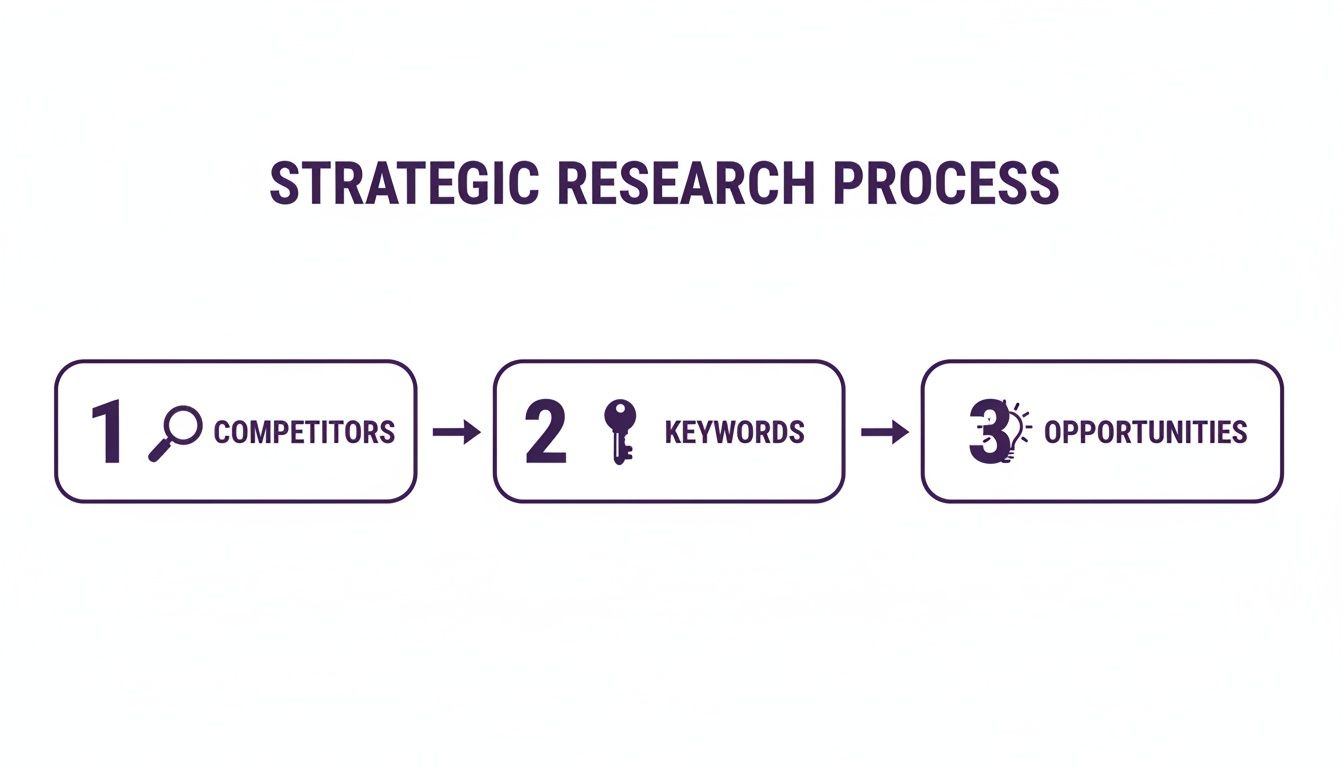

This simple flow shows how digging into competitors and keywords uncovers the opportunities that guide what you create and how you package it.
Work Smarter, Not Harder With Content Repurposing
Creating genuinely high-quality content is a serious investment of time and resources, so you need to squeeze every last drop of value out of each piece. Repurposing is the secret to doing this well. It’s all about taking one substantial piece of content and strategically slicing and dicing it into multiple smaller assets for different channels.
Imagine you host a single one-hour webinar. That one asset can be expertly repurposed into:
- Four blog posts: Each one diving deeper into a key topic discussed during the webinar.
- Ten social media snippets: Short, impactful quotes or video clips perfect for LinkedIn or Twitter.
- A five-part email sequence: Nurturing leads who registered but didn't attend.
A smart content engine doesn’t just create; it multiplies. By repurposing core assets, you extend their reach and lifespan, ensuring your valuable insights connect with the widest possible audience across multiple touchpoints.
The stats absolutely back this up. With 93% of website traffic coming from search engines, SEO-driven articles are non-negotiable. But at the same time, video boasts an 81% positive sales impact, making it an incredibly powerful tool for driving conversions. Mixing up your formats is key.
AI as a Co-Pilot, Not an Autopilot
Let's talk about AI. It can be a fantastic co-pilot in your content creation process. It’s great for speeding up research, generating outlines, and even helping with first drafts. Using AI this way can give your team a significant boost in efficiency and output.
But—and this is a big but—AI cannot replace genuine human expertise and strategic oversight. The final polish, the unique brand voice, and the critical thinking that ensures content actually aligns with business goals? Those are irreplaceable human elements.
This is where a fractional leader shines. They guide the process, ensure quality, and make sure every single piece of content, whether drafted by a human or a machine, serves its strategic purpose. It's a key part of implementing your marketing automation best practices for content production.
Ultimately, building your content engine is about creating a balanced system. It’s where strategic planning, format selection, smart repurposing, and intelligent tool usage all come together to produce real, measurable results.
Amplifying Your Content for Maximum Reach


Let’s be honest: creating exceptional content is only half the battle. So many companies pour everything into creation, hit publish, and then… crickets. If you spend 100% of your effort writing an article and 0% promoting it, even the best piece will just sit there collecting digital dust.
A classic mistake I see all the time is treating distribution as an afterthought. It's not the final step; it's a parallel process.
Think of it like a movie premiere—the marketing push is just as critical as the film itself. The best strategies live by a 50/50 rule: half your time and resources go into making the content, and the other half goes into making sure the right people actually see it.
This means building a promotional mix that isn't just pinning all your hopes on one channel. A genuinely effective plan weaves together a variety of tactics to get your content in front of the right eyeballs.
Crafting Your Distribution Mix
To get maximum reach, you need a strategy that blends different types of media. This ensures you're meeting your audience wherever they hang out while also building long-term assets for your brand. A balanced approach typically includes:
- Owned Channels: These are the platforms you control completely—your website’s blog, your email newsletter, and your company social media profiles. They are perfect for nurturing the audience you already have and building a direct line of communication.
- Earned Media: This is the magic of organic attention you get from others. We're talking about social media shares, press mentions, and guest posts on other industry blogs. It’s incredibly valuable for building credibility and tapping into new audiences you couldn't reach on your own.
- Paid Advertising: This is where you put a budget behind your content through channels like social media ads or pay-per-click (PPC) campaigns. It’s a powerful way to guarantee reach and target specific segments of your ideal customer profile with surgical precision.
A great content distribution plan isn't about being everywhere at once. It's about being in the right places, consistently, with a message that resonates. For example, a B2B SaaS company might focus heavily on LinkedIn for thought leadership while using a highly targeted newsletter to nurture qualified leads.
Adapting to Modern Trends
The promotional landscape is always shifting, and your strategy needs to adapt with it. It's pretty clear where the momentum is heading.
In fact, 46% of B2B marketers expect their budgets to go up next year, with a significant chunk of that going toward video (61% boosting investment) and thought leadership content (52%). This highlights just how critical it is to embrace new formats to stay competitive. You can discover more insights about these content marketing statistics to see the full picture.
Ultimately, a strong promotional push is what transforms your content from a simple blog post into a powerful tool to build brand awareness and drive real business growth.
Need a leader who knows how to amplify your message and drive real results? Our network of fractional executives specializes in building and executing high-impact content strategies. Let's connect and find the right expert for you.
Measuring Performance and Optimizing for Results
Your content strategy shouldn't be a static document you create once and then file away. Think of it as a living, breathing part of your business. To really know if it's working, you have to move past just hitting "publish" and start actively measuring what happens next.
Without tracking the right numbers, you’re flying blind. You can't prove ROI, and you certainly can't make smart decisions about what to do next.
The trick is to build a simple dashboard that monitors what actually matters. It's easy to get lost in vanity metrics, but you need to focus on numbers that tie directly back to your business goals.
We're talking about things like:
- Organic traffic growth
- Lead conversion rates
- Content engagement
These are the signals that tell you if all this effort is paying off.
Creating Your Feedback Loop
One of the most powerful things you can do is run a quarterly content audit. This isn't about beating yourself up over past work; it's a strategic review to see what's hitting the mark with your audience and what's falling flat.
This process helps you spot the winners so you can double down on what works and prune the content that’s not pulling its weight. It creates a powerful feedback loop where real performance data informs your next moves.
For example, maybe you notice a specific case study is driving a surprising number of high-quality demo requests. That's a huge signal. It tells you to create more content just like it—maybe more case studies, or more blog posts diving into the problems that case study solved.
It's a common mistake to see data as a report card. It's not. It’s a compass. It doesn't just tell you where you've been; it points you toward where you need to go.
This is where experienced leadership is a game-changer. A fractional executive lives and breathes this process. They don’t just see numbers on a spreadsheet; they see a story unfolding. Their real value is in translating those analytics into clear, actionable insights that guide your strategy toward long-term, sustainable growth.
If you’re ready to turn your data into a growth engine, our network of fractional leaders can provide the strategic oversight needed to optimize your content performance. Explore our services to find the right expert for your team.
Sticking Points: Your Content Strategy Questions, Answered
Even the best-laid plans run into real-world questions. Once you start putting your content strategy into practice, a few common hurdles always seem to pop up. Let's tackle them head-on with some straight answers.
What’s a Realistic Content Budget?
There's no magic number here, but a solid benchmark is to set aside 25-30% of your total marketing budget for content. That figure needs to cover everything—creation, distribution, tools, and talent.
For startups, it's all about impact over volume. Your budget is far better spent creating one truly exceptional pillar piece and promoting the hell out of it than churning out ten mediocre articles nobody reads.
And remember, your budget isn't just measured in dollars; it's measured in time. This is where a fractional executive can be a game-changer, making sure every ounce of that investment goes toward activities with the highest possible ROI.
How Long Until This Actually Works?
Let's be clear: content is a long game, not a quick win. While a paid campaign might give you an early sugar rush, building a sustainable engine for organic traffic and brand authority simply takes time.
Here's a realistic timeline of what to expect:
- Initial Traction (3-6 months): You should start seeing some glimmers of hope—a little movement in your keyword rankings and a small, but noticeable, uptick in organic traffic.
- Meaningful Growth (6-12 months): This is where the magic starts to happen. You'll begin seeing a consistent flow of leads and conversions coming directly from your content efforts.
- Established Authority (12+ months): After a year of consistently shipping high-quality work, your content machine can become a predictable and powerful source of growth for your business.
The single biggest mistake I see is teams giving up too soon. Consistency is the only thing that separates the strategies that win from those that fizzle out. Stick to the plan, watch your metrics, and commit to the long haul.
When Is It Time to Call in an Expert?
Bringing in outside help is a major strategic move. You should seriously consider hiring an expert, like a fractional CMO, when you hit one of these classic inflection points:
- Your team is maxed out, and you can see the quality of your content starting to slip.
- You don’t have the C-suite experience to tie your content efforts directly to larger business goals.
- Your growth has hit a wall, and you desperately need a fresh set of eyes to figure out what's next.
The right expert won't just speed things up; they'll help you sidestep common mistakes and build a content engine that can actually scale with your company.
Building a powerful content strategy from scratch demands both high-level vision and relentless execution. Shiny connects you with vetted, C-suite executives who bring the strategic leadership you need, without the full-time price tag.
By partnering with a fractional leader, you gain access to decades of experience to build a strategy that works, guide your team, and deliver measurable results. They're the architects who ensure your content blueprint isn't just a document—it's a growth engine.
Ready to see the difference strategic leadership can make? Schedule a consultation to find the right fractional leader for your team.