How to Build Brand Awareness That Drives Real Growth
Building brand awareness isn’t just about getting your name out there. It’s about creating consistent, memorable experiences that make your brand instantly recognizable and—more importantly—trusted by the people you want to reach. It’s the groundwork that turns simple familiarity into customer loyalty and, ultimately, revenue.
But executing a sophisticated brand strategy is a major challenge, especially when you're focused on a hundred other things. This is a common pain point for growing businesses: you know you need senior-level marketing expertise, but the cost and commitment of a full-time executive feel out of reach.
Why Brand Awareness Is More Than Just a Buzzword
Let's be honest—'brand awareness' gets thrown around so much it often feels like a vague marketing goal. But what does it actually mean for your bottom line? In a marketplace crowded with noise, true awareness isn’t just about being seen; it’s about being remembered and trusted.
Think of it like building a reputation. At first, people just learn your name. They only stick around once they understand what you stand for and believe you'll deliver on your promises. When customers recognize and feel good about your brand, they are 81% more likely to trust it, which is the real foundation for any purchase.
The Real Impact on Your Business
Solid brand awareness is the silent force working for you long before a potential customer ever clicks on your website. It's what makes someone choose your product over a competitor's, even when the price is a little higher. It directly shapes customer behavior and fuels sustainable growth.
This guide moves past the theory and offers actionable insights. Here’s how a strong brand presence translates into tangible results:
- Builds Trust and Credibility: Familiarity breeds trust. The more customers see your brand show up in a consistent, positive way, the more credible you become. Simple as that.
- Creates Customer Loyalty: Strong brands forge an emotional connection. This bond turns one-time buyers into repeat customers and passionate advocates who will gladly recommend you to others.
- Shortens the Sales Cycle: When a lead already knows and trusts your brand, you don't have to work as hard to convince them to buy. Awareness warms up your audience, making them far more receptive to your message.
A powerful brand becomes the go-to choice in its category, turning simple recognition into reliable revenue streams. This is where strategic leadership becomes essential.
For many companies, the biggest hurdle is a lack of senior-level expertise to build and execute a sophisticated awareness strategy. This is exactly where fractional leadership can be a game-changer.
Bringing in a seasoned fractional CMO gives you the strategic firepower to accelerate this process. You get access to top-tier talent and proven playbooks without the hefty commitment and cost of a full-time executive.
Ready to build a brand that resonates? Let's dive into the actionable steps.
Define Your Brand Before You Build It
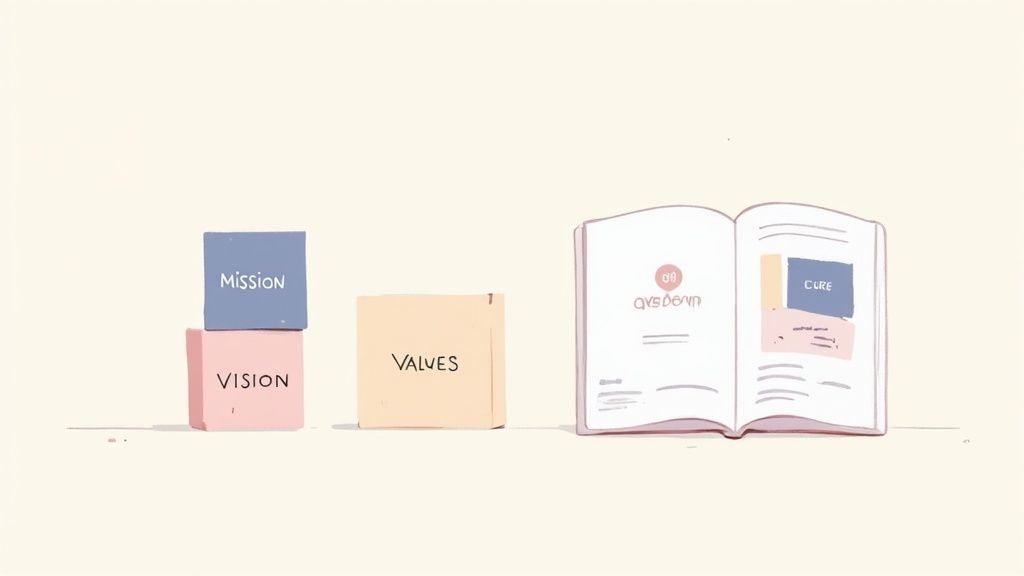
It’s tempting to jump straight into marketing tactics, but before you can build brand awareness, you have to know what your brand actually is. You can't expect customers to "get" you if your own team isn't crystal-clear on what you stand for.
Trying to build awareness without a defined identity is like building a house without a blueprint. Sure, you might throw some walls up, but the result will be shaky, inconsistent, and confusing. This foundational work isn't just fluff; it makes every dollar you spend on marketing later on that much more effective.
Articulate Your Core Identity
Your brand identity is so much more than just a slick logo. It’s the soul of your company. It answers the big questions: why do you exist, where are you going, and what do you believe in? Getting this right ensures everyone on your team is rowing in the same direction.
Start by nailing down these three pillars:
- Mission Statement: This is your “why.” A sharp, clear declaration of your company’s purpose.
- Vision Statement: This is your “where.” A picture of the future you’re trying to create.
- Core Values: This is your “how.” The non-negotiable principles that guide your decisions.
These aren't just for your "About Us" page; they should act as a strategic filter for everything you do. Look at Patagonia. Their commitment to the environment isn’t just a marketing angle. It’s a core value that dictates everything from product development to corporate activism.
A strong identity rooted in clear values builds trust, which is the bedrock of lasting recognition. Without it, awareness is just noise.
This clarity is a massive advantage. Today, a staggering 81% of consumers say they need to trust a brand before they'll buy from it. This stat alone tells you that awareness without credibility is a dead end. You can discover more about how trust impacts brand strength and see why it's so critical.
Translate Principles into Tangible Assets
Once you’ve set that foundation, you can start translating those big ideas into tangible assets—the things your audience will actually see, hear, and experience. Consistency across these assets is what makes a brand stick in people's minds.
This is where a fractional executive can be invaluable. They bring an expert eye to ensure your brand's essence is perfectly captured in every external-facing element, bridging the gap between high-level strategy and on-the-ground execution.
Focus on creating a cohesive system for these key areas:
- Brand Voice and Tone: How does your brand sound? Is it authoritative and professional, or witty and informal? Document it for consistency.
- Logo and Visuals: Your logo is your visual cornerstone. It must be unique, memorable, and representative of your values.
- Design System: Lock down a consistent color palette, typography, and imagery style for a uniform look and feel everywhere.
By defining your brand first, you create a powerful and consistent identity that truly connects with your target audience. It’s what makes your brand awareness efforts meaningful—and ultimately, effective.
Create Content That Builds Authority and Reach
Content is the engine that drives modern brand awareness. But just throwing up a blog or posting randomly on social media is a recipe for getting lost in the noise. The real goal is to build a content ecosystem that cements your company as the go-to expert in your space.
When you consistently deliver value, your audience starts to trust you long before they ever think about buying. This means you have to stop talking about yourself all the time. Your content needs to serve a purpose for the reader—educating them, sparking an idea, or solving a pain point.
Develop a Value-First Content Funnel
Imagine a B2B SaaS company that sells project management software. A scattershot approach of random blog posts just won't cut it. What they need is a structured content funnel that guides potential customers from "who are you?" to "where do I sign up?", building authority at every step.
This is where a strategic, value-first approach makes all the difference.
-
Top of Funnel (Awareness): Start with broad, educational content that solves a common problem. For our SaaS example, this could be a guide like, "How to Improve Team Productivity Without Burning Out Your Employees." It's discoverable, hits a major pain point, and doesn't push the product.
-
Middle of Funnel (Consideration): Develop more specific content that gently introduces your brand as a solution. Think a case study showing how a similar company used your software to slash project completion times by 30%, or a webinar comparing project management philosophies.
-
Bottom of Funnel (Decision): For people ready to buy, offer product-focused content like detailed feature comparisons, quick demo videos, and clear pricing pages that make saying "yes" easy.
By focusing on the customer's problem first, you earn their attention and trust. This transforms your content into a powerful tool for building a credible, authoritative brand.
This strategic layering is what turns passive browsers into engaged leads. The problem is, creating and managing a cohesive content machine requires serious high-level oversight. Many businesses stumble here because they lack the senior expertise to connect content creation to business goals.
Fractional Leadership for Content Strategy
This is exactly the kind of challenge where a fractional leader shines. An experienced fractional CMO can step in to architect a sophisticated content strategy that's wired directly into your growth objectives.
They provide the big-picture vision, ensuring every article, video, and podcast works together to build a powerful, recognizable brand presence. Instead of just churning out content, a fractional executive helps you build a system that consistently attracts, engages, and converts the right audience.
Amplify Your Message on Social and Paid Channels
Creating fantastic content is a huge win, but it's only half the battle. If nobody sees it, it might as well not exist. Getting your message in front of the right eyeballs requires a smart, multi-channel approach that blends organic community building with the pinpoint accuracy of paid ads.
Your organic social efforts are about finding where your people hang out online and joining the conversation. Don't just show up to blast your own horn. The goal is to build a genuine community by engaging in real conversations, celebrating your users, and offering value. This is how you build trust and turn passive followers into die-hard fans.
The Power of Paid Media
While organic social is your foundation, paid media is the rocket fuel. Strategic spending on platforms like LinkedIn or Google lets you introduce your brand to new, highly-relevant audiences. This isn't about setting money on fire; it's about surgical precision.
Paid media is a core driver for building measurable brand awareness. And here's a key insight: sustained campaigns always beat short, sporadic bursts. Brands across the globe invested roughly US$930 billion in advertising for a reason. That consistent visibility is directly tied to brand strength, making up 10% to 35% of a brand’s total equity. You can learn more about how marketing spend impacts brand value and see why it’s not just an expense, but an investment.
When your organic and paid strategies work together, you create a powerful flywheel. Paid ads bring in fresh traffic, who are then nurtured by your organic content. This sync-up strengthens brand recognition at a much faster clip.
Creating an Integrated Strategy
An effective approach needs both channels to work in harmony. For example, you can pour a little gasoline on your best-performing organic content with paid ads, guaranteeing it reaches a far wider audience.
Here’s how to integrate these channels:
- Boost Your Winners: Got a blog post getting organic love? Put a small paid budget behind it, targeting lookalike audiences to get it in front of more people who will appreciate it.
- Retarget Engaged Users: Someone liked your post or visited your website? Use paid ads to retarget them, keeping your brand top-of-mind.
- Test and Learn: Use paid channels to A/B test ad copy, images, and offers. Apply those learnings to your organic content strategy.
This integrated approach is a cornerstone of successful demand generation strategies because it maximizes consistency and reach.
Leverage Partnerships and Personalization to Grow Faster
So, you're creating great content and getting it out there. To kick your brand awareness into high gear, it’s time to create a ripple effect through strategic partnerships and deep personalization.
Borrow Trust Through Strategic Partnerships
One of the fastest ways to build trust and tap into a new, relevant audience is to borrow it. Team up with a non-competing company that serves the exact same customer profile you do.
This could be as straightforward as co-hosting a webinar or as in-depth as co-authoring an industry report. The goal is a win-win where you both gain credibility and valuable exposure.
Personalize Your Communication to Resonate Deeply
In a world overflowing with noise, generic messaging is the quickest ticket to being ignored. Personalization cuts through by making people feel seen and understood. This goes beyond using a {{first_name}} in an email. True personalization uses data to tailor your communications, creating an experience that feels genuinely relevant.
Deciding how to amplify your message—whether organically, through paid channels, or a mix of both—is key to getting this right.
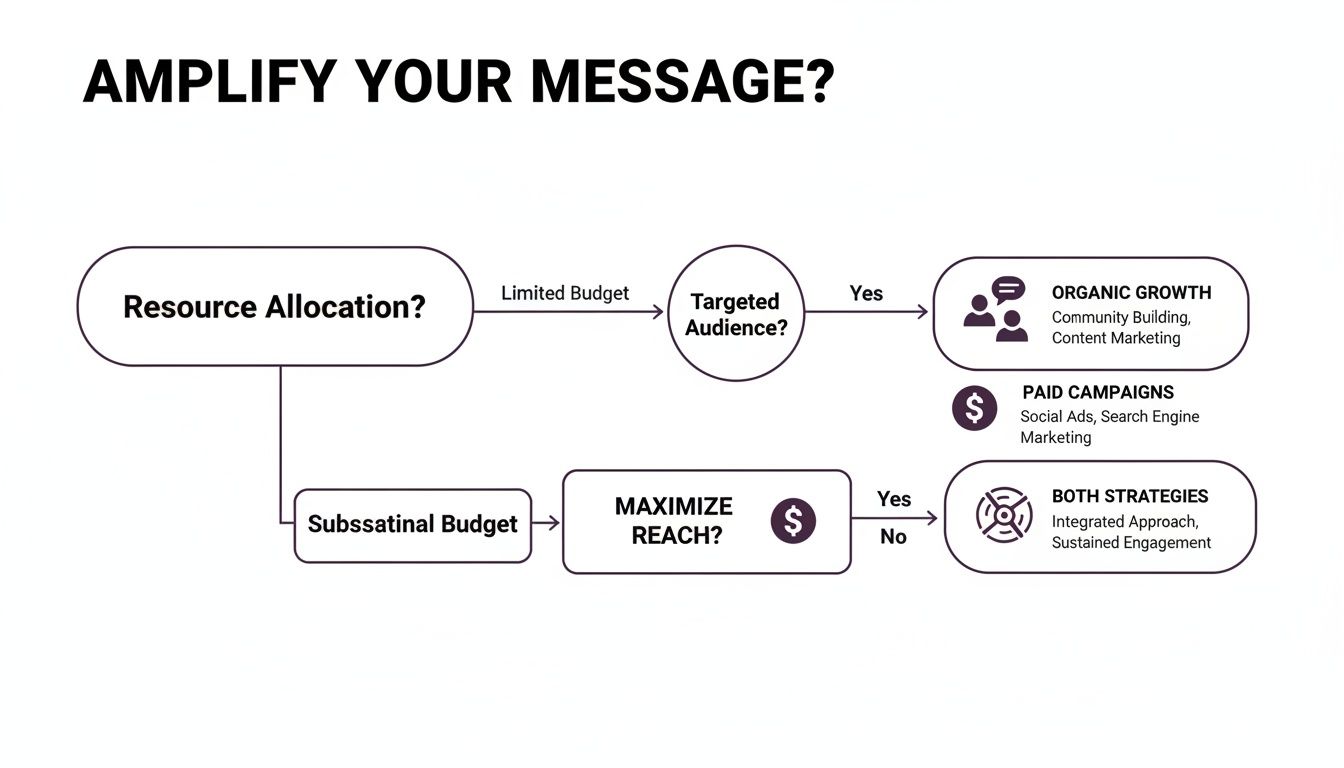
As you can see, the sweet spot is often found by combining organic and paid channels. This creates a powerful flywheel effect, maximizing both your reach and your impact.
Choosing Your Brand Awareness Channels
Picking the right channels is crucial. There's no single "best" option; it all depends on your goals, audience, and resources. This table breaks down some common channels to help you decide.
| Channel | Primary Strength | Best For | Key Metric to Track |
|---|---|---|---|
| Content Marketing/SEO | Building long-term authority and organic traffic. | Businesses with deep expertise in a niche. | Organic Traffic, Keyword Rankings, Backlinks |
| Social Media | Community building and direct engagement. | B2C brands or B2B with a strong community focus. | Engagement Rate, Follower Growth, Social Mentions |
| Paid Advertising | Targeted reach and immediate visibility. | Businesses needing quick results or targeting specific demos. | Impressions, Click-Through Rate (CTR), Cost Per Mille (CPM) |
| PR & Media Outreach | Third-party credibility and high-impact exposure. | Companies with a newsworthy story or unique data. | Media Mentions, Referral Traffic, Domain Authority |
| Partnerships/Co-marketing | Tapping into established, relevant audiences. | Businesses that complement others in their ecosystem. | Referral Traffic, Lead Quality, Co-branded Mentions |
| Influencer Marketing | Authentic endorsements from trusted voices. | Brands in visual or lifestyle-oriented industries. | Reach, Engagement, Brand Mentions from Influencers |
Ultimately, a multi-channel approach often yields the best results. Start by mastering one or two channels where your audience is most active, then expand from there.
By making your audience feel like you’re speaking directly to them, you transform passive observers into genuine brand advocates who are excited to engage and share your message.
Pulling off these advanced strategies requires a serious level of expertise. It's about more than just sending emails; it's about identifying the right partners and architecting a data-driven personalization engine. This is where many businesses hit a wall. An experienced leader, perhaps someone offering fractional marketing services, can provide the strategic oversight needed to execute these complex initiatives and turn big ideas into growth-driving realities.
How to Measure Brand Awareness So You Know What Works
Pouring resources into brand awareness without tracking results is like flying blind. You're moving, but you have no idea if you're headed in the right direction. The key is to combine hard data with softer, human signals from your audience to prove ROI and make smarter decisions.
Key Quantitative Metrics to Track
The numbers tell a big part of the story. You can find these metrics in the analytics tools you're already using.
-
Direct Traffic: Check Google Analytics. When people type your URL directly into their browser, it's a huge sign they know you by name. A steady climb in direct traffic is one of the clearest indicators of growing brand recall.
-
Branded Search Volume: Use Google Search Console to see how many people are searching specifically for your company or product names. If that number is going up, it means more people are actively seeking you out.
-
Social Media Reach & Mentions: Keep an eye on your brand's "share of voice." How often are you being mentioned compared to your competitors? Social listening tools can tell you the volume and sentiment of mentions.
Gathering Qualitative Insights
While numbers give you the what, qualitative feedback tells you the why. You need to know how people feel about your brand to understand its health.
Running simple brand recall surveys can provide invaluable feedback. Ask straightforward questions like, "When you think of [your industry], what companies come to mind first?" This is a classic way to gauge unaided awareness.
Figuring out the right mix of metrics is exactly where an experienced fractional leader can help. They know which key performance indicators for startups actually move the needle and can build a system that connects your brand efforts directly to your business goals.
Answering Your Top Brand Awareness Questions
Let's tackle some of the most common questions that pop up when building a brand.
How Long Does This Actually Take?
Everyone wants to know this, and the honest answer is: it’s a long game. Brand awareness isn’t a switch you can flip overnight.
While you might see early signs within the first one to three months, building genuine brand recall—where people think of you first—usually takes six to twelve months of consistent, focused effort. The magic is in the consistency. It’s not about one big campaign, but about showing up day after day. Progress can feel slow at first, but the results compound over time.
Brand Awareness vs. Lead Generation: What's the Difference?
It’s easy to mix these two up, but they play very different roles.
-
Brand Awareness: This is the top of your funnel. It's about introducing your brand to your ideal audience. You're not asking for anything yet; you're just making them familiar with who you are and what you stand for. The goal is recognition and trust.
-
Lead Generation: This comes next. Now that people know who you are, you’re focused on turning that familiarity into something tangible, like an email address or a demo request.
Here's the key takeaway: Solid brand awareness makes your lead generation efforts way easier and cheaper. When your audience already knows and trusts you, they're much more willing to give you their contact info.
Can a Startup on a Shoestring Budget Actually Compete?
Absolutely. A lack of a massive budget forces you to be smarter and more creative—which can be a huge advantage. Instead of outspending the competition, you can outsmart them by focusing on organic, value-packed strategies.
This means doubling down on things like:
- Creating genuinely helpful, SEO-optimized content that answers your audience’s biggest questions.
- Building a tight-knit community on one or two social channels where your customers hang out.
- Delivering a killer customer experience that turns users into your biggest advocates.
The secret for startups is to be relentlessly focused, consistent, and valuable. That’s how you win without a nine-figure marketing budget.
Building a brand that sticks requires seasoned leadership. If you recognize the pain points of executing a high-level strategy without senior expertise, fractional leadership offers a powerful solution. Shiny connects you with experienced fractional executives who can build and execute a winning brand awareness strategy—all without the cost of a full-time hire. Schedule a consultation to explore how the right expert can transform your team.