
Duties and Responsibilities of a CEO: A Modern Guide
The duties and responsibilities of a CEO can seem complex, but they boil down to four key areas: setting the company's vision, making that vision a reality through operational leadership, building a strong company culture, and managing the key relationships that fuel growth. The CEO is the ultimate decision-maker, responsible for ensuring every part of the company pulls in the same direction toward a unified, long-term goal.
But for many growing businesses, the cost of a full-time, experienced CEO is out of reach, creating a critical leadership gap. This is where understanding the true value of fractional leadership becomes a game-changer.
The Four Pillars of CEO Leadership
So, what does a CEO really do all day? The role is often imagined as a blur of high-stakes meetings and public appearances. While that’s part of it, the real duties of a CEO are far more structured and intentional.
Think of the CEO as a master orchestra conductor. They don't play every instrument, but they ensure every section—from strings to percussion—works in perfect harmony. The conductor sets the tempo, clarifies the artistic vision, and provides the unifying direction that brings the music to life.
Similarly, a CEO's responsibilities fall into four core pillars. These aren't just tasks on a to-do list; they are interconnected functions that hold up the entire organization.
This visual breaks down the CEO's role into four strategic domains: setting the vision, driving execution, shaping the culture, and engaging stakeholders.
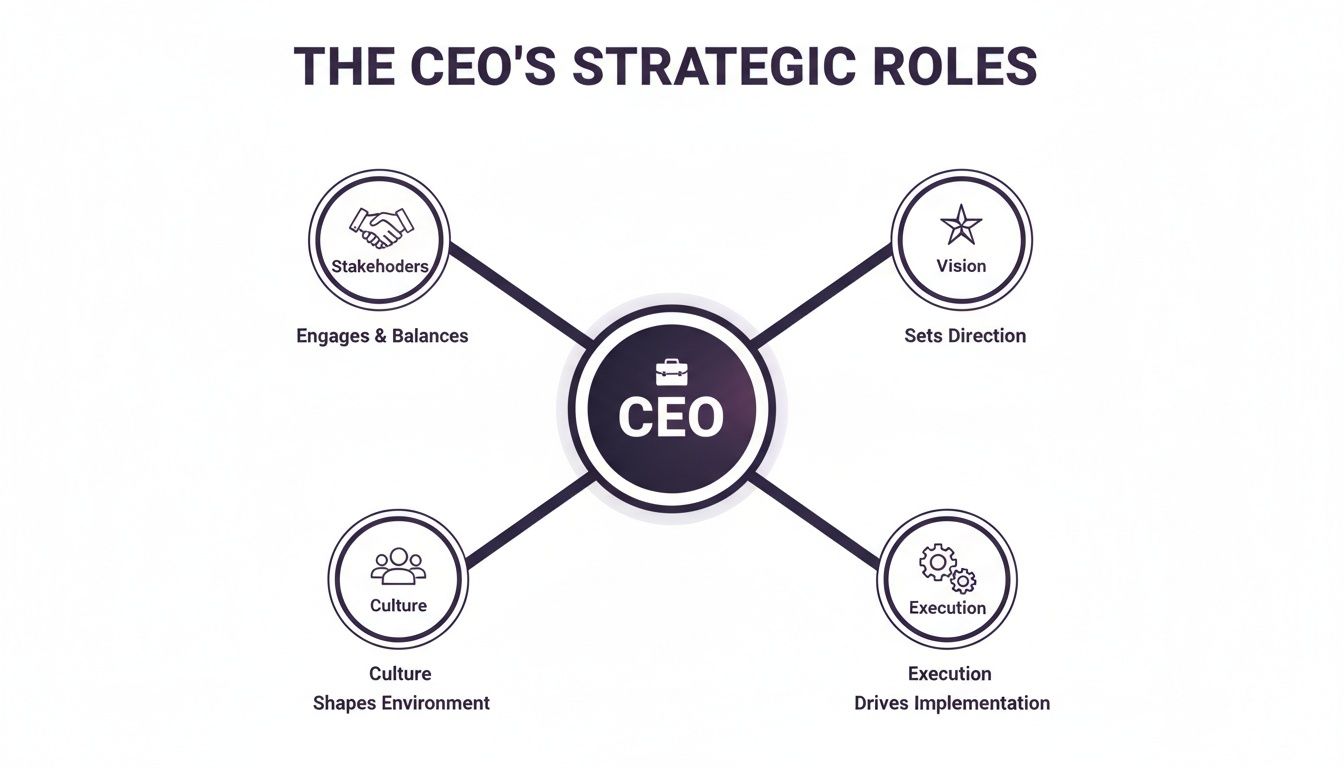
As the diagram shows, these four areas aren't silos. They are spokes on a wheel with the CEO at the hub, constantly balancing each one to propel the company forward.
The table below outlines these four essential pillars and the key activities within each domain.
| The Four Pillars of CEO Responsibility |
| :— | :— |
| Pillar of Responsibility | Key Duties and Focus Areas |
| 1. Strategic Leadership (The Architect) | • Set the long-term vision and mission.
• Develop and communicate the company's overarching strategy.
• Identify market opportunities and competitive threats. |
| 2. Operational Execution (The Navigator) | • Oversee day-to-day operations and ensure efficiency.
• Allocate capital and resources effectively.
• Build and mentor the executive leadership team. |
| 3. People & Culture (The Steward) | • Define and champion the company’s core values.
• Foster an environment of innovation, accountability, and psychological safety.
• Attract, develop, and retain top-tier talent. |
| 4. Stakeholder Relations (The Diplomat) | • Manage the relationship with the board of directors.
• Communicate with investors, partners, and the public.
• Serve as the primary public face of the company. |
Each pillar requires a different mindset and skillset, but a great CEO must master all four to guide their organization effectively. For growing companies, a fractional executive can provide expert support in any one of these areas.
The Architect and Navigator
First, a CEO is an architect, designing the company’s long-term vision. They look over the horizon, anticipate market shifts, and plot a course for sustainable growth. Their job is to answer the question: "Where are we going?"
Once that destination is clear, the CEO becomes the navigator, focused on execution. A brilliant strategy is just an idea without a team and systems to make it happen. The CEO allocates capital, builds a world-class leadership team, and puts metrics in place to track progress.
The Diplomat and Steward
The CEO is also the company's chief diplomat, managing all key stakeholders. This involves building a strong relationship with the board of directors, inspiring confidence in investors, and forging strategic partnerships.
Finally, the CEO is the ultimate steward of company culture. They set the tone from the top, defining the shared values and behaviors that attract—and keep—the best people.
A strong culture isn't about office perks; it's a real competitive advantage that builds resilience and drives innovation. The CEO is the guardian of this powerful asset.
Setting the North Star for Company Vision
Of all the duties a CEO has, none is more foundational than setting the company's long-term vision. This isn’t about a catchy mission statement on a wall; it’s about defining the organization’s “North Star”—the single point on the horizon that guides every decision.
Think of the CEO as the lead architect designing a skyscraper. Long before construction begins, the architect has a master blueprint. This blueprint is the vision—a crystal-clear picture of what the final building will look like and how it will change the skyline. In the same way, a CEO creates the strategic blueprint that gets every person in the company building the same structure.
From Blueprint to Reality
A great vision must be translated into an actionable plan. This is where the CEO’s role becomes crucial. They must constantly analyze data, talk with their team, and reinforce the mission.
Consider Satya Nadella at Microsoft. When he took over, the company was heavily focused on Windows. Nadella introduced a new vision: a "mobile-first, cloud-first" world. This was more than a slogan; it was a strategic pivot that reoriented the entire company, sparking the explosive growth of its Azure cloud platform.
Setting this kind of direction involves key actions:
- Analyzing the Competitive Landscape: Constantly watching rivals to find market gaps and build a defensible edge.
- Anticipating Technological Shifts: Understanding how trends like AI could disrupt the business or create massive opportunities.
- Communicating the Vision Relentlessly: Ensuring every employee understands the vision and how their work contributes to it.
A well-defined vision serves as the ultimate filter for decision-making. When faced with a tough choice, leaders can ask: "Does this move us closer to our North Star?"
How Fractional Leadership Sharpens Vision
Many founders have a powerful initial vision but get bogged down by daily operations, losing sight of long-term planning. This is a common business pain point where a fractional executive can be a game-changer.
Bringing in a fractional CEO or strategist provides access to an expert who has navigated these waters before. They bring an outsider’s perspective to analyze market data, stress-test assumptions, and build a sturdy strategic framework—all without the cost of a full-time executive.
This allows founders to focus on their passion, while their fractional partner helps draw the map to their North Star. Expert guidance can mean the difference between a vision that remains a dream and one that becomes reality.
Ready to sharpen your company’s vision? Explore how our vetted fractional executives can help you chart a course for success.
Turning Grand Strategy Into Daily Execution

A brilliant vision is inspiring, but it remains a daydream without relentless execution. One of the core duties and responsibilities of a CEO is to translate grand strategic goals into the tangible, daily actions that produce results.
Think of a CEO as a film director. The director isn't running every camera or writing every line of dialogue. Their job is to ensure every department—from cinematography to sound design—works in concert to bring the script (the vision) to life.
Similarly, the CEO is the ultimate owner of the company’s performance. They are responsible for building the systems, assembling the right leadership team, and fostering the accountability needed to deliver on promises.
Building the Engine of Execution
To turn strategy into reality, a CEO must build a high-performance operational engine. This isn't about micromanaging; it’s about empowerment and oversight.
This operational focus requires mastering several key functions:
- Resource Allocation: Directing capital, talent, and time toward the highest-impact initiatives.
- System Development: Establishing scalable processes for everything from financial reporting to product development.
- Performance Management: Setting clear, measurable goals and holding the leadership team accountable.
This focus is so vital that leaders who master it are often tapped for the top job. Amid intense market pressures, CEO turnover in the technology sector jumped by 90% year-over-year. According to recent findings, Chief Operating Officers (COOs) are a leading source of new CEOs, making up 22% of appointments, a clear sign that leaders skilled in execution are highly valued. You can read the full Global CEO Turnover Index report here.
A CEO's job isn't to have all the answers but to build an organization that can find them. They create an environment where strategy is consistently and effectively executed by the entire team.
Making Data-Backed Decisions
Sustainable execution is driven by data. A critical CEO duty is to define and monitor the key metrics that signal the health of the business. By tracking Key Performance Indicators (KPIs), a CEO can objectively measure progress and make informed decisions.
For many growing companies, building this operational machine is a major hurdle. This is where a fractional COO or CEO provides immense value. They can step in to implement proven frameworks, establish KPI tracking, and mentor the existing team—all on a part-time basis.
If you're ready to bridge the gap between vision and results, scheduling a consultation can connect you with the operational expertise needed to drive performance.
Architecting a High-Performance Company Culture

While strategy is crucial, a CEO's most profound legacy is often the company culture they build. This isn’t about ping-pong tables or free snacks; it’s about the shared values that define how work gets done.
Culture is the invisible force guiding every decision. One of the most vital duties and responsibilities of a CEO is to act as the primary steward of this culture. Their actions, communications, and decisions send a powerful signal about what the organization truly values.
The CEO as Chief Culture Officer
Think of a CEO as a gardener. A gardener doesn't yell at a plant to make it grow; they create the perfect environment for it to flourish. They tend the soil, ensure there’s enough sunlight, and pull out the weeds.
Similarly, a CEO cultivates the organization's environment by intentionally defining core values and modeling desired behaviors. When left to chance, culture can become toxic. An intentional culture, however, is a massive competitive advantage.
A strong culture acts like a company's immune system. It helps the team instinctively reject what doesn't align with its values and rally together to overcome challenges.
Building and Protecting the Cultural Foundation
A CEO's responsibility for culture starts with their leadership team. They must hire, mentor, and align senior executives to be champions of the culture. This can lead to tough calls, like addressing a top performer who undermines company values.
Making the hard decision to protect the culture is a defining part of the job. It comes down to key actions:
- Hiring for Cultural Fit: Prioritizing candidates who align with the company's core values.
- Rewarding the Right Behaviors: Promoting and recognizing people who embody the culture.
- Communicating Values Constantly: Weaving cultural principles into meetings, updates, and strategic planning.
Founders often struggle to maintain culture as a company scales. The systems that work for 10 people often break at 100. For a deeper dive, our guide on how to build company culture offers practical steps.
How Fractional Leadership Reinforces Culture
During periods of intense growth, it's easy for culture to get diluted. A fractional executive can be a powerful ally in protecting it. These leaders have been through the scaling journey and can implement frameworks to preserve your company’s unique DNA as you grow.
They bring an outside perspective, helping you spot cultural gaps and mentor your existing leaders on how to be better stewards of the values you’ve worked so hard to establish.
Managing the Board, Investors, and Key Partners
While a CEO spends much of their time on internal strategy, a huge piece of the job happens outside the company’s walls. They are the chief diplomat, responsible for building trust with the people who provide the capital, governance, and strategic leverage the company needs.
This external-facing role is as critical as what happens inside the office.
The CEO and the Board
The relationship between the CEO and the board of directors is foundational. The CEO is the board's direct line into the company's daily operations. Think of the board as seasoned advisors and the CEO as the ship's captain. The captain steers the vessel but must give the advisors clear, honest reports on the ship's condition and the weather ahead.
A healthy CEO-board dynamic is a true partnership, built on mutual respect and transparent communication.
Inspiring Confidence and Securing Resources
Beyond the boardroom, the CEO is the company's chief storyteller. When dealing with investors, the CEO’s job is to paint a compelling picture of the future. They need to articulate the strategy, market opportunity, and path to profitability with unwavering clarity.
This breaks down into key responsibilities:
- Transparent Financial Reporting: Presenting an honest view of the company’s financial health.
- Strategic Vision Communication: Reinforcing the long-term vision to assure investors their capital is building sustainable value.
- Building Personal Relationships: Forging direct connections with key investors to create a foundation of trust.
At its heart, managing stakeholders is a fiduciary duty. The CEO must act in the best interests of the organization, placing the company's welfare ahead of personal interests.
Navigating Strategic Partnerships
Finally, the CEO often leads negotiations for the company’s most important strategic partnerships. These alliances can unlock growth by providing access to new markets, tech, or customers.
Juggling these high-stakes relationships can be overwhelming for founders. This is where a fractional executive with deep experience in corporate governance and investor relations can be a game-changer, providing the steady hand needed to navigate these conversations. You can learn more in our article on the purpose of a board of directors.
How a Fractional CEO Delivers Expertise on Demand
Many growing companies face a difficult challenge: they desperately need high-level strategic leadership but can't afford a full-time, six-figure executive salary. This creates a dangerous leadership gap where founders are stretched too thin and growth stalls.
This is exactly the business pain point fractional leadership solves.
A fractional CEO provides the strategic guidance, operational oversight, and fundraising muscle a company needs, but on a part-time basis. It’s an on-demand model for executive expertise that is a perfect match for scaling businesses.
Think of it like hiring a world-class personal trainer. You don’t need them to move into your house to get in shape. Instead, you bring them in for focused sessions each week to map out a plan, perfect your technique, and hold you accountable. A fractional CEO works the same way, delivering elite-level business coaching and execution without the full-time price tag.
Closing the Leadership Gap Smartly
The real value of a fractional CEO is immediate access to seasoned experience. These are proven executives who have already scaled companies, navigated challenges, and built successful teams. They are ready to make an impact from day one.
This model is particularly effective at specific inflection points:
- Preparing for a Fundraise: A fractional CEO with a strong fundraising track record can sharpen your pitch and open up their investor network.
- Navigating a Market Expansion: An executive who has launched products in new territories can build your go-to-market strategy.
- Managing Rapid Growth: A fractional leader can implement the systems and processes you need to scale without breaking.
The goal of fractional leadership isn't just to fill a seat. It's to inject specific, high-impact expertise at the precise moment a company needs it most, de-risking growth.
Driving Reinvention and Modernization
In today's business world, one of the most critical duties and responsibilities of a CEO is to drive constant reinvention. This means adopting new technologies like AI to stay ahead of the curve.
A recent PwC survey found that while nearly 40% of CEOs think their companies won't be viable in ten years without a major pivot, two-thirds are reallocating 20% or less of their resources each year. The data shows a clear link: leaders who push for more aggressive reallocation see better financial results. You can dig into the findings in PwC's 27th Annual Global CEO Survey.
For startups facing high executive costs, this mandate can feel overwhelming. A fractional CEO can inject this exact expertise on a part-time basis, helping founders build a more efficient organization without the full financial burden. Learn more in our guide, "What Is a Fractional CEO?"
Common Questions About CEO Duties
Understanding the CEO role on paper is one thing, but a company’s stage of growth adds complexity. Here are answers to common questions founders and boards have about this demanding position.
What Is the Single Most Important Responsibility of a CEO?
While a CEO wears many hats, their single most important job is to set and relentlessly champion the company's long-term vision and strategy.
This vision is the North Star that guides every decision. Without it, teams work in silos, and momentum dies. All other duties—financial oversight, people management, and board relations—are in service of making that vision a reality.
How Do a CEO's Duties Change as a Company Scales?
The CEO role is not static; it must evolve with the company.
- Startup Phase: The CEO is a doer—writing code, closing deals, and fundraising to survive and find product-market fit.
- Scale-Up Phase: The CEO's job pivots to "leading through others." The focus shifts to recruiting an executive team and building scalable systems.
- Mature Enterprise Phase: The CEO becomes an optimizer and innovator, making major capital allocation decisions and driving innovation.
A founder who can't shift from a doer to a delegator is one of the most common reasons promising companies fail to scale.
When Is the Right Time to Hire a Fractional CEO?
You should consider hiring a fractional CEO when you have a clear "experience gap" holding you back, but a full-time hire isn't practical.
Common triggers include needing strategic guidance on scaling or fundraising, navigating a major transition like an acquisition, or facing a sudden leadership departure. A fractional CEO provides top-tier expertise right when you need it, without the long-term cost of a full-time executive search.
Navigating the complexities of leadership is key to unlocking your company's potential. Whether you need to refine your strategy, build scalable systems, or prepare for your next big move, having the right expertise makes all the difference. We connect businesses with vetted, world-class fractional executives who provide the targeted guidance needed to accelerate growth.
Ready to find the right leadership to match your ambition? Explore our network of fractional executives to find your perfect match. or schedule a consultation to discuss your needs.
