
A Founder’s Guide to Chief Operating Officer Roles
A CEO's job is to dream up the skyscraper. The Chief Operating Officer (COO) is the one who actually gets it built. They translate the grand vision into a day-to-day, actionable reality, making sure every internal part of the business works together seamlessly to hit the company's goals.
Their primary job is execution. They are the master builders who turn blueprints into a functional, scalable business.
The Unsung Hero of Startup Growth
Every founder has a vision, but that vision is just an idea without an expert who can build the structure to support it. That's where the Chief Operating Officer (COO) comes in. They don't just "run operations"; they're the strategic partner who cuts through the chaos of scaling a startup, ensuring the foundation is solid enough to handle insane growth.
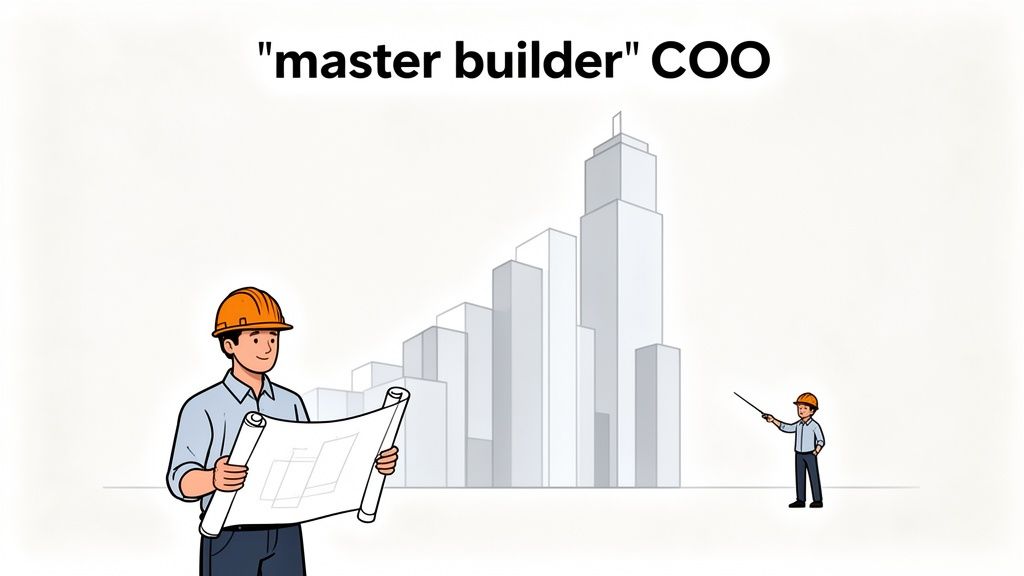
Think of it this way: the CEO is the architect, and the COO is the master builder on the ground. They're the ones coordinating every single team—from finance and product to sales and marketing—to make sure the building goes up correctly, on time, and on budget. This hands-on leadership is what turns ambitious plans into real-world results.
The Real Impact of Operational Excellence
The value of an experienced operations leader isn't just a nice-to-have; it hits the bottom line. Hard. Research shows that companies with COOs who have deep operational experience achieve a stunning 20% higher revenue growth than companies without one.
For a startup under intense pressure to scale, that kind of operational muscle is a massive competitive advantage. You can read the full study on COO impact to see just how critical the role is.
Let's break down the core functions of a modern COO to see exactly how they make this happen.
Core Functions of a Chief Operating Officer
This table summarizes where a COO focuses their energy and how each area directly contributes to a startup's growth trajectory.
| Function Area | Key Responsibilities | Impact on Growth |
|---|---|---|
| Process Optimization | Designing and rolling out efficient workflows and systems across the company. | Reduces operational friction, cuts costs, and makes the entire team more productive. |
| Departmental Alignment | Making sure all teams (Sales, Marketing, Product, etc.) share the same goals and actually collaborate. | Breaks down silos and creates a unified force that accelerates market traction. |
| Resource Management | Overseeing budgets, people, and technology to get the highest ROI. | Stops resources from being wasted and ensures money is spent on true growth drivers. |
| Performance Tracking | Setting up key performance indicators (KPIs) and obsessively monitoring progress. | Provides the data-driven insights needed to make smart decisions and pivot fast. |
At the end of the day, the best chief operating officer roles are about creating a system where growth isn't just possible—it's inevitable. They build the operational engine that lets a founder's vision take flight.
What a Chief Operating Officer Actually Does
If the CEO is the one pointing at a mountain peak in the distance and saying, "We're going there," the COO is the one drawing the map, packing the supplies, and making sure the entire team has the right gear for the climb. The COO is the operational heartbeat of the company, the person who translates a grand vision into the day-to-day reality of getting work done.
Think of them as the conductor of an orchestra. The CEO might have written the symphony, but the COO ensures every instrument—from sales to product to support—plays its part at the right time and in perfect harmony.
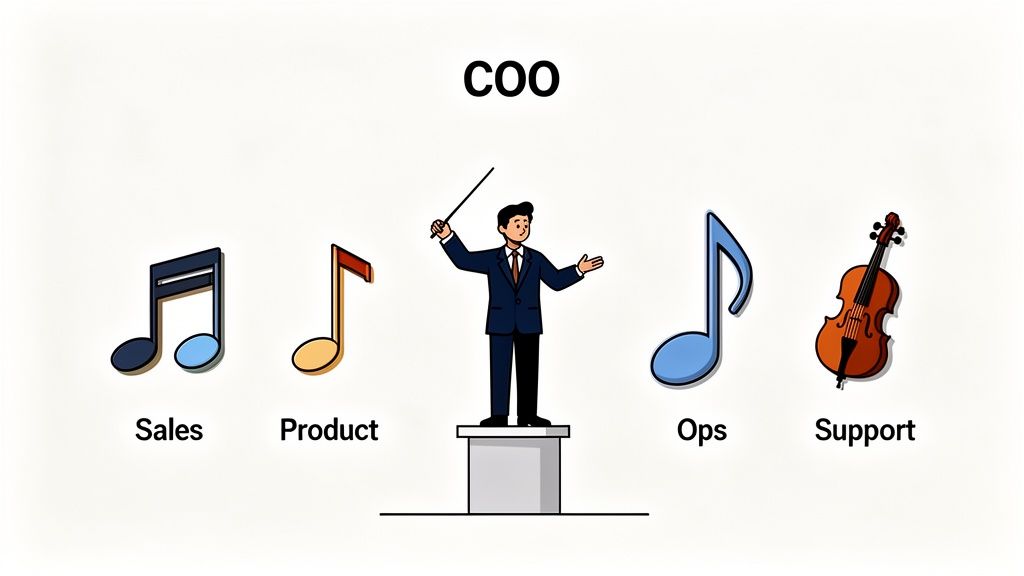
At its core, the role is all about execution and integration. A great COO connects the dots between departments, ensuring that what marketing promises, sales can actually sell, and the product team can build and deliver. This frees up the CEO to focus on the big picture stuff—fundraising, investors, market positioning, and where the company is headed in five years.
Core Responsibilities in Action
While the COO's to-do list is long, their work usually falls into a few key buckets. These are the levers they pull to build a company that can not only grow but also withstand the pressure.
- Optimizing Internal Processes: They are masters at spotting bottlenecks. For instance, a COO at a booming SaaS startup might notice that customer data is scattered across three different systems. They’ll step in and implement a new CRM, tying together sales, support, and success teams so everyone has the same information.
- Aligning Departments for Shared Goals: As companies grow, teams naturally start to form silos. The COO’s job is to tear those walls down. They make sure everyone is rowing in the same direction and understands how their work directly contributes to the company's main objectives.
- Managing Resources Effectively: This is all about getting the most out of every dollar, person, and piece of technology. A COO for an e-commerce brand might completely overhaul the supply chain, finding better vendors and logistics partners to cut delivery costs by 15% while also speeding up shipping.
- Tracking and Reporting on Performance: They live and breathe data, but only the data that matters. They establish the key performance indicators (KPIs) that paint a true picture of the company's health—not just revenue, but metrics like customer acquisition cost (CAC), lifetime value (LTV), and operational overhead.
This relentless focus on the company's internal engine is precisely how a COO fuels sustainable growth. For a closer look at their tactics, check out our guide on how to improve operational efficiency.
The Stabilizing Force in a Volatile World
In an unpredictable economy, the COO's role has become more critical than ever. Boards and investors are no longer just looking for flashy growth; they want stability and predictability. This shift is clearly reflected in who's staying and who's going at the executive level.
A recent report showed that global COO turnover at major public companies hit an all-time low, the lowest mid-year figure since tracking began. This isn't a coincidence. It signals a major emphasis on retaining steady, experienced leadership to navigate the choppy waters of today's market.
Ultimately, a great COO builds a business that doesn't just run—it hums. They create the systems and processes that become the unshakeable foundation for success, allowing the company to scale smoothly and predictably. This operational excellence is what separates the companies that thrive from those that just barely survive.
What Makes a Great COO? The Essential Skills
A fancy title doesn't automatically make someone a leader. For a Chief Operating Officer, real impact comes from a specific set of skills that go way beyond just "managing operations." In the pressure-cooker environment of a startup, a great COO brings tangible skills to the table, connecting the day-to-day grind directly to the company's biggest goals. They don’t just watch the business engine run; they’re in there, fine-tuning it for peak performance.
These are the skills that separate a mere caretaker from a true game-changer. The best COOs are masters of both the big picture and the tiny details, balancing a long-term vision with the immediate needs of a growing company.
Strategic and Financial Acumen
A high-impact COO needs to think like a CEO but act with an operator's precision. This means they must have a deep understanding of the market and the company's financial pulse, ensuring every operational decision props up the bottom line.
- Strategic Foresight: This is the ability to anticipate future needs. A COO with foresight might see a potential customer support bottleneck forming and start hiring and training new team members six months before it ever becomes a crisis.
- Financial Literacy: They need to know the profit and loss (P&L) statement inside and out. This skill allows them to draw a straight line from an operational tweak, like renegotiating a vendor contract, directly to an improvement in gross margin.
This mix of forward-thinking strategy and financial discipline ensures the company isn't just running well today but is built to handle whatever tomorrow brings.
Data Fluency and Change Management
In a startup, data is the language of growth, and change is constant. A COO who is fluent in both can steer the company through choppy waters with clarity and confidence. They use data not just to report on what happened, but to actively shape what happens next.
A great COO doesn't just show you a dashboard with a 5% spike in customer churn. They dive into the 'why' behind that number, pinpoint the operational flaw causing it, and then rally the team to roll out a fix that brings that number right back down.
This proactive approach requires serious leadership. Change management is all about guiding a team through shifts in processes, tools, or strategy without losing momentum. The COO has to be a crystal-clear communicator who can build buy-in and turn resistance into enthusiastic adoption.
Ultimately, these core skills are what allow a COO to take a founder's vision and forge it into a resilient, scalable, and profitable reality.
Finding the Right COO for Your Startup
Hiring a Chief Operating Officer isn't as simple as posting a job description. The right COO for a scrappy Series A startup is a totally different person than the one a mature company needs to prep for an IPO. Get this hire wrong, and you’re looking at friction, wasted cash, and stalled growth.
The first step is always to look inward and diagnose your company’s biggest operational headaches. Answering these questions honestly points you toward the specific kind of operator you actually need. Getting this diagnostic right is a cornerstone of building an effective startup management structure for sustainable growth.
The Seven Common COO Archetypes
Just as a doctor prescribes different treatments for different illnesses, you need to find the COO "archetype" that matches your company's current condition. Each type brings a unique skillset and focus to the table, tailored to solve a specific set of operational problems.
Getting familiar with these profiles is the first real step to making a smart hire.
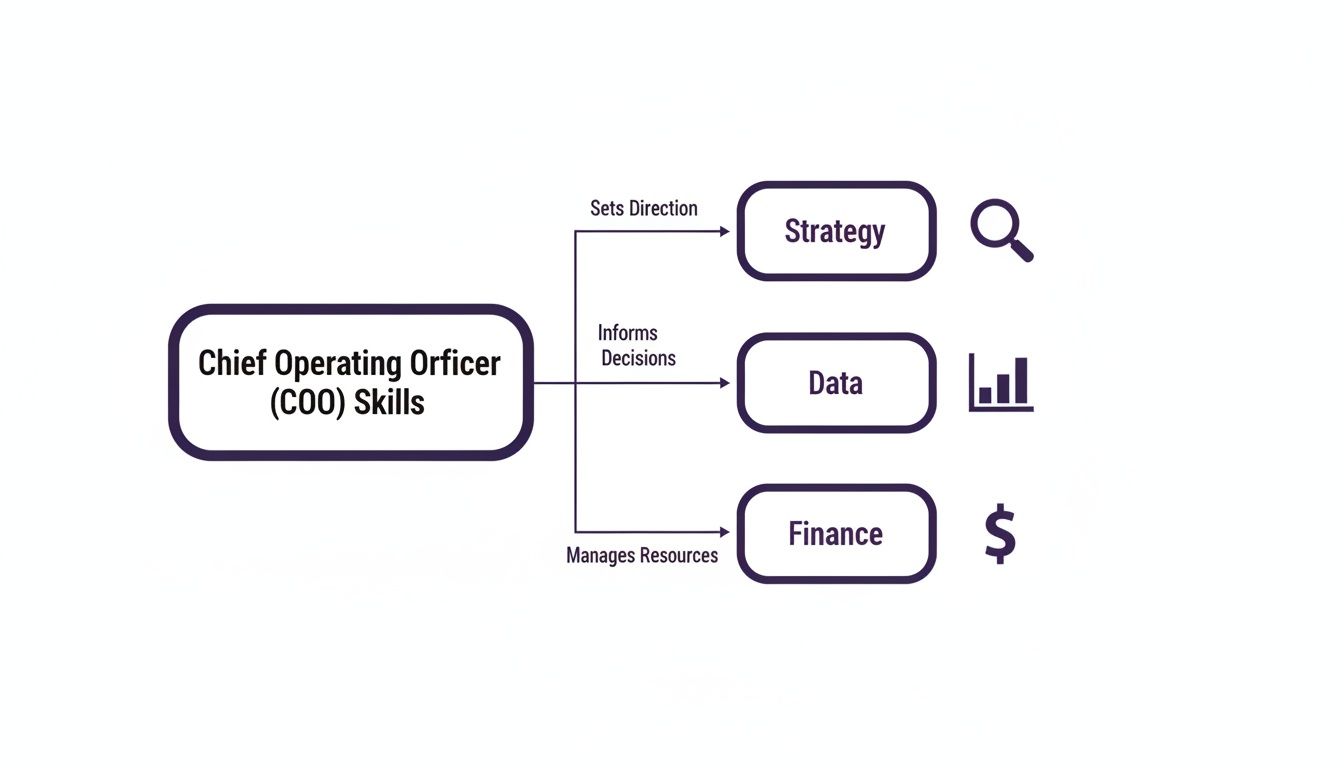
While the foundations of Strategy, Data, and Finance are always there, a COO’s true power comes from how they specialize and apply those skills to your business.
Comparing The 7 COO Archetypes
So, which operator does your startup need right now? This table breaks down the most common COO profiles to help you pinpoint the perfect match for your company's current goals and biggest roadblocks.
| COO Archetype | Primary Focus | Best For Companies That… |
|---|---|---|
| The Executor | Building foundational processes and systems from the ground up. | Are in the early stages and desperately need to turn chaos into scalable, repeatable workflows. |
| The Change Agent | Navigating complex transitions like mergers, acquisitions, or a major business pivot. | Are undergoing significant structural shifts and need an expert to guide the integration smoothly. |
| The Mentor | Coaching and developing a young or inexperienced leadership team. | Have product-market fit but lack seasoned senior leaders who can manage the next phase of growth. |
| The CEO's Other Half | Complementing the CEO's skillset, often by owning all internal execution. | Have a visionary, externally-focused CEO who needs a trusted partner to run the business day-to-day. |
| The MVP | Acting as a seasoned veteran who has "seen it all before" and has a playbook for growth. | Are entering a new, high-stakes growth phase and need a leader who has already navigated this territory. |
| The Heir Apparent | Being groomed to eventually step into the CEO role. | Are focused on long-term succession planning and want to ensure a smooth leadership transition. |
| The Transformer | Leading a complete operational, cultural, or digital overhaul of the business. | Need to modernize legacy systems or fundamentally reinvent their business model to stay competitive. |
Picking the right archetype is more than just a hiring tactic—it's a strategic move that aligns your leadership directly with your most critical business needs.
Why a Fractional COO Is the Smart Choice for Startups
Many founders hit a wall. You know you need senior operational leadership to scale, but the thought of a full-time COO's six-figure salary, equity, and benefits package is daunting. It's a massive financial gamble—one that could sink the company if you make the wrong hire. This classic catch-22 keeps too many startups stuck in operational chaos.
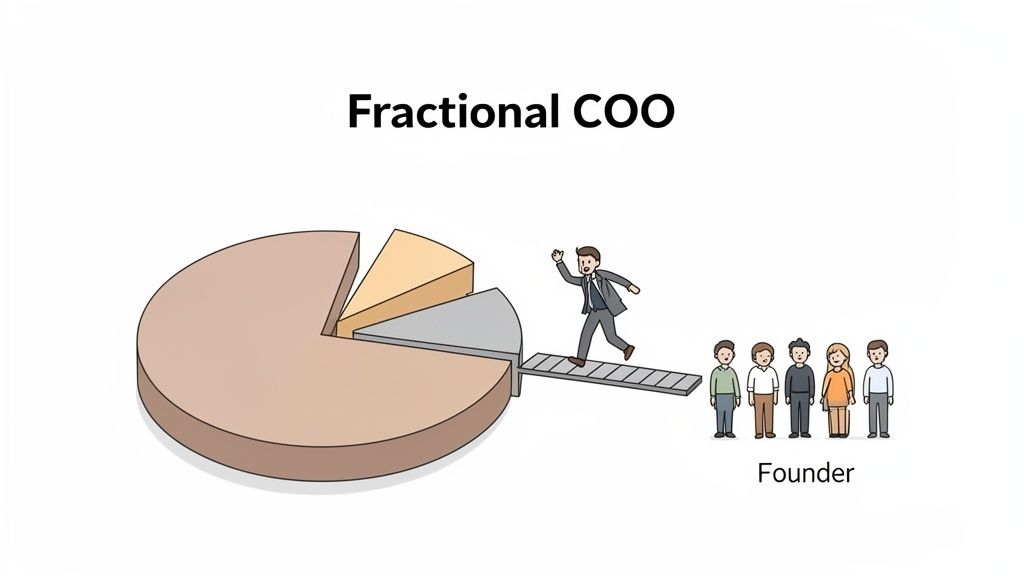
This is precisely where fractional leadership comes in as a modern, smarter alternative. A fractional COO is a seasoned, high-impact executive who partners with your company on a part-time basis. You get the exact amount of strategic oversight you need, whether that's ten, fifteen, or twenty hours a week, without the full-time commitment.
This model completely changes the hiring equation for growing businesses.
The Value of a Fractional Partnership
Bringing on a fractional COO isn't just about saving money; it's about making a more strategic and flexible investment in your company's future. It gives you access to a caliber of talent that would otherwise be out of reach, embedding decades of experience into your team without the full-time price tag.
Here’s why it’s such a powerful move for startups:
- Cost-Effectiveness: Get the strategic mind of a veteran operator for a fraction of a full-time executive's salary. This frees up crucial capital to reinvest in product development, marketing, or other growth drivers.
- Immediate Impact: Fractional COOs are pros who have seen your challenges before. They ramp up quickly, pinpoint operational bottlenecks, and start implementing fixes from day one—no lengthy onboarding period needed.
- Unmatched Flexibility: Your operational needs change as you grow. A fractional engagement lets you scale that support up or down as needed, giving you an agile leadership structure that adapts with your business.
By hiring fractionally, you're not just filling a role; you're injecting targeted, high-level expertise precisely where and when you need it most. It's a strategic weapon for accelerating growth without taking on unnecessary financial risk.
A Real-World FinTech Example
Imagine a FinTech startup that just closed its Series A. The team is brilliant, but they're facing a mountain of regulatory compliance hurdles and need to build scalable financial operations. They don't need a full-time operations leader for the next three years, but they desperately need an expert for the next nine months.
Hiring a fractional COO is the perfect play. This executive can step in, build the entire compliance framework, streamline financial reporting, and even hire a junior operations manager to maintain the new systems. Once that project is done, the engagement can end.
The startup gets world-class results without the long-term overhead. It’s a prime example of why so many companies now explore fractional COO services to solve critical, project-based challenges. This approach is the logical choice for founders who need to move fast, stay lean, and make every dollar count.
How to Find and Hire Your Ideal Fractional COO
Bringing on the right fractional COO isn't just about posting a job description. The process starts long before that, with a hard look at your company's operations. You have to get radically honest about your biggest pain points.
Don't just say, "We need help with operations." Get specific. Pinpoint the exact bottlenecks holding you back. Are your customer onboarding processes a mess? Is communication between departments broken?
Vetting for Real-World Impact
Clearly defining these challenges is everything. It turns a vague wish for help into a concrete mission and allows you to write a compelling description that focuses on outcomes, not just tasks. Instead of "manage supply chain," try something like, "slash fulfillment errors by 15% and cut shipping costs by 10% within six months." One is a chore; the other is a challenge.
When you get to the interview stage, your questions need to dig into specific, relevant experience. Zero in on their recent wins with companies at a similar growth stage to yours. An operator who took a company from $5M to $25M uses a totally different playbook than someone who managed a $500M enterprise.
Here are the kinds of questions that get to the heart of what matters:
- Problem-Solving Skills: "Walk me through a time you inherited a chaotic operational process. What were the first three things you did to diagnose and fix the problem?"
- Measuring What Matters: "What key performance indicators (KPIs) would you put in place to track the operational health of our business?"
- The First 90 Days: "Based on what you've learned about us, what would be your top priorities in the first 90 days to make a tangible impact?"
The right fractional COO won’t just give you vague advice; they’ll show up with a clear, actionable plan. Their answers should prove they have a bias for execution and a deep understanding of how to get results, fast.
Find the Right Operational Partner for Your Business
Finding this caliber of talent on your own can be a slog. Tapping into a vetted network gives you a direct line to proven leaders, saving you the time and risk of sifting through countless unqualified candidates.
If you're ready to stop managing chaos and start building a business that can scale, we can help. Shiny connects you with a network of world-class executives who can step in and make an immediate impact.
Ready to find the operational partner who can truly change the game for your business? Explore our network of world-class fractional executives or schedule a consultation to discuss your specific needs.
Ready to stop managing chaos and start building a business that can scale? Shiny connects you with a network of over 3,000 vetted fractional executives who can step in and make an immediate impact. Find your ideal operational partner today.