A Founder’s Guide to Consultant Pricing Strategy
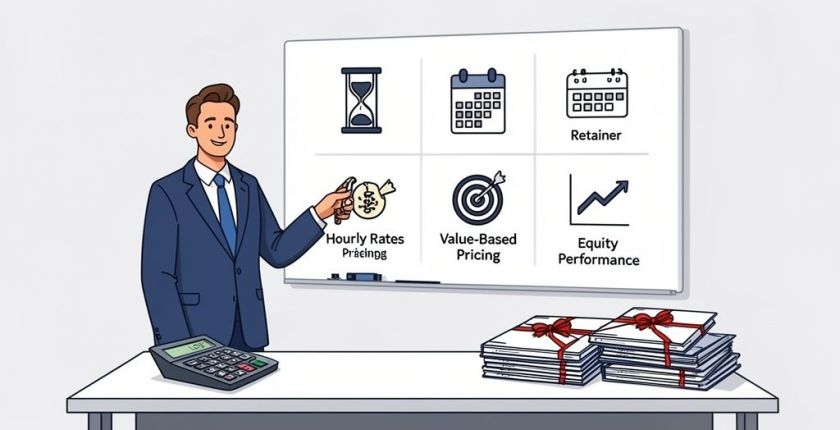
To build a winning consultant pricing strategy, you must stop thinking about hourly rates. Instead, focus on the tangible value and outcomes you create. It’s all about positioning your expertise as a strategic investment that directly fuels business growth, justifying premium fees with clear, results-oriented proposals. This mindset is crucial for any founder looking to partner with high-impact fractional executives.
The Modern Blueprint for Consultant Pricing
The days of consultants just trading hours for dollars are over, especially in the fast-paced world of startups. Founders and CEOs aren’t just buying time; they're investing in outcomes.
You need to see a direct line between their work and your most important business goals—whether that’s boosting revenue, streamlining operations, or locking down the next funding round. This requires a completely different pricing blueprint, one built on the value delivered, not just the effort put in.
Think of it like hiring a world-class chef. You don't pay them by the minute. You invest in their ability to create an unforgettable dining experience that keeps customers coming back. In the same way, a consultant's pricing needs to reflect the strategic impact they deliver, not just the hours they log on a timesheet.
Shifting from a Contractor to a Strategic Partner
The moment you adopt a value-first mindset, everything changes. It’s the first real step toward a pricing strategy that commands higher rates and attracts the right kind of talent. A consultant is no longer just a temporary hire checking off tasks; they become an essential part of your leadership team.
This approach allows you to:
- Align on Goals: When pricing is tied to outcomes, everyone is focused on the same high-impact objectives.
- Demonstrate Clear ROI: Justifying the cost becomes simple when you can point to tangible results like more qualified leads or significant cost savings.
- Build Long-Term Relationships: Businesses that see a consultant as a partner in their success are far more likely to engage them for long-term, retainer-based work.
Understanding the Fractional Executive Market
The fractional executive model is built for this value-driven approach. As the demand for fractional services explodes, the market has set clear pricing benchmarks. These rates make top-tier talent accessible to startups and SMBs without the heavy cost of a full-time salary.
Industry reports show that fractional executives typically charge between $250 and $450 per hour, which usually translates into a monthly retainer. This is a game-changer for businesses where a full-time C-suite hire could easily cost over $300,000 a year in salary alone, not to mention benefits. You can learn more about the true cost of fractional executives and their market rates.
When you focus on the strategic value a consultant provides, the conversation shifts from "How much do you cost per hour?" to "What results can you help us achieve?" This is the absolute cornerstone of a successful partnership.
Building a pricing structure that reflects this blueprint is how you communicate undeniable value from day one. If you're ready to find leaders who get it, exploring a curated marketplace can connect you with founders who are actively looking for high-impact fractional leaders.
Selecting the Right Pricing Model for Your Services
Picking the right pricing strategy feels a lot like a pilot choosing a flight plan. The destination is always the same—delivering incredible value and hitting your business goals—but the route you take has to account for the conditions on the ground. Your specific needs, the complexity of the project, and the outcomes you're chasing all shape which model makes the most sense.
The most common trap is defaulting to hourly billing. It's simple, sure, but it almost never captures the true strategic value a consultant brings to the table. Let's move past that and look at three core models that are a much better fit for high-impact work.
This decision tree gives you a quick visual to help map out which pricing model might be the best fit for your next engagement.

As the chart shows, different business needs and project scopes should lead you down completely different pricing paths. The goal is to anchor the price in outcomes, not just hours logged.
The Power of the Monthly Retainer
For any ongoing, strategic engagement, the monthly retainer is your best friend. This structure is just a fixed, recurring fee for a defined scope of work or a set block of time each month. It's the perfect setup for a Fractional CMO who's overseeing your marketing strategy, managing a small team, and reporting on key metrics week in and week out.
The real beauty of the retainer is its predictability for everyone involved.
- For Your Business: You get consistent access to top-tier strategic thinking for a flat monthly cost. It makes budgeting a breeze.
- For the Consultant: It creates a steady, reliable income stream, allowing them to stop worrying about constantly drumming up new business and focus on what they do best: delivering results for you.
A typical retainer might cover 10-15 hours per week, which is often the sweet spot for a startup that needs real leadership but can't stomach the cost of a full-time exec. This model is all about building deep, long-term partnerships where the consultant truly becomes part of your team.
Embracing Value-Based Pricing
Value-based pricing is the holy grail for high-impact consulting, and for good reason. You're not buying time anymore; you're buying a specific, measurable result. This model completely uncouples the fee from hours worked and ties it directly to the tangible business outcomes generated.
Imagine you hire a Fractional Head of Sales to increase qualified leads by 40% in six months. Their fee isn't based on weekly hours, but on hitting that massive goal. When they deliver, their compensation reflects the huge value they just created for your business—something an hourly rate could never touch.
This approach fundamentally changes the conversation. The consultant is no longer a line-item expense; they are a profit driver. Founders are far more willing to write a big check when they see a clear and direct path to an even bigger return.
To pull this off, the consultant must be rock-solid confident in their ability to deliver. They also need to be skilled at defining the right KPIs from the start and tracking them obsessively to prove their impact.
When to Use Project-Based Fees
Project-based pricing, or a simple flat fee, is the way to go for well-defined initiatives with a clear start and end date. Think of a Fractional COO brought in to implement a new ERP system, or a Fractional CFO tasked with getting a company ready for its Series A fundraise.
Your business pays one single, fixed price for the entire project. This model shines when:
- The scope of work is airtight and not likely to change.
- The consultant can accurately estimate the time and resources needed.
- The deliverables are concrete and easy to point to.
This structure gives you cost certainty, which is a huge selling point. For the consultant, it directly rewards efficiency. The faster they can deliver amazing results, the more profitable the engagement becomes. The only catch is that the scope must be ruthlessly defined upfront to protect everyone from "scope creep"—where the project slowly expands beyond the original agreement.
Ultimately, the best fractional executives don't stick to just one model. They blend them to fit the client's needs perfectly. Top consultants often combine a monthly retainer for ongoing advisory work with value-based bonuses for hitting major milestones. This flexibility is exactly why so many SMBs are choosing fractional leaders over full-time hires. To see how these strategies play out in the real world, you can explore detailed fractional leadership pricing models.
Choosing the right model is your first step toward a partnership that feels right for you and your consultant. By aligning fees with value created, you position them not as a contractor, but as a truly indispensable partner.
How to Assess a Consultant's Rate
Alright, you've settled on a pricing model. Now for the fun part: understanding the numbers behind the expertise and evaluating offers that can transform your business. This is where theory hits the road. It's a mix of knowing the market, understanding a consultant's value, and recognizing a package that solves your biggest headaches.
First things first, let's get a feel for the market. The fractional executive world has exploded into a $5.7 billion market, and it’s not slowing down, growing at a healthy 14% CAGR. This isn't just a trend; it's a fundamental shift in how startups get access to top-tier leadership.
What does that mean for you? It means there's a ton of data out there. Most fractional execs are charging between $250-$450 per hour. When you compare that to the $300,000+ all-in cost of a full-time hire, you can see why founders are jumping on this. You're gaining a massive strategic advantage. For more on this, the rise of the fractional executive market and its strategic impact is a great read.

This market data gives you a solid starting point. Now, let's figure out where a specific consultant fits in that range.
Fine-Tuning Your Evaluation
Just looking at the market average is a surefire way to misjudge a great hire. A consultant's unique experience is what justifies a premium price.
Ask these questions to evaluate a consultant’s rate:
- Niche Expertise: Are they just another Fractional CMO, or are they the Fractional CMO for B2B AI startups? Do they know FinTech regulations inside and out as a Fractional CFO? That kind of specialized knowledge is rare and valuable.
- Proven Track Record: Results speak louder than a resume. If they can point to case studies where they grew revenue by 30% or helped close a $10 million funding round, they have all the justification needed to charge at the top end of the market.
- Scope Complexity: There’s a big difference between handling high-level board strategy and getting bogged down in day-to-day operational tasks. The more responsibility and strategic weight they carry, the higher their rate should be.
If you want to get really granular with the numbers, our guide on how to calculate your hourly rate as a consultant breaks it down step-by-step. It's a great way to understand the math from their perspective.
Designing Tiered Service Packages
Don't just buy time. Buy solutions. The best consultants create tiered packages that move the conversation away from "what's your hourly rate?" and towards "which of these options is right for my business?"
This makes the buying decision incredibly simple for a founder. You can see a clear path and choose the level of engagement that matches your budget and urgency.
Let's walk through an example for a Fractional CMO. Startups have very different marketing needs as they grow, so their packages should reflect that journey.
A well-designed package shifts the client’s focus from an hourly rate to the specific outcomes they can achieve at each investment level. It transforms the sales conversation from "How much do you cost?" to "Which of these solutions is right for us?"
Here’s a look at how tiered packages for a Fractional CMO could be structured, showing how the focus shifts from foundational work to strategic leadership.
Sample Fractional CMO Service Packages
This table shows how hours and deliverables can be bundled into clear, outcome-focused tiers that align with a startup's growth stage.
| Package Tier | Weekly Hours | Key Deliverables | Monthly Retainer |
|---|---|---|---|
| Starter | 5-10 Hours | Go-to-Market Strategy: Define ICP, messaging, and positioning. Set up foundational analytics and marketing channels. | $5,000 – $8,000 |
| Growth | 10-15 Hours | Demand Generation Engine: Build and manage content and paid acquisition funnels. Hire first marketing specialist. Implement marketing automation. | $8,000 – $15,000 |
| Scale | 20-25 Hours | Team Leadership: Manage marketing team and budget. Develop brand strategy and C-level reporting. Drive expansion into new markets. | $15,000 – $25,000 |
See how that works? It's a clear roadmap. As a founder, you can immediately identify your stage and see the value provided. It makes the hiring process so much easier because your biggest questions have already been answered.
When a consultant structures their services this way, they’re not just a vendor; they’re a strategic partner who genuinely understands the startup journey.
Crafting Proposals That Close Deals
After you've nailed down your pricing model and service packages, it all comes down to the proposal. This is where the rubber meets the road. A killer pricing strategy is worthless if a consultant can't communicate its value in a way that gets an enthusiastic "yes."
Your proposal is much more than a list of services and prices. It’s a compelling business case that should make the fee feel like an obvious, high-return investment. Think of it as the final chapter in the sales conversation, tying everything together.
A great proposal recaps your biggest headaches, shows the consultant truly gets your business, and then positions their services as the only logical solution. It’s less about what they do and all about what you get.

The best proposals always frame the price around tangible outcomes and a clear return on investment. If your discovery calls went well, the consultant already has all the ammo they need to build this case.
Framing Price Around Value and ROI
A proposal's main job is to shift the conversation from cost to value. A consultant should never lead with their price. They need to build up to it by carefully laying out the financial impact of their work. This isn't about vague promises; it's about specific, quantifiable results.
For example, instead of saying they’ll "improve marketing," a great proposal gets specific: "Our strategy is designed to increase qualified leads by 30% within six months, which, based on your current conversion rates, translates to an estimated $250,000 in new pipeline revenue."
That one shift changes the entire dynamic. Suddenly, a $10,000 monthly retainer isn’t an expense—it's a smart investment with a massive potential payoff.
A strong proposal must include:
- A Clear Problem Statement: It should kick off by summarizing the core challenge you’re there to solve, using your own words. This proves they were listening.
- Quantifiable Goals: It must define the specific, measurable results they're aiming for, ensuring these goals tie directly back to your main business objectives.
- The Cost of Inaction: It should gently remind you of the financial hit you're taking by not solving this problem. How much revenue are you leaving on the table every month you wait?
A great proposal makes you feel completely understood. It should read like a strategic plan you co-created, where their fee is just the final, logical step to achieving your goals.
By the time you get to the price, it should feel not just reasonable, but necessary. For a deeper dive, check out our guide with more tips on how to negotiate contracts effectively.
Handling Price Objections with Confidence
Even with a flawless proposal, you might be tempted to say: "You're too expensive." As a founder, understanding how a top consultant handles this objection reveals their confidence and professionalism.
An objection isn't a "no." It's an invitation for more clarity.
When a client pushes back on price, a great consultant will ask questions. A simple, "I understand. Can you help me understand which part of the proposal feels out of line with your budget?" can open things up. More often than not, the issue isn't the total price but a misalignment on the scope of work.
From there, they will pivot right back to value. This is where the power of the fractional model truly shines.
Example Scenario
Let's say you balk at a $12,000 monthly retainer for a Fractional Head of Sales role.
- A strong consultant might respond: "I appreciate you sharing that. When we consider the alternative—a full-time Head of Sales—that would likely cost over $25,000 a month with salary, benefits, and bonuses. This engagement delivers that same senior-level leadership for less than half the cost. More importantly, our shared goal is to boost your sales pipeline by $500,000 next quarter. Does that outcome still align with your priorities?"
This response is powerful because it does three things masterfully:
- It reframes their fee as a huge saving compared to a full-time hire.
- It re-anchors the discussion to the massive ROI they’re bringing to the table.
- It puts the ball back in your court by asking you to confirm the value of the outcome.
If the budget truly is a hard-and-fast limit, a consultant's next step isn't to slash their rate. It's to offer a reduced scope. This protects the integrity of their pricing while still finding a way to work together.
Adapting Your Pricing as Your Business Grows
A consultant's pricing strategy should never be a "set it and forget it" document. What worked last year—or even last quarter—might be leaving money on the table today. The market is always shifting, their skills are getting sharper, and the value they bring to clients is constantly on the rise.
The most successful consultants are masters of adaptation. They don't just randomly change their rates; they have a deliberate process for testing, iterating, and communicating those changes. It's about staying profitable and competitive by making sure their price always matches the value created.
Testing New Packages with Minimal Risk
Rolling out a brand-new service package can feel like a gamble. The easiest way to avoid that is to pilot new ideas with a small, controlled group before going all-in.
The best bet is often to start with a trusted, long-term client.
- Pitch it as a "beta" program. A consultant might offer an exclusive deal: "I'm developing a new 'Scale' package that includes X and Y, and I'd love to offer it to you first at a friendly rate in exchange for your feedback."
- Build the value together. This is a golden opportunity to fine-tune deliverables based on what a real client actually needs.
- Walk away with a killer case study. A successful pilot with a happy client gives the consultant the ultimate sales tool: a detailed case study packed with real ROI data that justifies new pricing.
This approach de-risks the whole process, validating a new offering in a low-pressure setting while making a key client feel special.
Communicating Rate Increases to Retainer Clients
Bringing up a rate increase with a long-term client can feel awkward, but handled correctly, it can reinforce the consultant's value and make the partnership even stronger. The trick is to make the conversation about your success, not their rising costs.
A consultant should never justify a rate increase by talking about their own expenses. They must anchor the change to the incredible value and results they've already delivered and will continue to deliver.
When a consultant raises their rates, they're not just asking for more money. They're re-calibrating the engagement to reflect the new, higher level of value they bring to your business. It’s a direct result of the success you’ve created together.
Here’s a simple way to frame that conversation:
- Give plenty of notice. A heads-up of 60-90 days is standard and shows respect for your budgeting process.
- Remind you of the wins. Start by recapping the milestones you’ve hit together. For example: "Over the last year, we've managed to increase your lead flow by 40% and brought customer acquisition costs down by 15%."
- Connect the price to future value. Tie the new rate to an expanding role and the next set of goals. "As we move into scaling the sales team, my role will grow to include [new responsibilities]. To reflect this expanded scope and keep driving these results, my new monthly retainer will be [new rate] starting in [Month]."
- Reaffirm their commitment. A great consultant always ends by reinforcing how dedicated they are to your success.
When framed this way, a rate increase feels like a natural and logical next step in a thriving partnership. If you're wondering how these rates compare, particularly for finance roles, our breakdown of the cost of a part-time CFO can give you some useful benchmarks.
Using Win-Loss Data as a Feedback Loop
A consultant's proposal pipeline is a goldmine of pricing data. Paying close attention to their win-loss ratio provides the most honest feedback they’ll ever get.
If a consultant is winning 100% of the proposals they send out without a single question about price, that’s a massive red flag. It’s a dead giveaway that they are priced too low.
On the flip side, if they are consistently losing out at the proposal stage and getting feedback that price is the issue, it's time to take a hard look at their value proposition. Are they clearly communicating the ROI? Are they targeting the right kind of clients who can afford their level of expertise?
By checking in on this data regularly, a consultant can make small, informed tweaks to their pricing. It’s an iterative process that keeps them perfectly positioned—not too cheap, not too expensive, but priced just right for the massive value they deliver.
Common Questions About Consultant Pricing
Even after you've built out a rock-solid pricing plan, a few questions are bound to pop up. That's completely normal. In fact, thinking through these common "what if" scenarios is the final step to building the confidence you need to price your services and close high-value deals.
Let's walk through some of the most frequent questions that founders and executives grapple with when it's time to invest in top-tier talent.
How Should I Price My Services if I Am New to Fractional Consulting?
When a consultant is just starting out, their two best friends are simplicity and social proof.
New fractional execs often start with a straightforward monthly retainer. They figure out a target hourly rate they're comfortable with, then do their homework to see what others with a similar background in their niche—whether that’s SaaS, HealthTech, or CPG—are charging.
For their first one or two clients, they might consider offering a small "beta" discount. This isn't about being cheap; it's a strategic trade. In exchange for a slight price reduction, they get a killer testimonial and a detailed case study. This approach lets them build the social proof needed to command top-tier rates later, all without setting a bad precedent with deep, unsustainable discounts.
When Should I Include Equity in My Pricing for a Startup?
Equity can be a massive wealth-builder, but it’s not something to throw into every proposal. A consultant should save it for long-term, deeply integrated roles where their work will have a direct, measurable impact on the company's valuation. We're talking about a commitment that goes far beyond a typical fractional role.
If you do go down this path, a common structure is to slightly reduce the cash retainer in exchange for an equity stake that vests over 12-24 months.
For most fractional gigs, especially those lasting less than a year, it's much smarter for consultants to stick to cash. This ensures they're paid fairly for the immediate value they're bringing to the table, without taking on all the long-term risk of an early-stage startup.
And one more thing: always have an attorney who specializes in startup equity review any agreement before you sign. This is absolutely non-negotiable.
What Is the Best Way to Respond When a Client Says My Price Is Too High?
A consultant's gut reaction might be to immediately offer a discount. A great one won't. A price objection isn't a "no"—it's an invitation to have a deeper conversation about value. The goal is to reframe the discussion entirely around the return on your investment.
They should start by asking clarifying questions to get a better sense of your budget and where the number is coming from. Then, they will pivot the conversation back to the outcomes you're trying to achieve.
- Example Response: "I understand this is a significant investment. Just to revisit our goals, we're projecting this work will increase your pipeline by X%, which should generate about Y in new revenue within six months. Is that outcome still what you're hoping for?"
If your budget is truly set in stone, their next move isn't to slash their rate. It's to reduce the scope of work to match what you can afford. This protects the integrity of their pricing while still finding a path to work together.
How Often Should I Review and Adjust My Pricing?
A consultant's pricing isn't a "set it and forget it" document. It should evolve as their experience and the market do. The best ones conduct a formal review of their entire pricing strategy at least once a year.
But some events should trigger an immediate price check:
- They land a huge win: A new case study showing massive ROI for a client is the perfect reason to raise rates.
- They gain a hot new skill: Expertise in a high-demand area like AI implementation increases market value.
- They have a perfect win rate: Winning 100% of proposals without negotiation is a flashing red sign that they are charging too little.
For retainer clients, this process can be much smoother if an annual rate review clause is included directly in the contract. It normalizes the conversation and makes price adjustments an expected part of a successful, long-term partnership.
Finding the right clients who see the value in strategic leadership is just as critical as setting the right price. At Shiny, we connect our curated community of over 3,000 vetted fractional executives with startups ready to invest in top-tier talent.