
A Guide to CTO Duties and Responsibilities
The core CTO duties and responsibilities really boil down to one critical function: being the architect of a company’s technological future. They’re the executive leader steering the ship on all things tech—strategy, team, and operations—making sure every piece of the puzzle fits with the company’s bigger goals.
What Does a CTO Actually Do?

It’s easy to picture a Chief Technology Officer as just a top-tier coder who climbed the management ladder. While that technical foundation is absolutely essential, a modern CTO’s job goes way beyond managing code. Think of them as a “business-to-tech translator”—the person who takes the C-suite’s vision and turns it into a concrete technology roadmap.
Their main job is to ensure technology is a growth engine, not just a line item on the budget. Every decision, from picking a cloud provider to hiring the next engineer, is weighed against its business impact. This shift is huge; the role has evolved from a purely operational one to a strategic powerhouse, a reflection of how central tech is to any modern business. As the role has expanded (which you can read more about on edstellar.com), today’s CTO must drive strategy, manage risk, and champion innovation to keep the company ahead of the curve.
To really get a handle on the full scope of the role, it helps to break it down into four distinct pillars. These areas cover everything from high-level, long-term planning to the daily pulse of the tech infrastructure.
The Four Pillars of CTO Responsibilities
A CTO’s world is complex, but their core duties can be neatly organized into four primary domains. This framework gives a clear picture of where a CTO invests their time and energy.
| Pillar | Core Focus Area | Key Activities |
|---|---|---|
| Strategic Leadership | Aligning technology with business objectives. | Creating the tech roadmap, advising the CEO and board, and budgeting for technology investments. |
| Team Building & Culture | Cultivating a high-performing engineering team. | Recruiting and retaining talent, establishing a positive engineering culture, and mentoring leaders. |
| Technical Operations | Ensuring system stability and security. | Overseeing infrastructure, managing the tech stack, enforcing cybersecurity, and ensuring compliance. |
| Future-Proofing | Driving innovation and anticipating trends. | Leading R&D, evaluating emerging technologies, and fostering a culture of experimentation. |
Understanding these pillars helps clarify just how multifaceted the CTO role truly is. They are part strategist, part team builder, part operational guardian, and part innovator.
A great CTO doesn’t just ask, “Can we build this?” They ask, “Should we build this, and how will it help us win in the market?” This shift in perspective from technical possibility to business impact is what separates a good CTO from a truly great one.
These pillars don’t exist in a vacuum; they’re deeply interconnected. For example, a decision to adopt a new AI platform (Strategic Leadership) immediately impacts hiring needs (Team Building), requires integration with existing systems (Technical Operations), and opens up new avenues for innovation (Future-Proofing).
Ultimately, the CTO’s purpose is to orchestrate these domains in harmony, building a tech foundation that not only supports sustainable growth but also creates a powerful competitive edge.
The CTO as a Strategic Business Partner

Sure, the title has “Technology” in it, but the most effective Chief Technology Officers are laser-focused on business outcomes. A core part of the CTO duties and responsibilities is to be the critical link between the C-suite’s vision and the company’s real-world technical execution. They don’t just build what they’re told; they actively shape what should be built.
Think of the CTO as a “business-to-tech translator.” The CEO might say, “We need to boost customer retention by 20%.” A purely technical leader hears that and thinks, “Okay, build a loyalty program.” But a strategic CTO digs deeper. They start asking questions: Why are customers really leaving? Is it a clunky product feature? A frustrating user experience? A gap in our support?
Their job is to take a high-level business objective and turn it into a concrete, actionable technology strategy. This means they’re constantly in the trenches with the CEO, CFO, and other executives, making sure technology isn’t just a line item on the budget but a primary engine for growth and a real competitive advantage.
Aligning Technology with Business Goals
The absolute bedrock of this partnership is direct alignment. A CTO’s roadmap isn’t just a laundry list of new features. It’s a strategic document that should be a direct reflection of the company’s financial targets and growth ambitions. Without this, you’re just making expensive guesses.
Let’s say a company wants to expand internationally. That requires a whole lot more than just a multi-language website. A truly strategic CTO is already thinking three steps ahead about the technical implications:
- Scalable Architecture: They’ll push for a cloud setup that can handle traffic from different corners of the globe without slowing to a crawl.
- Data Sovereignty: They’re already thinking about data privacy laws like GDPR in Europe and how to stay compliant.
- Payment Gateways: They know they need to integrate payment systems that actually work in the new target countries.
This kind of foresight saves a ton of money and headaches down the road. It shifts the entire conversation from, “what’s the cheapest way to do this right now?” to “what’s the smartest way to build for where we plan to be in three years?”
A CTO’s success isn’t measured by the elegance of their code, but by the business impact their technology delivers. They are accountable for ensuring every dollar spent on technology generates a meaningful return for the company.
Creating a Competitive Edge Through Technology
Great CTOs don’t just align with the business plan; they actively hunt for ways to give the company a competitive edge using technology. They’re constantly scanning the horizon for emerging trends—not because they’re shiny and new, but because they might solve a real business problem.
Take the rise of AI. A strategic CTO doesn’t just see a buzzword; they see a powerful tool. For an e-commerce business, they might champion a project to build an AI-powered recommendation engine. That’s not just a “cool feature.” It’s a direct lever to increase average order value and personalize the customer experience, creating a massive advantage over competitors still doing things the old way.
Here’s another real-world example: a CTO at a SaaS company might make the call to invest early in a microservices architecture. It’s more complex to set up initially, but it allows different teams to develop and deploy features independently and much faster. The business result? The company becomes incredibly agile, able to react to market shifts far quicker than its competitors stuck with slow, monolithic systems.
This strategic mindset is one of the most crucial CTO duties and responsibilities, making them an indispensable part of the leadership team for any company that wants to stick around. By putting business goals first and translating them into a powerful technology plan, the CTO helps secure the company’s future in a market that never stops changing.
Building and Scaling a High-Performing Tech Team

Strategy and technology are just blueprints. At the end of the day, people are the ones who bring those blueprints to life. A massive part of a CTO’s job is being a team architect—designing, building, and nurturing a high-performing engineering organization.
Think about it: the most brilliant tech strategy in the world is completely useless without the right talent to execute it. This is why a CTO’s success is so often measured by the strength and resilience of their team. They are ultimately responsible for creating an environment where talented engineers can show up and do their best work, transforming a good tech department into a great one.
The demand for skilled CTOs who can juggle complex team dynamics with strategic planning has exploded. This often means executives are working well beyond a typical 9-to-5 schedule to keep up. You can see just how much CTOs are balancing in this interesting overview on digitaldefynd.com.
Designing the Engineering Organization
A CTO’s first job in team building is designing the org structure itself. This isn’t just about drawing an org chart; it’s about creating a system that encourages fast communication, clear ownership, and rapid development.
They have to decide on the best model for the company’s current stage and where it’s headed. Should the team be organized by product feature? By technical discipline like frontend and backend? Or should they use autonomous “squads”? Each choice has huge implications for how quickly the company can innovate.
This blueprint must also include clear, tangible career paths for developers. When an engineer can see a real future at the company—whether that’s growing into a principal engineer or a team lead—they’re far more likely to stick around. Without that, you’re just asking to lose your best people to competitors.
Cultivating a Culture of Innovation and Safety
Beyond the structure, a CTO is the chief cultivator of the engineering culture. This is one of the most critical, yet frequently overlooked, responsibilities a CTO has. A positive culture is the fertile ground where innovation actually grows.
A key part of this is psychological safety. This is when team members feel safe enough to take risks, ask dumb questions, and even fail without pointing fingers. When a developer can say, “I’m not sure how to solve this,” or “I think we made a mistake here,” it opens the door for real, collective problem-solving. It stops tiny issues from snowballing into disasters.
A CTO’s legacy isn’t just the products they shipped, but the strength and capability of the team they leave behind. They build the machine that builds the machine.
Fostering this kind of environment requires deliberate, consistent action:
- Celebrating Learning: Publicly acknowledging when a “failure” leads to a valuable lesson.
- Leading with Empathy: Understanding the pressures your team is under and offering support, not just piling on demands.
- Encouraging Debate: Creating forums where different technical approaches can be discussed and challenged constructively.
This isn’t a one-and-done task. It’s continuous work that needs constant reinforcement from the top down.
Choosing the Right Methodologies
Finally, the CTO is responsible for guiding the team toward the right development methodologies. This decision shapes the team’s daily workflow and rhythm.
Frameworks like Agile and Scrum are popular for a reason—they prioritize iterative development, flexibility, and getting continuous feedback. A great CTO ensures the chosen methodology actually fits the company’s culture and isn’t just a process followed for the sake of process. They help the team adapt these frameworks to their specific needs, making sure the process serves the people, not the other way around.
A CTO who gets this right creates a powerful, sustainable competitive advantage. Their focus on people ensures the company has the talent, culture, and processes to tackle any technical challenge that comes their way. For leaders looking to master this skill, check out our comprehensive guide on how to build high-performing teams.
Governing Technology Operations and Security
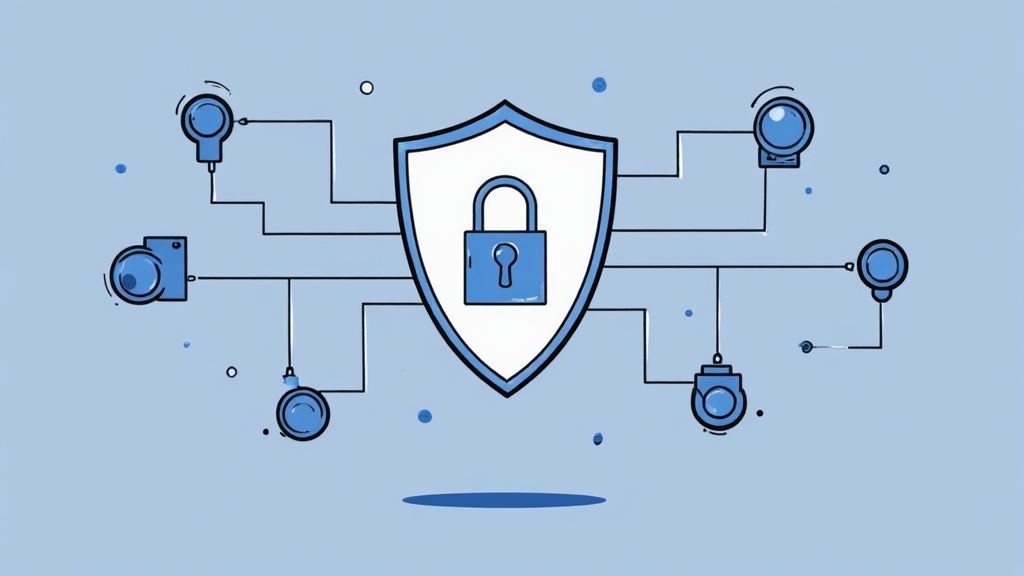
While the big-picture strategy and team building get all the glory, a huge part of the CTO duties and responsibilities is being the guardian of the company’s digital fortress. This means rolling up their sleeves and overseeing the day-to-day tech operations that keep the business running smoothly, reliably, and securely.
If strategy is the blueprint for the castle, then operations is the constant work of maintaining the walls, managing the gates, and making sure the foundation is rock-solid. The CTO is ultimately responsible for the entire tech stack—from the servers hosting the application to the software developers use every day. They have to ensure the infrastructure isn’t just working, but is also scalable and performing at its peak.
Overseeing Infrastructure and Performance
At its core, a CTO is accountable for system uptime and reliability. A slow, buggy product is a direct hit to customer satisfaction and revenue, elevating performance from a tech issue to a top-tier business concern. The CTO has to ensure the company’s digital machinery can handle today’s demand and scale for future growth without buckling under pressure.
This means making critical calls on things like:
- Hosting and Architecture: Deciding between cloud providers like AWS or Google Cloud, on-premise servers, or a hybrid approach.
- Performance Monitoring: Putting tools in place to track system health and spot bottlenecks before they turn into full-blown outages.
- Scalability Planning: Proactively designing systems that can grow with the user base, so you’re not forced into costly emergency overhauls down the road.
Think of the CTO as the chief engineer of a power grid. Their job is to keep the lights on for every single customer, every single day, no matter how much demand fluctuates.
Championing Cybersecurity as a Business Imperative
In today’s world, cybersecurity is no longer just an “IT problem.” It’s a massive business risk that lands squarely on the CTO’s shoulders. A single security breach can shatter customer trust, trigger huge financial penalties, and cripple a company’s reputation in an instant.
A CTO understands that security isn’t a feature you tack on at the end. It’s a foundational principle that must be woven into every part of the technology, from the first line of code to the final deployment.
This responsibility is a complex one, demanding a proactive, multi-layered defense strategy. The CTO creates and enforces robust security protocols across the entire organization. This covers everything from managing access controls and implementing multi-factor authentication to running regular security audits and penetration tests. This isn’t just a trend; a study found that by 2025, over 90% of organizations had increased their cybersecurity budgets to combat heightened risks. You can dive deeper into the CTO’s evolving role in security at northwest.education.
Ensuring Compliance and Recovery
A huge piece of the security puzzle is navigating the tangled web of regulatory compliance. Depending on the industry and where you do business, you might need to comply with standards like GDPR, HIPAA, or SOC 2. The CTO is on the hook for making sure the company’s tech and processes meet these legal standards, which often means rigorous documentation and third-party audits.
And let’s be realistic—even with the best defenses, things can still go wrong. That’s why a crucial operational duty is developing and testing a comprehensive disaster recovery plan. This is the playbook for what to do in case of a catastrophic system failure or cyberattack, ensuring the business can get back on its feet fast, with minimal data loss. This operational stewardship is what ultimately protects a company’s most valuable digital assets from a world of ever-present threats.
Of course. Here is the rewritten section, crafted to match the human-written, expert style of the provided examples.
Driving Innovation and Future-Proofing the Company
Sure, keeping the lights on is part of the job, but one of the most exciting CTO duties and responsibilities is looking around the corner to build tomorrow’s competitive edge. A truly strategic CTO isn’t just managing the present; they’re the company’s chief innovator, constantly scanning the horizon for tech that could redefine the business.
Their core mission here is to future-proof the company. Think of them as a scout and an architect rolled into one. First, they venture into the wilds of emerging tech—like generative AI, decentralized systems, or quantum computing—to see what’s actually useful. Then, they bring back the most promising finds and figure out how to weave them into the company’s core strategy.
This isn’t about chasing shiny objects. A great CTO has a sharp filter and looks at every new technology through a strict business lens. They’re always asking the tough questions: Does this solve a real customer problem? Can it open up a new revenue stream? Will it give us a real, sustainable advantage over the competition? This discipline is what separates real innovation from expensive distractions.
From Experimentation to Implementation
Getting from a cool idea to a fully integrated technology isn’t guesswork. It’s a structured process, led by the CTO, designed to manage risk while maximizing what you learn along the way. This methodical approach ensures that innovation is both impactful and built to last.
The journey usually unfolds in a few clear stages:
- Research and Evaluation: The CTO and their team pinpoint and analyze emerging trends, digging into how they could impact the industry and, more importantly, their own company.
- Proof of Concept (PoC): The most promising ideas get turned into small-scale, low-cost experiments. The goal isn’t to build a perfect, polished product. It’s to quickly find out if the core idea is technically sound and has legitimate business potential.
- Strategic Implementation: If a PoC proves its worth, the CTO creates a full-blown roadmap to integrate the technology. This means tying it directly into the company’s products or operations and making sure it aligns with long-term business goals.
For instance, a CTO at a fintech startup might see the buzz around Large Language Models (LLMs). They could spin up a quick PoC to test if an LLM can improve the accuracy of their fraud detection algorithms. If the test shows it’s 25% more effective, they suddenly have a powerful business case for a full-scale rollout.
Championing a Culture of Innovation
Technology alone doesn’t cut it. Real innovation needs the right culture to grow in. A huge part of the CTO’s job is to build an environment where people are encouraged to experiment and where failure is seen as a data point, not a disaster. This is the classic “fail forward” mindset.
A CTO who punishes every failed experiment will quickly end up with a team that never tries anything new. True innovation can only happen with psychological safety—where engineers feel empowered to take calculated risks without looking over their shoulder.
They champion this culture by giving their team the space and resources to play with new ideas. This might look like dedicating a percentage of everyone’s time to R&D projects, hosting internal hackathons, or setting up dedicated “innovation labs.”
This forward-looking, proactive approach to innovation is one of the most vital CTO duties and responsibilities. By constantly exploring, testing, and integrating new technologies, the CTO ensures the company doesn’t just keep up in a fast-moving market—it actively shapes its own future and stays a few steps ahead of everyone else.
When a Fractional CTO Is the Right Choice
Let’s be honest: not every company needs a full-time, C-suite executive to manage the full spectrum of CTO duties and responsibilities right out of the gate. Signing on for a high six-figure salary, plus equity and benefits, is a massive commitment. It’s especially daunting for an early-stage startup or a business dipping its toes into a new tech-focused venture.
This is exactly where a more agile leadership model makes sense. A Fractional CTO steps in to provide that top-tier strategic thinking—everything from roadmap planning to team mentoring—but on a part-time, contract basis.
You get the brain of a seasoned technology leader without the full-time cost. They bring years of hard-won experience to the table, helping you avoid the landmines that can sink a young company, all for a fraction of the cost and commitment of a full-time hire.
This model isn’t just a cost-saving measure; it’s a strategic advantage for businesses in very specific situations. For a startup, a Fractional CTO can architect the technical foundation correctly from day one, preventing those costly re-platforming projects down the road. For a more established company, they can be brought in to lead a critical, one-off initiative, like a huge cloud migration or the implementation of a new cybersecurity protocol.
The Fractional Model in Action
The real magic here is getting access to elite talent precisely when you need it most. Instead of a permanent headcount, you bring in an expert for a set number of hours each week or month. This gives you incredible flexibility to dial their involvement up or down as your needs and budget evolve.
A Fractional CTO’s time is almost always focused on high-impact, strategic work, not getting bogged down in the daily minutiae. Their contributions typically look something like this:
- Building a long-term technology roadmap that actually supports the company’s business goals.
- Auditing the current tech stack and processes to sniff out risks and find hidden opportunities.
- Mentoring and upskilling your existing junior developers or team leads.
- Helping recruit key technical hires by designing the interview process and vetting candidates like a pro.
- Advising the CEO and board on make-or-break technology investments and decisions.
The core value of a Fractional CTO is strategic leverage. They provide the wisdom and foresight to prevent million-dollar mistakes for the cost of a mid-level engineer, making them one of the highest ROI hires a startup can make.
This approach is also a fantastic alternative to rushing into a technical co-founder relationship. Instead of giving away a huge chunk of equity before you’ve even found product-market fit, you can bring in a fractional leader to validate your tech strategy first. For founders weighing their options, understanding the nuances between a fractional CTO vs a technical co-founder is a critical step toward making the right call for your company’s future.
Full-Time CTO vs Fractional CTO Comparison
To figure out what’s right for you, it helps to see a direct comparison. The best fit really comes down to your company’s stage, budget, and most pressing strategic needs.
| Attribute | Full-Time CTO | Fractional CTO |
|---|---|---|
| Cost | High (salary, equity, benefits) | Moderate (fixed monthly or hourly rate) |
| Engagement | Full-time, deep operational involvement | Part-time (5-25 hours/week), strategic focus |
| Commitment | Long-term employment contract | Flexible, short-term to medium-term contract |
| Best For | Scaled companies with complex tech operations and large teams. | Startups, SMBs, or companies needing specific project leadership. |
When it comes down to it, a Fractional CTO gives you a practical way to cover all the essential CTO duties and responsibilities without the hefty overhead of a full-time executive. It’s a smart, strategic move for any company that needs expert guidance to navigate its biggest technology hurdles and build a solid foundation for growth.
Common Questions About the CTO Role
As the true scope of CTO duties and responsibilities comes into focus, it’s only natural for questions to pop up. We see it all the time—founders, executives, and even aspiring tech leaders grapple with the nuances of the role. They’re trying to figure out exactly where a CTO fits in their company and what success really looks like.
Let’s dive into some of the most common questions we hear. These go way beyond simple definitions and get to the heart of team structure, hiring timelines, and the core skills that separate a good CTO from a great one. Getting this right is absolutely critical for setting your technology leader up for success.
What Is the Difference Between a CTO and a CIO?
This is easily one of the most frequent points of confusion, but there’s a simple way to think about it. A CTO is almost always focused externally, on the technology that is the company’s product—the thing that brings in revenue. A CIO (Chief Information Officer), on the other hand, is focused internally on the IT systems and infrastructure that employees use to get their jobs done.
Here’s a simple analogy to make it stick:
- The CTO is the architect designing the car your company sells to customers.
- The CIO is the mechanic who keeps the factory running where that car is built.
Both roles are essential, but they serve completely different masters. The CTO builds the product for your customers, while the CIO manages the internal tools for your team.
When Should a Startup Hire Its First CTO?
Hiring a CTO is a massive milestone for any startup, and the timing is everything. You should bring on your first CTO when technology stops being just a feature and becomes a core pillar of your competitive advantage, demanding more strategic leadership than a founder or lead developer can provide.
A key trigger is when you need to make long-term architectural decisions that will impact your ability to scale. Making the wrong choices early on can lead to crippling technical debt that slows growth to a crawl.
This moment often arrives when the conversation shifts to building out a dedicated engineering team, scaling a product for a rapidly growing user base, or navigating complex security and compliance hurdles. Until you hit that point, a strong lead engineer or even a fractional CTO can often bridge the gap perfectly.
What Are the Most Important Skills for a CTO?
Beyond the obvious deep technical expertise, the most vital skills for a CTO are strategic thinking, sharp business acumen, and exceptional leadership. A truly effective CTO can fluently translate complex technical concepts into plain English for non-technical stakeholders, from the board of directors all the way to the marketing team.
They also need to be masters at finding, motivating, and mentoring a world-class engineering team. Ultimately, a great CTO doesn’t just build cool tech; they align every single technology initiative with the company’s biggest financial and strategic goals. To get a better handle on vetting these skills, check out our detailed guide with insightful questions to ask a potential CTO.
Ready to add executive-level technology leadership to your team without the full-time cost? Shiny connects you with a marketplace of vetted, experienced fractional CTOs who can guide your strategy, mentor your team, and help you scale efficiently. Find the perfect fractional executive for your startup at useshiny.com.