Executive Onboarding Best Practices: The Ultimate Guide for Modern Leadership Success
The Hidden Power of Strategic Executive Onboarding

Most companies treat executive onboarding as a basic orientation – some introductions, paperwork, and straight into the job. This rushed approach often leaves new leaders feeling lost and unprepared to make their full impact. When organizations invest time in proper executive integration, however, they set their leaders up for meaningful long-term success.
Why Strategic Onboarding Matters
A well-designed onboarding process helps new executives quickly understand their role and start making valuable contributions. Rather than just handing over policy documents, strategic onboarding provides customized experiences like focused training sessions, mentoring relationships, and direct access to key team members. This personalized approach ensures executives build the right connections and context from day one.
The numbers make a compelling case for strategic onboarding. Companies that implement strong onboarding programs see 52% higher employee retention and 60% greater productivity. Even more striking, employees who experience great onboarding are 2.6 times more likely to be satisfied at work and 69% more likely to stay with the company for 3+ years.
Key Elements of Strategic Executive Onboarding
Success comes from focusing on core elements that help new leaders smoothly integrate into the organization. This is especially important for growing companies that need their executives to make an impact quickly. Here are the essential components:
- Cultural Immersion: New executives must truly experience the company culture, not just read about it. This means spending time with employees at all levels, joining key meetings, and seeing how work actually gets done day-to-day.
- Relationship Building: Strong internal and external relationships determine an executive’s effectiveness. Strategic onboarding creates opportunities for new leaders to connect with stakeholders through planned introductions, group activities, and mentoring partnerships.
- Performance Alignment: Clear goals and expectations are critical. The onboarding process should help executives understand strategic priorities and define measurable objectives that link their role to organizational success.
By focusing on these fundamentals, companies create the conditions for successful leadership transitions. This structured approach leads to faster executive integration and better organizational performance.
Crafting Your Executive Integration Timeline
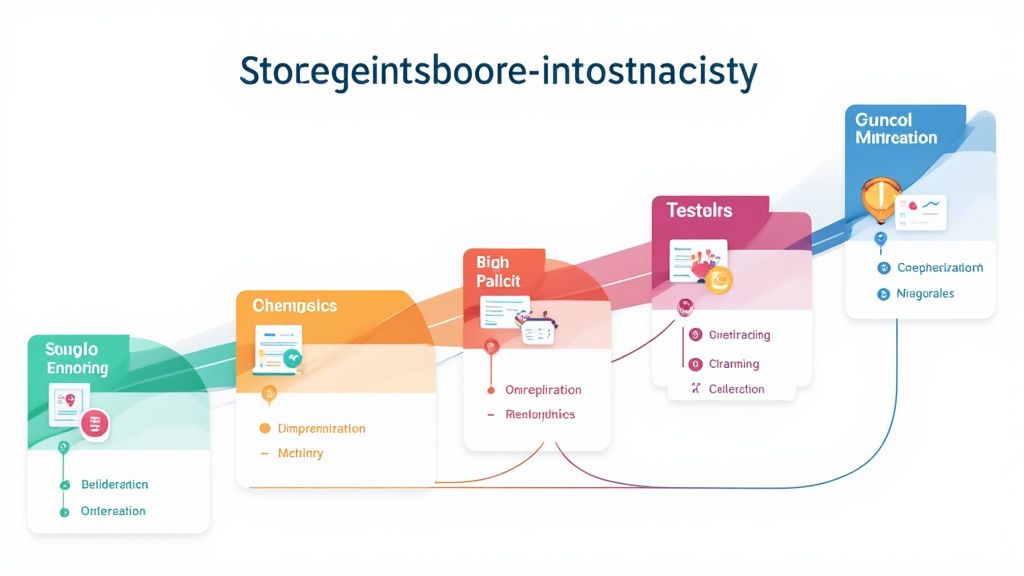
Creating a clear timeline is essential for successfully bringing new executives into an organization. A well-structured onboarding plan helps new leaders hit the ground running while giving the company clear checkpoints to track progress. This goes beyond just scheduling meetings – it’s about mapping out a thoughtful integration journey.
Key Milestones in the Executive Onboarding Timeline
The most effective onboarding plans typically span 90 to 180 days and include specific milestones to measure progress at each stage:
- First 30 Days: Initial Immersion and Assessment. New executives focus on understanding company culture, evaluating their department’s current state, and building key relationships. This is primarily a time for listening and gathering insights.
- 30-90 Days: Strategy Development and Early Wins. Leaders begin shaping their vision while identifying and executing quick wins. This helps establish credibility and shows their ability to drive positive change.
- 90-180 Days: Implementation and Long-Term Planning. The focus shifts to putting strategies into action and developing sustainable plans. Success metrics become more concrete as the executive solidifies their leadership approach.
Building a Flexible and Focused Timeline
While these core milestones provide structure, the specifics need to match both the role and organization. For instance, a Chief Marketing Officer might prioritize early meetings with clients and the marketing team, while a Chief Technology Officer would likely focus first on assessing technical infrastructure and product roadmaps. That’s why platforms like Shiny can be so helpful – they connect companies with experienced executives who understand role-specific onboarding needs.
Research shows that longer, more structured programs deliver better results. However, only 11% of companies extend their onboarding beyond three months, even though HR experts recommend longer programs. Organizations with standardized onboarding see 50% better retention and productivity from new hires.
Customizing Timelines for Specific Roles
To make your integration timeline most effective, consider these key elements:
- Role-Specific Objectives: Set clear goals for the executive’s first few months that connect to broader business strategy and provide concrete ways to measure success.
- Regular Check-ins: Plan frequent touchpoints between the new executive, their supervisor, and HR to track progress and address any challenges early.
- Mentorship and Support: Connect new executives with experienced internal mentors who can help them navigate company culture and internal dynamics. This speeds up learning and builds stronger relationships.
A well-designed timeline with these elements helps organizations get better results from new executive hires. The upfront investment in careful planning pays off through faster integration, more effective leadership, and stronger business performance.
Building Power Networks That Drive Results

When an executive starts a new role, success depends on more than just initial introductions. What really matters is building a strong web of relationships that helps drive measurable impact. This means connecting purposefully with the right people who can help advance key business objectives.
Mapping Key Stakeholders for Early Engagement
Smart executives start by creating a clear map of who they need to connect with. This goes beyond just looking at org charts – it’s about understanding who has real influence, who holds critical information, and who can help get things done.
Take a new CFO as an example. While they’ll obviously need strong ties within finance, their success also depends on building bridges to leaders in operations, sales, and other departments. This broader view helps them grasp how financial decisions ripple through the whole company. They also need to develop relationships with external partners like major investors and clients right from the start.
Orchestrating Meaningful Interactions
After identifying key relationships to build, the next step is engaging with purpose. Quick meet-and-greets won’t cut it – each interaction needs clear goals and follow-through. Whether it’s a one-on-one lunch, small group discussion, or casual coffee chat, what matters is making it count.
The format matters less than the substance of these conversations. Good executives focus on really listening, asking smart questions that show they’ve done their homework, and finding ways to add value. This approach builds trust naturally and sets the stage for strong ongoing partnerships.
Building Authentic Relationships That Last
Real influence comes from genuine connections, not just collecting business cards. The best executives invest time in understanding others’ goals, challenges and perspectives. They look for ways to help others succeed while moving their own objectives forward.
Mentoring relationships offer a great example of this give-and-take dynamic. New executives can benefit from finding mentors while also mentoring others. Platforms like Shiny help facilitate these valuable connections by linking executives who can support each other’s growth. When both parties gain from the relationship, it tends to endure.
Avoiding Common Pitfalls in Network Building
Even experienced leaders can falter in relationship building. Common mistakes include only networking “up” to more senior executives while ignoring peers and rising talent. Another frequent error is letting relationships go cold after the initial connection.
The keys to avoiding these pitfalls are:
- Building diverse networks across levels and functions
- Following through consistently on commitments
- Finding ways to stay meaningfully engaged over time
- Looking for opportunities to help others succeed
When executives invest in authentic relationships and maintain them thoughtfully over time, they build the kind of network that helps them and their organizations thrive. The effort spent on relationship building pays off in better collaboration, smoother execution, and stronger results.
Mastering Cultural Integration for Leadership Success

Good executive onboarding goes beyond just learning a company’s stated values – it requires understanding the organization’s unwritten rules and hidden dynamics. New leaders must grasp both the formal aspects of company culture and its subtle, unspoken elements to thrive in their roles.
Making Sense of Company Culture
Think of integrating into a new company culture like becoming fluent in a new language. You need to master both the formal vocabulary (mission statements and values) and the everyday expressions that only come from direct experience. For new executives, this means going beyond surface-level understanding.
The real meaning behind company values often differs from their formal definitions. A company may claim to value “innovation,” but what does that mean in practice? Some organizations encourage bold experimentation, while others prefer small, steady improvements. The best way to understand these nuances is through hands-on experience – joining team meetings, having casual conversations, and closely observing how work gets done.
Finding the Right Balance
After getting a solid grasp on the culture, executives face the challenge of adapting while also making positive changes where needed. This requires careful judgment. Moving too fast with changes can create pushback, but being too passive means missing opportunities to help the organization grow.
The process is similar to joining an established musical group. You first need to learn their style and build trust before suggesting new directions. Successful executives make an effort to understand and work within the existing culture before attempting to shape it.
Leading Diverse Teams Effectively
Cultural integration becomes even more important when managing teams with varied backgrounds and perspectives. Different team members may have distinct communication preferences and expectations that leaders need to understand and bridge effectively.
The key is creating an environment where everyone feels heard and valued. This means actively seeking different viewpoints during discussions, making space for open dialogue about cultural differences, and handling misunderstandings with care and understanding. Tools like Shiny help companies find experienced executives who excel at leading diverse teams.
Making Culture Work for Business Success
Strong cultural integration does more than help executives fit in – it enables them to drive real business results. By truly understanding cultural dynamics, leaders can build stronger relationships, improve team communication, and boost engagement throughout the organization.
The payoff comes in the form of more effective teamwork, smarter decisions, and better business outcomes. Simply put, leaders who master cultural integration turn their understanding into a real advantage for their organizations.
Measuring What Matters in Executive Integration
Successful executive onboarding depends on tracking the right metrics that show how well new leaders are actually integrating and making an impact. Moving beyond basic checkboxes like “completed orientation,” organizations need to focus on measuring indicators that predict whether an executive will succeed long-term.
Identifying Key Performance Indicators (KPIs)
While specific KPIs should align with each role and organization, certain universal metrics offer valuable insight into an executive’s progress. In the first 90 days, key indicators include:
- Stakeholder Input: Regular feedback from peers, direct reports, and clients provides a complete view of the executive’s early impact and areas for improvement
- Goal Progress: Clear objectives for the first 30, 60, and 90 days, with specific benchmarks to measure progress against planned milestones
- Cultural Integration: Direct observations from HR and mentors about how well the executive understands and demonstrates company values in their leadership approach
For ongoing success measurement, focus on:
- Team Results: Concrete improvements in team productivity, engagement, and innovation that can be tied to the executive’s leadership
- Business Outcomes: Specific metrics showing the executive’s direct impact, such as revenue growth, market expansion, or successful strategic initiatives
- Team Stability: Tracking retention rates within the executive’s organization as an indicator of leadership effectiveness
Gathering Meaningful Feedback
Quality feedback drives improvement, but the approach matters. To collect truly useful insights:
- Ask targeted questions that explore specific behaviors and their impact rather than surface-level impressions
- Create safe channels for anonymous feedback, especially from direct reports who may hesitate to share openly
- Mix formal and informal check-ins to catch issues early and enable real-time adjustments
Continuous Program Optimization
Treat your onboarding program as an evolving system rather than a fixed process. Review metrics and feedback regularly to spot trends and areas needing attention. For instance, if multiple executives struggle with similar cultural challenges, adjust your orientation to better prepare future leaders. Companies like Shiny offer access to experienced fractional executives who can help refine your approach based on proven successes across organizations. This commitment to ongoing improvement helps ensure consistently stronger leadership transitions.
Your Executive Onboarding Action Plan
Creating a strong foundation for new executive success requires careful planning and execution. This section outlines practical steps and tools to build an effective onboarding program, along with solutions to common challenges and critical success factors. We’ll explore how companies can take proven practices and adapt them to their unique needs.
Developing a Comprehensive Onboarding Program
Every executive and organization has distinct requirements that need a thoughtful, personalized approach. Rather than relying on standard processes, successful onboarding adapts to both the incoming leader and company culture. This means going beyond basic orientation to create meaningful integration experiences.
- Strategic Timeline Planning: Create a detailed 90-180 day plan that matches both role demands and business goals. Break this into clear phases – for example, focusing first on understanding company culture and building key relationships, then moving into strategic planning and execution.
- Key Relationship Building: Plan meaningful connections with important stakeholders inside and outside the organization. Provide context about each person’s role, shared objectives, and potential areas for collaboration to make these interactions valuable.
- Structured Support System: Match new executives with experienced internal mentors who can provide guidance and help navigate the organization. Companies can also work with platforms like Shiny to connect with seasoned fractional executives for additional mentorship.
- Clear Performance Goals: Set specific, measurable objectives that align with company strategy from the start. This creates shared understanding around what success looks like and helps drive meaningful impact.
Addressing Common Onboarding Challenges
Most organizations face similar hurdles when bringing on new executives. Here are proven solutions to typical challenges:
- Information Management: Focus on sharing essential knowledge first, then provide additional resources as needed rather than overwhelming with data upfront
- Cultural Integration: Start cultural immersion early and make it a key priority to prevent misalignment with company values
- Support Networks: Create a dedicated onboarding team or mentorship program to provide consistent guidance
- Role Clarity: Clearly outline responsibilities, authority, and success metrics from day one
Key Success Factors for Program Execution
Several core elements help ensure strong onboarding outcomes:
- Executive Engagement: New leaders must actively participate in and embrace the onboarding process
- Stakeholder Input: Include key stakeholders in program planning and rollout
- Ongoing Feedback: Regularly gather input from the executive and stakeholders to refine the program
- Results Tracking: Monitor specific metrics to evaluate program effectiveness and identify improvements
| Component | Impact |
|---|---|
| Strategic Timeline | Ensures relevance to specific role and organization |
| Relationship Building | Creates productive connections with key stakeholders |
| Support System | Provides guidance and speeds up learning |
| Performance Alignment | Connects individual and organizational goals |
| Regular Assessment | Enables continuous program enhancement |
A well-designed executive onboarding program is essential for long-term success. By implementing these practices and using resources like Shiny, organizations help new leaders integrate smoothly and make an impact quickly. Taking a strategic approach benefits both the executive and the broader organization.
Looking to improve your executive onboarding? Shiny offers a marketplace connecting companies with experienced fractional executives across industries. Find part-time leaders matched to your specific needs and accelerate your growth.