Facebook Lead Ads: A Complete Guide for 2026
A startup founder can spend days refining an offer, launch a polished campaign, and still watch the budget produce little more than a spreadsheet full of unqualified names. The problem often isn't that Facebook can't generate demand. It's that the campaign, form, targeting, and follow-up process were designed as separate tasks instead of one operating system.
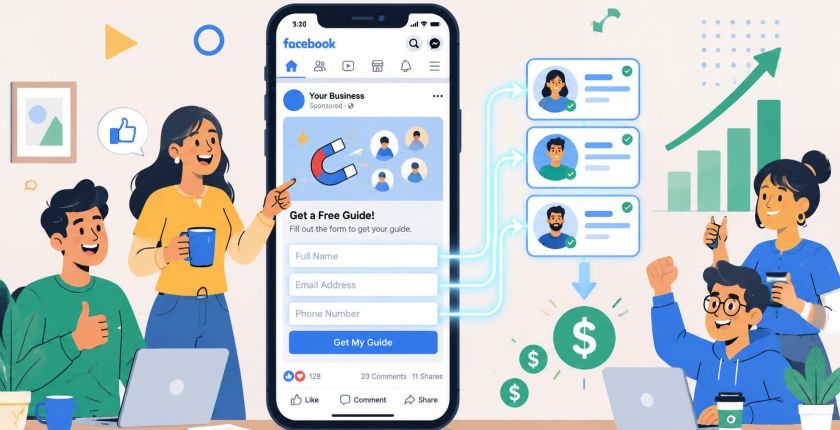
Facebook Lead Ads can remove a major source of friction by letting prospects submit information inside Facebook or Instagram rather than sending them to a separate landing page. That convenience can improve completion, but it also makes weak messaging and poor sales operations more dangerous. The form may be easy to complete, yet the business still has to earn the conversation afterward.
Why Facebook Lead Ads Matter for Startups
Facebook Lead Ads became a distinct format in the mid-2010s, during Meta's push to let people submit forms without leaving the app. The design addressed a practical mobile problem: every additional page load, redirect, and form field created another opportunity for a prospect to abandon the process.
A later market benchmark found that campaigns using the format averaged a 12.54% conversion rate, compared with 10.47% for campaigns sending users to landing pages. The same benchmark reported an average cost per action of $17.98 for Lead Ads versus $13.26 for landing-page campaigns, as shown in historical Facebook lead benchmarks. The trade-off is clear. Lead Ads can produce materially better completion rates, but the convenience may come with a higher acquisition cost.

The mobile advantage
A small business doesn't need a website to test a clear offer. A local service company can promote a quote request, a software startup can offer a product guide, and a professional firm can invite prospects to request an assessment. In each case, the prospect can respond without waiting for an external page to load.
That doesn't mean every form fill is valuable. The lower-friction experience can attract people who are curious but not ready to buy, especially when the ad promises something vague. The strongest campaigns make the exchange explicit before the click: what the person receives, who it's for, what information the form asks for, and what happens next.
Practical rule: Treat the form as the first sales conversation, not as an administrative checkbox.
The economics have changed
Facebook Lead Ads remain a major acquisition channel, but recent performance is less forgiving. Analysis of 726 campaigns reported a 7.72% average conversion rate in 2025, down from 8.67% in 2024, while average cost per lead rose 20.94% to $27.66. The same benchmark reported a 2.59% click-through rate, with 80% of tracked industries experiencing year-over-year conversion declines, according to recent Facebook advertising benchmarks.
For a startup, that means the format can still support pipeline creation, but it can't compensate for an unclear offer or an absent sales process. Founders who use demand generation strategies effectively connect the ad to qualification, routing, and nurture. They don't measure success by lead volume alone.
How to Create Your First Facebook Lead Ad Campaign
A first campaign should be simple enough to diagnose. Choose one offer, one audience hypothesis, and one clear next step. Complexity makes it difficult to determine whether the problem lies in the creative, targeting, form, or follow-up.
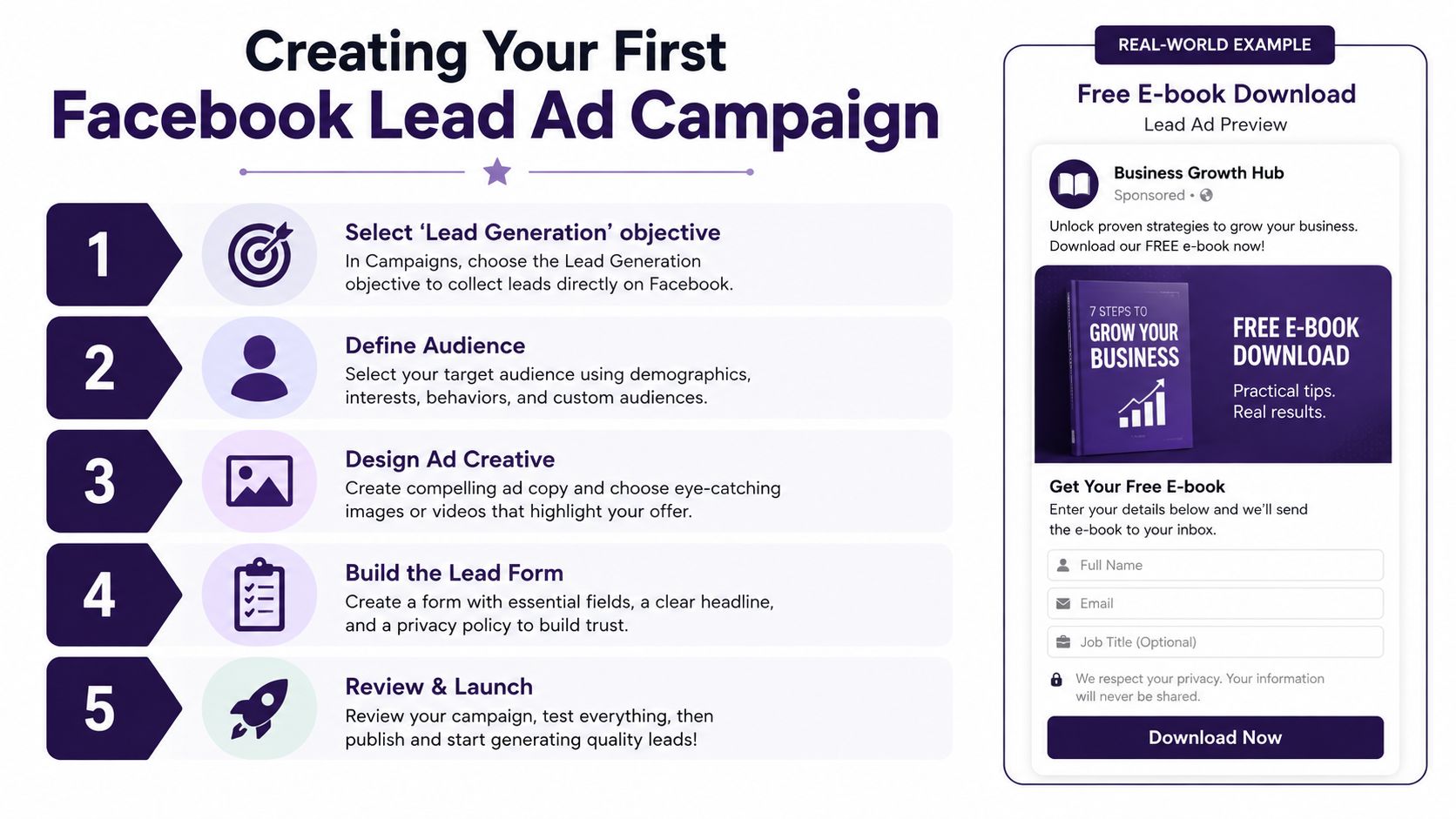
Step 1, choose the campaign foundation
Open Meta Ads Manager, select Create, and choose the Leads objective. For the conversion location, select Instant forms if you want prospects to submit inside Facebook or Instagram.
Name the campaign so another person can understand its purpose without opening the account. Include the offer and audience in the name, rather than relying on labels such as “Test Campaign.” Set the budget and schedule conservatively enough to learn from the first version instead of changing several variables at once.
Step 2, define a useful audience
Start with the strongest data you already own. A customer list, qualified CRM segment, website visitors, or people who engaged with your content can provide a more meaningful starting point than broad interests alone.
You can test a lookalike audience based on your best existing customers, use interest-based targeting when the niche is clearly defined, or retarget people who already interacted with your brand. Keep the audience logic tied to the offer. A guide for enterprise procurement shouldn't use the same audience assumptions as a local consumer promotion.
Step 3, build the creative around one promise
Use a single image, short video, or carousel that communicates the problem and the exchange quickly. The headline should match the form's promise. If the ad says “Get the pricing guide,” the form shouldn't unexpectedly ask the prospect to book a sales call.
A practical example for a SaaS startup might be:
- Primary text: “Planning your next reporting workflow? Download the practical evaluation guide and compare the questions your team should ask before choosing a platform.”
- Headline: “Get the reporting evaluation guide”
- Call to action: “Download”
This works better than “Transform your business with next-generation analytics,” because the prospect can immediately understand the benefit.
Step 4, design the form for intent
Meta provides prefilled information, but prefill doesn't eliminate the need for judgment. Use the shortest form that still supports qualification. Ask for contact details and one question that reveals fit, urgency, use case, or buying context.
Choose More volume when reach is the priority, or Higher intent when an additional review step can help people confirm their information. Use the intro section to restate the value, explain how the data will be used, and link to the privacy policy. The thank-you screen should tell the prospect exactly what happens next.
A useful question might be, “What are you trying to improve first?” with answers such as reporting, lead routing, attribution, or team productivity. That answer can shape the follow-up instead of leaving every lead in the same generic sequence.
Step 5, connect delivery before launch
Send new leads into the CRM or marketing platform before publishing. A campaign that collects contacts but requires someone to download a spreadsheet manually will lose valuable context and create avoidable delays. Tools and workflows covered in marketing automation best practices can help connect capture to notification, assignment, and nurture.
Preview the ad, form, and thank-you screen on mobile. Check the privacy language, CTA consistency, field order, and delivery path. Then launch one controlled version and record the assumptions you intend to test.
Targeting Strategies That Actually Work for SMBs
Targeting works when it reflects how buyers become customers. An audience isn't “good” because it looks large in Ads Manager. It's useful when the people inside it share a credible reason to care about the offer and a realistic path to purchase.
Start with first-party data whenever possible. Existing customers, qualified opportunities, product users, newsletter subscribers, and high-value website visitors can provide better signals than a collection of loosely related interests. A lookalike audience built from poor-quality leads scales the wrong behavior.
Three practical audience paths
Lookalike audiences are useful when a startup has enough trustworthy customer or opportunity data to define what good looks like. Build the source from qualified outcomes, not every form fill. If your CRM doesn't distinguish customers from unqualified contacts, fix that classification before using the list as a seed.
Interest-based targeting can be a sensible starting point for a new business with limited first-party data. Keep the message tightly connected to the selected interests, and don't assume interest alignment equals buying intent. A prospect may recognize a category without having a problem they want to solve now.
Retargeting is strongest when the audience has already demonstrated a meaningful action, such as engaging with a product explanation or visiting a high-intent page. Use a different message from the prospecting ad. Someone who has already interacted with the company may need proof, comparison details, or a direct consultation offer rather than another introduction.
| Targeting Type | Pros | Cons | Best For |
|---|---|---|---|
| Lookalike audience | Extends qualified customer signals to new prospects | Depends on clean source data and can reproduce weak qualification | Startups with reliable customer or opportunity records |
| Interest-based targeting | Gives new advertisers a practical way to test a market | Interests don't always indicate urgency or purchase intent | New offers with a clearly defined niche |
| Retargeting | Reaches people who already know the brand | Can saturate a small audience and needs a distinct follow-up message | Visitors and engagers who need more evidence |
| First-party custom audience | Uses direct business knowledge and customer context | Requires organized, consent-aware data | SMBs with an active CRM or customer database |
Recent benchmarks show why vertical context matters. In 2025, education and legal services exceeded 10% conversion, while furniture reached 3.77% and physicians and surgeons reached 4.51%, according to WordStream's Facebook Ads benchmarks. Those figures aren't targets for every company. They're a reminder that the same campaign structure can behave very differently across markets.
Allocate spend according to evidence, not habit. Compare audience groups using CTR to judge initial relevance, then examine conversion rate and cost per lead together. Finally, connect the audience to lead-to-meeting and lead-to-opportunity outcomes, because the cheapest segment isn't necessarily the most valuable one.
Turning Leads into Revenue Through Follow-Up
A form fill is an event, not a sale. The startup wins only when the contact receives a relevant response, gets qualified, and moves into a process that matches their buying timeline.
A common failure pattern looks healthy inside Ads Manager. The ad earns clicks, the form produces contacts, and the cost per lead seems acceptable. Then the sales team discovers that many people don't remember submitting the form, don't match the target profile, or never receive a response designed for their stated need.
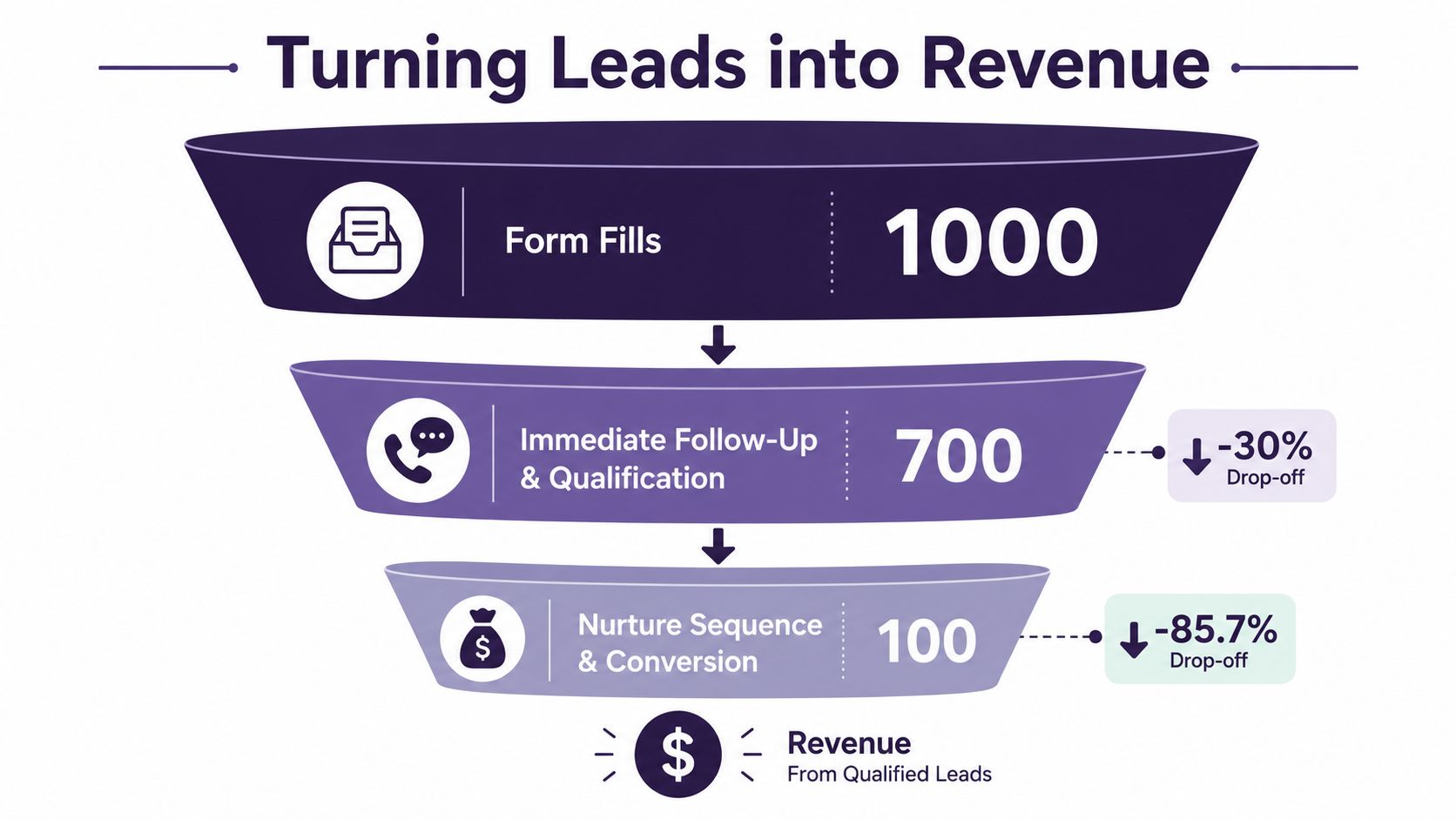
Build the handoff before buying traffic
The operational system should answer five questions:
- Who receives the lead: Assign ownership by territory, product, urgency, or customer segment.
- What happens immediately: Send a confirmation that repeats the promised asset or next step.
- How intent is checked: Use the form response, requested topic, company context, or stated timeline to guide qualification.
- Which channel follows: Choose email, phone, SMS, or a personal message according to consent and business context.
- When nurture begins: Place non-ready contacts into a sequence that continues the conversation without pretending they're sales-ready.
Immediate personalized follow-up matters because the ad has created a moment of attention. A generic autoresponder can confirm receipt, but a useful response references the prospect's request and sets expectations. If the lead asked for a consultation, provide the scheduling path. If the lead downloaded an educational resource, point to the next relevant decision.
Measure the revenue path
Track CTR first to see whether the offer earns attention. Then review conversion rate and cost per lead together. After that, move beyond platform metrics and monitor lead-to-meeting and lead-to-opportunity conversion, as recommended in guidance on Facebook Ads CTR benchmarks and lead quality.
A startup selling complex software might route a prospect who selects “evaluating vendors” to a sales representative, while sending “researching options” into an educational sequence. That distinction turns one form into multiple operating paths. The campaign becomes easier to optimize because marketing can see which audience, message, and answer lead to commercial progress.
Use sales funnel optimization to identify where contacts stop moving. If the form performs well but meetings don't happen, changing the thumbnail won't solve the problem. Review the handoff, response quality, qualification criteria, and scheduling experience first.
When to Bring in a Fractional CMO or Growth Executive
A founder can launch a Lead Ad. Running the channel well requires a broader system. Someone has to set the acquisition strategy, define acceptable lead quality, connect campaign data to the CRM, manage creative testing, coordinate sales, and decide when rising costs reflect a weak offer rather than a media problem.
That workload often arrives before a startup can justify a full-time chief marketing officer. A fractional CMO or growth executive can provide senior direction without requiring the company to make a permanent executive hire before the operating model is ready.
The right moment to add leadership
Bring in fractional leadership when:
- The channel is active but direction is unclear: Campaigns run, yet no one owns the relationship between spend, pipeline, and revenue.
- Lead quality is disputed: Marketing celebrates volume while sales rejects the contacts.
- The founder remains the bottleneck: Every audience decision, creative review, and follow-up exception returns to the founder.
- Growth requires coordination: Paid acquisition, lifecycle marketing, sales operations, and positioning need one accountable owner.
- The team needs a repeatable system: The company wants processes that an eventual full-time hire can inherit.
The value isn't limited to ad configuration. A capable executive can help determine whether Facebook is the right channel for the offer, clarify the customer segment, establish reporting definitions, and build the feedback loop between sales conversations and campaign decisions.
Why fractional can fit resource constraints
Academic work on the fractional CEO model defines the arrangement across six dimensions, including temporal allocation, decision authority, embeddedness, accountability, governance coupling, and transition pathway, as described in research on fractional CEO architecture. Those dimensions matter for marketing because a fractional leader shouldn't be treated as an external pair of hands. The company needs clear authority, access to data, executive sponsorship, and an agreed path for what happens when the role changes.
Market research places the global fractional leadership market at about $5.7 billion, growing at roughly 14% annually, and reports that fractional leaders doubled from about 60,000 in 2022 to 120,000 in 2024, according to fractional leadership market analysis. A 2026 UK survey of 180 senior fractional leaders also identified fragmented discovery, unpredictable pipelines, and reliance on personal networks as continuing friction points, based on the State of Fractional Leadership in the UK.
The practical lesson is simple. Don't hire fractional leadership merely because the campaign dashboard looks complicated. Hire it when the business needs senior judgment across marketing, sales, measurement, and execution, but isn't ready for a permanent executive structure.
Troubleshooting Common Facebook Lead Ad Issues
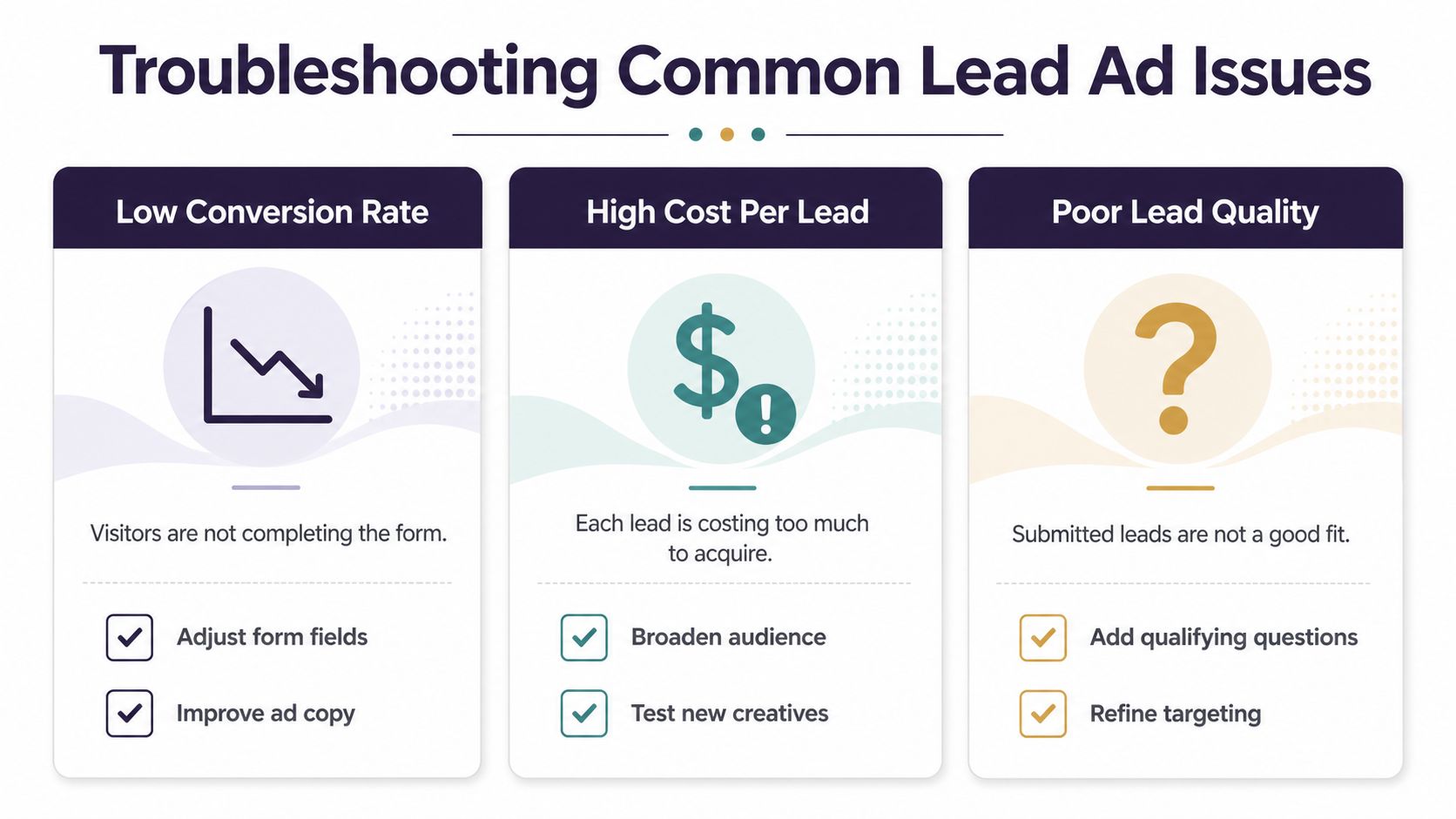
Most Lead Ad problems fall into three categories: too few people complete the form, each lead costs too much, or the contacts lack commercial value. Diagnose the category before changing the campaign. Random edits can obscure the actual cause.
Low conversion rate
First check message continuity. The ad, headline, form introduction, and thank-you screen should describe the same offer in plain language. If the creative promises a consultation but the form asks someone to download a guide, the mismatch creates hesitation.
Then reduce unnecessary friction. Remove fields that don't support qualification, clarify the benefit before the form opens, and test a stronger creative angle. A low conversion rate can reflect weak relevance, not just an overlong form.
High cost per lead
Review CTR before rebuilding the entire campaign. A weak CTR often signals that the audience doesn't recognize the problem, the creative fails to earn attention, or the offer doesn't feel valuable enough. Test a new promise, image, video opening, or audience interpretation.
If CTR is healthy but CPL remains high, compare conversion rate and audience size, then examine whether the form asks for information that prospects aren't ready to provide. Broaden targeting carefully when the audience is too narrow, but don't sacrifice qualification merely to make delivery cheaper.
Poor lead quality
Low-quality submissions usually point to weak expectations, loose targeting, or inadequate follow-up discipline. State the intended audience and next step in the ad. Add a question that separates use cases or urgency, and use first-party data to refine the audience.
Independent guidance on Facebook lead generation best practices emphasizes precise targeting grounded in first-party data, clear messaging, and immediate personalized nurture. Those controls matter because frictionless forms can increase casual submissions. Review lead-to-meeting and lead-to-opportunity outcomes before deciding that the ad is successful.
A mature troubleshooting routine asks what changed in the full system: offer, audience, creative, form, routing, response time, or qualification. Fix the narrowest confirmed problem, document the result, and avoid changing every variable at once.
Shiny connects startups and growing businesses with vetted fractional executives who can take ownership of acquisition strategy, Facebook Lead Ads, reporting, and follow-up operations. Visit Shiny to explore the right executive match for your growth stage or schedule a consultation about building a more reliable lead-generation system.