
Fractional Leadership: Grow Your Business Without Full-Time Costs
Demystifying Fractional Leadership: The Modern Executive Revolution

At its heart, fractional leadership is about bringing seasoned executives into your company on a part-time, or “fractional,” basis. Instead of committing to a full-time C-suite hire, businesses can tap into top-level strategic thinking for the specific hours or days required. This model provides a adaptable way to add high-level skills to your team without the hefty price tag of a full-time salary and benefits.
More Than Just Consulting
It’s easy to mistake fractional leadership for standard consulting, but there are important distinctions. Consultants usually tackle specific projects with clear start and end dates, delivering recommendations or finished solutions. A fractional leader, conversely, becomes a real part of your leadership team.
They take ownership of their area, shape strategy, oversee projects, and are held accountable for results – much like a full-time executive, just working fewer hours. It’s like having a top medical specialist available when needed, someone who understands your situation deeply over time, rather than getting a one-off assessment for a single issue. This ongoing, built-in style is what makes fractional leadership stand apart.
The Strategic Shift: Why Now?
While fractional roles may have once simply plugged temporary holes, fractional leadership is now a calculated strategic choice for many growing businesses. It opens the door to hiring experienced leaders—often those with backgrounds in large corporations or successful startups—whose full-time cost might otherwise be out of reach. This lets smaller companies and startups gain wisdom typically reserved for bigger players.
This strategic move isn’t just hearsay; the adoption of fractional leadership has grown significantly. Data shows a 23% increase in companies using fractional leaders since 2010. Additionally, forecasts predict this trend will climb, with an expected 15% rise over the next five years, marking a real change in how companies source executive talent.
Comparing the Models
Getting a handle on the differences helps show the value. This comparison table highlights the key differences between fractional leadership and traditional full-time executive positions across various dimensions:
| Aspect | Fractional Leadership | Traditional Executive Role |
|---|---|---|
| Commitment | Part-time (e.g., 5-25 hours/week) | Full-time (40+ hours/week) |
| Cost Structure | Retainer or project-based fee; lower overhead | Full salary, benefits, equity, bonus |
| Scope | Strategic leadership, specific functions | Broad oversight, day-to-day management |
| Integration | Embedded within leadership team | Fully integrated employee |
| Flexibility | High; scale up/down as needed | Lower; tied to employment contracts |
| Talent Access | Access to top-tier execs otherwise unaffordable | Limited by budget for full-time hires |
This table makes clear how fractional roles offer targeted expertise with greater flexibility and often lower overall cost compared to traditional hires.
Identifying the Right Fit
Not every leadership position needs someone full-time right away. Fractional leadership shines particularly bright when:
- A specific, high-level skill (like fundraising, M&A strategy, or market entry planning) is needed now and then.
- The company requires strategic direction in a vital area but can’t afford a full-time executive salary.
- A business is scaling quickly and needs experienced hands to establish solid systems and processes.
On the other hand, roles that demand constant, hands-on, daily operational oversight are likely better filled by a full-time employee. Thinking carefully about the strategic versus operational demands of a position is key to choosing the right hiring approach.
The Compelling Business Case for Fractional Leadership
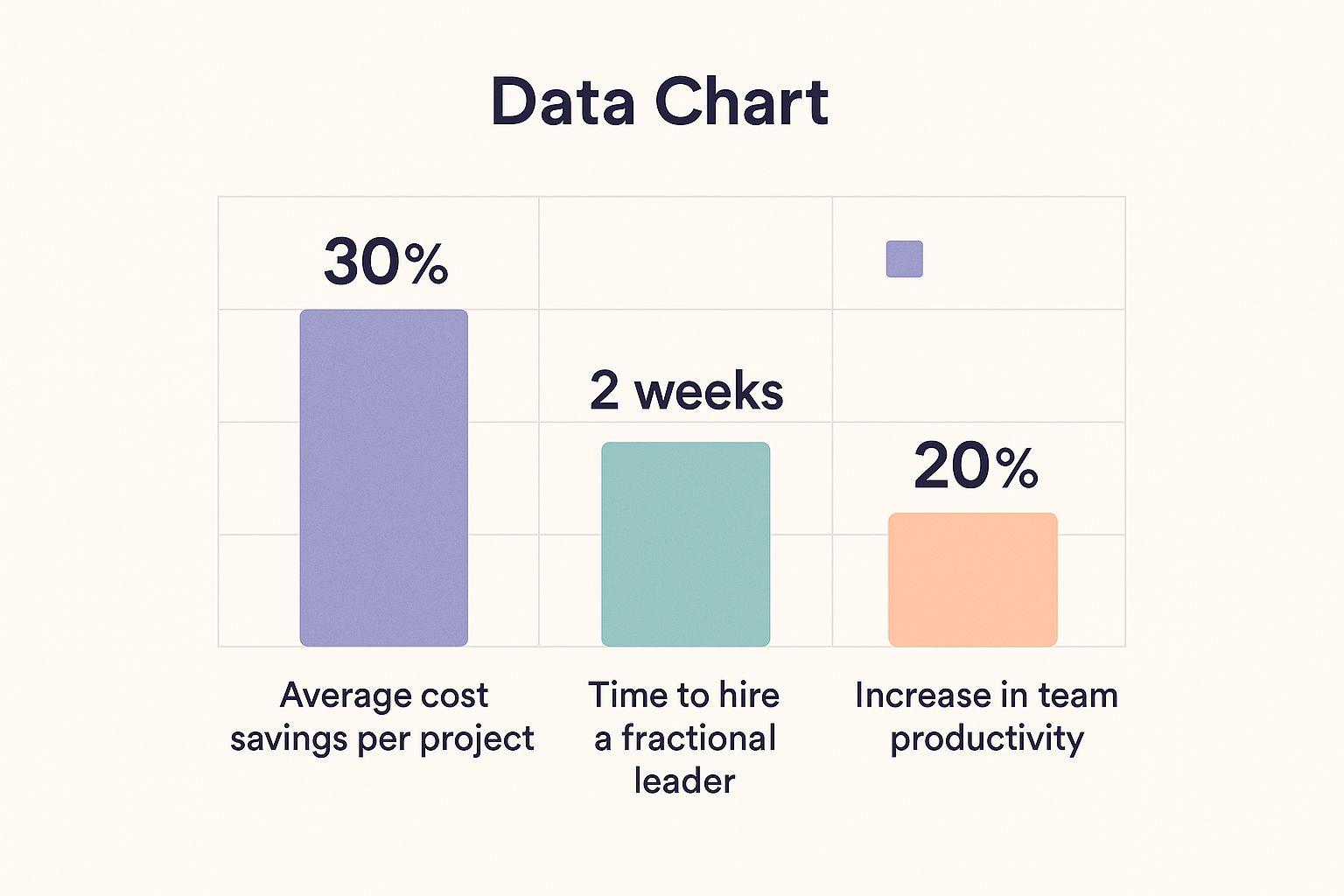
Many companies are initially drawn to fractional leadership because it seems cheaper than hiring a full-time executive. While lower direct salary costs are part of the picture, the real financial upsides are much broader. Opting for an experienced leader on a part-time basis helps avoid numerous hidden costs tied to traditional hiring.
Unpacking the Full Cost Savings
Consider the complete picture of employing a senior executive – the total cost of employment. This isn’t just their salary. It also covers significant extras like health insurance, retirement plans, payroll taxes, potential stock options, office space, and equipment. These additional costs often tack on an extra 30-40% to the base salary.
A fractional leader, usually paid through a simple retainer or project fee, sidesteps most of these extra expenses. Also, think about the costs involved in finding a top executive. Using recruitment firms, placing job ads, and the internal time spent reviewing applications and conducting interviews can easily run into tens of thousands of dollars. This often amounts to 20% to 30% of the executive’s first-year pay. Fractional hiring methods, particularly through specialized platforms, greatly cut down or remove these initial costs and waiting times.
Visualizing the Financial Advantage
To truly grasp the cost difference, let’s break down the typical expenses side-by-side.
This table breaks down the financial implications of both leadership models across various expense categories:
| Expense Category | Fractional Leadership Cost | Full-Time Executive Cost | Potential Savings |
|---|---|---|---|
| Salary/Base Pay | Retainer/Project Fee | Base Salary + Bonus/Equity | Significant |
| Benefits | Minimal / None | 30-40% of Salary (Health, 401k etc) | High |
| Recruitment Fees | Low / None | 20-30% of 1st Year Salary | High |
| Payroll Taxes | Minimal / None | Employer Contributions Required | Moderate |
| Overhead (Office, Equip) | Minimal / Shared | Dedicated Space & Equipment Costs | Moderate to High |
| Estimated Total Cost | Significantly Lower | Base + 50-70%+ in Additional Costs | Often exceeds 50-70% annually |
The comparison highlights substantial savings. Expenses like benefits, recruitment fees, and major overhead costs associated with a full-time hire are largely absent in the fractional model.
These savings often exceed 50-70% each year. This financial freedom allows businesses to channel funds back into important growth activities. This approach also aligns with changing work preferences among executives. You can explore more about this shift in our article on Why Executives Are Leaving Full-Time Jobs for the Fractional Work Revolution.
ROI Beyond the Bottom Line
The value of fractional leadership extends past just saving money. Experienced fractional executives get up to speed quickly, often delivering strategic insights within weeks, not months.
This accelerated impact gets critical projects moving faster, helps capture market opportunities quicker, and provides valuable guidance to internal teams. These advantages boost overall business performance and offer a quicker return compared to the lengthy process of finding and onboarding a full-time executive.
Where Fractional Leadership Creates Maximum Impact
While the advantages of fractional leadership are appealing, its success often depends on the specific business context. Certain types of companies and particular situations tend to get extraordinary value from this flexible executive model. Knowing these ideal scenarios helps businesses decide if bringing in fractional expertise is the right strategic path.
Ideal Industries and Business Stages
Some industries are particularly well-suited for the fractional leadership model. Fast-growing sectors like tech startups—including SaaS, FinTech, and HealthTech companies—frequently need senior strategic advice in areas like finance or marketing before they can support a full-time C-suite salary. These businesses gain a lot from experienced leaders who can set up scalable systems and guide crucial phases like market entry or fundraising.
But it’s not just startups finding value here. Established companies, even large ones, use fractional leaders for specific projects, business changes, or to fill temporary leadership gaps with top-tier talent without a long-term hiring commitment. This approach isn’t just for small firms; data shows that 35% of Fortune 500 companies use fractional leadership in some capacity, highlighting its usefulness for managing talent effectively at scale.
High-Impact Executive Functions
Certain executive positions consistently yield great results when filled fractionally. Common examples include:
- Chief Financial Officer (CFO): Focuses on strategic financial planning, support for fundraising, and oversight of reporting, often without needing deep involvement in daily transactions.
- Chief Marketing Officer (CMO): Concentrates on developing high-level marketing strategy, shaping brand positioning, and overseeing campaign execution.
- Chief Technology Officer (CTO): Provides technical vision, guidance on architecture, and manages development roadmaps.
- Chief Human Resources Officer (CHRO): Centers on talent strategy, organizational structure, and ensuring compliance.
These roles often work well fractionally because their main contribution is strategic direction and oversight, not continuous, hands-on operational work. Think of fractional leadership as a type of strategic outsourcing, much like the advantages gained from outsourcing HR tasks to dedicated specialists.
Organizational Traits for Success
Beyond the industry or specific role, certain company features make a business a good candidate for fractional leadership. Organizations with clear strategic goals but lacking the in-house know-how to reach them are often ideal fits. Just as vital is a company culture that is open to bringing in external experts and giving them the authority to drive results.
Companies that require specific, high-level direction for set periods or distinct projects usually find fractional leadership works better than overextending their current team or hiring a full-time executive whose responsibilities might change rapidly. On the other hand, if a position requires constant, deep operational engagement and round-the-clock availability, a traditional full-time hire likely remains the more sensible option.
Recognizing When Your Business Needs Fractional Leadership
Knowing where fractional experts can help is useful, but figuring out when your own company should bring one in means spotting specific signs. Businesses often hit bumps in the road or face big opportunities where their existing leadership setup starts holding them back. Seeing these moments clearly is key to using fractional leadership well.
Spotting the Signs You Need Backup
One of the biggest clues is when growth plateaus, even if you have a great product or service. This might show up as consistently missed goals, projects getting stuck, or founders becoming the main bottleneck because they’re juggling too many strategic and day-to-day jobs.
These holdups usually signal a lack of expert, high-level guidance in important areas. Maybe your marketing lacks a clear plan, your financial strategy isn’t ready for the next level, or your tech setup isn’t keeping up with growth. Waiting too long to fill these gaps with seasoned leadership can seriously cap your potential.
Key Moments for Fractional Help
Certain stages in a company’s journey almost naturally call for the focused expertise that fractional leadership offers. These inflection points often require skills your current team might lack, but don’t necessarily justify hiring a full-time executive right away. Making a move during these times is important.
See if your business is experiencing situations like these:
- Rapid Scaling: Growth is picking up speed, but your internal processes and team structure are struggling to cope.
- Need for Specialized Expertise: You need deep knowledge for a particular project, like setting up a new ERP system, handling tricky compliance issues, or managing a merger.
- Market Expansion or Diversification: Moving into new regions or launching very different products needs strategic planning that goes beyond your team’s current experience.
- Preparing for Major Milestones: Getting set for a big funding round or looking into acquisition options calls for experienced financial or strategic advice.
Evaluating Your Leadership Needs
To figure out if fractional leadership is the right answer, take an honest look at where strategic direction is missing. Are key departments like finance, marketing, or operations just focused on daily tasks without a clear strategy for the future? Is your current leadership always underwater, unable to plan ahead?
Choosing between a fractional expert and a full-time hire means weighing the specific need against the cost and long-term commitment. If you need high-level strategy, guidance, and leadership for specific projects more than constant day-to-day management, fractional help is often the more budget-friendly and direct approach. Remember, delaying action can result in missed growth opportunities or costly mistakes.
Want to dive deeper into making this choice? Check out our guide: A Comprehensive Guide to Fractional Hiring.
Implementing Fractional Leadership: Your Strategic Roadmap

So, you’ve spotted the signs that your business could use some high-level strategic help. The next step? Actually bringing fractional leadership into your day-to-day operations. Making this happen smoothly takes a clear plan. This roadmap shows you the practical steps to bring fractional talent into your team effectively.
Identifying Your Specific Leadership Needs
First things first, you need to get really specific about the leadership gaps you’re trying to fill. Don’t just think “We need someone for Marketing.” Instead, define the specific strategic outcomes you need this person to deliver. Are you trying to boost revenue significantly, make your operations run smoother, or get ready to seek investment?
Nailing down these goals helps you write a much better job description. It also makes sure you’re looking for someone with the exact skills and track record you need. Plus, this clarity makes it easier to track their success down the line.
Sourcing the Right Fractional Talent
Finding top-notch fractional leadership means knowing where to look. Your usual hiring channels might work, but often, you’ll find better candidates through platforms and networks that specialize in fractional executives. These places often feature experienced professionals who have already been vetted.
Here are a few places to search:
- Fractional Executive Marketplaces: Online platforms built to connect businesses like yours with part-time leaders.
- Industry Networks: Tapping into your professional contacts and asking for referrals can yield great results.
- Specialized Agencies: Some recruitment firms focus solely on placing fractional executives.
Zero in on candidates whose background lines up perfectly with the outcomes you defined earlier. Also, think about whether their working style clicks with your company’s vibe. The aim is to find someone who can step in and be a genuine strategic partner.
Integration and Onboarding
Getting a fractional leader started involves more than just paperwork; they need to be integrated properly into your team. A solid onboarding process helps them get up to speed on your business quickly so they can start making a difference. Give them access to the information, people, and systems they need.
Good integration means:
- Making sure your existing team understands the fractional leader’s role and authority.
- Setting up regular check-ins and clear reporting methods.
- Agreeing on some initial goals within the first 30-60 days to get things moving.
Managing expectations is crucial – for both the fractional leader and your own team. Everyone needs to understand the scope of what the fractional leader will be doing. You might find this helpful: Learning more about Fractional Executive Services. Getting the integration right helps avoid confusion and ensures the leader feels like a key part of the team, making your fractional leadership investment truly count.
Measuring Fractional Leadership Success: Beyond Basic Metrics
So, you’ve brought a fractional leader onto your team. How do you know if this strategic move is actually working out? Going beyond just a general feeling is crucial to see the real impact fractional leadership is having on your business. It’s about linking their work directly back to the reasons you needed their specific skills in the first place.
This focus on results makes sense. Bringing in fractional leadership lets companies tap into high-level expertise without the hefty price tag and commitment of a full-time executive. Because of this model, checking that you’re getting the value you expect is even more important.
Defining Role-Specific KPIs
First things first, you need to set up Key Performance Indicators (KPIs). These metrics should tie directly to the fractional leader’s role and the goals you agreed on when they started. Fuzzy goals only lead to fuzzy outcomes; specific metrics bring clarity.
Think about what success looks like for different roles:
- Fractional CMO: You might track growth in leads, a lower customer acquisition cost (CAC), more marketing-qualified leads (MQLs), or better brand recognition.
- Fractional CFO: Look at improvements in cash flow, keeping spending closer to the budget, hitting fundraising targets, or making financial reports more accurate.
- Fractional CTO: Success could mean better system reliability (uptime), quicker software development cycles, launching new products successfully, or reducing accumulated technical debt.
- Fractional CHRO: Focus on metrics like keeping employees longer, hiring faster for important positions, higher employee satisfaction scores, or rolling out new HR programs smoothly.
It’s also really important to set realistic expectations for when you’ll see these results. Big strategic changes take time, whereas smaller tactical wins might appear much faster.
Implementing Reporting and Review Cadences
Tracking success isn’t something you do just once. It requires regular communication and check-ins. Set up a consistent reporting schedule – it doesn’t have to be complicated. Often, simple dashboards or shared documents tracking the agreed-upon KPIs are enough.
Plan for regular review meetings, maybe monthly or quarterly, focused purely on progress towards these goals. These conversations are vital for:
- Looking at performance openly and honestly.
- Spotting any challenges or areas needing adjustment.
- Making sure the fractional leader’s efforts stay aligned with the company’s main goals.
Ultimately, carefully measuring the impact of fractional leadership confirms its value. It ensures your investment turns into real business growth and better capabilities. Clear metrics demonstrate clear value.
The Future of Fractional Leadership: What’s Next?
Now that we’ve covered how to gauge the success of fractional leaders, let’s look at where this approach is headed. Fractional leadership isn’t static; it changes based on market demands and new technologies. Several key trends are shaping its future, presenting fresh possibilities for businesses ready to adapt.
The Rise of Specialization and Platforms
As the fractional leadership model grows, we’re observing a move towards greater specialization. It’s no longer just about general executive help. Companies increasingly look for fractional experts with deep experience in specific areas, such as implementing AI or guiding SaaS companies into international markets.
This demand is driving the development of specialized platforms. These platforms aim to connect businesses with precisely the right talent. They function as more than simple job listings, often including vetting processes and tools to better manage the working relationship. This makes finding the right fractional leadership less of a gamble and more of a strategic choice.
Evolving Compensation and Alignment
Retainer models are standard now, but the future will likely bring more innovative compensation structures. Businesses and fractional leaders are finding new ways to connect pay with performance. We might see more pay arrangements linked directly to the key performance indicators (KPIs) previously discussed.
For instance, a fractional Chief Marketing Officer could have part of their compensation tied to hitting specific targets for lead generation or revenue. This approach ensures both the business and the leader are sharply focused on achieving concrete results, reinforcing the partnership aspect of fractional leadership.
Technology’s Role: AI and Integration
Technology is set to play a big part in the evolution of fractional leadership. AI tools could help fractional leaders by automating routine work, delivering data insights more quickly, or improving communication among dispersed teams. This frees up executives to concentrate more on high-level strategy.
Additionally, improved integration tools will smooth the process of bringing fractional leaders into a company’s daily operations. We’ll likely see more project management platforms, secure communication methods, and shared knowledge bases built specifically for teams that include fractional members. This tech support will simplify managing fractional leadership setups.
Expanding Industry Adoption and Workforce Shifts
While tech and finance adopted fractional leadership early, expect it to become more common in traditional industries facing disruption, like manufacturing, education, and non-profits. These sectors often need experienced leadership for specific challenges but may lack the budget for a full-time hire.
This growth is also influenced by changing workforce desires. A growing pool of highly experienced former C-suite executives now prefer flexible, project-based roles over traditional full-time positions. This expands the available talent pool for businesses seeking specialized fractional leadership, providing access to previously unattainable expertise. Companies that embrace this flexible talent model stand to gain a significant advantage.
Ready to tap into the future of leadership today? Explore Shiny’s marketplace of over 650 vetted fractional executives across 40+ industries. Find the experienced, flexible leadership your startup needs to grow efficiently.