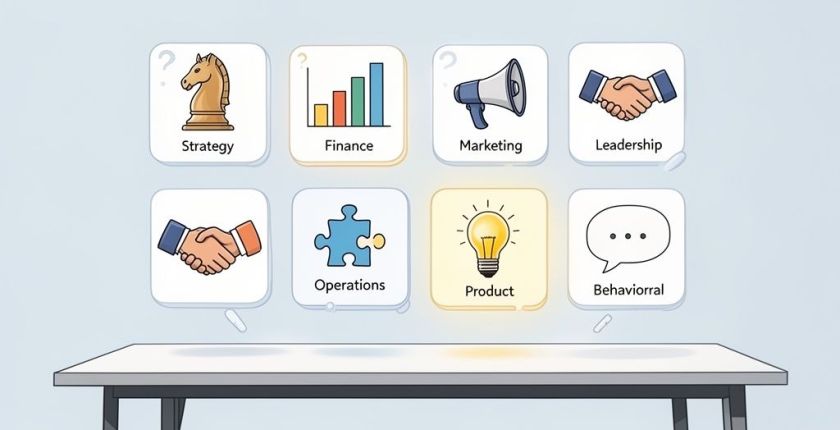
Top Interview Questions to Identify Your Next Executive Leader
Hiring an executive is one of the highest-stakes decisions a founder can make. A great hire can propel your company to new heights, while a mis-hire can cost millions in lost revenue, team morale, and time. The challenge is that traditional interview processes often fail to reveal a candidate's true potential. Resumes list accomplishments, but they don't show how a leader thinks, adapts, or inspires.
This is especially true when considering a fractional executive—a seasoned leader who brings their expertise to your team on a part-time basis. Think of it like bringing in a world-class architect to design the blueprint for your skyscraper, rather than hiring them full-time to oversee every single brick. In this model, every hour counts, and you must be certain you are bringing on a partner who can deliver strategic impact from day one.
This guide provides a playbook of interview questions for an executive, moving beyond generic prompts. We’ll break down questions into ten critical categories, tailored for the unique pressures of a growing business. You will learn how to assess not just past successes, but the future potential to lead your team, build scalable systems, and drive profitable growth, all within a flexible, capital-efficient framework. By asking better questions, you can de-risk your hiring process and find the strategic partner who will accelerate your journey.
This article will help you identify an exceptional leader by focusing on their practical skills in areas like:
- Leadership and Vision
- Sales and Revenue Growth
- Operational Excellence
- Financial Acumen
- Change Management
- Team Building and Talent Management
- Remote and Part-Time Effectiveness
Let's dive into the categories that will help you make a more informed, confident hiring decision.
1. Leadership and Vision Questions
These foundational interview questions for an executive are designed to reveal a candidate's capacity to establish a compelling vision and guide a company toward it. For any leader, but especially a fractional executive who must make an impact quickly, the ability to articulate a clear, strategic direction is non-negotiable.

These questions go beyond surface-level claims to uncover how a candidate thinks, persuades, and executes on long-term goals. They are crucial for startups and scale-ups that need a leader to define "north" and align the entire organization, often with limited time and resources.
Sample Leadership Questions
- Transformational Vision: "Describe a time you fundamentally shifted an organization's strategic direction. What was the catalyst, what was your vision, and what were the tangible business outcomes?"
- Communicating Change: "How do you communicate a new vision to a team that is skeptical or resistant to change? Walk me through your communication plan."
- Defining Success: "Based on what you know about our company, what does a successful first 100 days look like for you in this role, and what key milestones would you set?"
What to Look For
The best candidates will provide a structured narrative that includes specific, measurable results. They should be able to quantify their impact, whether through revenue growth, market share increase, or improved employee engagement scores.
Pro Tip: For fractional roles, add a constraint. Ask, "How would you adapt that 100-day plan if you only had 15 hours per week?" This tests their ability to prioritize high-impact activities, a critical skill for part-time leadership.
Pay close attention to their passion and clarity. A true leader's vision is not just a slide deck; it's a deeply held belief they can articulate with conviction. For a deeper dive into vetting executive candidates, explore our guide on interviewing an executive for more advanced techniques.
2. Sales and Revenue Growth Questions
These interview questions for an executive are engineered to assess a candidate's ability to build and scale a revenue engine. For any business needing to find product-market fit or accelerate growth, a leader's proven track record in driving sales is paramount. These questions cut through theory to probe a candidate's hands-on experience.

This questioning is crucial for companies that need a leader to not just strategize but also roll up their sleeves. A strong sales executive, even in a fractional capacity, can refine your sales process, coach your team, and establish the key metrics needed to build a predictable revenue machine.
Sample Sales Questions
- Building from Scratch: "Walk me through how you've built a sales organization from the ground up. What were the first three key hires you made and why?"
- Quantifiable Impact: "Describe the most significant revenue increase you've directly driven. What specific strategies did you implement, and what was your role in their execution?"
- Strategic Planning: "How would you approach taking our company from $5M to $15M ARR in 18 months? What would be your top priorities in the first 90 days?"
What to Look For
The best answers will be rich with data and specific metrics. A top-tier candidate should confidently discuss concepts like CAC (Customer Acquisition Cost), LTV (Lifetime Value), pipeline velocity, and churn rates. They should connect their past actions directly to measurable business outcomes.
Pro Tip: When interviewing for a fractional sales leader, frame the strategic question with a time constraint. Ask, "Given 15 hours per week, how would you prioritize your efforts to hit that $15M ARR target?" This tests their ability to focus on the highest-leverage activities, a non-negotiable skill for an effective part-time executive.
Listen for a clear methodology. Whether their background is in enterprise sales or self-serve models, they should be able to articulate a systematic process for growth. Their ability to diagnose your current sales challenges and propose a realistic plan is a strong indicator of their potential impact.
3. Operational Excellence and Process Questions
These interview questions for an executive are designed to assess a candidate’s ability to build scalable systems and optimize processes. For fractional COOs and operations leaders who need to deliver value quickly, the skill to create order from chaos is paramount. These questions probe a candidate’s problem-solving methodology and ability to implement robust operational frameworks.
This questioning is vital for companies at an inflection point, whether scaling rapidly or navigating a complex turnaround. Imagine your business is a high-performance race car. An operations expert is the chief engineer who tunes the engine, refines the aerodynamics, and manages the pit crew to ensure you can go faster without falling apart. They install the systems that prevent growth from breaking the business.
Sample Operational Questions
- Complex Problem-Solving: "Describe a complex operational bottleneck you identified and solved. What was your diagnostic process, what solution did you implement, and how did you measure its success?"
- Balancing Control and Flexibility: "How do you decide when to standardize a process versus when to allow for flexibility as a company grows? Provide an example."
- Efficiency Through Technology: "Tell me about a time you led an automation or technology implementation project that significantly improved efficiency. What was the ROI, and what were the biggest challenges?"
What to Look For
The best answers will demonstrate a clear, data-driven methodology. Listen for candidates who talk in terms of metrics, frameworks, and specific outcomes (e.g., reduced cycle time by 20%). They should be able to articulate not just what they did, but why they chose that specific approach.
Pro Tip: Ask about specific tools and technologies they've implemented, like ERPs or CRMs. This reveals their practical experience and whether their technical toolkit aligns with your company's stage and needs.
A strong operations leader understands that processes are about people. Look for evidence of strong change management skills and an ability to get team buy-in. To learn more about building a well-oiled machine, explore our guide on how to improve operational efficiency.
4. Financial Acumen and Unit Economics Questions
These interview questions for an executive are crafted to assess a candidate's deep understanding of a company’s financial engine. Beyond basic P&L statements, they probe into the core drivers of profitability, cash flow, and strategic financial planning. For any senior leader, especially a fractional executive who must quickly identify the most important financial levers, this acumen is indispensable.
These questions are vital for growth-stage companies where cash is king. A leader who grasps unit economics can distinguish between "good" and "bad" revenue, ensuring that growth is both sustainable and profitable. They think like an owner, focusing on long-term financial health.
Sample Financial Acumen Questions
- Profitability Drivers: "Walk me through a specific initiative you led that directly improved gross margin. What levers did you pull, and what was the quantifiable impact?"
- Unit Economics Fluency: "If you were to analyze our business, what would be the top three unit economics you would focus on, and why are they the most critical indicators of our health?"
- Capital Allocation Strategy: "Describe a situation where you had to make a difficult capital allocation decision between two competing priorities, such as investing in product development versus expanding the sales team. How did you decide?"
What to Look For
Listen for a candidate who can translate complex financial concepts into simple, actionable business language. The best answers will demonstrate a clear connection between financial metrics and operational strategy. They should provide specific numbers like Customer Acquisition Cost (CAC) payback period or Lifetime Value (LTV).
Pro Tip: For a fractional CFO, present them with a hypothetical challenge. For example, "Imagine our cash runway is six months, but we need to extend it to twelve without raising capital. What are the first three areas you would investigate?" This tests their problem-solving skills under pressure.
A strong candidate won't just recite textbook definitions; they will articulate the trade-offs between growth and profitability with nuance. To better understand these core concepts, explore our guide on what is unit economics and why it matters.
5. Change Management and Organizational Transformation Questions
These critical interview questions for an executive are designed to assess a candidate's ability to navigate organizational change. For a fractional executive who must catalyze transformation with limited face time, the skill to manage resistance, align stakeholders, and drive new initiatives is paramount. These questions reveal a candidate's emotional intelligence, resilience, and strategic communication skills.
This area is vital for companies undergoing a pivot, implementing new technology, or scaling rapidly. A leader adept at change management can build trust quickly and ensure new processes are adopted effectively. They understand that successful transformation is as much about winning hearts and minds as it is about implementing a technically sound plan.
Sample Change Management Questions
- Overcoming Resistance: "Tell me about a significant transformation initiative you led. What was the biggest source of resistance, and what specific steps did you take to overcome it?"
- Building Trust: "How do you build trust and gain buy-in with a new team, particularly when you need to implement unpopular changes? Provide a real-world example."
- Communicating Difficult News: "Describe a time you had to deliver difficult news to your team or stakeholders. How did you prepare for the conversation, and what was the outcome?"
What to Look For
Seek evidence of a structured and empathetic approach. The best candidates will describe a multi-faceted strategy that includes listening, communicating transparently, and creating champions for the change. They should articulate a clear understanding of the human side of transformation.
Pro Tip: Test their agility by asking, "Imagine you've launched a change initiative, but a key assumption proves wrong a month in. How do you course-correct without losing credibility?" This tests their adaptability and humility, crucial traits for any modern leader.
Pay attention to their language. Do they use "we" when describing team efforts? This reveals their capacity to lead through influence rather than just authority, a key skill for making a lasting impact in a fractional role. For more on finding leaders who can drive meaningful change, see our guide on the benefits of a fractional executive.
6. Technical and Functional Expertise Questions
These role-specific interview questions for an executive assess a candidate's deep, practical knowledge within their domain, such as marketing, finance, or engineering. While strategic vision is crucial, an executive must also possess the functional credibility to lead their department. This is especially true for fractional executives who need to establish authority and deliver value from day one.
This line of questioning ensures your potential leader isn't just a strategist but also a practitioner with proven experience. Hiring an executive who has “been there, done that” can prevent costly mistakes and accelerate growth by implementing proven frameworks.
Sample Functional Expertise Questions
- Marketing: "Walk me through a marketing channel you have successfully scaled from experiment to a significant revenue driver. What was your framework, and what were the key metrics you tracked?"
- Engineering: "How do you decide between building a new feature in-house versus integrating a third-party solution? Describe your decision-making framework and a time you had to make a tough call."
- Product: "Describe your process for validating product-market fit for a new product or feature. What specific qualitative and quantitative methods do you rely on?"
What to Look For
The strongest candidates will answer with confident, structured clarity. They should be able to articulate their frameworks, methodologies, and the reasoning behind their decisions. Listen for their ability to explain complex functional topics in a simple, accessible way—a sign of true mastery.
Pro Tip: Ask about current trends in their field. For example, "How would you leverage generative AI in our marketing strategy?" This tests if they are a continuous learner who stays on the cutting edge, which is vital for maintaining a competitive advantage.
A great answer will not only demonstrate past success but will also connect that experience directly to your company's specific challenges. They should show enthusiasm for applying their hard-won expertise to your unique business context.
7. Startup and Scaling Experience Questions
These crucial interview questions for an executive are tailored to assess a candidate’s fitness for the unique chaos and opportunity of a growth-stage company. Leading in a startup is fundamentally different from a mature enterprise. It requires a mindset geared toward resourcefulness, rapid iteration, and navigating ambiguity.
For founders hiring their first executive or a fractional leader to navigate a key growth inflection point, this questioning is essential. You need a leader who has been in the trenches building the systems to support growth. They must be comfortable wearing multiple hats and making high-stakes decisions with imperfect information.
Sample Startup and Scaling Questions
- Navigating Growth Pains: "Describe a significant scaling challenge you managed, for example, growing from 10 to 100 employees. What systems broke first, and how did you rebuild them to be scalable?"
- Startup vs. Enterprise Mindset: "What do you believe is the biggest difference between leading a team in a startup versus a large corporation? Provide an example of how you adapted your leadership style."
- Resourcefulness: "Tell me about a time you had to achieve an ambitious goal with a very limited budget or team. What was your approach, and what was the outcome?"
What to Look For
The best answers will demonstrate a clear understanding that startup leadership is about building the plane while flying it. Candidates should speak to specific growth inflection points and show they are builders, not just maintainers.
Pro Tip: Ask about their professional network. A great fractional executive brings not just their skills but their connections. Ask, "If we needed to hire two key roles for your team in the next 90 days, how would your network accelerate that process?"
Look for evidence of both scrappiness and strategic foresight. An ideal candidate can roll up their sleeves to solve an immediate problem while simultaneously architecting a solution that will last. Their experience should prove they can create order from chaos without stifling the innovation that fuels growth.
8. Team Building and Talent Management Questions
An executive's legacy is often defined by the team they build. These interview questions for an executive are designed to assess their ability to attract, develop, and retain top-tier talent. For a fractional executive, who must quickly integrate and influence an existing team or build one from scratch, these skills are paramount.

This area is critical for startups where every hire has a significant impact. A leader who excels at talent management can amplify their own impact exponentially, creating a team that drives results even when the executive is working on a part-time basis.
Sample Talent Management Questions
- Talent Acquisition: "Walk me through your process for identifying and recruiting A-players. What was your most successful hire, and why?"
- Developing Potential: "How do you identify and develop high-potential individuals within your team? Provide an example of someone you mentored into a larger role."
- Performance Management: "Describe a time you had to manage an underperforming executive or senior team member. How did you handle the situation, and what was the outcome?"
What to Look For
Strong answers will demonstrate a clear, repeatable process for talent management. Listen for specific strategies they use for sourcing, interviewing, onboarding, and coaching. The best candidates will discuss both their hiring wins and their misses, showing self-awareness and a commitment to learning from mistakes.
Pro Tip: Ask, "How would you create a strong team culture when you are only engaged 10-15 hours per week?" This tests their ability to empower direct reports, establish clear communication channels, and lead effectively through influence rather than constant presence—a key skill for any fractional leader.
Look for a focus on creating diverse and inclusive teams. An executive who proactively builds a team with varied perspectives and backgrounds is better equipped to solve complex problems and drive innovation. This mindset is a powerful indicator of a modern, effective leader.
9. Customer and Market Strategy Questions
These critical interview questions for an executive are crafted to evaluate a candidate’s ability to deeply understand customers, define market positioning, and execute a winning competitive strategy. For any growth-focused role, particularly a fractional CMO or VP of Product, a customer-first mindset is a prerequisite for success.
This is vital for startups trying to find or expand their product-market fit. An executive who can translate customer insights and market signals into a coherent go-to-market plan provides an invaluable competitive advantage.
Sample Customer and Market Questions
- Competitive Positioning: "How would you approach defining our competitive positioning in what you perceive to be a crowded market? Walk me through your first 90 days."
- Customer-Driven Pivots: "Tell me about a time a customer research initiative you led directly resulted in a significant change to product or marketing strategy. What was the insight and what was the outcome?"
- Go-to-Market Strategy: "Describe your framework for developing and launching a go-to-market (GTM) strategy for a new product or an expansion into a new market segment."
What to Look For
Listen for candidates who demonstrate a clear methodology for gathering and synthesizing market intelligence. They should speak fluently about both qualitative methods (like customer interviews) and quantitative data analysis. The strongest answers will connect these activities directly to strategic decisions and measurable business results.
Pro Tip: Ask about failures. A question like, "Describe a GTM launch that didn't meet expectations and what you learned," can be incredibly revealing. It tests for humility, analytical skills, and the ability to learn from missteps.
A great candidate doesn't just talk about "being customer-centric"; they provide concrete examples of how they've embedded customer feedback into the operational rhythm of their past organizations. This is a core competency when vetting any senior leader responsible for growth.
10. Remote Leadership and Part-Time Effectiveness Questions
These specialized interview questions for an executive are tailored to the realities of modern, flexible leadership. They are essential for vetting candidates for fractional, interim, or remote executive roles where impact must be delivered without constant physical presence or a full 40-hour workweek.
For a startup engaging a fractional executive, this skill set is paramount. Such leaders must integrate quickly, build trust asynchronously, and drive results through strategic communication rather than sheer hours in the office. These questions reveal if a candidate possesses the discipline and systems to make every hour count.
Sample Part-Time Effectiveness Questions
- High-Impact, Low-Hours Leadership: "Describe your framework for delivering maximum value to an organization when you're engaged for only 10-15 hours per week. How do you prioritize?"
- Asynchronous Influence: "Tell me about a time you influenced a major strategic decision without being in the room. What tools and communication methods did you use to build consensus?"
- Maintaining Alignment: "How do you ensure a team stays aligned with the strategic direction when your interactions with them are primarily remote and asynchronous? Walk me through your process."
What to Look For
The strongest candidates will demonstrate a clear methodology for part-time engagement. They won't just say they "work hard"; they will describe specific systems for communication, documentation, and prioritization. Look for concrete examples of using tools like Slack, Asana, or detailed written memos to drive projects forward.
Pro Tip: Ask about their experience in other part-time strategic roles, such as serving on an advisory board. This often indicates they are skilled at providing high-level guidance without getting bogged down in day-to-day operational tasks.
Listen for a mindset focused on empowerment and leverage. A great fractional leader builds systems that allow the team to function effectively in their absence. They understand their role is to set the direction and remove roadblocks, not to do all the work themselves.
From Questions to Confidence: Finding Your Next Strategic Leader
Navigating executive recruitment can feel like searching for a needle in a haystack. This guide to interview questions for an executive is designed to be your magnet, pulling the most qualified, strategically aligned leaders to the surface. It moves beyond standard inquiries to equip you with a framework to rigorously assess everything from high-level vision to the granular details of operational efficiency.
The goal isn't just to fill a vacancy. It's about finding a strategic partner who can amplify your company's strengths and drive sustainable growth. By probing into areas like change management and team building, you transform the interview from a simple Q&A into a deep diagnostic tool. This process reveals not just what a candidate has done, but how they think and lead through complexity.
Key Takeaways for Your Executive Search
As you move forward, keep these core principles at the forefront of your hiring strategy:
- Go Beyond the Resume: A candidate's past achievements are important, but their thought process is paramount. How they handled a past failure is often more telling than their biggest success.
- Context is Everything: Tailor your questions to your company’s current stage and most pressing challenges. A startup needing to find product-market fit requires a different executive mindset than a scale-up focused on optimizing processes.
- Assess for Fractional Fit: When considering a fractional executive, prioritize questions about remote leadership and high-impact strategies. You need a leader who delivers significant value with focused, high-leverage work.
Actionable Next Steps: Implementing Your Interview Framework
Simply having a list of questions isn't enough; effective implementation is what yields results. Here’s how to put this guide into practice:
- Build a Scorecard: Before you conduct a single interview, create a simple scorecard. Define what a "strong," "average," and "weak" answer looks like for your top 5-7 most critical questions. This standardizes your evaluation process.
- Assign Question Categories: Don't try to ask everything in one sitting. Assign different categories of questions (e.g., Financial Acumen, Team Building) to different interviewers on your hiring panel to ensure comprehensive coverage.
- Conduct a "Working Session" Interview: For final-round candidates, consider a 60-minute practical interview. Present them with a real, anonymized strategic challenge and ask them to walk you through their approach. This is the ultimate test of their strategic thinking.
Mastering the art of asking insightful interview questions for an executive is a force multiplier for your business. It de-risks one of the most significant investments you will ever make: your leadership team. It provides the clarity and confidence needed to choose a leader who will not just perform tasks, but will shape your company's future, inspire your team, and accelerate your journey toward your most ambitious goals.
Finding, vetting, and interviewing top-tier executives is a full-time job. A fractional leadership model provides a powerful solution, giving you access to elite talent without the long-term commitment and overhead of a full-time hire. If you're ready to build your dream leadership team with confidence, we can connect you with the right strategic partner. To learn more about how our pre-vetted network can help you scale faster, explore our network of proven talent.