Ultimate Guide to Leadership Style Assessment: Discover Your Authentic Leadership Approach
Understanding Modern Leadership Styles

Successful leadership has moved beyond traditional top-down management approaches. The most effective leaders now focus on empowering their teams, building collaboration, and fostering innovation. Understanding your natural leadership style through assessment tools gives valuable insights that benefit both individual leaders and their organizations.
Identifying Key Leadership Styles
Several leadership approaches have proven particularly successful in modern workplaces:
- Democratic Leadership: Promotes shared decision-making and active team input, which builds ownership and boosts morale
- Affiliative Leadership: Centers on building strong relationships and positive team dynamics to create a supportive work culture
- Charismatic Leadership: Uses vision and enthusiasm to motivate teams toward ambitious goals
- Coaching Leadership: Focuses on developing individual strengths and potential through guidance and mentoring
- Servant Leadership: Prioritizes team needs first, with leaders acting as facilitators who empower employees
Most successful leaders blend multiple styles based on specific situations and team needs. For example, using democratic approaches for daily decisions while adopting more charismatic leadership during major changes or new initiatives.
Prevalence of Modern Leadership Styles
Recent data shows clear patterns in leadership approaches. The Niagara Institute’s 2022 leadership survey of 1,164 professionals across 48 countries found that democratic, affiliative and charismatic styles dominate. Specifically:
- 46.9% use democratic leadership
- 20.6% employ affiliative leadership
- 18.8% practice charismatic leadership
The survey included respondents from Canada (30.1%), United States (21.5%), and United Kingdom (18.5%), providing a global perspective on current leadership trends.
Benefits of Leadership Style Assessment
Understanding your core leadership style through assessment helps maximize your impact. Key benefits include:
- Identify Your Strengths: Know your natural leadership tendencies to build on what you do best
- Pinpoint Growth Areas: Find specific skills to develop for more rounded leadership
- Improve Team Dynamics: Adjust your approach based on how it affects your team
- Enhance Communication: Better understand your communication style to connect more effectively
For organizations, leadership style assessments help spot high-potential team members, create targeted development programs, and build stronger leadership teams. This is especially important for startups and small businesses where strong leadership gives a competitive edge.
The Science Behind Leadership Style Assessment

The process of evaluating leadership capabilities goes beyond basic personality testing. Modern leadership style assessments are based on research that aims to understand and predict how leaders perform. These tools help organizations identify and develop effective leaders.
Exploring the Psychology of Leadership
Leadership assessments examine multiple psychological factors that influence how someone leads. Key areas include personality traits, problem-solving abilities, and emotional intelligence skills. For instance, assessments may look at whether someone tends to be more outgoing or reserved, how they handle complex challenges, and their ability to connect with others. This creates a detailed picture of their leadership approach.
Validity and Reliability of Assessments
Two core principles determine how useful a leadership assessment can be: validity and reliability. Valid assessments accurately measure real leadership qualities and behaviors. Reliable assessments produce consistent results when taken multiple times by the same person. Both factors are essential for an assessment to provide meaningful insights.
Traditional vs. Innovative Approaches
While traditional assessments relied mainly on questionnaires and interviews, new methods now include simulations, feedback from multiple sources, and AI analysis of communication patterns. Many organizations combine both old and new techniques to get better results. This approach helps companies find and develop leaders who can handle today’s business challenges.
Enhancing Leadership Effectiveness, Not Changing Personality
The goal of leadership assessments isn’t to fundamentally change who someone is. Instead, they help leaders understand their natural tendencies and how to use them effectively. Tools like the Predictive Index Behavioral Assessment and Myers-Briggs Type Indicator show leaders their natural style – whether they’re more collaborative or directive. With these insights, leaders can adapt their approach while staying true to themselves. This leads to stronger teams, better communication, and improved results.
Implementing Leadership Assessments in Organizations
Good leadership assessment programs need solid planning and consistent follow-through. Successfully implementing these assessments requires understanding your organization’s specific needs, picking suitable tools, and nurturing an environment where feedback leads to real growth.
Planning Your Assessment Strategy
Start by defining clear goals for your leadership assessment program. Think about what you want to achieve – perhaps identifying emerging leaders, helping current leaders improve, or strengthening team dynamics. For instance, if succession planning is your focus, choose assessments that spot future leadership potential. If you want better team collaboration, look for tools measuring emotional intelligence and communication abilities.
When selecting assessment tools, focus on key factors like reliability and validity. The assessment should match your organization’s leadership development goals and be practical to use. Pick tools with clear, easy-to-understand reports that make the assessment process smooth and productive.
Building a Culture of Feedback and Growth
Success requires creating an environment where people view feedback as a path to improvement. Help your team understand how assessments work and what you’ll do with the results. Be open about the process and show how it connects to career development. Address concerns early through clear communication and by showing the real benefits assessments provide.
Modern tools like the DDI Leadership Snapshot help organizations develop first-level leaders. DDI’s research shows that 42% of leaders want more assessment opportunities to understand their strengths and areas for improvement. Their Leadership Snapshot evaluates 18 different factors across Leadership Impact, Business Skills, and Interpersonal Skills.
Creating Development Pathways
After completing assessments, translate results into clear action plans. Give each leader specific feedback based on their results and work with them to create personalized development goals. Focus on building existing strengths while improving weaker areas. Make sure these plans align with both individual career goals and organizational needs.
Support development through various activities like coaching, mentoring, training, and stretch assignments. Regular check-ins help ensure leaders stay on track with their goals. This ongoing approach helps build a learning culture. Link leadership development to performance reviews and promotions to emphasize its importance.
Measuring Long-Term Impact
Track how your leadership assessment program affects the organization over time. Look for changes in leadership behavior, team performance, and business results. Regular evaluation helps improve the program and shows its value. Measure specific metrics like employee engagement scores, customer satisfaction, or project completion rates to demonstrate concrete benefits.
“A leadership style assessment provides valuable insights, but its true power lies in how you apply those findings.”
Translating Assessment Results Into Action
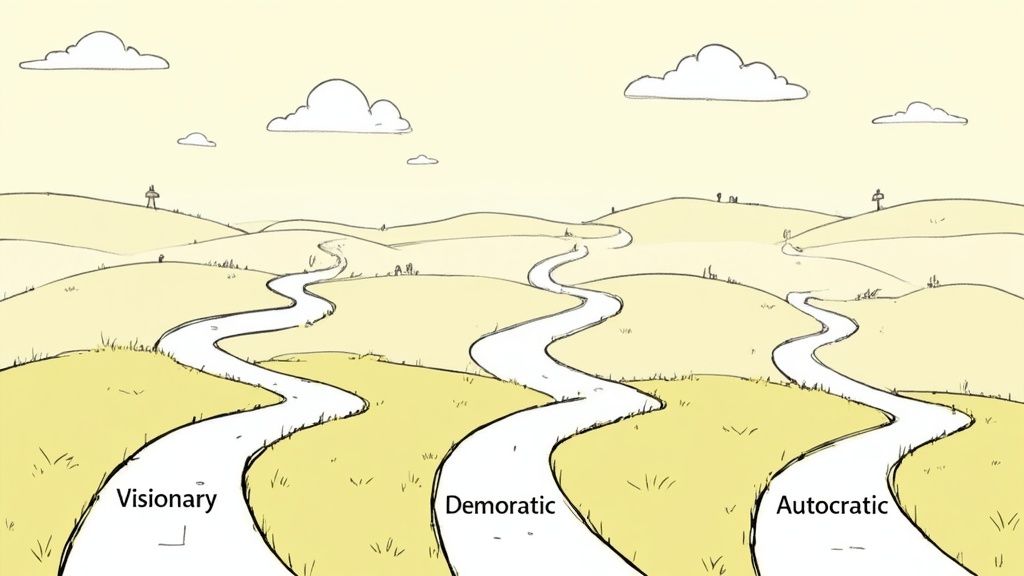
Understanding your leadership assessment results is just the beginning. The real value comes from putting those insights into practice. Like following a map, the assessment shows where you are and where you want to go – now it’s time to plan your route.
Building Upon Strengths
Your assessment reveals your natural leadership abilities. These are the skills that already help you lead effectively. For example, if you excel at communication, focus on roles involving presentations, team building, and resolving conflicts. By deliberately practicing and expanding these abilities, you can move from being a good leader to a great one.
Addressing Growth Areas
Every leader has room to improve. Your assessment highlights specific areas where you can develop further. For instance, if you need to strengthen your delegation skills, look for workshops, mentoring, or projects that require you to delegate extensively. Working on these areas creates positive momentum and helps build a culture focused on growth.
Creating Personalized Action Plans
Use your assessment insights to build a concrete development plan with SMART goals – specific, measurable, achievable, relevant, and time-bound. If you want to improve decision-making, set a goal to complete relevant training within three months and apply those skills to an upcoming project. Review and adjust your plan regularly as you progress.
Measuring and Tracking Progress
Leadership growth is ongoing. Track your development through regular self-reflection, team feedback, and performance metrics tied to your focus areas. A leader working on empathy might monitor team feedback scores about their communication style and supportiveness. This helps you evaluate what’s working and make needed adjustments.
Maintaining Momentum Through Challenges
Setbacks are normal in leadership development. Having a clear action plan and support system helps you stay on track when things get tough. Consider finding a mentor, joining a leadership group, or regularly reviewing your long-term goals. Like using a compass to navigate storms, your assessment insights and action plan can guide you through difficulties toward becoming a more effective leader.
Avoiding Common Assessment Pitfalls
Making the most of leadership style assessments requires careful planning and thoughtful implementation. Poor execution can lead to misleading results or wasted effort. Here’s how to sidestep common problems and get meaningful insights from your assessment program.
Identifying Red Flags in Assessment Tools
Before rolling out any leadership assessment, take time to evaluate the tool itself. Look for assessments with solid scientific validation and consistent results over time. Be wary of tools that rely only on self-reporting, as these can introduce personal bias where people overestimate strengths or minimize weaknesses. Skip assessments that promise quick fixes or put leaders into overly simple boxes – effective tools reflect the complex nature of leadership.
Avoiding Misinterpretation of Results
Even quality assessments can be misused. A frequent mistake is focusing solely on fixing weaknesses while ignoring strengths. For example, if a leader excels at strategic planning, find ways for them to use this skill in new contexts rather than just working on communication gaps. Another error is treating results as permanent labels rather than snapshots in time. Leadership styles grow and change, so plan for regular check-ins to track progress and shifting needs.
Maintaining Program Integrity Over Time
The real value comes from ongoing integration into development efforts, not one-time assessments. Simply getting feedback without clear next steps rarely leads to lasting change. Create personalized growth plans, provide coaching support, and connect people with resources like skill-building workshops or mentors. Keep reviewing your process – gather participant feedback, measure leadership outcomes, and refine the program to maintain alignment with company goals.
Building a Checklist for Success
Use this checklist to get the most from your leadership assessment program:
- Tool Selection: Does the assessment have proven validity and reliability for our needs?
- Result Interpretation: Are we looking at both strengths and growth areas while avoiding fixed labels?
- Action Planning: Do we provide clear development paths and supporting resources?
- Program Evaluation: Are we tracking results and adjusting over time?
With careful attention to these areas, leadership assessments can drive real growth for individuals and organizations. Quality assessment programs help companies develop strong leaders ready to guide teams through complex challenges. Shiny connects you with experienced executives who can provide guidance throughout your leadership development journey.
The Future of Leadership Style Assessment

Leadership assessment methods continue to shift as companies look for better ways to identify and grow talent. Research and technology are opening up new possibilities for evaluating leadership potential. Let’s explore what’s ahead for this critical business function.
AI and Machine Learning Applications
Artificial Intelligence and machine learning tools are bringing new capabilities to leadership assessment. These systems can detect patterns in communication and behavior that humans might miss. For example, AI can evaluate how leaders speak in meetings or write emails to understand their communication style and suggest improvements.
Quick Feedback Systems
Modern assessment goes beyond one-time evaluations to provide ongoing insights. Advanced feedback systems can give leaders input about their performance in real-time. Picture getting instant tips about your communication during an important meeting. This immediate feedback helps leaders learn and adapt more quickly.
The Essential Human Element
While technology offers powerful tools, human insight remains key. Data and analytics work best when paired with experienced coaches who can help translate findings into practical changes. Having a skilled mentor or coach helps leaders understand assessment results and make meaningful improvements.
Getting Ready for Changes Ahead
Here’s how organizations can prepare for newer assessment approaches:
- Try New Tools: Test different AI-based assessment platforms to find what works best
- Build Skills: Help HR teams learn to work with modern assessment data
- Focus on Growth: Make ongoing development, not just evaluation, the priority
- Keep Connections: Use technology to enhance, not replace, human relationships
Leadership Development’s Next Phase
The tools and methods for developing leaders are becoming more sophisticated. Companies that thoughtfully incorporate new assessment technologies while maintaining strong human connections will build stronger leadership teams. Taking a balanced approach helps organizations better prepare for future challenges.
Need experienced leadership to grow your startup? Shiny connects you with proven executives who can work with your company part-time to drive results.