
A Guide to Organizational Restructuring
Organizational restructuring is a big-picture, strategic move where a company overhauls its business model, leadership, or even its financial foundation. The end goal? To boost efficiency and ramp up profits. It’s a fundamental change in how a business runs, often touching its very core and operational DNA. This kind of deliberate shift helps a company stay agile, react to market changes, get lean, and prime itself for the next big growth spurt.
What Is Organizational Restructuring
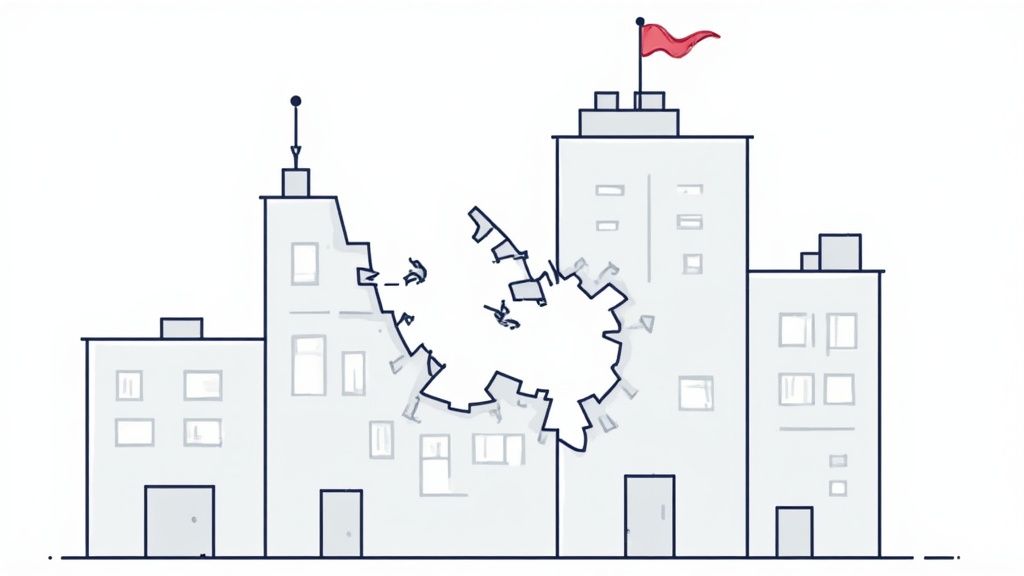
Don’t think of restructuring as a last-ditch effort to keep the lights on. It’s more like a top-tier sports coach making calculated adjustments mid-season. A great coach doesn’t wait until the championship is out of reach to change the game plan; they’re constantly fine-tuning formations, switching up player roles, and adapting strategies to counter a rival or seize a new advantage.
That’s exactly what a company does when it restructures—it’s realigning its teams, resources, and workflows to get more competitive and innovative. This is way more than just moving boxes around on an org chart. It’s a deep, strategic recalibration of the company’s internal engine. For smaller businesses, getting the foundation right from the start can save you from painful overhauls later. You can dive deeper into this in our guide to small business organizational structure.
The Scope of Restructuring
Every restructuring effort looks a little different. It’s not a one-size-fits-all playbook; it’s a tailored strategy that hinges on a company’s unique goals and the specific hurdles it’s facing. The process can be a minor tune-up or a complete teardown and rebuild.
To give you a clearer picture, here’s a breakdown of the common approaches to restructuring. Each one is typically triggered by different circumstances and aims to achieve a specific outcome.
Types of Organizational Restructuring
| Restructuring Type | Primary Trigger | Main Objective |
|---|---|---|
| Financial Restructuring | Cash flow issues, high debt, or poor financial performance. | Improve financial stability and create a more sustainable capital structure. |
| Operational Restructuring | Inefficient processes, high costs, or declining product quality. | Cut costs, boost productivity, and enhance core business operations. |
| Organizational Design | Misalignment with strategy, poor communication, or rapid growth. | Realign reporting lines, departments, and roles to better support business goals. |
As you can see, the “why” behind a restructure dictates the “what.” Whether you’re sorting out your finances, fixing broken processes, or redesigning the org chart, the key is to match the solution to the problem at hand.
A Constant State of Evolution
In today’s fast-moving markets, restructuring isn’t some rare, seismic event. It’s becoming a regular part of doing business. Companies are constantly redesigning themselves to stay ahead of the curve, and the data backs this up.
In fact, a whopping 96% of companies are in some stage of transformation right now. And what’s pushing them? A significant 51% of these changes are driven by market competition and the hunt for new growth opportunities. It’s clear that restructuring is no longer just a reaction to crisis; it’s a strategic necessity for any modern business.
Ultimately, a well-executed restructuring effort is a sign of a healthy, forward-thinking organization. It demonstrates a leadership team’s willingness to make tough decisions, adapt to changing conditions, and position the company for long-term success rather than just reacting to past failures.
Key Drivers Forcing Modern Businesses to Restructure
Companies don’t just wake up one morning and decide to overhaul their entire structure on a whim. The push to restructure almost always comes from powerful forces, both inside and outside the company, that make the old way of doing things obsolete.
Think of it this way: your business is a ship designed for a specific voyage across a specific sea. But what happens when an unexpected storm rolls in—like a new technology, a recession, or a global pandemic? You can’t just keep sailing with the original setup. You have to re-rig the sails, adjust the course, and maybe even reinforce the hull. Sticking to the old plan is a surefire way to sink.
Modern businesses are constantly navigating these kinds of turbulent waters, and restructuring is how they stay afloat and move forward.
Economic and Market Pressures
The global economy is one of the biggest storms a business can face. Things like inflation, shaky supply chains, and sudden shifts in consumer spending force leaders to take a hard look at their operations. When costs are climbing and customers are tightening their belts, companies have to get leaner and more efficient just to survive, let alone grow.
This environment often leads to tough choices. We’re seeing a major increase in corporate restructuring as companies grapple with rising interest rates and new regulations. In fact, by mid-2024, U.S. companies had already announced over 744,000 job cuts, hitting the tech and retail sectors especially hard. This isn’t just about slashing costs; it’s a strategic pivot to build resilience and pour resources into the innovations that will help them weather the storm. You can explore more data on how companies are navigating these economic headwinds.
Some of the key economic drivers are:
- Intensified Competition: New players are always entering the market, often with leaner, more agile models that can quickly steal market share. Established companies have to restructure just to keep up.
- Evolving Consumer Demands: Customer expectations are a moving target. They want better products, faster service, and more personalized experiences. This forces businesses to reorganize teams and processes to meet those demands.
- Supply Chain Volatility: The fragility of global supply chains has become painfully obvious. This has prompted many companies to restructure their entire operations, bringing sourcing closer to home and building more resilient networks.
Technological Advancements
If economic pressures are the storm, technology is the tidal wave changing the entire ocean. The rapid rise of AI and automation is probably the single biggest force pushing companies to restructure today. This isn’t just about bolting on a few new tools—it’s about fundamentally rethinking how work gets done entirely.
As repetitive, manual tasks get automated, some roles are becoming obsolete. At the same time, this creates an urgent need for completely new skills in areas like data analysis, AI management, and digital strategy.
A company structured for a pre-AI world cannot effectively compete in an AI-driven one. Ignoring this technological shift is like a cavalry regiment insisting on using horses when the opponent has tanks.
This massive technological push is forcing companies to adapt in a few key ways:
- Redefine Job Roles: Restructuring is essential to create new positions focused on new tech while phasing out roles that can be automated. This isn’t a simple swap; it requires a serious investment in retraining and upskilling your workforce.
- Break Down Silos: Old-school departmental silos are death to innovation. Modern digital tools run on data and thrive on cross-functional collaboration. To make them work, companies have to redesign their structures to be more integrated and project-based.
- Flatten Hierarchies: Technology puts information and powerful tools directly into the hands of employees, breaking down the old top-down management model. This paves the way for flatter organizations, faster decisions, and more autonomy for the people on the front lines.
At the end of the day, both the economy and technology are sending a clear message: evolve or get left behind. Choosing to restructure isn’t a sign of failure. It’s a proactive admission that the structure that brought you yesterday’s success won’t be the one that delivers tomorrow’s.
A Step-By-Step Framework For Successful Restructuring
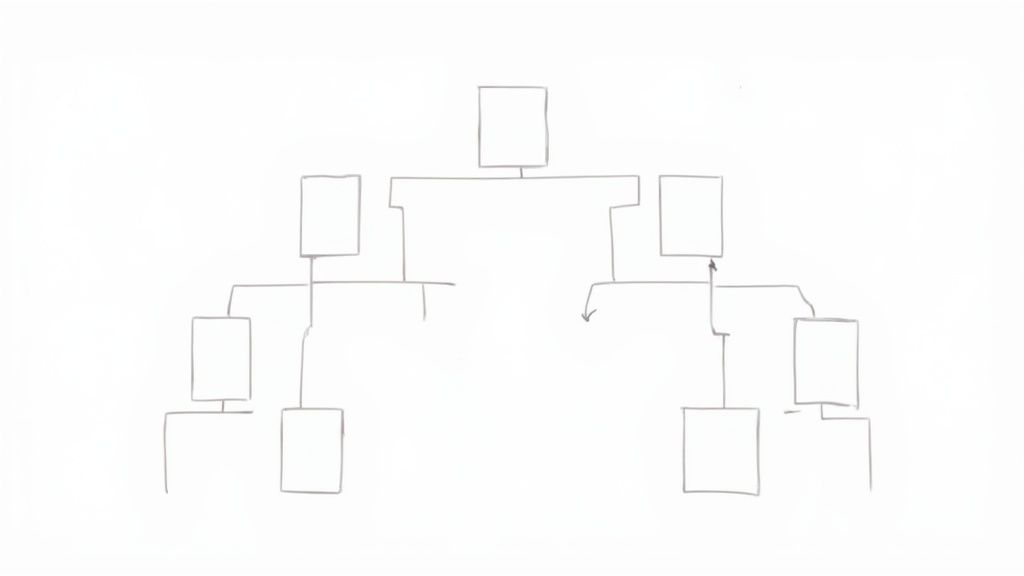
Trying to execute an organizational restructuring without a clear plan is like trying to assemble a race car engine without the manual. You might get some parts to fit together, but it’s definitely not going to perform under pressure—and it’ll probably fall apart on the first lap.
A structured, phased approach isn’t just nice to have; it’s essential for navigating this kind of complexity, minimizing the inevitable disruption, and actually hitting your targets.
This framework breaks the journey down into five manageable phases. Think of it as your roadmap, guiding you from the initial diagnosis all the way to post-launch monitoring. Each step builds on the last, creating a logical and cohesive transition for everyone involved.
Phase 1: Diagnosis And Goal Setting
Before you can chart a new course, you need to know exactly where you are on the map. This first phase is all about deep analysis and defining what success actually looks like. It’s how you move from a vague feeling that “something needs to change” to a concrete set of objectives.
Your first move is to conduct a thorough organizational audit. Dig into everything—performance data, process workflows, financial reports, and especially employee feedback. The goal is to pinpoint the specific inefficiencies, bottlenecks, or misalignments that are holding you back.
Once you have a clear picture of the problems, you can start defining the solutions. This means setting clear, measurable goals. Vague ambitions like “improve efficiency” are useless here. You need specific targets to aim for.
- Example Goal: “Reduce operational costs in the manufacturing division by 15% within six months.”
- Example Goal: “Decrease customer ticket resolution time by 25% by consolidating support tiers.”
- Example Goal: “Increase the product development cycle speed by 30% by creating cross-functional agile teams.”
These tangible goals become your North Star, keeping everyone aligned throughout the entire organizational restructuring process.
Phase 2: Strategic Planning And Design
With a clear “why” established, this phase focuses on the “what” and the “how.” This is where you get out the blueprints and design the new organizational structure. It involves mapping out new reporting lines, defining new roles and responsibilities, and redesigning workflows to support the goals you just set.
Think of yourself as an architect. You need a detailed plan that shows how every room connects and what its purpose is. In this case, your “rooms” are departments and teams, and the “hallways” are your communication and reporting channels.
A huge part of this phase is creating a rock-solid communication plan. Most resistance to change comes from a lack of information and a fear of the unknown. A proactive, transparent communication strategy is your best tool for building trust and getting buy-in from top to bottom.
“Unless you have a disciplined process to make sure that these new businesses get the resources they need, almost always the existing businesses will resist.” – Charles O’Reilly, Stanford Graduate School of Business Professor
Your plan should detail key messages, identify who you’re talking to (senior leaders, middle managers, all employees), and set a timeline for updates. Transparency is your greatest asset.
Phase 3: Phased Implementation
With your blueprint and communication plan in hand, it’s time to start building. A “big bang” approach, where everything changes overnight, is a recipe for chaos. A phased implementation is almost always the smarter, safer route.
This means rolling out changes in a logical, controlled sequence. For example, you might realign the senior leadership team first, then move to departmental structures, and finally update individual roles. This staged approach allows the organization to absorb changes gradually and gives you a chance to learn and adjust as you go.
During this phase, leadership has to be highly visible and accessible. This isn’t the time to manage from behind a closed door. Leaders need to be on the ground, answering questions, addressing concerns, and constantly reinforcing the vision for the change.
Phase 4: Communication And Change Management
While you started planning your communications back in Phase 2, this is where the execution becomes critical. It’s the human side of the framework, focused on guiding your people through the transition with empathy and real support.
Effective change management is about a lot more than sending a few company-wide emails. It’s about creating an environment where people feel heard, valued, and equipped for what’s next.
Key Change Management Actions:
- Hold Town Halls: Create open forums where employees can ask questions directly to leadership. No filters.
- Provide Training: Give people the new skills and knowledge they need to succeed in their new roles or work within new processes.
- Offer Support Resources: Provide access to things like career counseling or wellness programs to help employees manage the stress that comes with uncertainty.
- Celebrate Small Wins: Acknowledge and celebrate milestones along the way. This builds momentum and keeps morale from tanking.
This phase is all about turning potential resistance into active support for the organizational restructuring.
Phase 5: Performance Monitoring And Adjustment
The launch of the new structure isn’t the finish line; it’s a new starting line. This final phase is about rigorously monitoring performance against the goals you set way back in Phase 1. You need to track the key metrics you identified to see if the changes are actually delivering the results you expected.
No plan is perfect, so you have to be ready to be agile. Collect feedback from employees and managers to identify any unforeseen challenges or areas where the new structure is creating friction. Be willing to make small adjustments and fine-tune the design based on what you’re seeing in the real world. This continuous improvement loop ensures your organization doesn’t just change—it evolves effectively.
Navigating The Human Element of Restructuring
A perfect restructuring plan on paper means nothing if it ignores the people at its core. This is where so many companies stumble. Mastering the art of change management isn’t just a “soft skill”—it’s the single most critical factor that decides whether a reorganization succeeds or fails. The moment change is announced, employees are hit with a powerful mix of fear, uncertainty, and resistance.
Think of it like a ship’s captain steering through a nasty storm. The technical navigation plan is essential, sure. But it’s the captain’s calm, clear, and constant communication that keeps the crew focused and working together. In a restructuring, that’s leadership’s job: to be the steady hand that guides the team through the disruption.
Understanding The Emotional Landscape
The second employees hear the word “restructuring,” their thoughts immediately turn personal. Will my job be cut? Will I have a new boss? Are my responsibilities about to change overnight? This anxiety is a productivity killer, tanking morale right when you need your team to be most engaged.
Ignoring these gut reactions is a recipe for disaster. Resistance isn’t just defiance; it’s a symptom of genuine fear. The only way through is with proactive and empathetic leadership that tackles these concerns head-on, turning a period of high anxiety into a moment to actually build trust.
An organizational restructuring is as much an emotional journey as it is a structural one. How you manage the former will directly dictate the success of the latter.
Building A Compelling Narrative For Change
You can’t just drop a new org chart in Slack and expect a standing ovation. You have to build a compelling story that answers the one question on everyone’s mind: “Why?” This narrative has to connect the restructuring to a clear, positive vision for the company’s future—and by extension, a secure future for its employees.
A powerful change narrative should do three things:
- Acknowledge the Past: Give credit where it’s due. Recognize the hard work that got the company to this point.
- Explain the Present: Be brutally honest about the market shifts or internal roadblocks that make this change necessary.
- Paint a Vision for the Future: Get people excited. Describe what the organization will look like and how it will be stronger and better positioned to win.
This story provides context and purpose. It helps people see the change not as chaos, but as a logical and necessary step forward.
Creating Open Channels for Feedback and Support
Communication during a restructure can’t be a one-way street. To build real trust, you have to open genuine channels for feedback. This is more than a digital suggestion box. It means actively seeking input through town halls, anonymous surveys, and direct one-on-ones between managers and their teams.
When people feel heard, they feel invested. Just as critical is providing real, tangible support to help them navigate the transition. This includes things like:
- Retraining and Upskilling Programs: Offer training for new roles or tools. It shows you’re invested in your current team, not just looking for replacements.
- Wellness Resources: Provide access to mental health support and stress management resources. Acknowledge the toll this takes.
- Clear Career Pathing: Don’t leave people guessing. Help them see a future for themselves within the new structure.
Getting this human element wrong has serious consequences. Poor change management leads to burnout, and burned-out employees leave. In fact, employees experiencing high change fatigue are far more likely to quit. Only 43% of them plan to stay with their company, compared to 74% of those with low fatigue. That’s a potential retention crisis waiting to happen.
Ultimately, a leader’s actions during a restructure speak louder than any company-wide memo. By modeling the new behaviors you want to see, communicating with transparency, and showing genuine empathy, you can turn a period of immense uncertainty into a chance to forge a more resilient culture.
How Fractional Executives Can Streamline Restructuring

Leading an organizational restructuring is a monumental task. It’s the kind of high-stakes project that demands specialized skills, unwavering focus, and countless hours—resources that a stretched leadership team simply doesn’t have to spare.
This is where a powerful, modern solution comes into play: bringing a fractional executive on board.
Think of a fractional executive as a specialist surgeon called in for a complex procedure. You wouldn’t ask your general practitioner to perform open-heart surgery. You bring in an expert who has deep, specific experience and has done it successfully dozens of times before.
This on-demand leadership provides immediate expertise in financial modeling, operational redesign, and change management, all without the long-term cost of a full-time hire.
Gaining Objective Expertise and Speed
One of the biggest hurdles in any restructuring is internal bias. It’s only natural. Existing leaders are often too close to the problems, attached to certain processes, or influenced by internal politics.
A fractional executive walks in with a fresh, objective perspective.
They can assess the situation without emotional baggage, identify sacred cows that need to go, and make tough, data-driven recommendations. This unbiased viewpoint is absolutely crucial for making the right strategic moves and avoiding costly missteps.
A fractional executive acts as a neutral third party, capable of navigating complex internal dynamics to ensure the restructuring goals remain the top priority, free from the influence of historical baggage or departmental silos.
On top of that, their specialized experience accelerates the entire process. They aren’t starting from scratch; they bring proven frameworks and playbooks, allowing them to bypass the steep learning curve an internal team would face. This means faster planning, smoother execution, and a quicker path to seeing real results.
The Value of Specialized Leadership
Fractional executives bring a unique blend of high-level strategic oversight and sleeves-rolled-up execution. They don’t just advise from a distance. They get in the trenches and work alongside your team to manage timelines, mentor employees, and drive the project forward.
This model is particularly effective for navigating the complexities of an organizational restructuring. Here’s how they add value:
- Cost-Effectiveness: You get access to top-tier executive talent for a fraction of the cost of a full-time salary, benefits, and equity package.
- Reduced Risk: Their experience helps you sidestep common pitfalls, dramatically reducing the risk of a failed or stalled initiative that could cost the company dearly.
- Skill Transfer: They mentor your existing team as they go, building internal capabilities and leaving your organization stronger and more knowledgeable than before.
This approach is closely related to interim management, which also provides temporary leadership during critical transitions. You can learn more by exploring our detailed guide on what interim management is and how it can benefit your business.
Ultimately, bringing in a fractional expert turns a potentially chaotic and high-risk undertaking into a managed, strategic process. It positions your company for a smoother transformation and a more successful, sustainable future.
Common Pitfalls In Restructuring And How To Avoid Them
Even the most carefully planned organizational restructuring can go sideways. It’s a high-stakes process, and the path to a stronger, more agile company is littered with traps that can derail even the best intentions, leaving behind a trail of disillusioned employees.
The good news? Most of these failures aren’t random. They’re predictable challenges that demand a smart defense. By understanding where others have stumbled, you can build a plan that dramatically increases your chances of success.
Poor Communication And A Lack of Transparency
An information vacuum is the single fastest way to kill morale during a restructure. When employees are left in the dark, they’ll naturally assume the worst. Rumors catch fire, anxiety spikes, and productivity grinds to a halt as everyone shifts their focus from their work to sheer survival.
This lack of clear, consistent communication breeds deep-seated distrust in leadership. To sidestep this, you have to commit to radical transparency right from the start.
- Build a Proactive Communication Plan: Don’t just wait for questions to roll in. Set up a regular cadence of updates using multiple channels—think town halls, candid emails, and manager-led team huddles.
- Be Honest About the “Why”: People need to understand the business reasons behind the change. Clearly connect the dots between the restructure and the company’s long-term health and future opportunities.
- Open Up Two-Way Channels: Give employees safe, accessible ways to ask tough questions and voice their concerns without fear of reprisal. A simple Q&A form or dedicated office hours can make a world of difference.
Great communication isn’t about having all the answers. It’s about being present, honest, and consistent—a cornerstone of any solid change management best practices.
Underestimating The Cultural Impact
An organizational restructuring is so much more than shuffling boxes on an org chart. It fundamentally rewires a company’s culture, and ignoring this human element is a critical mistake. When new teams are formed, old reporting lines vanish, and familiar routines are upended, it can feel like the company’s very identity is being erased.
A restructure that looks brilliant on a spreadsheet but clashes with the company’s core culture is doomed to fail. You simply cannot force a new structure onto a culture that rejects it.
The key is to conduct a cultural assessment before you make a single move. Get a real feel for your company’s existing values, communication styles, and all those unwritten rules. Then, design the new structure to align with—or thoughtfully evolve—that culture, rather than trying to bulldoze it.
Ill-Defined Objectives and Unclear Goals
Finally, a shocking number of restructurings fail for a simple reason: success was never clearly defined in the first place. Without specific, measurable goals, the entire initiative is rudderless. Teams don’t know what to prioritize, leaders have no way to track progress, and the whole effort can dissolve into a chaotic mess of changes with no clear purpose.
This lack of focus has been a driving factor in many large-scale corporate restructurings, from Nissan’s asset sales to Pemex’s workforce reductions, where clear financial targets guided every decision.
Before you touch anything, define what victory looks like. Set concrete Key Performance Indicators (KPIs) that are tied directly to the restructuring’s objectives. This gives everyone a clear roadmap and provides a tangible way to measure the return on this significant investment of time, energy, and resources.
Frequently Asked Questions About Organizational Restructuring

Navigating an organizational restructuring naturally kicks up a lot of questions for everyone involved, from the C-suite to the front lines. Getting clear, straight answers is the only way to cut through the anxiety and keep the team moving in the same direction.
Here are a few of the most common questions that pop up whenever a company starts talking about significant change.
How Long Does A Restructuring Typically Take?
There’s no one-size-fits-all answer here. The timeline for an organizational restructuring really depends on the size of your company and just how deep the changes go.
A simple departmental shuffle might be wrapped up in a few weeks. But a massive, top-to-bottom corporate overhaul that touches multiple divisions? That could easily stretch from six months to over a year.
The trick is to think in phases, not just one big, scary deadline. A phased approach allows for careful planning, thoughtful implementation, and the space to make adjustments along the way without completely overwhelming your people.
Will There Be Layoffs?
Let’s be honest—this is usually the first question on everyone’s mind. And it’s a fair one.
While some restructures do lead to workforce reductions to chase efficiency, it’s definitely not a given. Many are about putting the right talent in the right seats, creating new roles, and building better processes to spark growth, not just to trim the budget.
Leadership has to be crystal clear and transparent on this. If layoffs are a possibility, you need to explain the “why” and the process. If they aren’t part of the plan, say so directly and put those fears to rest.
What Is The Difference Between Restructuring And Reorganization?
People often use these terms as if they mean the same thing, but there’s a crucial difference. Think of it like this:
- Reorganization is about tweaking the internal reporting structure. You’re essentially redrawing the org chart—who reports to whom is different, but the core way the business operates doesn’t really change.
- Restructuring is a much deeper, more fundamental shift. It can involve changing the company’s entire financial foundation (like dealing with debt), its operational model, or its overarching strategy. The org chart changes are just one piece of a much larger puzzle.
Restructuring gets to the heart of how and why the business runs, while reorganization is more focused on the who. Making that distinction is key to setting the right expectations from the start.
Pulling off this level of change requires a specific kind of expertise and a clear-eyed view of the end goal—something that seasoned leadership can bring to the table.
Executing a flawless restructuring demands an expertise that many internal teams simply don’t have. Shiny is a marketplace connecting you with over 650 vetted fractional executives who can lead your transformation with the precision and objectivity it requires. Find the strategic leadership you need to navigate change effectively at https://useshiny.com.