Sales Funnel Optimization: Boost Your Conversions Today
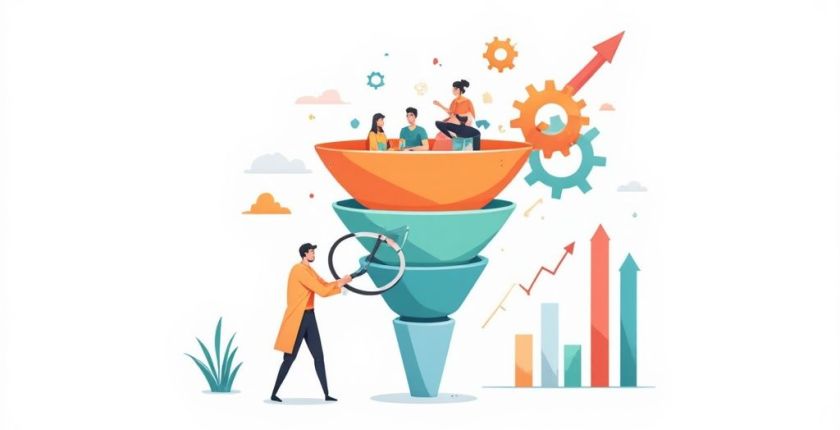
Sales funnel optimization isn’t some dark art. It’s simply the process of improving each step a person takes on their way to becoming a customer. The goal is to plug the “leaks”—those spots where potential buyers drop off—and create a smoother, more convincing path from that first glimmer of awareness to the final purchase.
Diagnosing Your Sales Funnel Health
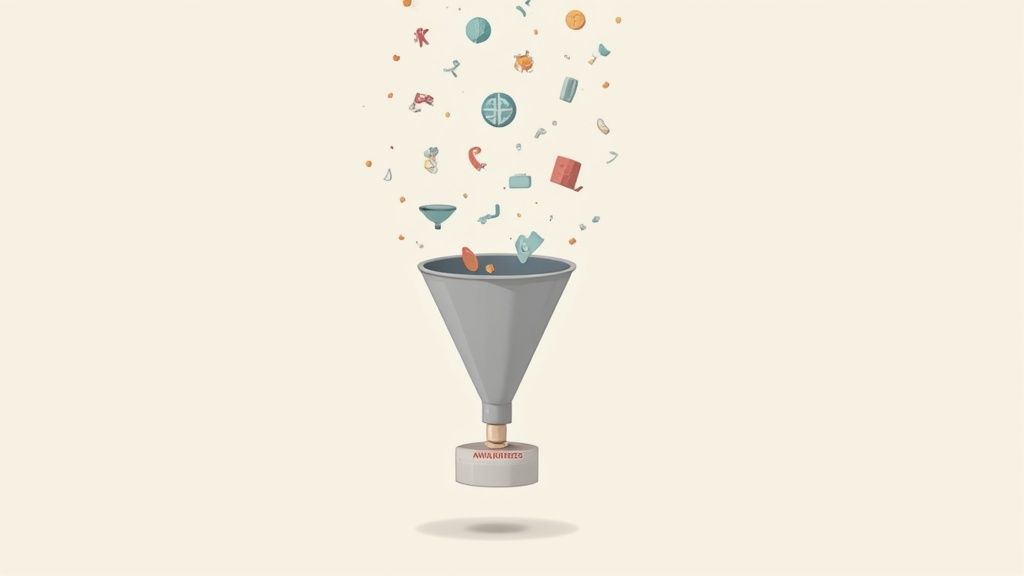
Before you can fix a leaky funnel, you have to find the holes. This diagnostic phase is the absolute bedrock of any good optimization strategy. It’s all about getting past surface-level numbers like total website traffic and digging into the data that tells you the real story of what your users are doing.
Think of yourself as a detective. Your job is to follow the clues and trace the customer’s journey, step by step.
The first move is to map out every single touchpoint someone has with your brand. And I mean every touchpoint. This isn’t a 30,000-foot view; it’s a granular breakdown from the first ad they see on social media to the post-purchase “thank you” email.
Establishing Your Performance Baseline
Once you have that map, it’s time to attach hard numbers to each step. This means figuring out the key performance indicators (KPIs) that truly define success at every stage. For any of this to work, you have to be obsessive about tracking activity.
Look at key ratios, like how many unique prospects you contact versus how many actually connect. Or your connection-to-demo rate. These numbers reveal how effective your outreach really is. Digging into metrics like demo completion rates and the final conversion from pipeline to closed-won helps you pinpoint exactly where people are losing interest. It’s how you start to improve win rates, which currently hover around a pretty average 21%.
A proper audit should give you clear answers to a few critical questions:
- Where’s the biggest drop-off? Pinpoint the exact transition between stages with the highest abandonment rate.
- What are our stage-to-stage conversion rates? You need to know the percentage of users who successfully move from one step to the next.
- How long does our sales cycle really take? Understanding your sales velocity is crucial for spotting bottlenecks that are slowing everything down.
To help you get started, here’s a quick look at the core metrics you should be tracking at each funnel stage. This is your starting point for identifying where performance is strong and where it’s leaking.
Key Funnel Stages and Their Core Metrics
| Funnel Stage | Primary Goal | Key Metric to Track | Example Tool |
|---|---|---|---|
| Awareness (Top) | Attract new prospects | Website Traffic, Social Media Engagement, Impressions | Google Analytics |
| Interest (Middle) | Capture lead information | Lead Conversion Rate, Content Downloads, Newsletter Signups | HubSpot |
| Consideration (Middle) | Nurture and qualify leads | Email Open/Click-Through Rates, Demo Requests, Free Trial Signups | Mailchimp |
| Decision (Bottom) | Convert leads into customers | Demo-to-Close Rate, Sales Qualified Leads (SQLs) | Salesforce |
| Purchase (Bottom) | Finalize the sale | Close Rate, Average Deal Size, Customer Acquisition Cost (CAC) | Close |
Tracking these metrics gives you a data-backed view of your entire funnel, turning vague feelings about performance into concrete numbers you can act on.
A classic startup mistake is obsessing only over the final conversion rate. Real, sustainable growth comes from improving the micro-conversions at every single step. Those small wins compound and lead to massive gains at the bottom of the funnel.
Uncovering Hidden Opportunities
This whole diagnostic process isn’t just about finding what’s broken; it’s about uncovering hidden pockets of growth.
For instance, you might discover that leads from a guest post you did on an industry blog are converting at a ridiculously high rate. That’s not just an interesting tidbit—it’s a bright, flashing sign telling you exactly where to double down on your marketing efforts.
Or maybe you watch a few user session recordings and notice that everyone hesitates on your pricing page. That’s not just a leak; it’s a golden opportunity. Maybe you need to clarify your value prop, add more social proof, or create a more compelling call-to-action.
By establishing a clear baseline, you create a benchmark. From that point on, every change you make can be measured against it. This is how you turn guesswork into a predictable, repeatable system for growth.
Attracting Higher Quality Leads at the Top
A funnel packed with leads might look impressive, but if it’s full of the wrong people, it’s just a vanity metric. The top of your funnel (TOFU) is your first, best shot at attracting prospects who are a perfect fit for what you offer. This is where real sales funnel optimization starts—shifting from a mindset of just driving traffic to attracting genuinely interested, high-quality leads.
This means you have to stop casting a wide, generic net and start fishing with a spear. It all boils down to having a razor-sharp understanding of your ideal customer profile (ICP). You need to know their biggest frustrations, the exact questions they’re typing into Google, and the words they use to talk about their problems.
For instance, a startup selling project management software shouldn’t just target “small business owners.” That’s way too broad. A much stronger ICP would be something like, “founders of remote-first tech startups with 10-50 employees who are struggling with cross-functional project visibility.” Getting this specific completely changes how you approach your content and SEO.
Sharpening Your Lead Generation Strategy
Once you’ve nailed down your ICP, you can create content that acts like a magnet for that specific audience. Think less about high-level, generic blog posts and more about creating targeted resources that solve a very specific, painful problem.
- Go After High-Intent Keywords: Target long-tail keywords that scream “I’m looking for a solution right now.” Instead of a broad term like “project management tips,” you’d be much better off targeting something like, “best Trello alternative for agile development teams.”
- Create Problem-Specific Lead Magnets: Build checklists, templates, or mini-guides that directly address a known pain point. A startup with financial modeling software could offer a “Pre-Seed Funding Cap Table Template.” It’s an instant value-add for the right person.
- Build Hyper-Relevant Landing Pages: Your landing pages have to deliver on the promise of the ad or link that brought the visitor there. A mismatch in messaging is one of the biggest reasons for high bounce rates and wasted ad spend.
Don’t mistake volume for value. I’ll take ten highly qualified leads who fit my ICP over 100 unqualified ones any day of the week. Those ten are the ones who will actually make it through the funnel; the other 100 are just noise.
Focusing on the right people from the very beginning is also a massive lever for controlling your acquisition costs. When your efforts are aimed at prospects with a genuine need, you waste far less time and money trying to nurture leads who were never going to buy anyway. If you want to dive deeper, check out our guide on how to reduce customer acquisition cost.
This targeted approach has a huge ripple effect on your conversion rates downstream. The data is pretty clear: the average lead-to-customer conversion rate hovers around a slim 2.35%. But simple optimizations, like fine-tuning your landing pages, can boost conversions in a big way. This just goes to show the immense potential hiding in the very first step of your customer’s journey. You can explore more of these crucial sales funnel statistics and findings to see for yourself. When you get better leads in, the rest of the funnel just works better. It’s as simple as that.
Building Trust Through Mid-Funnel Nurturing
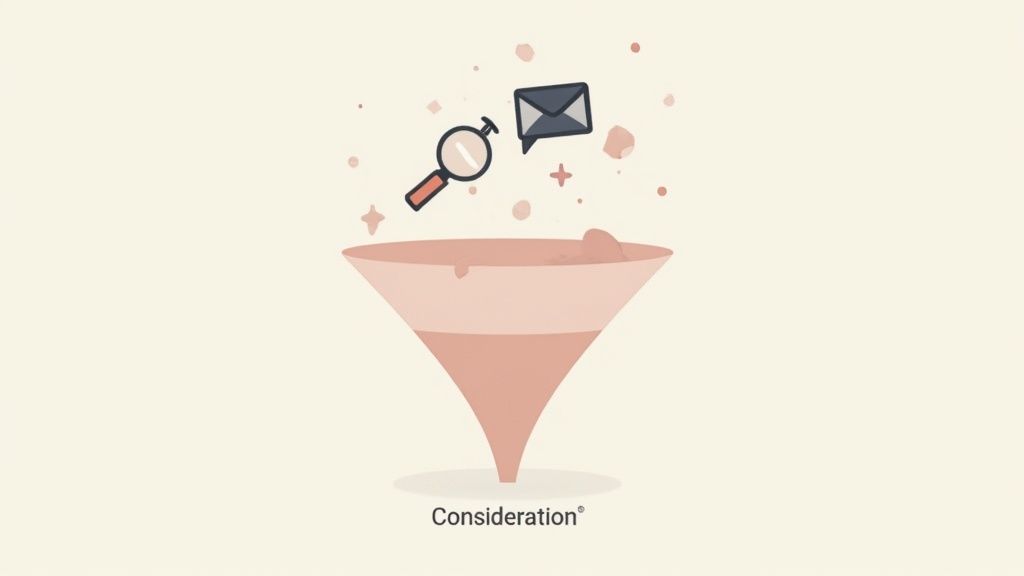
Getting a lead into your system is a great first step, but it’s just that—a first step. The middle of the funnel (MOFU) is where you turn that initial flicker of interest into genuine trust. This is the crucial stage where most businesses unfortunately let promising leads go cold because they fail to build the relationship.
Effective mid-funnel nurturing is a delicate balance. You need to stay relevant without being annoying, providing value and gently reminding leads why they showed interest in the first place. This is where strategic sales funnel optimization truly pays off, building momentum instead of letting it fizzle out.
The reality is pretty stark: companies that are great at lead nurturing generate 50% more sales-ready leads at a 33% lower cost. And yet, a staggering 79% of marketing leads never convert into sales, mostly because they weren’t nurtured properly. That gap represents a massive opportunity.
Delivering Value with Automated Precision
Email automation is one of your most powerful tools for MOFU nurturing, but I’m not talking about the generic, one-size-fits-all blasts. The goal is to deliver personalized, value-driven content based on what a lead has actually done.
Think about the content they downloaded or the pages they browsed. Did they read a blog post about scaling a remote team? That’s your signal. Send them a case study showing how a similar company used your product to manage their distributed workforce. It’s not a hard sell; it’s just the helpful next step in their research.
Here’s how I’d approach structuring your automated sequences to get the most impact:
- Segment Your Audience: Group leads based on how they came in, their industry, or their on-site behavior. A lead who attended a fintech webinar needs entirely different content than one who downloaded an e-commerce checklist.
- Map Content to Their Journey: Don’t just blast out your latest blog posts. Line up your content with the questions they’re likely asking at this stage. Think case studies, comparison guides, or webinar recordings.
- Vary Your Content Formats: Keep things fresh. Follow up a detailed case study with a short, tactical video tip. Mixing it up keeps your communication from feeling stale and predictable.
The point of mid-funnel content isn’t to sell—it’s to educate and build credibility. When you consistently solve small problems for your leads, they’ll eventually trust you to solve their big ones.
Using Social Proof and Lead Scoring
As your leads move through the middle of the funnel, they are actively weighing their options. This is the perfect moment to introduce social proof. Case studies, testimonials, and third-party reviews are gold here because they shift the focus from what you say about your product to what other people have actually accomplished with it.
At the same time, you need to be using a lead scoring system to track who’s becoming more engaged. It’s a simple but incredibly effective way to assign points to leads based on the actions they take.
A basic setup might look like this:
- Opened an email: +1 point
- Clicked a link: +3 points
- Visited the pricing page: +10 points
- Downloaded a case study: +15 points
This system helps your sales team zero in on the warmest, most sales-ready prospects, ensuring they spend their time wisely. It transforms your funnel from a passive system into an active, intelligent process that guides the right people toward a decision when they’re ready.
Closing More Deals at the Dotted Line
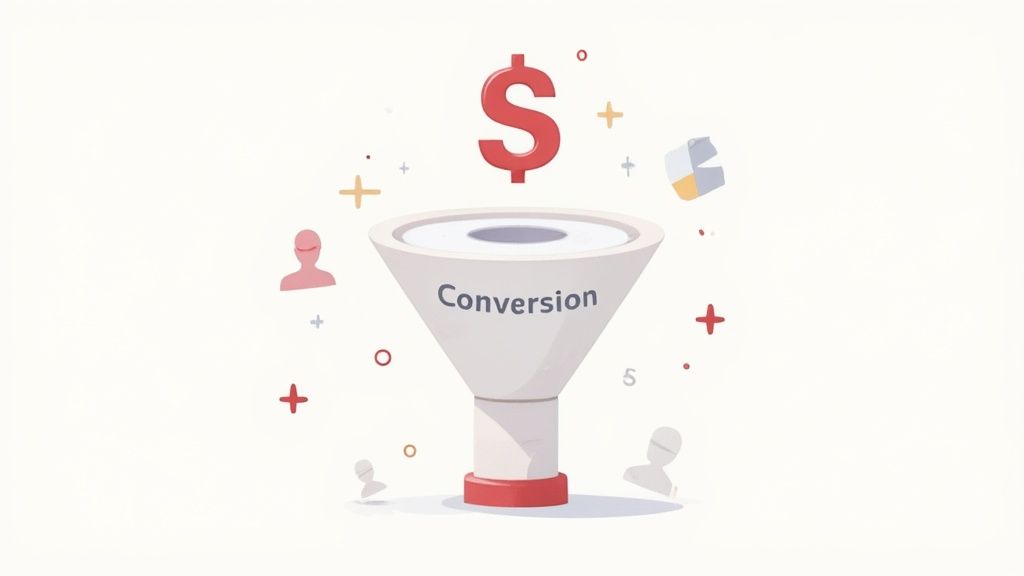
This is it—the final step. Your prospect is informed, engaged, and right on the cusp of becoming a customer. The bottom of the funnel (BOFU) is where all your hard work is supposed to pay off, but it’s also where the smallest bit of friction can derail the entire process.
Optimizing this stage is all about building that last ounce of confidence and making the decision to buy feel both easy and incredibly smart.
At this point, your goal flips from education to validation. You’re no longer teaching; you’re confirming they’re making a great choice. This means you need to scrutinize your sales pages, checkout process, and calls-to-action with a fine-tooth comb.
A clunky, multi-page checkout is a classic conversion killer. Try to see the process through your customer’s eyes. Is every single form field absolutely necessary? Are you offering enough payment options to make it convenient for everyone? These small tweaks can have an outsized impact on your closing rate.
Building Unshakeable Final Confidence
When a prospect is that close to buying, their internal risk detector goes on high alert. Now is the time to deploy your most powerful trust signals. Social proof isn’t just a nice-to-have at the BOFU; it’s absolutely essential.
You need to strategically place your strongest assets where they’ll have the most impact:
- Customer Testimonials: Put glowing quotes from happy customers directly on your sales and checkout pages. If you have video testimonials, even better.
- Case Studies: Offer prominent links to detailed case studies that show tangible, real-world results—especially ones that mirror your prospect’s own goals.
- Trust Badges: Display security seals, satisfaction guarantees, and any industry awards you’ve won. These visuals instantly reassure users that their information is safe and their purchase is protected.
Personalization here becomes a closing superpower. Generic calls to action might work sometimes, but personalized CTAs have been shown to outperform them by a staggering 202%. And what about testimonials? Adding them at this final stage can lift conversions by 34%. These numbers don’t lie—trust and relevance are your most valuable currencies here.
Don’t be afraid to make a direct offer that completely eliminates risk. A free trial, a money-back guarantee, or a personalized one-on-one demo can be the final nudge someone needs to get over their hesitation and commit.
Removing Last-Minute Friction
Even with powerful social proof, a clunky user experience can sabotage a sale at the last second. The goal is to make saying “yes” as simple as humanly possible. Think of Amazon’s one-click ordering—they mastered the art of removing friction, and it built an empire.
Consider putting some of these friction-reducers in place:
- Offer Live Chat: Give people instant access to a real person who can answer last-minute questions about pricing, features, or implementation.
- Simplify Your Pricing Page: Clearly explain the value of each tier. Ditch the jargon and make it dead simple for them to understand what they get for their money.
- Send Strategic Reminders: For users who abandon their cart, a well-timed follow-up email offering help or a small incentive can be all it takes to bring them right back.
Ultimately, strong sales funnel optimization at the bottom is less about aggressive selling and more about confident guidance. It’s about reassuring the prospect that they are making the right choice. For startups trying to scale, refining this final step is a core part of building sustainable growth. By applying these focused tactics, you’ll not only close more deals but also start building better customer relationships from day one—a central tenet of many modern business development strategies.
Using Data and Testing for Continuous Growth
Here’s a hard truth: effective sales funnel optimization never really ends. It’s not a project you can check off a list. The best funnels are constantly being tweaked and refined through a disciplined cycle of analysis, testing, and learning. This is how you build a resilient, high-performing growth engine.
Your analytics tell you what is happening—where people are dropping off, which pages are bleeding visitors. But to truly fix the leaks, you need to understand why it’s happening. This is where qualitative data tools become your best friend.
Things like heatmaps show you exactly where people are clicking, moving their mouse, and how far they bother to scroll. It’s a visual gut-check on what’s grabbing attention and what’s getting ignored. Session recordings take it a step further, letting you watch anonymized videos of real user sessions. It’s like looking over their shoulder, giving you a front-row seat to their moments of confusion or frustration.
Embracing a Culture of Experimentation
Armed with these insights, you can stop guessing and start making data-informed hypotheses. The heart of this process is A/B testing, also known as split testing. It’s a simple method of pitting two versions of a webpage or email against each other to see which one gets better results.
Every good test starts with a clear hypothesis. For instance, maybe your heatmaps show that almost no one is clicking your main call-to-action (CTA) button on the pricing page.
Your hypothesis might be: “Changing the CTA button color from grey to a high-contrast orange and tweaking the text from ‘Sign Up’ to ‘Start My Free Trial’ will boost clicks by 15%. It’ll be more visible, and the new copy feels like a lower-risk commitment.”
From there, you split your traffic. 50% of visitors see the original page, and the other 50% get the new version. The winner is the one that produces a statistically significant lift in clicks.
Don’t just test the big, obvious changes. I’ve seen tiny tweaks to a headline, a form field, or an image yield surprisingly massive results. The key is to test one variable at a time so you know exactly what caused the change in performance.
What to Test for Maximum Impact
While you can test almost anything, focus your energy on the high-impact areas that directly influence user decisions. It’s all about prioritizing.
Here’s where I’d start:
- Headlines and Value Propositions: Does your headline instantly and clearly communicate the value you offer? Is it compelling?
- Calls-to-Action (CTAs): Play with button text, color, size, and placement. See what actually drives people to act.
- Page Layout and Design: Sometimes, a cleaner, simpler design can slash friction and dramatically improve conversions. Don’t be afraid to remove things.
- Email Subject Lines: For your nurture sequences, the subject line is your first—and often most important—hurdle. Test relentlessly.
Adopting this test-and-learn mindset is absolutely fundamental to long-term success. It creates a system where every part of your funnel is constantly improving, which feeds directly into your bottom line. Building these kinds of efficient systems is a topic we’re passionate about, and you can learn more in our guide on how to improve operational efficiency in your startup.
Got Questions About Your Sales Funnel? Let’s Talk.
If you’re digging into your sales funnel, you’ve probably got a million questions swirling around. With so many moving parts, it’s easy to get analysis paralysis and wonder where to even start. Let’s tackle some of the most common ones I hear from founders.
One of the biggest hurdles is just figuring out where to focus first for the biggest bang for your buck. The answer is almost always the same: find your biggest leak. Dive into your analytics and pinpoint the stage where you’re losing the most people. That’s your ground zero. Don’t try to boil the ocean and fix everything at once.
Then there’s the question of measuring success. Sure, your overall conversion rate matters, but it’s a vanity metric that doesn’t tell you the whole story. Instead, get granular and track the micro-conversions between each stage. Improving the percentage of people who click from a blog post to a product page is a tangible win, and those small victories add up.
How Long Until I See Real Results?
This is the big one, isn’t it? Every founder wants to know when the magic happens. The honest answer is, it varies. A simple A/B test on a landing page with decent traffic might give you a clear winner in a couple of weeks. But something more involved, like a complete overhaul of your email nurture sequence, could easily take a full quarter to generate data you can actually trust.
Patience and consistency are your best friends here. It’s all about small, iterative tweaks that compound over time. Aim for steady progress, not a single, massive breakthrough.
Optimization isn’t a “one and done” project; it’s a continuous process. The real goal is to build a system of ongoing improvement, where you’re constantly listening to your audience and refining your approach based on what the data tells you.
Why the Heck Isn’t My Funnel Converting?
This is a huge question, but the root cause is often a fundamental disconnect in the customer’s journey. One of the most glaring issues I see is the lack of a clearly documented process. It sounds simple, but it’s a game-changer.
Believe it or not, only 22% of businesses think their sales funnel is truly effective. And a staggering 68% haven’t even formally defined or documented their strategy. This is a massive opportunity, because the data clearly shows a strong link between having a documented process and actually hitting your numbers. You can find more of these sales funnel stats on ElectroIQ. Without a map, how can you expect to guide anyone from Point A to Point B?
If your funnel is falling flat, it’s probably for one of these reasons:
- Mixed Messaging: The promise you made in your ad just doesn’t match the experience on your landing page. It feels like a bait-and-switch.
- Too Much Friction: Your forms are a mile long, your checkout process is a maze, or your site is painfully slow. People give up.
- A Lack of Trust: You haven’t given prospects enough social proof—like testimonials, reviews, or case studies—to make them feel safe pulling out their credit card.
The best first step? Audit the funnel from your customer’s point of view. Go through the entire process yourself, from ad click to checkout. Take notes on every single point of friction or confusion. This simple exercise almost always uncovers the obvious-but-overlooked problems that are secretly killing your conversions.
At Shiny, we connect startups with elite fractional executives who live and breathe this stuff. If you need expert leadership to build a high-performing sales and marketing engine—without the cost of a full-time hire—explore our marketplace. Find the perfect part-time executive to drive your growth at https://useshiny.com.