

Overcoming Startup Hiring Challenges: Tips & Strategies
Decoding the Startup Hiring Maze
Building a stellar team is crucial for any startup, but navigating the hiring process can be tricky. This listicle identifies six common startup hiring challenges, offering practical solutions to help you secure top talent, even with limited resources. Learn how to overcome budget constraints, compete effectively with larger companies, and find specialized expertise. We’ll also explore defining roles, balancing cultural fit with skills, and building robust recruitment processes. Understanding these key challenges is essential for attracting and retaining the right people to drive your startup’s success.
1. Budget Constraints
Budget constraints represent a significant hurdle for startups when hiring, especially when competing against established companies with deeper pockets. This challenge affects every aspect of compensation, from base salaries and benefits to bonuses and equity. It forces startups to be resourceful and find innovative ways to attract top talent without overspending. Operating with limited capital requires a strategic approach to recruitment, focusing on value propositions beyond purely monetary rewards.

This financial reality impacts not just the salaries offered but also the ability to provide comprehensive benefits packages. Cash flow concerns can also influence hiring timelines, delaying crucial additions to the team. These limitations make securing talent in competitive markets particularly challenging, especially for specialized roles. Features of this startup hiring challenge include limited financial resources for competitive salaries, a restricted ability to offer comprehensive benefits packages, cash flow concerns that often affect hiring timelines, and difficulty securing talent, especially in competitive job markets.
However, budget limitations can also be a catalyst for innovation. It encourages resourcefulness in crafting non-monetary compensation packages and finding candidates who prioritize the company’s mission and growth potential over immediate financial gains. It necessitates lean hiring approaches, streamlining the process for efficiency. This often leads to a stronger focus on company culture and values.
The pros of operating within a tight budget include forcing innovation in non-monetary compensation, encouraging the pursuit of candidates who value the company’s mission over a higher salary, and developing lean and efficient hiring approaches. However, there are undeniable cons, including a high risk of losing top candidates to competitors offering higher salaries, an inability to compete for top-tier talent in specialized fields requiring premium compensation, limited retention tools when employees receive more lucrative offers, and the potential for quality compromises when hiring solely based on affordability. Learn more about Budget Constraints and how to navigate the financial challenges facing new businesses.
Examples of successful startups that navigated budget constraints include Airbnb, which initially offered equity and housing as compensation, Buffer, which adopted transparent salary formulas, and DuckDuckGo, which emphasized work-life balance and remote work flexibility.
Actionable Tips for Startups Facing Budget Constraints:
- Highlight equity potential and growth opportunities: Focus on the long-term value proposition, emphasizing how early contributions can translate into significant financial gains as the company grows.
- Emphasize company culture, mission, and impact: Attract candidates who align with the company’s values and are motivated by the opportunity to make a difference.
- Offer flexibility and work-life balance as non-monetary benefits: Remote work options, flexible hours, and generous vacation policies can be attractive perks.
- Create transparent compensation structures that scale with company growth: Build trust and demonstrate a commitment to fair compensation as the company becomes more successful.
- Focus on unique perks that cost less but create value: Consider perks like professional development opportunities, team-building activities, or company-sponsored events.
Budget constraints deserve a prominent place on this list of startup hiring challenges because they are a universal experience for early-stage companies. Understanding how to effectively navigate this challenge is crucial for attracting and retaining talent while building a successful business. This is particularly important for startups in competitive sectors like SaaS, FinTech, and HealthTech, where attracting experienced executives is often essential but expensive. For entrepreneurs and small to medium-sized businesses seeking cost-effective leadership, addressing budget limitations creatively is paramount. This resourceful approach is also highly relevant to companies exploring flexible, part-time executive roles as a cost-saving strategy.
2. Competing with Established Companies
One of the most significant startup hiring challenges is competing with established companies for top talent. Startups often find themselves vying for candidates against organizations with stronger employer brands, greater perceived stability, and significantly more resources. This creates an asymmetric playing field, making it difficult to attract experienced professionals who might view joining a startup as a risky career move despite the potential upside. This challenge is particularly acute when hiring for executive roles, where candidates often prioritize stability and established career paths.

This disparity manifests in several ways: brand recognition differences, varying perceptions of job security, resource imbalances for recruitment efforts, and limited internal career advancement paths compared to larger organizations. Startups might struggle to match the compensation and benefits packages offered by larger companies, adding another layer of complexity to the hiring process. This challenge deserves a prominent place on this list because it’s a fundamental hurdle nearly every startup faces, impacting its ability to acquire the talent necessary for growth and success.
Features of this challenge:
- Brand recognition disparity: Established companies benefit from years of brand building, making them more attractive to risk-averse candidates.
- Perception of job security differences: Startups, particularly in early stages, are often perceived as less stable than established companies.
- Resource imbalance for recruitment: Large companies have dedicated recruitment teams and larger budgets for employer branding and candidate sourcing.
- Limited internal career advancement paths: Startups, due to their size, may have fewer opportunities for upward mobility compared to larger corporations.
Pros of leveraging startup advantages:
- Opportunity to differentiate through innovation and purpose: Startups can attract talent by highlighting their unique mission and the opportunity to work on cutting-edge projects.
- Ability to offer greater responsibility and impact: Employees in startups often have a more direct impact on the product and company trajectory.
- More flexible work environments and decision-making authority: Startups are often more agile and offer greater flexibility in terms of work arrangements and decision-making.
Cons of competing with established companies:
- Perceived career risk for candidates: Joining a startup can be seen as a riskier career move, especially for those with families or significant financial responsibilities.
- Limited ability to match corporate benefits and perks: Startups may not be able to offer the same level of benefits and perks as larger companies.
- Less established recruitment processes and employer brand: Startups may have less refined recruitment processes and a weaker employer brand compared to established companies.
- Higher scrutiny from candidates regarding business viability: Candidates are likely to scrutinize a startup’s business model and long-term viability more closely than that of an established company.
Examples of successful startup hiring strategies:
- Stripe emphasized its engineering culture and technical excellence to compete with tech giants for top engineering talent.
- GitLab built a fully remote organization before it was common, attracting talent seeking work-life balance and flexibility.
- Notion created a distinctive brand voice and culture that appeals to creative professionals and knowledge workers.
Tips for overcoming this challenge:
- Develop a compelling Employer Value Proposition (EVP): Highlight the unique advantages of working at your startup, emphasizing growth potential, learning opportunities, and the chance to make a real impact.
- Showcase growth potential and learning opportunities: Attract ambitious individuals by emphasizing the opportunity to learn and grow rapidly within a fast-paced environment.
- Emphasize direct impact on product and company trajectory: Highlight the opportunity for employees to have a significant impact on the company’s success.
- Build relationships with candidates before you need to hire: Networking and building relationships within your industry can help you attract top talent when you’re ready to hire.
- Create a distinctive culture that attracts people who specifically want startup environments: Foster a culture that aligns with the values and aspirations of your target candidates.
The popularization of startup culture, fueled by examples like Netflix’s famous culture deck, Y Combinator’s promotion of startup career advantages, and the general “Silicon Valley” glorification of startup work culture, has helped level the playing field somewhat. However, startups still need to be strategic and proactive in their hiring efforts to compete effectively with established companies.
3. Finding Specialized Talent
One of the most significant startup hiring challenges revolves around finding specialized talent. Startups, especially those operating at the cutting edge of technology, often require individuals with niche skills or experience in emerging technologies. These highly sought-after skillsets, prevalent in areas like AI, blockchain, specialized development frameworks, or specific industry niches, are often in high demand but short supply. This talent scarcity creates a fiercely competitive hiring landscape, forcing startups to devise innovative strategies to attract and secure top talent. This particular challenge deserves its place on this list because, without the right specialized talent, a startup’s innovative vision can be significantly hampered, impacting its growth trajectory and potential for success.

This talent shortage isn’t just about finding someone who can code in a particular language. It often requires finding versatile specialists who understand both the technology and the specific industry domain. For example, a FinTech startup might need a developer with deep expertise in blockchain and a strong understanding of financial regulations. This intersection of skills makes finding the right candidate even more challenging. Furthermore, the rapid pace of technological evolution means the required skillsets are constantly changing, adding another layer of complexity to the startup hiring process.
The highly competitive talent pools for specialized skills often lead to extended time-to-hire and premium compensation expectations. This can strain a startup’s limited resources. There’s also a knowledge concentration risk if these crucial specialized skills reside within only a few employees. Additionally, assessing specialized skills during the hiring process can be difficult, especially for non-technical hiring managers.
However, securing the right specialized talent unlocks significant advantages. It allows startups to build cutting-edge products, drive innovation with specialized expertise, and differentiate themselves through technical excellence.
Several successful startups have tackled this challenge head-on. OpenAI, for example, attracts scarce AI talent by offering significant equity and research freedom. Coinbase successfully recruits cryptography experts by positioning themselves as a thought leader in the cryptocurrency space. Vercel, focusing on Next.js, actively engages with the open-source community to target specialized developers. These examples demonstrate the importance of targeted recruitment strategies.
So, what can your startup do? Here are some actionable tips to navigate the challenging landscape of specialized talent acquisition:
- Develop relationships with academic institutions: Partnering with universities and research labs specializing in relevant fields provides access to a pipeline of emerging talent.
- Participate in specialized communities: Engage in conferences, forums, and online communities to connect with experts and build relationships within your niche.
- Consider remote talent: Expanding your geographic search area by embracing remote work opens up a significantly larger pool of potential candidates.
- Build a technical brand: Establish your startup as a leader in your field through content marketing, open-source contributions, and active community engagement. This attracts talent who are passionate about the same technologies and challenges.
- Create apprenticeship models: Develop specialized talent internally by creating apprenticeship programs that train promising individuals in the specific skills your startup requires.
Learn more about Finding Specialized Talent This link provides further insights into best practices for attracting top talent to your startup.
Overcoming the challenge of finding specialized talent is crucial for startup success. By implementing these strategies, startups can gain a competitive edge in attracting and retaining the individuals who will drive innovation and growth. Remember, investing in the right talent is an investment in the future of your company.
4. Defining Roles and Responsibilities
One of the most significant startup hiring challenges is defining roles and responsibilities. Unlike established corporations with rigid organizational structures, startups often operate in a state of constant flux. Roles are fluid, responsibilities shift, and expectations evolve alongside the company’s growth trajectory. This dynamic environment, while exciting, can create ambiguity and pose challenges in recruiting, setting clear expectations, and evaluating performance, especially when attracting candidates accustomed to more structured corporate settings. This ambiguity is a crucial aspect of startup hiring challenges because it impacts everything from attracting the right talent to retaining them long-term.
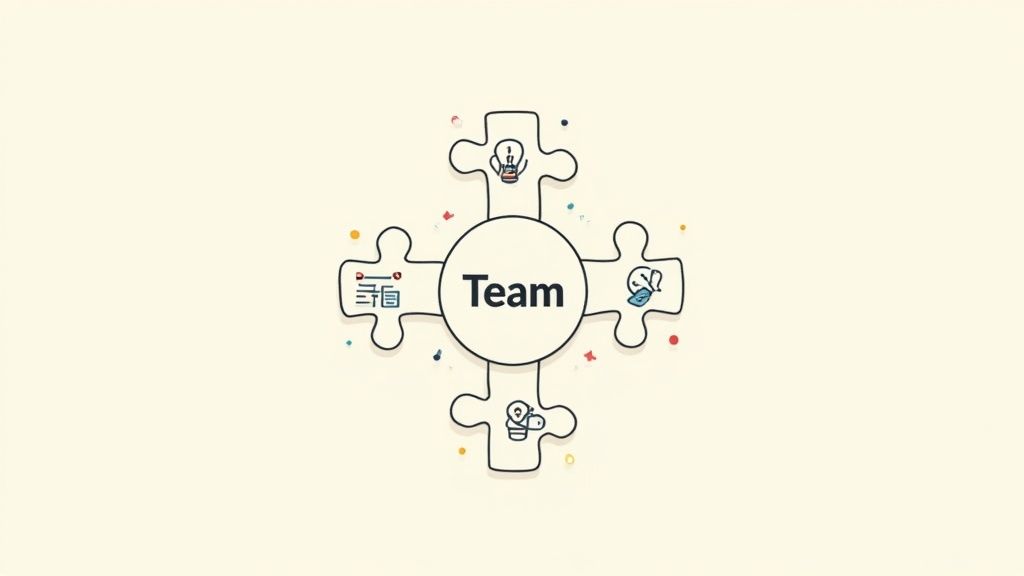
This fluidity manifests in several ways: rapidly changing role requirements as the company pivots and scales, the need for employees to wear multiple hats and adapt quickly to new challenges, undefined or flexible career progression paths, and often unclear boundaries between positions and even departments. While this can be daunting for some, it also presents unique opportunities. The flexibility allows startups to tailor roles to both business needs and individual strengths, offering employees the chance to develop a broad skill set and contribute across various functions. This environment fosters reduced organizational silos and less bureaucracy, leading to faster decision-making and innovation.
However, the lack of clearly defined roles also presents potential downsides. It can lead to role confusion, accountability issues, and difficulty in setting clear expectations for both current employees and new hires. Evaluating performance becomes challenging when the targets are constantly shifting. Furthermore, the ever-expanding scope of responsibilities, coupled with unclear boundaries, can contribute to employee burnout.
Successful startups navigate this challenge by embracing structured flexibility. Companies like Zapier have pioneered the use of “role canvases” rather than fixed job descriptions, allowing for adaptable responsibilities. Basecamp’s “shaped work” concept helps provide clarity amidst flexibility, while Atlassian utilizes “team playbooks” to define collaborative workflows rather than rigid individual roles. These examples demonstrate that embracing fluidity doesn’t necessitate a complete lack of structure.
So, how can your startup effectively define roles and responsibilities amidst this inherent fluidity? Consider these actionable tips:
- Create core responsibility frameworks with flexible components: Define the core responsibilities of a role but allow for flexibility in how these responsibilities are executed and expanded upon.
- Set clear short-term objectives while acknowledging evolving long-term responsibilities: Provide concrete, achievable goals for the immediate future while being transparent about the potential for long-term role evolution.
- Use regular check-ins to recalibrate role expectations: Implement frequent check-ins (e.g., weekly or bi-weekly) to discuss performance, address challenges, and adjust expectations based on the company’s evolving needs.
- Hire for adaptability and growth mindset over specific skill matches: Prioritize candidates who demonstrate adaptability, a willingness to learn, and a positive attitude towards change over those with a narrow, fixed skill set.
- Develop 30-60-90 day plans for new hires to provide initial structure: Offer new hires a structured onboarding experience with clear goals and expectations for their first three months, helping them acclimate to the startup environment and understand their initial contributions.
This approach is particularly relevant for startups experiencing rapid growth, facing evolving market demands, or seeking to build agile and adaptable teams. By embracing a structured approach to flexibility, startups can mitigate the challenges of role ambiguity while leveraging the unique advantages of a dynamic environment. This, in turn, contributes to a more engaged, productive, and successful workforce, directly addressing a critical component of startup hiring challenges.
5. Cultural Fit vs. Skills: A Critical Startup Hiring Challenge
One of the most significant startup hiring challenges revolves around the delicate balancing act between cultural fit and skills. While technical proficiency and experience are undeniably important, especially in the fast-paced startup environment, cultural alignment is equally crucial, particularly in the early stages. This challenge deserves its place on this list because early hires have an outsized impact on shaping the company’s culture and values. In small, close-knit teams, where interpersonal dynamics can dramatically impact productivity, the tradeoff between a candidate’s perfect skill match and their ability to integrate seamlessly within the team becomes particularly critical.
This balancing act involves considering several key features: the influence of early hires on company culture, the importance of values alignment in small teams, the need to avoid homogeneity while building a cohesive unit, and the challenge of objectively assessing cultural alignment. Essentially, startups must determine how much weight to give to a candidate’s “soft” skills and personality versus their technical expertise.
The Pros of Prioritizing Cultural Fit:
- Improved Retention and Team Performance: Employees who feel culturally aligned are more likely to stay with the company longer, reducing costly turnover and contributing to a more stable team environment. Shared values foster a sense of belonging and purpose, leading to increased engagement and performance.
- Faster Decision-Making and Alignment: When team members share core values, decision-making processes become smoother and faster. Alignment on fundamental principles allows teams to move quickly and efficiently, a significant advantage in the dynamic startup landscape.
- Enhanced Performance Under Pressure: Cohesive teams, built on a foundation of shared values and strong interpersonal relationships, are better equipped to handle the inevitable pressures and challenges of a startup environment. They are more likely to support each other and collaborate effectively during difficult times.
The Cons of Overemphasizing Cultural Fit:
- Lack of Diversity: An overemphasis on “culture fit” can inadvertently lead to homogeneous teams lacking diversity in thought, background, and perspective. This can stifle innovation and limit the company’s ability to adapt to changing market conditions.
- Subjective Assessments: Rejecting skilled candidates based on subjective cultural assessments can lead to missed opportunities and potentially discriminatory practices. Defining and measuring cultural fit objectively is a significant challenge.
- Inconsistent Interpretations: “Good culture” can be interpreted differently by various individuals within the organization. Without clear definitions and consistent evaluation processes, cultural fit becomes a nebulous and potentially biased metric.
- Risk of Echo Chambers: Prioritizing cultural fit over diverse perspectives can create echo chambers where dissenting opinions are suppressed, limiting creativity and innovation.
Successful Implementations:
- HubSpot: Their publicly available Culture Code document defines what they value in employees beyond technical skills, providing a clear framework for both candidates and hiring managers.
- Patagonia: They prioritize hiring people passionate about their environmental mission, ensuring a strong cultural alignment that drives their brand and business.
- Netflix: Their “keeper test” framework encourages managers to constantly evaluate whether they would fight to keep each member of their team, emphasizing performance and cultural contribution.
Actionable Tips for Startups:
- Define Cultural Values Objectively: Translate abstract values into concrete behavioral examples. Instead of saying “we value collaboration,” define what collaborative behavior looks like in your company.
- Distinguish Between “Culture Fit” and “Culture Add”: Shift the focus from finding people who seamlessly blend in to identifying individuals who can bring new perspectives and strengths to the team while aligning with core values.
- Structured Interviews: Use structured interviews with standardized questions and evaluation criteria to reduce bias in cultural assessments.
- Scenario-Based Questions: Create scenarios to test value alignment rather than relying solely on personality matching. This provides a more objective measure of how a candidate would behave in real-world situations.
- Trial Projects: Implement trial projects or short-term contracts to observe a candidate’s work style, collaboration skills, and cultural fit before making a full-time offer.
These tips, popularized by figures like Reid Hoffman (LinkedIn), Brian Chesky (Airbnb), and Peter Thiel (Zero to One), highlight the crucial role of culture in building successful startups. By understanding the nuances of balancing cultural fit and skills, startups can build strong, cohesive teams that drive innovation and achieve long-term success.
6. Limited Recruitment Resources and Processes
One of the most significant startup hiring challenges is the frequent lack of robust recruitment resources and processes. Early-stage companies typically lack dedicated HR teams, sophisticated Applicant Tracking Systems (ATS), or established recruitment workflows. This infrastructure gap creates inefficiencies in sourcing, evaluating, and onboarding candidates, ultimately leading to longer hiring cycles, inconsistent candidate experiences, and potentially poor hiring decisions. This challenge is particularly acute when hiring for specialized roles or experiencing rapid growth.
This resource constraint manifests in several ways: an absence of dedicated recruiting personnel often means founders and other team members wear multiple hats, including recruiter. Manual, often disorganized, tracking of candidates leads to missed opportunities and communication breakdowns. Inconsistent interview processes and evaluation criteria make it difficult to compare candidates objectively. Finally, limited bandwidth for proactive talent sourcing means relying on inbound applications or referrals, potentially missing out on top-tier passive candidates.
However, this constraint also presents unique opportunities. Building processes from scratch allows for the creation of highly efficient and customized systems tailored to the specific needs of the startup. It fosters more direct involvement from team members in the hiring process, ensuring a better cultural fit. This flexibility enables startups to adapt their approach as they evolve and scale.
Pros:
- Opportunity to build efficient processes from scratch: Startups can design recruitment processes optimized for their specific needs and culture.
- More direct involvement from team members in hiring: This leads to better cultural fit and team cohesion.
- Flexibility to customize processes for specific roles: Tailoring the hiring process improves the quality of hires for specialized roles.
Cons:
- Founder/executive time diverted to recruitment activities: This can distract from core business functions and hinder growth.
- Inconsistent candidate experience affecting employer brand: A negative experience can damage your reputation and deter top talent. Even seemingly minor details, like how background checks are handled, can impact a candidate’s overall impression. While streamlining your background verification process is crucial, it’s equally important to consider the candidate experience during background checks. A negative experience can reflect poorly on your employer brand and deter top talent. Why Candidate Experience Matters in Background Verification from SpringVerify.
- Difficulty scaling hiring as company grows: Manual processes struggle to keep up with increased hiring demands.
- Risk of bias and poor decisions without structured processes: Lack of structure can lead to subjective evaluations and unfair hiring practices.
Examples of Successful Implementation:
- Greenhouse: Before becoming a leading HR tech company, Greenhouse bootstrapped its own simplified ATS, proving the viability of lean solutions.
- Zapier: They developed a lightweight recruitment framework that scales efficiently with minimal resources, focusing on automation and clear processes.
- Webflow: Created templated interview approaches to ensure consistency and objectivity even with limited HR support.
Tips for Overcoming Limited Resources:
- Implement lightweight ATS solutions designed for startups: Several affordable options offer essential features without the complexity of enterprise systems.
- Create standardized interview scorecards for consistent evaluation: This helps mitigate bias and ensures objective candidate comparisons.
- Develop clear hiring workflows and responsibility assignments: This clarifies roles and streamlines the process.
- Build relationships with select recruitment partners for specialized roles: Outsourcing specific searches can save time and resources.
- Schedule regular ‘hiring sprints’ to batch recruitment activities efficiently: This dedicated focus maximizes productivity and minimizes disruptions.
Learn more about Limited Recruitment Resources and Processes
Addressing this startup hiring challenge head-on is crucial for long-term success. By implementing these tips and learning from successful examples, startups can overcome resource limitations and build effective, scalable recruitment processes that attract and secure top talent. This proactive approach not only improves the quality of hires but also protects valuable time and resources, allowing founders to focus on what they do best: building their business.
6 Key Hiring Challenges Comparison
| Challenge | Implementation Complexity 🔄 | Resource Requirements 💡 | Expected Outcomes 📊 | Ideal Use Cases 💡 | Key Advantages ⭐ |
|---|---|---|---|---|---|
| Budget Constraints | Medium – requires creative compensation models and flexibility | Low to Medium – relies on non-monetary perks and lean hiring | Moderate – attracts mission-driven candidates with potential retention risks | Startups with limited capital aiming to attract talent cost-effectively | Encourages innovation in compensation and lean processes |
| Competing with Established Companies | High – overcoming brand and resource gaps | Medium to High – needs strong employer branding and candidate engagement | High – attracts talent valuing impact and growth opportunities | Startups facing strong brand competition seeking to differentiate | Offers greater responsibility and flexible environments |
| Finding Specialized Talent | High – complex sourcing and assessment needs | High – premium compensation and specialized networks needed | High – gains access to cutting-edge skills and innovation potential | Startups needing rare, niche technical expertise | Builds technical excellence and innovation potential |
| Defining Roles and Responsibilities | Medium – requires adaptable frameworks and continuous alignment | Low to Medium – focuses on flexible role design and ongoing clarity | Moderate – flexible roles support agility but risk ambiguity | Startups with evolving needs requiring versatile employees | Enhances adaptability and broad skill development |
| Cultural Fit vs. Skills | Medium – needs objective cultural evaluation processes | Low to Medium – relies on structured interviews and values alignment | High – strong team cohesion improves retention and performance | Early-stage startups where culture greatly impacts success | Builds cohesive, aligned teams improving collaboration |
| Limited Recruitment Resources and Processes | Medium – setting up scalable but lean recruitment systems | Low to Medium – adoption of lightweight ATS and standardized workflows | Moderate – improves hiring efficiency but may strain founders’ time | Startups lacking HR infrastructure needing scalable hiring solutions | Enables process customization and greater team involvement |
Scaling Your Startup Team Smartly
Startup hiring challenges are a universal hurdle for emerging businesses, from budget constraints and competition with established companies to the complexities of finding specialized talent. Effectively defining roles, prioritizing cultural fit versus skills, and navigating limited resources are crucial for success. Mastering these aspects of recruitment directly impacts a startup’s ability to secure the leadership necessary for growth and innovation, especially within competitive industries like SaaS, FinTech, and HealthTech. Remember, building a strong team isn’t just about filling positions; it’s about finding the right people to propel your vision forward.
The insights discussed in this article—navigating budget limitations, attracting talent despite competition, sourcing niche expertise, establishing clear roles, balancing culture and skills, and optimizing your recruitment process—provide a roadmap to overcome these startup hiring challenges. By implementing these strategies, you can build a high-performing team capable of driving your startup towards its goals. The long-term benefits of strategic hiring are immense, ranging from accelerated growth and increased market share to a stronger company culture and improved employee retention.
Building a winning team is the cornerstone of any successful startup. Don’t let hiring challenges hinder your progress. Looking for a streamlined solution to access top-tier executive talent without the commitment of full-time hires? Shiny offers a fractional executive marketplace connecting startups with experienced leaders. Explore the possibilities and scale your team strategically with Shiny.
