
Strategic Roadmap Template: Crafting a Blueprint for Outstanding Results
Understanding the Critical Need for Strategic Roadmaps

Most companies struggle to turn their plans into real results. A key reason? They lack a clear strategic roadmap. Think of a strategic roadmap like a blueprint – it takes big goals and breaks them down into specific, actionable steps. Whether you’re running a startup or an established company, having this structured guide keeps everyone focused on what matters most.
Bridging the Gap Between Strategy and Execution
A strategic roadmap shows the key steps your organization needs to take to reach its goals. It’s like having a GPS for your business – it helps you navigate through market challenges while keeping track of important milestones. For example, startups can map out their product launches, marketing efforts, and funding rounds to ensure every activity moves them closer to success. This focused approach helps teams stay on track and prioritize effectively.
The Perils of Poor Planning
Research shows that about 90% of strategic plans fail during implementation, according to research from Robert Kaplan and David Norton. Even excellent strategies can fall apart without proper execution planning. A strategic roadmap helps prevent this by providing clear direction and measurable goals.
Building a Foundation for Growth
A strategic roadmap does more than just track timelines – it helps get everyone on the same page. When team members understand both the big picture and how their work contributes to it, collaboration improves dramatically. The roadmap also helps leaders make smart decisions about resources, budgets and priorities. Most importantly, it gives organizations the structure they need to adapt to market changes while staying focused on long-term success.
Core Components of an Effective Strategic Roadmap Template

A strategic roadmap helps organizations turn their plans into concrete actions. The key elements below form the foundation of an effective roadmap template.
Defining Your Vision and Objectives
Start by creating a clear vision statement that guides your organization’s direction and decision-making. Next, develop specific, measurable, achievable, relevant, and time-bound (SMART) objectives. These break down your vision into concrete goals that teams can work toward.
Setting Measurable Milestones and Key Performance Indicators (KPIs)
With objectives in place, establish milestones – key checkpoints that mark progress on your journey. Each milestone needs specific deliverables and deadlines. Set up Key Performance Indicators (KPIs) to measure your advancement. Regular KPI tracking provides data to help refine your approach and make needed adjustments.
Visualizing Your Strategy with Timelines and Swimlanes
A well-designed roadmap template helps teams stay coordinated through visual elements. The timeline view shows strategic initiatives and milestones in chronological order. Swimlanes organize activities by department or theme – like product, marketing, or sales teams. These visual tools make complex strategies easier to understand and execute. When teams can clearly see how their work fits into the bigger picture, they collaborate more effectively to reach goals.
Building Communication and Alignment Through Your Roadmap
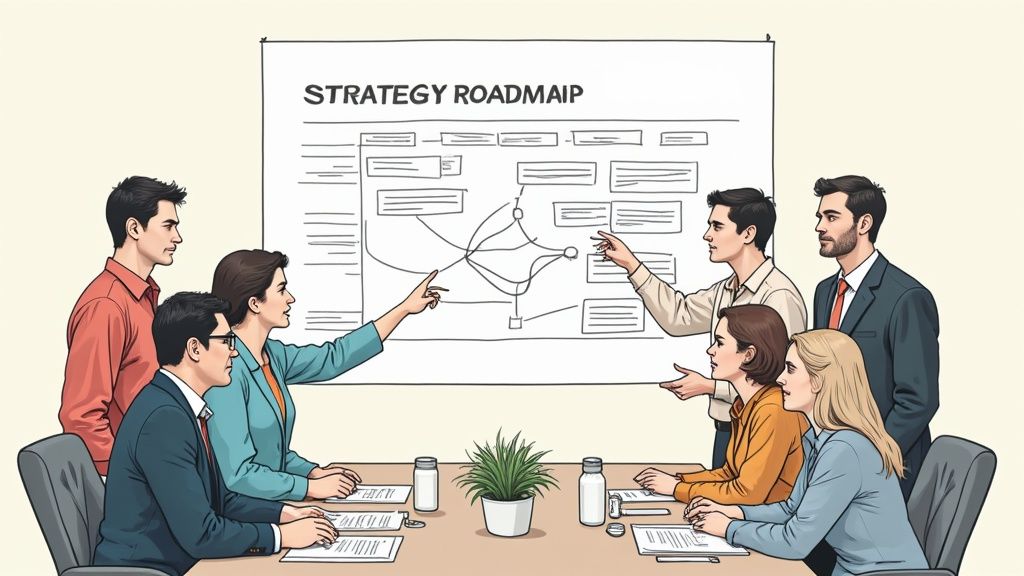
A strategic roadmap does more than just outline plans – it brings teams together around a shared vision. When used effectively, it turns complex strategies into clear direction that everyone can understand and support. These roadmaps become essential guides that shape decisions and motivate action across the organization.
Fostering Buy-In and Transparency with Your Roadmap
Getting support for strategic initiatives depends on clear communication. A well-designed roadmap makes it simple to share your strategy with stakeholders in an engaging way. When you present milestones visually and explain their impact, teams are much more likely to get involved and stay committed. This open approach builds trust and participation.
Maintaining Momentum Through Consistent Communication
Strategic roadmaps need ongoing attention and updates to stay relevant. Regular progress updates and team discussions help keep everyone informed and aligned on where you’re headed. This steady communication reinforces the roadmap’s importance and allows adjustments based on feedback and changing conditions. Research shows that clear strategic planning pays off – organizations with well-defined outcomes grow 30% faster than those without. Learn more about strategic planning impacts at AchieveIt.
Adapting to Change and Maintaining Strategic Focus
As markets shift and new challenges emerge, your roadmap needs flexibility while keeping core goals clear. Regular reviews and updates help teams stay focused on what matters most, even as conditions change. This balanced approach allows the roadmap to guide decisions effectively in dynamic environments, ensuring efforts stay aligned with strategic priorities.
Implementing Your Strategic Roadmap for Maximum Impact

While having a strategic roadmap template provides a solid foundation, success depends on effective implementation. Let’s explore practical ways to move from planning to execution and achieve measurable results.
From Planning to Action: Executing Your Strategic Roadmap
The real work begins after creating your strategic roadmap. Many organizations struggle with this crucial transition from planning to execution. Success requires converting high-level objectives into specific tasks with clear ownership and accountability. Breaking down goals into manageable steps helps teams understand their roles and responsibilities.
Milestone Tracking and Progress Monitoring
Regular milestone tracking is essential for successful implementation. Think of milestones as key checkpoints in your journey – monitoring progress against these markers helps spot potential issues early. Quick identification of challenges allows teams to make needed adjustments before small problems become major roadblocks.
Resource Allocation and Risk Management
If a product development milestone falls behind schedule, you may need to shift resources to get back on track. Smart risk management is also critical – identify potential issues upfront and develop specific plans to address them. This could mean finding backup suppliers, creating contingency plans, or building extra time into critical project phases.
Maintaining Team Engagement and Momentum
Teams often lose steam after the initial excitement wears off and day-to-day challenges emerge. Keep everyone focused through consistent communication about progress, wins, and obstacles. Create an environment where team members feel comfortable sharing concerns and ideas. Regular check-ins and celebrations of key achievements help maintain energy and reinforce the importance of hitting roadmap goals. Building this open, collaborative culture ensures the roadmap stays relevant and actionable over time.
Measuring Success and Adapting Your Strategy
Success in business requires tracking key metrics and adapting plans based on real data. A clear roadmap provides structure, but it’s equally important to monitor progress and make informed adjustments. Setting specific Key Performance Indicators (KPIs) helps organizations track their goals and identify what’s working and what needs improvement.
Going Beyond Basic Metrics
Smart organizations look deeper than surface-level data to understand their true performance. While positive revenue growth can seem encouraging, rising customer churn may signal underlying problems. Using both leading indicators (like customer satisfaction scores that predict future retention) and lagging indicators (like past quarterly sales) provides a complete view of business health.
Case Study: A startup implemented regular customer feedback sessions to spot potential issues before they impacted retention. Their proactive approach to gathering user input helped them stay aligned with customer needs and significantly improved user retention rates.
Implementing Feedback Loops for Continuous Improvement
Regular feedback helps organizations stay current with market shifts and customer needs. Effective feedback comes from multiple sources and informs strategy updates. Key feedback channels include:
- Customer Surveys: Understanding satisfaction levels and user experience
- Team Debriefs: Reviewing internal processes and efficiency
- Performance Reviews: Tracking KPIs and overall progress
Maintaining Strategic Flexibility
Successful strategies balance consistency with adaptability. While keeping focused on core goals is important, plans should allow for adjustments when conditions change. Companies that regularly review and update their strategies tend to perform better than those stuck on rigid plans.
In summary, tracking success through clear metrics requires ongoing attention and willingness to adapt. Organizations can stay on track and exceed goals by choosing effective KPIs, gathering regular feedback, and maintaining flexible strategies.
Using Technology to Build Successful Strategic Roadmaps
Strategic roadmaps need the right technological tools to be effective. Smart use of technology helps teams work better together, speed up decision-making, and improve results. Good tools make a meaningful difference in how organizations plan and execute their strategies.
Picking Tools That Work For You
When choosing roadmap tools, consider what fits your organization’s specific needs. Small startups often do well with basic spreadsheets or project management software. For bigger companies working on complex plans, dedicated roadmap platforms with real-time updates, automated reports, and visual tools are worth considering.
Making Your Tools Work Together
Any new roadmap technology should connect smoothly with your current systems. If you already use tools like CRM software or analytics platforms, look for roadmap solutions that can share data with them. When systems work together well, everyone sees the latest information and can spot issues early.
Getting Value From Your Tech Investment
Pick tools that directly help achieve your strategic goals. Avoid complex software with extra features you won’t use. Focus on solutions that make work easier, help teams communicate, and support data-based decisions. This ensures your technology investments pay off.
Combining Tech and Human Judgment
While automation is helpful, strategic planning needs human insight. Data alone can’t replace experienced judgment in spotting trends and adjusting plans. The best roadmaps use both automated tools and human expertise. This balanced approach helps organizations understand their performance and adapt effectively.
Growing Your Strategy Tools
As organizations expand, their roadmap needs change too. Choose technology that can grow with you and handle more complex plans and bigger teams. Cloud tools make it easy to add users and features when needed, helping your roadmap stay useful as your organization develops.
For startups looking to build strong leadership without the full-time cost, fractional executives can help. Shiny connects startups with experienced part-time executives across different business areas. Their network of leaders can provide the strategic guidance growing companies need.