
What Makes an Effective Leader: Keys to Impactful Leadership
Effective leadership isn't about the corner office or a fancy title. It's a hands-on mix of sharp strategic vision, genuine emotional intelligence, and the ability to empower your team to do their best work.
For startups and scaling companies, getting leadership right is everything. It's the single biggest factor separating stagnation from explosive growth. But finding that perfect, full-time executive is a monumental challenge—a grind plagued by high costs, long recruitment cycles, and the risk of a bad hire that can set you back months.
What if the perfect leader isn't a single permanent hire at all? What if there's a smarter, more flexible way to get the expertise you need, right when you need it?
Decoding Modern Effective Leadership
The old command-and-control model is a relic. Today, leadership is less about being a commander and more about being a coach and strategist. It’s about building a culture where people feel seen, inspired, and motivated to drive toward a shared vision.
Finding a leader who can both chart the course and rally the crew is tough, especially with a serious global talent shortage.
It's a tough market. A staggering 77% of companies report a major deficit in leadership talent, from team leads to the C-suite. This shortage guts business agility and torpedoes succession planning.
This scarcity makes the hunt for executive leadership fiercely competitive. Many businesses sink huge amounts of time and money into finding a single, full-time executive, convinced it’s the only way.
But they often come up empty, struggling to find a candidate with the exact blend of skills for their specific growth stage. The reality is, the perfect solution might be a more flexible, targeted one.
By understanding the core components of effective leadership, you can identify the right fit for your unique needs—whether that’s a full-time hire or a strategic, fractional engagement. If you're just starting, you can explore our guide on what is executive leadership to build a solid foundation.
Core Components of Effective Leadership
| Leadership Pillar | Brief Description | Why It Matters for Growth |
|---|---|---|
| Strategic Vision | The ability to see the big picture, anticipate future trends, and chart a clear path forward. | It ensures the entire company is aligned and moving in the right direction, preventing wasted effort on dead-end initiatives. |
| Emotional Intelligence (EQ) | Self-awareness, empathy, and the skill to manage relationships and inspire trust. | High EQ builds a resilient, psychologically safe culture where people are motivated to collaborate and innovate. |
| Decisive Action | The confidence to make tough calls with incomplete information and take calculated risks. | In a fast-moving startup environment, indecision is a silent killer. Decisiveness keeps momentum going. |
| Empowerment & Delegation | The art of trusting your team, giving them ownership, and getting out of their way. | It scales your impact beyond what one person can do, develops your team’s skills, and fosters a culture of accountability. |
Understanding these pillars is the first step. Next, we’ll explore what they look like in action within a high-growth company.
The Four Pillars of High-Impact Leadership
Great leadership isn't just one thing; it's a blend of core strengths that propel a business forward. Think of these four pillars as a practical framework for spotting—and developing—true leadership in any organization.
First, let's look at what happens when leadership is missing or ineffective, a common tripwire for growing companies.
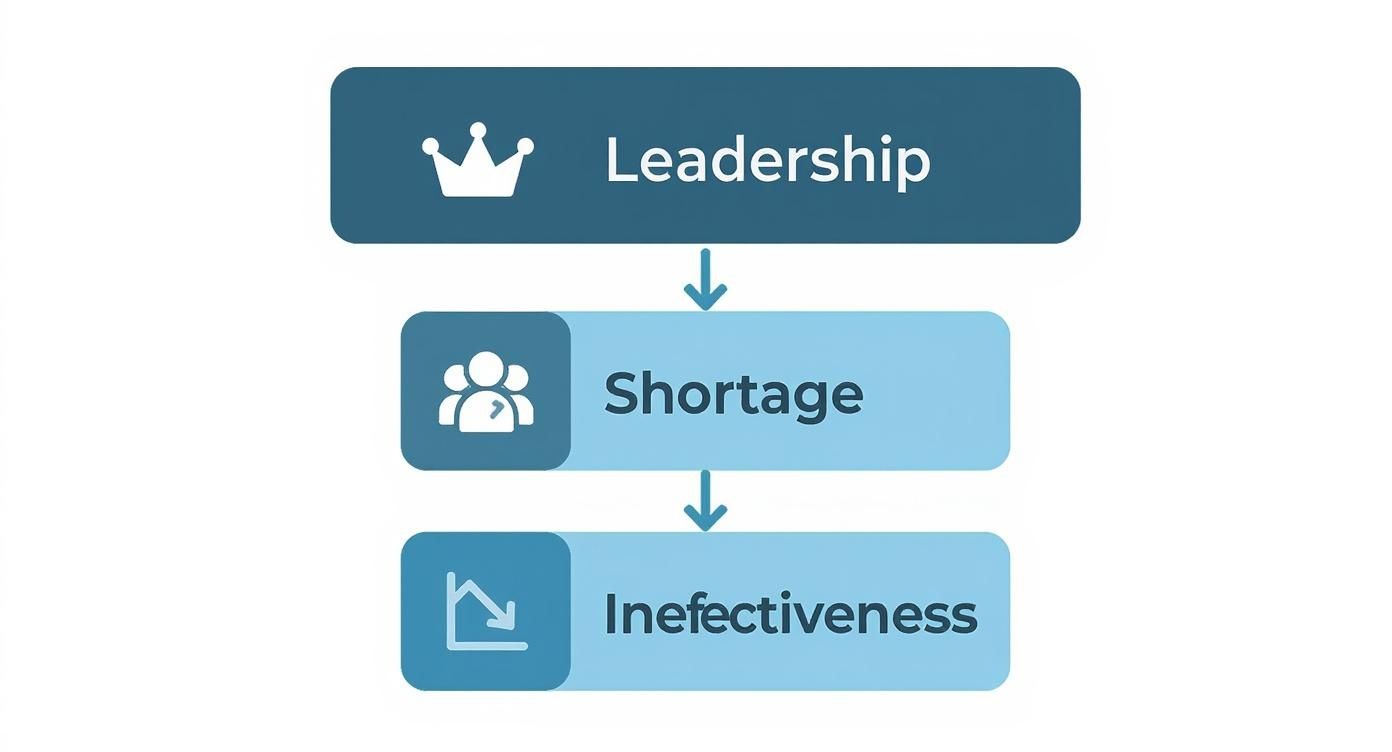
A simple leadership shortage can quickly spiral into ineffectiveness. It's a critical problem, but one that the right leadership model can solve.
Strategic Vision
Strategic vision is seeing beyond today's to-do list. An effective leader is like a ship's captain, charting a course through unpredictable seas. They aren’t just managing daily tasks; they’re defining the destination and mapping the clearest path to get there.
This foresight helps a company sidestep costly mistakes and jump on market opportunities before the competition. A leader with a strong strategic vision ensures every team, project, and person is pulling in the same direction.
Empathetic Communication
This is more than just talking; empathetic communication is about listening to understand. Leaders who master this create an environment of psychological safety, where people feel comfortable sharing ideas, flagging concerns, or admitting mistakes without fear.
They build trust by showing genuine interest in their team's perspectives. This isn't a "soft skill." Companies with highly engaged employees—often a direct result of empathetic leadership—see 21% greater profitability. To get a better handle on this, you can learn more about building a leadership development framework that nurtures these very skills.
Decisive Action
Momentum is everything in a startup. Decisive action is the ability to make tough, timely calls with conviction, even with incomplete information. A great leader gathers the best available data, weighs the risks, and makes a choice, knowing hesitation can be more damaging than a calculated wrong turn.
An effective leader is always evaluating the current state and identifying the future state. This involves driving execution through mentoring, inspiring, and motivating with a firm yet empathetic demeanor.
This doesn't mean being reckless. It means having the courage to move forward, learn from the results, and pivot when necessary. It's what keeps an organization agile.
Team Empowerment
Finally, there’s team empowerment. Effective leaders act as coaches who build up their players, not commanders who bark orders. Their main job is to unlock their team's potential by delegating strategically and giving people real ownership and autonomy.
This approach pays off in two huge ways:
- It develops talent: Giving team members meaningful responsibilities helps them grow their skills.
- It scales impact: An empowered team can achieve far more than any single leader ever could.
By focusing on these four pillars, you can build a clear picture of what makes a leader truly effective—and start finding the right people to guide your company’s growth.
The Observable Behaviors of Great Leaders
Abstract traits are one thing, but what separates a great leader from a good one is what they do day in and day out. Leadership is a series of consistent actions that create an environment where your team can thrive.
By focusing on these tangible behaviors, you can spot high-impact leaders and build these skills within your own company.

These are learned skills, not innate personality quirks. They are how big-picture ideas turn into real-world impact.
Fostering Psychological Safety
One of the most powerful things a leader can do is create psychological safety. This means building an environment where people feel safe to speak up, disagree, take a smart risk, or admit a mistake without fear of being shamed or punished.
- What it looks like: A leader who asks quieter people for their thoughts and frames failed experiments as learning moments.
- What it doesn't look like: A manager who shoots down ideas, points fingers when things go wrong, or lets one or two people dominate every meeting.
This single behavior unlocks innovation and smarter problem-solving. People bring their best ideas when they aren't afraid.
Delivering Constructive Feedback
Great leaders see feedback as a tool for growth, not criticism. They deliver it with the sole intention of helping people improve.
Effective feedback is a dialogue, not a monologue. It's about respectfully sharing observations and working together to find a path forward, strengthening both the individual and the team.
This means being specific, timely, and focusing on behavior, not character. An effective leader also balances constructive feedback with authentic recognition, ensuring people feel seen and valued.
Empowering Through Strategic Delegation
For a real leader, strategic delegation is an act of trust. It’s about giving people meaningful ownership and the autonomy and support they need to succeed.
- What it looks like: A leader who hands off a project with a clear goal but gives the team freedom on how they get there.
- What it doesn't look like: A manager who only delegates grunt work, gives vague instructions, and then swoops in to take over at the first sign of trouble.
This approach builds your team’s skills and frees you up to focus on big-picture strategy. In fact, leaders who excel at strategic thinking are 33% more likely to achieve positive outcomes on major projects. You can find more data on strategic leadership in this comprehensive analysis on DigitalDefynd.
How to Measure Real Leadership Effectiveness
Great leadership delivers tangible business results. To make smart hiring decisions, you must move beyond gut feelings and adopt a data-informed approach.
Think of it like a doctor checking a patient's health. They combine qualitative feedback ("How are you feeling?") with quantitative vitals (heart rate, blood pressure). Similarly, a leader’s effectiveness is revealed by combining team morale with hard performance data.
Beyond the Vibe Check: Quantitative Metrics
Start with the numbers. These metrics provide clear, unbiased evidence of a leader's impact.
- Employee Retention Rates: High turnover is a massive red flag. A strong leader builds an environment where talented people want to stay.
- Team Performance Against KPIs: Are the leader's direct reports hitting their targets? Measure their influence on core business drivers like revenue growth or customer satisfaction scores (CSAT).
- Project Success Rates: Track the percentage of projects finished on time, on budget, and to the required quality standard.
The Human Element: Qualitative Metrics
Numbers don't tell the whole story. Qualitative data captures the human side of leadership—how a leader inspires, motivates, and builds culture.
- Employee Net Promoter Score (eNPS): This simple survey asks employees how likely they are to recommend their company as a great place to work, acting as a barometer for morale.
- 360-Degree Feedback: Anonymous feedback from peers, direct reports, and superiors provides a well-rounded view of a leader’s skills.
- Quality of Innovation: A leader who fosters psychological safety will see more creative and proactive contributions from their team.
You can build a simple scorecard to track these metrics over time, moving from subjective opinions to a concrete, data-backed evaluation.
Leadership Effectiveness Scorecard Example
| Metric Category | Key Performance Indicator (KPI) | How to Measure |
|---|---|---|
| Team Performance | Employee Retention Rate | Track quarterly and annual voluntary turnover within the leader's team. |
| Business Impact | Achievement of Team KPIs | Compare team performance against set targets (e.g., sales quotas, MQLs). |
| Execution | Project On-Time Delivery | Calculate the percentage of projects completed by their original deadline. |
| Team Morale | Employee Net Promoter Score (eNPS) | Conduct anonymous surveys twice a year to gauge team satisfaction. |
| Interpersonal Skills | 360-Degree Feedback Score | Collate anonymous feedback from peers, reports, and managers annually. |
| Innovation | Number of New Initiatives Proposed | Track new ideas or process improvements suggested and implemented by the team. |
By combining these different types of metrics, you create a holistic scorecard. This data-driven approach removes guesswork, allowing you to clearly identify high-impact leaders and pinpoint specific areas for development.
This balanced view is essential. When you’re facing a critical leadership decision, having a clear, evidence-based picture of a candidate's potential impact is invaluable. If you're exploring leadership options, our experts at Shiny can help you build a scorecard tailored to your unique business goals.
Bridging the Leadership Gap with a Fractional Executive
You know what effective leadership looks like, but you've hit a wall. You have a gaping hole in your leadership team, but the cost of a full-time C-suite executive is out of reach.
This is a classic growing pain. Hiring a top-tier executive is a massive commitment—not just the six-figure salary, but the equity, benefits, and months-long recruitment process. You need the strategic brainpower now, but the actual workload doesn't justify a 40-hour-per-week role.

The Strategic Value of Fractional Leadership
This is exactly where fractional leadership comes in. It’s like hiring a world-class architect to design the blueprints for your dream home without keeping them on retainer for the entire construction project. You get the high-impact brilliance right when you need it most.
A fractional executive is a seasoned leader who joins your company part-time. This model gives you immediate access to the veteran skillset needed to tackle specific, high-stakes challenges.
A fractional leader isn’t a consultant who drops off a strategy deck and disappears. They become an integrated part of your team, rolling up their sleeves to execute plans, mentor your people, and drive real results—all for a fraction of what a full-time hire would cost.
When Is a Fractional Leader the Right Choice?
This flexible approach is the perfect solution for critical business milestones where senior-level guidance is non-negotiable. It’s a smart play for any company focused on efficient growth. You can dive deeper into the benefits of the fractional leadership model in our detailed guide.
Consider these common scenarios where a fractional leader delivers a massive ROI:
- Navigating a Funding Round: A fractional CFO who has been through the gauntlet can build a financial model that gets investors excited.
- Launching a New Product: A fractional CMO can hammer out a go-to-market strategy with the precision and speed you need.
- Breaking a Growth Plateau: An experienced CRO can diagnose a broken sales process and build a revenue engine that scales.
- Scaling Operations: A fractional COO can implement the systems and processes required to handle a surge in demand without everything catching fire.
By plugging in an expert for these specific moments, you get the leadership needed to accelerate growth without getting locked into a long-term financial straitjacket.
Find Your Next Leader with a Trusted Partner
Knowing what makes a great leader is one thing. Finding one in today's market is another. Companies pour money into leadership development, yet a staggering 77% still report a leadership gap.
The traditional, lengthy search for a full-time executive is too slow and rigid for a fast-moving company. You need expertise now, not in six months. This is where you have to think differently. A fractional leadership model gives you immediate access to the exact talent you need. Think of it as a surgical strike for targeted growth.
Our Proven Process for a Perfect Fit
At Shiny, our mission is to eliminate the pain of finding high-impact leadership. We move beyond generic job descriptions to define the specific business outcomes you need to achieve. From there, we tap into our vetted network of seasoned fractional executives to find your perfect match.
We ensure the right fit by focusing on what truly matters:
- Defining Your Needs: We work with you to pinpoint the exact skills required to overcome your current business hurdles.
- Connecting You with Experts: You get direct access to a curated pool of leaders who have already solved the problems you're facing.
- Ensuring Cultural Alignment: We find executives who will slot seamlessly into your team and culture, because skills are only half the equation.
High-performing companies that nail leadership development see 2.3 times greater financial success. You can dive into the full research on leadership investment to see the numbers for yourself. Don't let a leadership gap hold you back.
Leadership FAQs
Practical questions always come up when founders explore new ways to build their teams. Here are a few we hear most often.
What Is the Single Most Important Leadership Trait?
If you had to pick one, it's adaptability. An adaptable leader can pivot strategy on a dime, embrace new technology, and steer the team through uncertainty. They have a clear vision but aren't too rigid to change course when the market demands it. That's what keeps a company resilient.
How Can a Small Startup Afford a High-Caliber Leader?
This is the million-dollar question, and it’s why the fractional leadership model is so powerful. Instead of taking on a massive full-time executive salary, startups can bring in a seasoned leader for a fraction of the cost. You get the top-tier strategic thinking you need to scale without draining your runway.
How Do I Know If My Company Needs a Fractional Leader?
Think about the scope and duration of your need. A fractional executive is the perfect fit for specific, high-stakes challenges with a defined timeline.
- Strategic Oversight: Do you need an expert to guide you through a critical project like a funding round, market entry, or product overhaul?
- Specialized Skills: Are you hitting a growth plateau because you lack a key skillset, but you don't need it full-time forever?
If you're nodding "yes," a fractional leader is likely your best bet. If you have a permanent, day-to-day operational gap that requires constant hands-on management, a full-time hire probably makes more sense.
Making the right leadership decision is one of the most critical steps in your company's journey. At Shiny, we connect businesses with the exact leadership talent they need to hit their next milestone. Stop searching and start scaling.
Ready to close your leadership gap? Explore our network of vetted fractional executives and find your perfect match.