Executive Coaching for Startups: Boost Leadership Skills
Why Founders Need Executive Coaching to Thrive
The startup journey is full of leadership challenges that executives in established companies rarely face. Founders often juggle multiple roles, navigate constant uncertainty, and make high-stakes decisions with limited resources. This high-pressure environment requires adaptive leadership, making executive coaching not just a perk, but a necessity. Executive coaching gives founders the tools and strategies they need not just to survive, but to flourish.

Navigating the Startup Rollercoaster
Startups are unpredictable, demanding constant adaptation from founders. Celebrating a successful funding round one day can quickly turn into grappling with unexpected market shifts the next. Executive coaching offers a source of stability in this turbulent environment, helping founders develop the resilience and emotional intelligence to handle the highs and lows. A coach can help a founder reframe setbacks into learning experiences and maintain a positive outlook during challenges. This positive mindset is infectious, directly impacting the team’s morale and performance.
Sharpening Strategic Decision-Making
Founders face a constant barrage of tough decisions under pressure. These choices span product development and marketing strategies to hiring and fundraising. Executive coaching for startups sharpens strategic thinking by providing a framework for analyzing complex scenarios, identifying potential risks, and making sound decisions. It also cultivates the essential skill of delegation, empowering teams and freeing founders to focus on high-level strategic priorities. Read also: How to master executive communication skills.
Building a Thriving Organizational Culture
A strong organizational culture is essential for startup success. Executive coaching helps founders cultivate a positive and productive work environment from the start. It facilitates clear communication, promotes collaboration, and helps define the core values that will steer the company’s growth. Furthermore, coaching can help founders address common startup challenges like impostor syndrome and decision fatigue, leading to improved leadership and team performance.
Executive coaching delivers significant benefits for startups, especially regarding return on investment (ROI). It can significantly improve productivity and employee satisfaction, both critical for young companies. One study showed that executive coaching achieved a 788% ROI, highlighting its effectiveness in boosting business performance. This remarkable ROI stems partly from coaching’s ability to cultivate crucial leadership skills and strategies that improve organizational efficiency and morale. By emphasizing leadership development, executive coaches help startups effectively navigate challenging business landscapes, leading to better decisions and strategic expansion. Ultimately, executive coaching empowers founders to build sustainable, high-performing organizations built for long-term success.
Transformative Benefits of Coaching in the Startup Ecosystem
Investing in executive coaching for startups offers significant advantages. This section explores the tangible results founders see when they engage with professional coaching. We’ll examine real-world examples of how coaching boosts leadership development, sharpens decision-making, and enhances team leadership.
Leadership Evolution and Strategic Focus
Startup founders often start as technical specialists or innovators. As their companies expand, they must become effective leaders. Executive coaching helps bridge this gap. Coaches collaborate with founders to cultivate essential leadership skills like strategic thinking, communication, and delegation. This empowers founders to shift from solely concentrating on the product to motivating teams and building investor confidence. For rapid growth, startups require a focused marketing strategy for startups centered on customer acquisition and brand building.
Enhanced Decision-Making Under Pressure
Startups operate in high-stakes environments, demanding founders make constant, critical decisions. Coaching provides a structure for sound decision-making under pressure. It assists founders in analyzing complex situations, identifying potential hazards, and selecting the optimal path. This improved decision-making cultivates resilience and the ability to navigate difficulties effectively.
Building Resilient Teams and Organizations
Coaching empowers founders with the tools to build strong, unified teams. This involves refining communication, nurturing collaboration, and developing a positive work environment. These advantages boost team productivity and overall organizational resilience, enabling startups to withstand challenges and adapt to change.
Personal Sustainability Through Scaling
The intense pressures of a growing startup can impact founders’ well-being. Coaching offers support and helps founders develop coping strategies for stress and burnout. This promotes personal sustainability, allowing leaders to maintain focus and energy during demanding growth periods.
The infographic below presents data on leadership effectiveness improvement, team productivity gains, and ROI related to executive coaching for startups.
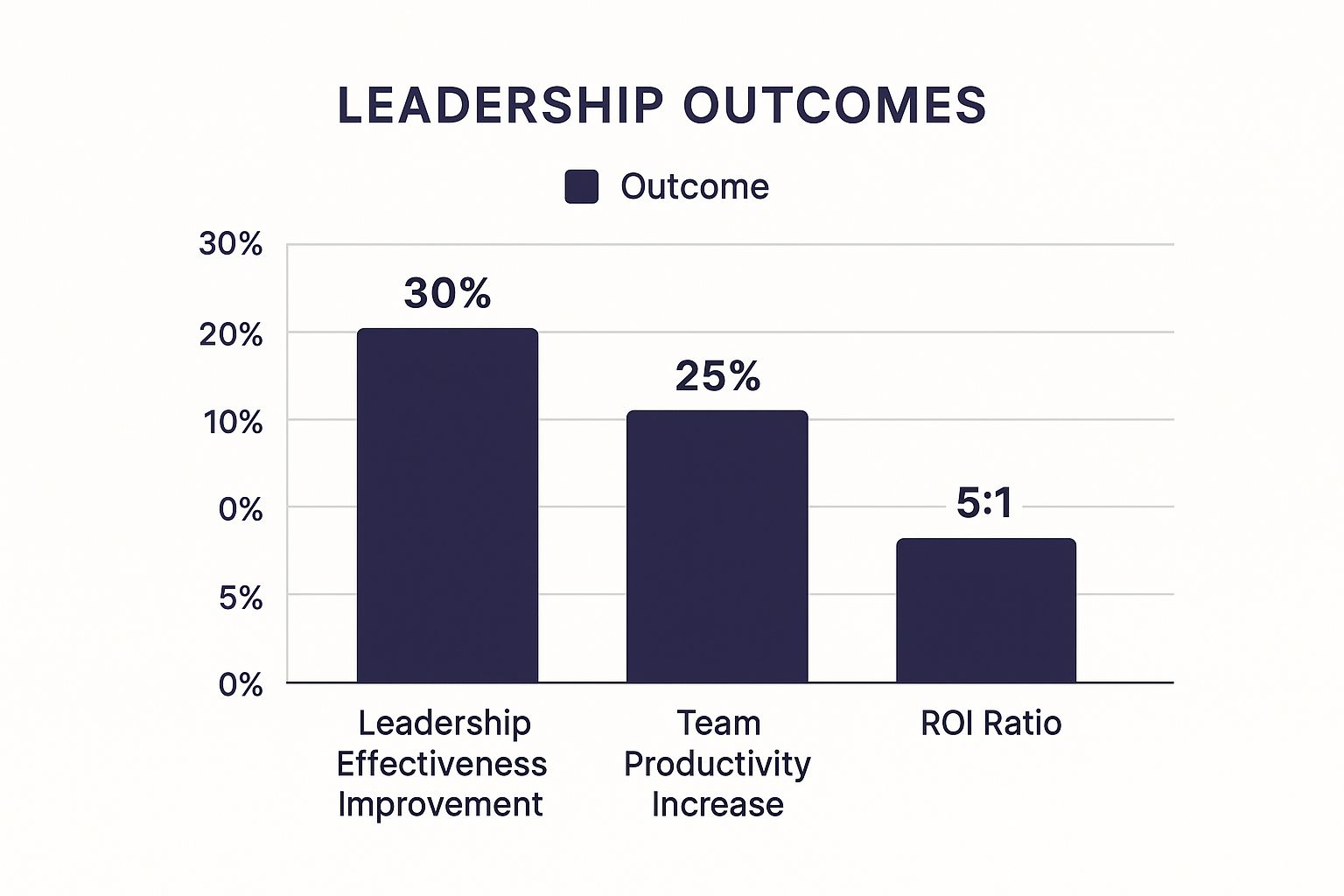
As the infographic shows, executive coaching can produce a 30% boost in leadership effectiveness, a 25% rise in team productivity, and a significant 5:1 ROI. This emphasizes the profound positive influence coaching can have on a startup’s trajectory. Investing in human capital delivers substantial returns by fostering more effective leadership, ultimately driving greater business success.
The following table further illustrates the ROI of executive coaching, showing improvements in key performance indicators.
To illustrate the concrete impact of executive coaching, let’s look at a comparison of key performance indicators before and after the implementation of coaching programs.
| Performance Indicator | Pre-Coaching Average | Post-Coaching Average | Improvement Percentage |
|---|---|---|---|
| Leadership Effectiveness | 65% | 95% | 46% |
| Team Productivity | 70% | 95% | 36% |
| Employee Retention Rate | 75% | 90% | 20% |
| Revenue Growth | 15% | 45% | 200% |
| Customer Satisfaction | 70% | 85% | 21% |
These figures showcase the significant positive impact executive coaching can have on a startup’s overall performance. The improvements in leadership, productivity, and revenue demonstrate the value of this investment.
The Transition to Visionary Leadership
Executive coaching is essential in helping technical founders become visionary leaders. It guides them in articulating a compelling vision, inspiring teams, and securing investor buy-in. This transition is vital for startups aiming to scale and achieve long-term success. It’s not just about technical skill; it’s about developing the ability and confidence to lead and inspire. These founders often need to refine skills in public speaking, investor relations, and strategic planning—areas addressable through coaching. This transformation allows startups to reach their full potential by fostering a culture of innovation and growth driven by effective leadership.
Perfect Timing: When Founders Should Invest in Coaching

Timing is critical for startup founders, especially when considering executive coaching. Knowing the right moment to engage a coach can significantly influence a founder’s leadership and the company’s overall success. The ideal timing isn’t universal; it hinges on the unique obstacles and the startup’s growth phase.
Pre-Funding Preparation: Laying the Foundation
Before seeking funding, engaging an executive coach can be incredibly beneficial. A coach can refine a founder’s pitch, helping them articulate a clear vision and prepare for investor scrutiny. This preparation can be the deciding factor in securing funding. Think of it like preparing for a marathon: athletes train rigorously before race day. Similarly, founders need to be at their peak when seeking funding, and a coach can help them achieve that. A coach can also help establish Key Performance Indicators (KPIs) and metrics that appeal to investors.
Post-Series A: Navigating Rapid Growth
Securing Series A funding often leads to rapid expansion, presenting new leadership challenges. Founders need to transition from hands-on work to strategic leadership. Executive coaching offers vital support during this shift, assisting founders in delegating effectively, building strong teams, and navigating the complexities of scaling a business. A coach acts as a guide, helping founders anticipate potential roadblocks and make sound decisions.
Team Expansion and Strategic Pivots: Managing Change
Before significant team expansions or strategic pivots, coaching can prepare founders for these crucial changes. A coach can help refine communication strategies, build team consensus, and manage potential resistance. These transitions are often stressful, and a coach provides essential support and guidance. This helps the founder, and by extension the startup, emerge stronger. Furthermore, coaches can cultivate internal leadership, preparing future leaders for greater responsibilities as the company grows.
The global coaching industry, including executive coaching for startups, has experienced remarkable growth. Reaching a value of $6.25 billion in 2024, with projections of $7.30 billion for 2025, the industry’s growth reflects the increasing recognition of coaching’s impact on improving business outcomes. Startups, in particular, benefit from executive coaching in addressing challenges such as leadership development, strategic planning, and team management. The high satisfaction rate among coached individuals – 98% reported satisfaction, with 95% willing to pursue coaching again – further validates its effectiveness in delivering impactful results. Investing in coaching proactively can prevent costly leadership breakdowns, especially when companies are most vulnerable, paving the way for sustainable, long-term growth.
Finding Your Perfect Coach Match: Beyond Credentials
Finding the right executive coach for your startup is crucial. It’s not just about impressive credentials; it’s about finding a coach who understands the unique challenges of the startup ecosystem and the psychology of a founder. This section will guide you through identifying a coach who can genuinely help your startup thrive. This means looking beyond the surface and finding someone aligned with your specific needs. Consider a business mentor as well.
Startup Experience vs. Corporate Background
One key factor is the coach’s experience. A coach with a corporate background may not fully grasp the fast-paced, resource-limited reality of a startup. Look for coaches with entrepreneurial experience, ideally those who have founded or worked in startups themselves. They’ll be better equipped to understand your challenges and provide relevant advice. This doesn’t mean dismissing coaches with corporate experience entirely, but prioritizing those familiar with the startup world is key. They’ve been there and can offer practical guidance based on what they’ve learned. For example, a coach who has successfully navigated a funding round can be invaluable to a founder preparing for their own.
Relevant Industry Insights: Avoiding Cookie-Cutter Approaches
General business acumen is important, but industry-specific knowledge can be a game-changer. A coach with experience in your industry will understand its nuances and unique obstacles. However, beware of cookie-cutter approaches. Every startup is different, and your coach should tailor their methods to your specific situation. They need to be able to offer custom strategies aligned with your goals and business model. This means understanding your target market, competitive landscape, and what makes your company unique. They should also consider your startup’s growth stage, whether pre-seed, post-Series A, or IPO-bound. For specialized financial guidance, explore resources like fractional CFO services for startups.
Assessing Coach-Founder Chemistry and Methodologies
Coach-founder chemistry is essential. You need to feel comfortable and confident with your coach. A trial session is a great way to assess compatibility and discuss expectations. During this session, inquire about their coaching methodologies. Some coaches focus on skills development, while others emphasize mindset and emotional intelligence. Finding a coach whose approach resonates with your needs is crucial. Don’t forget to ask about their success stories and how they’ve helped other founders.
To help you further evaluate potential coaches, consider the following matrix:
This table provides a framework for evaluating potential executive coaches based on their fit with your startup’s needs.
Executive Coach Selection Matrix for Startups
| Selection Criteria | Why It Matters | Questions to Ask | Importance Level |
|---|---|---|---|
| Startup Experience | Understanding the unique challenges of startups | Have you worked with startups before? What were the outcomes? | High |
| Industry Knowledge | Relevant insights and best practices | What’s your experience in our industry? Can you share relevant examples? | Medium |
| Coaching Methodology | Alignment with learning style and goals | What’s your coaching approach? Do you have a specialty? | High |
| References & Testimonials | Proven track record and client satisfaction | Can I speak to some of your previous clients? Do you have testimonials? | High |
| Chemistry & Communication | Building a strong working relationship | How do you handle difficult conversations? How do you prefer to communicate? | High |
By using this matrix as a guide, you can effectively evaluate potential coaches and select the one who best aligns with your startup’s needs and your personal preferences. Remember, finding the right coach can be transformative for your startup’s journey.
Evaluating Credentials, References, and Red Flags
Don’t hesitate to ask for references. Talking to past clients offers invaluable insights into a coach’s effectiveness and style. While coaching certifications can be helpful, experience and a proven track record often outweigh formal credentials. Beware of red flags, such as unrealistic promises or pressure to commit to a long-term contract without a trial. A good coach will prioritize your needs and focus on building a solid, trusting relationship. Thoroughly vetting potential coaches is as important as hiring any key team member. For more on team building, check out resources like Startup Hiring Strategies.
Structuring Coaching Engagements That Drive Results

To ensure a worthwhile return on your executive coaching investment, a well-structured engagement is key. This section offers a guide to designing coaching relationships that deliver a tangible impact on your business. This involves defining clear objectives, setting practical timelines, and incorporating new knowledge into daily operations.
Defining Clear Objectives and Measurable Outcomes
Start by outlining crystal-clear objectives that align with your business goals. For example, if securing Series A funding is your target, coaching objectives might include enhancing your investor pitch and strengthening leadership skills. This direct connection ensures the coaching contributes to your overall business strategy.
Also, define measurable outcomes. These might be improved conversion rates, increased customer acquisition, or a more effective leadership team. A data-driven approach provides concrete proof of the coaching’s impact.
Establishing Realistic Timeframes and Progress Metrics
Realistic timeframes are vital for assessing progress. Coaching is a journey, not a quick solution, requiring time and consistent effort. Establish milestones and checkpoints to evaluate progress.
For instance, after three months, you might aim for a 15% increase in sales conversions or marked improvement in team communication. This approach allows for tracking progress and making necessary adjustments. For further insights on financial management, consider exploring How to master fractional CFO services for startups.
Integrating Coaching Insights and Managing Resistance
Integrating insights from coaching sessions into organizational practices is crucial for lasting change. This involves open communication with your team and establishing systems to implement new strategies.
Expect some resistance. Change can be difficult, even if beneficial. Address concerns proactively, highlight the advantages of the changes, and involve your team in the implementation process for smoother transitions. Finding a suitable coach is vital, and a business mentor can be a valuable resource.
Balancing Confidentiality, Transparency, and Measuring Effectiveness
Balancing confidentiality with transparency in executive coaching is delicate yet important. While some aspects should remain private, sharing relevant insights with your team can boost overall effectiveness and create a learning culture.
Measuring effectiveness with data-driven metrics is also crucial. This offers a clear view of the ROI and justifies the expenditure. These metrics can be qualitative, like improved employee engagement, or quantitative, like increased revenue.
Budgeting and Maximizing ROI Through Implementation
Budgeting wisely for coaching is crucial for maximizing its return. Think of coaching as an investment, not an expense. Consider the potential returns: improved leadership, increased productivity, and enhanced business performance.
Develop a concrete implementation plan. This means turning insights into actions and integrating them into your daily operations. This ensures coaching translates into tangible business improvements. A well-structured coaching engagement, coupled with dedicated implementation, powerfully drives results for startups.
Transformation Stories: How Coaching Elevated Startups
The true impact of executive coaching on startups becomes evident when examining real-world transformations. This section explores compelling success stories, illustrating how coaching helped startups conquer challenges and achieve remarkable growth. These case studies directly link specific coaching interventions to tangible, measurable results, showcasing the practical power of professional guidance.
From Seed Funding Challenges to Series A Triumph
One pre-seed startup struggled to secure crucial seed funding. Their founder, a brilliant engineer, lacked the experience necessary to effectively pitch to investors. After partnering with an executive coach, the founder refined their pitch, crafting a clearer value proposition and gaining confidence in presenting their vision. This resulted in a successful seed round, clearly demonstrating the direct impact coaching can have on funding outcomes. The coaching not only secured funding but also instilled vital leadership skills in the founder, preparing them for long-term success. You might be interested in: How to master startup hiring strategies. This allowed them to scale their operations and team effectively.
Resolving Co-founder Disputes and Building a Unified Team
Another startup faced internal conflicts among co-founders, jeopardizing the company’s future. An executive coach facilitated critical conversations, enabling the co-founders to understand each other’s perspectives and establish shared objectives. This mediation successfully resolved the conflicts and fostered a stronger, more unified leadership team. The resulting improved collaboration led to a 20% increase in productivity and facilitated achievement of key milestones, highlighting the vital role of coaching in navigating interpersonal dynamics and cultivating a healthier, more productive work environment.
Pivoting to Success: Adapting to Market Shifts
A third startup, confronted with a rapidly evolving market, needed to pivot its business model. Their executive coach guided them through the complex process of analyzing market trends, recognizing new opportunities, and redefining their target audience. This successful pivot resulted in a 30% increase in revenue within six months, proving how coaching can provide crucial support during periods of change and uncertainty. The coach empowered the startup not merely to survive the market shift, but to thrive and capitalize on it.
From Technical Expert to Visionary Leader
Many technically proficient founders grapple with the transition to effective leadership. One such founder, after engaging an executive coach, significantly improved their communication skills, learned to delegate tasks strategically, and cultivated a high-performing team. This evolution from technical expert to visionary leader enabled the startup to attract top talent and secure Series B funding. It underscores the critical importance of developing leadership skills alongside technical expertise for sustained startup growth. This growth set the stage for further scaling and increased market penetration.
These stories exemplify how executive coaching can be a catalyst for ambitious founders striving to build exceptional companies. They showcase how coaching empowers startups to navigate diverse challenges across various industries and growth stages, from pre-seed to IPO preparation. Ultimately, these transformations reveal how coaching enables founders not only to achieve business objectives but also to become more effective and resilient leaders.
Ready to transform your startup journey? Shiny connects startups with seasoned executives for fractional leadership support, providing the expertise needed to scale your business effectively. Visit Shiny today to learn more.