Executive Onboarding Checklist: 7 Key Steps for Leaders
Setting the Stage for Executive Success
Onboarding a new executive is crucial for organizational success. This executive onboarding checklist provides seven key steps to ensure a smooth transition and maximize impact. Learn how to create a robust onboarding strategy, covering pre-arrival communication, a 90-day roadmap, stakeholder integration, cultural assimilation, knowledge transfer, executive coaching, and team development. This checklist helps startups, SMBs, and companies across SaaS, FinTech, and HealthTech efficiently integrate new leadership, whether full-time or fractional. This streamlined process sets the stage for long-term executive success.
1. Pre-arrival Communication Plan
A crucial element of any successful executive onboarding checklist is a comprehensive pre-arrival communication plan. This structured approach focuses on engaging the incoming executive before their official start date, fostering a sense of welcome and facilitating a smoother transition. It involves a series of strategic communications, information sharing, and relationship-building activities designed to prepare the executive for their new role and reduce first-day anxiety. This plan encompasses everything from welcome messages and company information packets to scheduling initial meetings and introductions to key stakeholders.
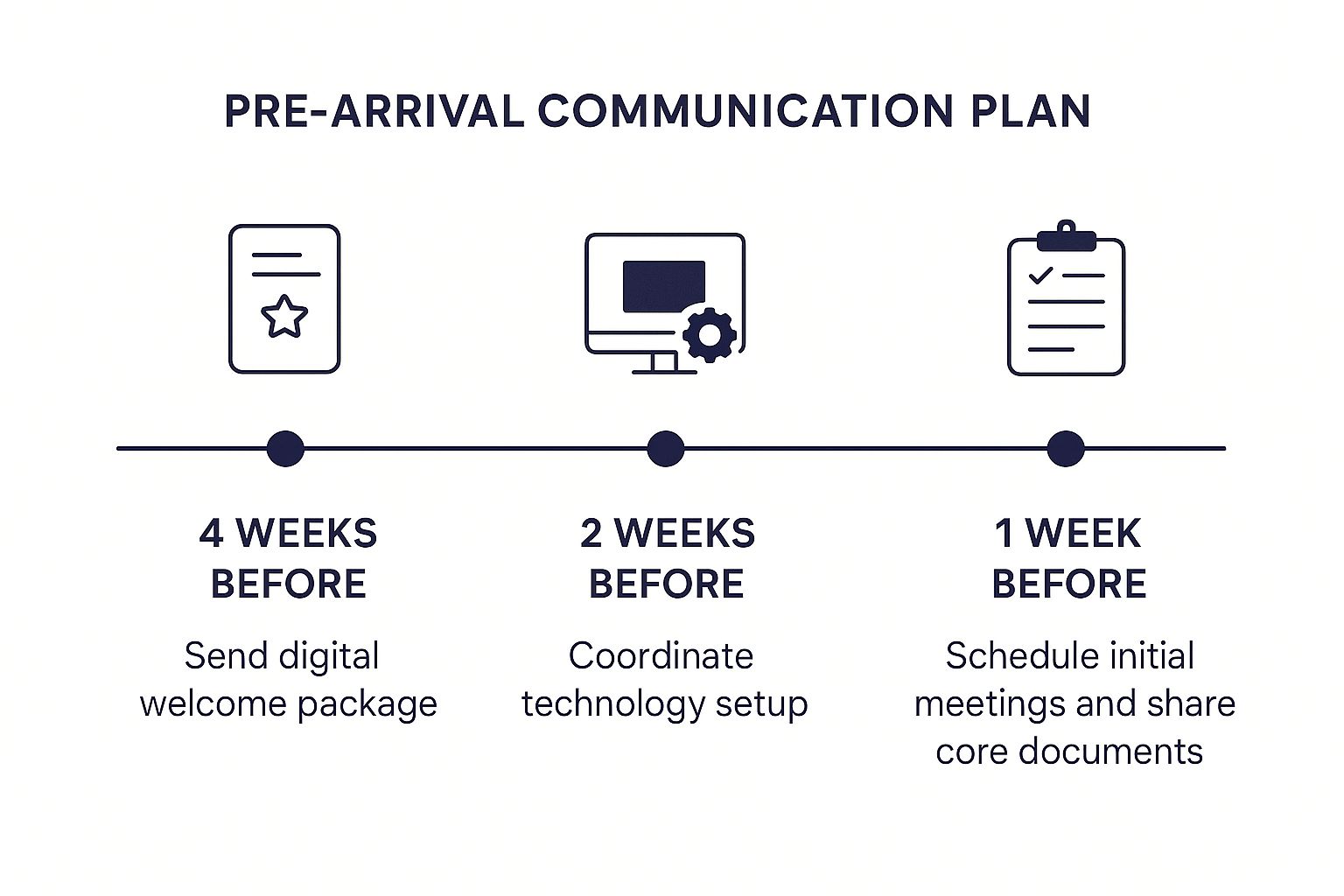
The infographic above visualizes a sample pre-arrival communication timeline. It starts several weeks before the official start date with a welcome package and progresses through key milestones such as technology setup, introductions to team members, and access to essential documents. This structured approach allows the new executive to gradually absorb information and build relationships, paving the way for a productive start. As you can see, spacing out these communications ensures the executive isn’t overwhelmed and allows ample time for questions and engagement.
A well-defined pre-arrival communication plan typically includes features like a welcome package with company culture information, coordination of technology setup, a preliminary agenda and meeting schedule, access to relevant company documents and reports, and an introduction to the executive assistant or support staff. These elements contribute to a positive first impression and demonstrate the organization’s commitment to a successful onboarding experience. This is particularly crucial for startups, SMEs, and companies in fast-paced industries like SaaS, FinTech, and HealthTech where a quick executive ramp-up is essential for success.
Examples of successful pre-arrival communication plans include Microsoft’s program with digital welcome packages and virtual meet-and-greets, IBM’s series of informal calls with key stakeholders, and Netflix’s provision of their culture deck and strategic documents weeks before the start date. These examples highlight the value of proactive communication and early engagement in setting up new executives for success. For more insights into effective communication strategies, you can Learn more about Pre-arrival Communication Plan.
Pros:
- Reduces first-day anxiety and uncertainty.
- Accelerates productivity by preparing the executive with critical information.
- Demonstrates organizational commitment to a smooth transition.
- Allows time for executives to process information before day one.
Cons:
- Risk of overwhelming the executive with too much information.
- May create expectations that differ from actual experience.
- Requires additional resources and coordination from HR and leadership teams.
Tips for Implementation:
- Space out communications to avoid overwhelming the executive.
- Provide a single point of contact for questions before arrival.
- Include personal touches like team welcome videos.
- Share only the most critical documents before the start date.
- Ensure all administrative paperwork is handled before day one.
This item deserves its place in the executive onboarding checklist because it sets the tone for the entire onboarding experience. By proactively engaging the new executive before their official start date, organizations can significantly improve the likelihood of a successful and productive transition. This is particularly important for entrepreneurs and businesses seeking to maximize the impact of their executive hires. A well-executed pre-arrival communication plan is an investment in the future success of both the executive and the organization.
2. First 90 Days Strategic Roadmap
A crucial component of any successful executive onboarding checklist is the First 90 Days Strategic Roadmap. This structured plan acts as a navigational tool for the incoming executive, outlining key milestones, goals, and activities for their first three months. It serves as a critical bridge, aligning expectations between the organization and the new leader, ensuring everyone is on the same page from the start and setting the stage for long-term success. This roadmap provides a clear framework for the executive to quickly integrate, understand the organizational landscape, and begin making meaningful contributions.

This roadmap typically utilizes a 30-60-90 day plan template, outlining progressive stages of onboarding. It incorporates key performance indicators (KPIs) and success metrics to measure progress objectively. Stakeholder mapping and relationship goals ensure the executive builds crucial connections within the organization. Learning objectives and knowledge acquisition targets facilitate a deep understanding of the company’s operations, culture, and industry landscape. Finally, the roadmap identifies specific deliverables and early wins, allowing the executive to demonstrate value quickly and build momentum.
Examples of successful implementations of the First 90 Days Strategic Roadmap abound. Satya Nadella’s initial focus at Microsoft centered on cultural transformation and cloud strategy, while Mary Barra’s roadmap at GM prioritized addressing product quality issues and rebuilding trust. Many organizations, such as Salesforce, provide customized roadmaps for their executives that align with quarterly business reviews, demonstrating the widespread adoption and value of this approach.
This item deserves a place in the executive onboarding checklist because it provides a clear and measurable path to early success for new leaders. It reduces the ambiguity and uncertainty often associated with starting a new role, allowing the executive to focus on making an impact rather than simply finding their footing. The benefits are manifold: improved communication, faster integration, and a higher likelihood of achieving organizational objectives. Learn more about First 90 Days Strategic Roadmap
Pros:
- Creates clear expectations and alignment with organizational goals.
- Provides a structured approach to tackling complex organizational challenges.
- Helps the executive prioritize activities and manage time effectively.
- Serves as a reference point for progress discussions with superiors.
Cons:
- May need frequent adjustments as the executive learns more about the organization.
- Risk of being too prescriptive, limiting the executive’s creativity and innovation.
- Can create pressure to deliver results too quickly without proper context.
Tips for Implementation:
- Co-create the roadmap: Work with the executive, rather than imposing it upon them, to ensure buy-in and ownership.
- Build in flexibility: The roadmap should be adaptable to new insights and changing circumstances.
- Balance learning and action: Include both learning objectives and actionable items to foster both understanding and impact.
- Regular checkpoints: Schedule regular review meetings to discuss progress, address challenges, and adjust the roadmap as needed.
- Identify early wins: Focus on 2-3 achievable early wins to build momentum and demonstrate value quickly.
The First 90 Days Strategic Roadmap, popularized by thought leaders like Michael Watkins (author of “The First 90 Days”) and Ram Charan, is a powerful tool for setting up new executives for success. Whether you’re a startup founder, a small business owner, or part of a larger organization, incorporating this element into your executive onboarding checklist is crucial for achieving a smooth transition and maximizing the impact of new leadership.
3. Stakeholder Integration Program
A robust executive onboarding checklist must include a Stakeholder Integration Program. This systematic approach connects new executives with key internal and external stakeholders crucial for their success and the company’s overall performance. It goes beyond simple introductions and focuses on building strong, productive relationships through structured activities and feedback loops. This process ensures the executive quickly gains a comprehensive understanding of the organization, its culture, and its challenges, while simultaneously building trust and rapport with those they’ll be leading and collaborating with. This is a vital step in any effective executive onboarding checklist.

A well-designed Stakeholder Integration Program incorporates several key features: a comprehensive stakeholder map highlighting relationship priorities, scheduled introductory meetings with the board of directors, C-suite executives, and direct reports, opportunities for customer and partner engagement, cross-functional team meetings and site visits, and both formal and informal relationship-building events.
Why This Belongs in Your Executive Onboarding Checklist:
For startups, SMEs, and larger corporations across SaaS, FinTech, HealthTech, and other sectors, successfully integrating a new executive is paramount. This program accelerates their ability to contribute meaningfully. A strong integration minimizes disruption, facilitates buy-in for new initiatives, and fosters a positive leadership transition. It’s particularly important for entrepreneurs bringing in experienced executives to scale their businesses.
Benefits and Advantages:
- Accelerated Trust-Building: Quickly establishes credibility and rapport within the organization.
- Diverse Perspectives: Provides valuable insights into organizational challenges and opportunities from various viewpoints.
- Identification of Key Players: Helps executives identify allies, potential resistance points, and influential stakeholders.
- Effective Communication Channels: Establishes lines of communication vital for future change initiatives.
Potential Drawbacks:
- Time Intensive: Can divert the executive’s attention from immediate operational matters.
- Information Overload: Excessive meetings can overwhelm the new executive.
- Political Dynamics: Initial impressions can be influenced by internal politics.
Examples of Successful Implementation:
- Apple: Assigns “culture buddies” from different departments to help new executives navigate the company culture.
- Procter & Gamble: Implements a “Connect Program” scheduling 50+ stakeholder meetings in the first month.
- Citigroup: Uses a digital platform to map stakeholder relationships and track meeting outcomes.
Actionable Tips for Effective Implementation:
- Prioritize Stakeholders: Focus on those most critical to the executive’s mandate.
- Pre-Meeting Briefings: Provide detailed information on each key stakeholder before meetings.
- Structured Discussions: Structure some meetings around specific business issues to foster productive dialogue.
- Include Frontline Employees: Gain valuable insights by including frontline employees and customers in the plan.
- Document Insights: Create a system for the executive to record key takeaways from each interaction.
Popularized By: This approach is championed by organizations like DDI (Development Dimensions International) and is a core component of Egon Zehnder’s Executive Integration Program.
By incorporating a comprehensive Stakeholder Integration Program into your executive onboarding checklist, you significantly increase the likelihood of a successful transition and maximize the new executive’s impact on your organization. This is a valuable investment that pays dividends in the long run.
4. Cultural Assimilation Strategy
A crucial component of any successful executive onboarding checklist is a robust cultural assimilation strategy. This deliberate approach accelerates an executive’s understanding of and integration into the organization’s culture, values, norms, and even the “unwritten rules.” It’s not just about filling a position; it’s about integrating a leader who can thrive and effectively lead within the specific context of your company. This is particularly important for startup founders, SMBs, and rapidly growing industries like SaaS, FinTech, and HealthTech where company culture plays a significant role in attracting and retaining top talent. A well-defined cultural assimilation strategy ensures your investment in executive talent yields the desired returns.
How it Works:
Cultural assimilation goes beyond simply handing a new executive the employee handbook. It involves active participation and immersive experiences designed to foster a deep understanding of the organizational DNA. This includes:
- Formal cultural orientation sessions with HR and senior leaders: These sessions provide a structured overview of the company’s history, mission, values, and strategic goals.
- Company history and values workshops: Deep dives into the company’s past, including key decisions, successes, and failures, help illustrate how values translate into action.
- Immersion in different departments and locations: Shadowing employees in various roles provides a firsthand view of daily operations and interdepartmental dynamics.
- Participation in company traditions and events: Experiencing company events, celebrations, and rituals allows executives to connect with employees on a personal level.
- Access to cultural mentors or guides: Pairing the executive with a seasoned employee who can provide informal guidance and insights on navigating the organizational landscape.
Examples of Successful Implementation:
- Zappos: Requires all executives to spend time on customer service lines, regardless of their role, reinforcing their customer-centric culture.
- Netflix: Uses case studies of past difficult decisions during their culture onboarding, showcasing how company values inform decision-making.
- Toyota: Execs participate in ‘learning circles’ with employees at all levels, fostering open communication and a shared understanding of company values.
Why This Belongs on Your Executive Onboarding Checklist:
Ignoring cultural assimilation can lead to misalignment, decreased effectiveness, and even executive turnover. This strategy reduces the risk of cultural missteps by providing new leaders with the context needed to make informed decisions and build strong relationships within the organization. This is critical for entrepreneurs who need their executive team to quickly integrate and contribute to the company’s growth.
Pros:
- Reduces risk of cultural misalignment and missteps
- Helps executives adapt their leadership style to the organizational context
- Accelerates acceptance and credibility with teams
- Provides insights into decision-making patterns and organizational politics
Cons:
- May reinforce existing cultural limitations rather than encouraging needed change
- Can be subjective and difficult to measure effectiveness
- Cultural nuances are often learned through experience rather than formal programs
Actionable Tips for Implementation:
- Storytelling: Include stories about both successes and failures that truly illustrate cultural values.
- Informal Connections: Arrange informal meetings with long-tenured employees across different departments.
- Honest Dialogue: Identify any cultural tensions or contradictions honestly rather than presenting an idealized version of the company culture.
- Safe Spaces for Questions: Create opportunities for executives to ask questions about cultural norms without fear of judgment.
- Immersive Experiences: Design immersive experiences like customer visits or operational shadowing to provide firsthand exposure to the business.
Popularized By:
Edgar Schein (organizational culture expert) and Ben Horowitz (author of “What You Do Is Who You Are”) have highlighted the importance of a deliberate approach to cultural integration.
By prioritizing cultural assimilation within your executive onboarding checklist, you significantly improve the likelihood of executive success and a positive impact on the organization as a whole. It’s an investment that pays dividends in the long run.
5. Knowledge Transfer Framework
A robust executive onboarding checklist must include a comprehensive Knowledge Transfer Framework. This structured approach is crucial for ensuring your new executive rapidly acquires the critical business, technical, and organizational knowledge necessary for effective leadership and swift integration. It bridges the gap between their past experiences and your company’s specific context, accelerating their journey to full productivity and minimizing potential missteps. This is especially critical in fast-paced industries like SaaS, FinTech, and HealthTech, where quick decision-making is paramount.
What it is and How it Works:
A Knowledge Transfer Framework involves a blend of formal learning sessions, documentation review, and experiential learning opportunities tailored to the executive’s role and responsibilities. It’s not simply a data dump; it’s a curated learning journey designed to equip the new leader with the specific information they need to succeed. This framework proactively addresses the common challenge of new executives taking too long to become fully productive. By providing them with a clear understanding of the company’s inner workings, they can hit the ground running.
Features of a Successful Knowledge Transfer Framework:
- Company business model and strategy briefings: Deep dives into the company’s core value proposition, target market, competitive landscape, and future strategic direction.
- Industry and competitor analysis sessions: Understanding the broader market dynamics, key players, and emerging trends relevant to the executive’s area of responsibility.
- Technical and operational deep dives: Exposure to the company’s core technologies, processes, and systems, particularly those directly impacting their role.
- Financial performance reviews and metrics explanations: A clear understanding of the company’s financial health, key performance indicators (KPIs), and reporting mechanisms.
- Historical context and institutional memory transfer: Capturing and sharing past successes, failures, and lessons learned to prevent repeating mistakes and build upon existing knowledge.
Pros:
- Accelerates the executive’s journey to full productivity: Empowers the new leader to make informed decisions from day one.
- Reduces risk of decisions made without proper context: Minimizes the chances of costly mistakes stemming from a lack of understanding.
- Prevents reinvention of solutions to previously solved problems: Leverages existing knowledge and avoids redundant efforts.
- Provides foundation for informed strategic thinking: Enables the executive to contribute strategically from a position of knowledge.
Cons:
- Risk of information overload affecting retention and prioritization: Careful planning and modular delivery are essential to avoid overwhelming the executive.
- Knowledge transfer often lacks tacit or implicit knowledge: Formal sessions may not fully capture nuanced organizational culture and informal processes. This is where mentorship and shadowing can be valuable.
- Can become too theoretical without practical application: Hands-on experiences and real-world scenarios are crucial for effective learning.
Examples of Successful Implementation:
- GE’s leadership onboarding includes simulated business scenarios based on actual company challenges, allowing executives to apply their knowledge in a safe environment.
- Amazon provides new executives with access to documented “correction of errors” from past initiatives, fostering a culture of learning from mistakes.
- McKinsey creates personalized learning journeys with “need to know” vs. “nice to know” categorization, ensuring focused and efficient knowledge transfer.
Tips for Building an Effective Knowledge Transfer Framework:
- Organize knowledge transfer in digestible modules rather than lengthy sessions.
- Use visual tools like business model canvases and strategy maps to aid comprehension.
- Combine formal presentations with hands-on experiences such as shadowing key personnel, participating in project meetings, and leading small initiatives.
- Create annotated document libraries with executive summaries for easy access to key information.
- Establish regular knowledge check-ins to identify gaps, address questions, and reinforce learning.
Why this item deserves its place in the executive onboarding checklist:
For startups, SMEs, and established enterprises across diverse sectors, a well-executed Knowledge Transfer Framework is essential for integrating new executive talent smoothly and effectively. It reduces the ramp-up time, minimizes risks associated with uninformed decisions, and maximizes the return on investment in executive recruitment. This framework plays a critical role in setting new leaders up for success, contributing directly to the achievement of organizational goals, and ultimately enhancing the strength of the executive onboarding checklist itself.
6. Executive Coaching and Support System
A robust executive onboarding checklist must include a dedicated executive coaching and support system. This personalized framework provides new executives with the professional guidance, feedback, and resources they need to successfully navigate the challenges inherent in a leadership transition. This is a crucial element of any effective executive onboarding checklist, ensuring a smoother integration and faster time-to-productivity.
What it is and How it Works:
An executive coaching and support system encompasses several key components designed to provide holistic support. It typically involves pairing the new executive with an external professional coach, an internal mentor from senior leadership, and integrating them into peer support networks. Structured feedback mechanisms and regular check-ins with the supervisor or board further reinforce the support structure. This multi-faceted approach addresses both the professional and personal adjustments required during the transition.
Features:
- Professional Executive Coach Assignment: A dedicated external coach provides objective, confidential guidance, focusing on leadership development and transition challenges.
- Internal Mentor from Senior Leadership: An internal mentor offers insights into the company culture, organizational dynamics, and unspoken rules, facilitating a quicker understanding of the internal landscape.
- Structured Feedback Mechanisms: Regular feedback sessions provide valuable insights into performance and areas for improvement, fostering continuous growth.
- Peer Support Networks or Integration Cohorts: Connecting new executives with peers creates a sense of community and provides a safe space for sharing experiences and best practices.
- Regular Check-ins with Supervisor or Board: Consistent communication with superiors ensures alignment on goals, expectations, and progress.
Pros:
- Safe Space for Processing Challenges: The support system provides a confidential environment for executives to discuss concerns, seek advice, and process the emotional aspects of transitioning into a new role.
- Objective and Experienced Perspective: External coaches and internal mentors offer unbiased perspectives and valuable insights based on their experience.
- Accelerated Adaptation and Effectiveness: Targeted development through coaching and mentoring speeds up the onboarding process and enhances executive effectiveness.
- Reduces Isolation: The support network combats the feeling of isolation often experienced by executives during leadership transitions.
Cons:
- Quality Dependent on Coach/Mentor Fit and Expertise: The success of the coaching and mentoring relationship heavily relies on the compatibility and expertise of the individuals involved.
- Potential Confidentiality Concerns with Internal Mentoring: Careful consideration must be given to establishing clear confidentiality boundaries, especially with internal mentoring relationships.
- Additional Time Commitment: Participating in coaching and mentoring sessions requires a time investment during an already demanding transition period.
- Cost: External coaching, particularly with premium coaches, can be a significant expense.
Examples of Successful Implementation:
- Google: Matches new executives with “Sherpa” mentors from within their peer group, fostering rapid integration and knowledge sharing.
- Microsoft: Leadership transitions often include executive coaching packages with renowned firms like Korn Ferry, providing expert guidance.
- Johnson & Johnson: Their Executive OnBoard program incorporates quarterly support sessions with board members, ensuring strategic alignment and high-level feedback.
Tips for Implementation:
- Involve the Executive in Selection: Allow the incoming executive to participate in selecting their coach and mentor to ensure a good fit and build rapport.
- Establish Confidentiality Boundaries: Clearly define confidentiality expectations, especially for internal mentoring relationships, to build trust and encourage open communication.
- Focus on Transition Challenges Early On: Initially, coaching sessions should prioritize addressing immediate transition challenges rather than long-term development goals.
- Create Safe Feedback Channels: Establish channels for feedback outside of formal reporting relationships, fostering a culture of open communication.
- Consider Peer Mentoring: Leverage the experience of executives who recently completed their own onboarding by establishing peer mentoring relationships.
Popularized By:
- Marshall Goldsmith, executive coach and author
- Center for Creative Leadership (CCL)
Why This Item Deserves Its Place in the Checklist:
Investing in an executive coaching and support system is critical for ensuring a successful leadership transition. It demonstrates a commitment to the executive’s success and sets the stage for a productive and fulfilling tenure. This is particularly crucial for startups, SMEs, and companies in fast-paced industries like SaaS, FinTech, and HealthTech where the rapid onboarding and effectiveness of leadership talent is paramount. By providing structured support and guidance, organizations can significantly increase the likelihood of a successful executive integration, maximize ROI, and minimize the risks associated with leadership changes.
7. Accelerated Team Development Plan
A crucial aspect of any executive onboarding checklist is the Accelerated Team Development Plan. This strategic approach focuses on rapidly building effective relationships between the newly onboarded executive and their team, setting the stage for future success. It’s a critical component of a comprehensive executive onboarding checklist because a new leader’s effectiveness hinges on their ability to quickly integrate with and motivate their team. Ignoring this crucial step can lead to decreased productivity, misaligned goals, and ultimately, failure to achieve desired outcomes.
This plan goes beyond simple introductions and aims to establish a strong foundation for collaboration and performance. It involves a multifaceted approach, encompassing:
- Team assessment and dynamics analysis: Understanding the existing team dynamics, including communication styles, working norms, and potential conflicts, is paramount. This can be achieved through surveys, observation, or facilitated workshops.
- Facilitated team-building sessions: Structured activities designed to foster communication, build trust, and establish shared values.
- One-on-one meetings with all direct reports: These personalized interactions allow the new executive to understand individual strengths, concerns, and aspirations, building rapport and establishing clear expectations.
- Collaborative expectations and working norms establishment: Openly discussing and agreeing upon preferred working styles, communication protocols, and decision-making processes creates a transparent and productive environment.
- Joint goal-setting and vision-creation workshops: Aligning the team around shared goals and a common vision ensures everyone is working towards the same objectives, fostering a sense of purpose and unity.
The benefits of implementing an Accelerated Team Development Plan are numerous:
- Pros: Accelerates team cohesion and productivity, clarifies expectations and working relationships early, identifies team strengths, weaknesses, and development needs, builds trust rapidly through structured engagement.
However, there are also potential challenges to consider:
- Cons: May surface team conflicts or performance issues requiring immediate attention, time-intensive when immediate business demands are also pressing, the team may be resistant if previous leadership transitions were handled poorly.
Several organizations have successfully implemented accelerated team development strategies. LinkedIn, for instance, leverages “Team Reset” workshops for new executives to establish fresh working agreements. Atlassian implements “Team Playbook” sessions led by professional facilitators, while Alan Mulally, during his tenure at Ford, utilized “Business Plan Review” meetings to dramatically shift team dynamics and drive the company’s turnaround. These examples demonstrate the power of proactive team development in driving rapid integration and improved performance.
Tips for Successful Implementation:
- Schedule individual meetings with direct reports before team sessions. This allows for personalized relationship building and information gathering.
- Use a team effectiveness assessment to identify strengths and development areas.
- Establish clear decision-making frameworks and communication protocols early.
- Consider an offsite meeting for deeper team development work, away from the distractions of the office.
- Balance relationship-building activities with business-focused collaboration.
The work of Patrick Lencioni, author of The Five Dysfunctions of a Team, and Amy Edmondson’s research on psychological safety, have popularized the importance of team dynamics and trust in organizational success. Learn more about Accelerated Team Development Plan
For startup founders, SMBs, and companies in fast-paced industries like SaaS, FinTech, and HealthTech, investing in an Accelerated Team Development Plan as part of your executive onboarding checklist is a crucial step toward ensuring a smooth leadership transition and maximizing the new executive’s impact. It’s particularly relevant for entrepreneurs facing executive recruitment challenges, as a well-structured onboarding process can significantly increase the likelihood of long-term success. This approach also benefits companies utilizing flexible, part-time executive roles by ensuring rapid integration and alignment with the existing team. By proactively addressing team dynamics and fostering strong relationships early on, organizations can significantly increase the probability of achieving their strategic goals.
Executive Onboarding Checklist Comparison
| Checklist Item | Implementation Complexity 🔄 | Resource Requirements ⚡ | Expected Outcomes 📊 | Ideal Use Cases 💡 | Key Advantages ⭐ |
|---|---|---|---|---|---|
| Pre-arrival Communication Plan | Moderate: Coordination across HR, IT, and leadership | Medium: Content creation, scheduling, tech setup | Reduces anxiety, accelerates productivity before start date | New executives starting soon, remote onboarding | Smooth transition, early engagement, reduced first-day uncertainty |
| First 90 Days Strategic Roadmap | High: Requires co-creation, ongoing adjustments | Medium-High: Time for planning, metrics tracking | Clear expectations, aligned goals, prioritized efforts | Complex roles needing structured alignment | Provides focus, progress tracking, and early wins identification |
| Stakeholder Integration Program | High: Scheduling multiple stakeholder meetings | High: Time-intensive with broad stakeholder engagement | Builds trust, identifies allies/resistance, communication channels | Roles requiring broad internal/external relationships | Accelerates trust-building, diverse insights, strong networks |
| Cultural Assimilation Strategy | Moderate: Programs, sessions, immersive experiences | Medium: Orientation sessions, mentors, events | Faster cultural adaptation and acceptance | Organizations with strong or unique culture | Reduces cultural misalignment, boosts credibility, promotes fit |
| Knowledge Transfer Framework | High: Deep technical/business briefings and sessions | Medium-High: Documentation, sessions, experiential learning | Rapid knowledge acquisition, informed decisions | Complex organizations needing detailed knowledge | Prevents repetition, builds strategic foundation |
| Executive Coaching and Support System | Moderate: Personalized coaching and mentoring | Medium-High: Coaches, mentors, feedback tools | Improved adaptation, reduced isolation, targeted development | Executives facing complex transitions or challenges | Provides safe reflection space, accelerates effectiveness |
| Accelerated Team Development Plan | Moderate: Team assessments, workshops, individual meetings | Medium: Facilitation, time investment | Faster team cohesion, clarified roles, rapid trust | New leaders joining existing teams | Builds trust quickly, clarifies norms, boosts productivity |
Sustaining Momentum: Ongoing Executive Integration
Effectively onboarding a new executive is a critical investment for any organization, from startups to established enterprises. This executive onboarding checklist, encompassing pre-arrival communication, a 90-day roadmap, stakeholder integration, cultural assimilation, knowledge transfer, coaching, and team development, provides a comprehensive framework for setting up new leaders for success. Mastering these key elements isn’t just about ticking boxes; it’s about fostering a seamless transition, maximizing the return on your executive hire, and driving significant, long-term growth. A successful onboarding process translates directly into quicker time-to-value for the executive, smoother team integration, and faster achievement of strategic objectives.
The most important takeaway is that executive integration is not a sprint; it’s a marathon. While the initial 90 days are crucial, ongoing support, regular feedback, mentorship, and professional development opportunities are essential for sustained success. Cultivating a culture of continuous learning and development will ensure your executive team remains agile, innovative, and equipped to tackle the challenges and opportunities that lie ahead.
Investing in your executive team is investing in the future of your company. By prioritizing a robust and ongoing executive onboarding process, you’re not only setting up individual leaders for success but also laying the groundwork for a thriving, high-performing organization.
Looking for support in building a robust and flexible executive team? Shiny connects you with top-tier fractional executives who can provide invaluable expertise and mentorship throughout your executive onboarding process. Visit Shiny to explore how fractional talent can help you build a winning leadership team.