Fractional CMO Meaning: What It Is and Why It Matters
Ever wondered how some startups punch way above their weight in marketing? It's not always about a massive budget. Often, it's about having the right strategic mind at the helm, even if it's just for a fraction of the time. This is the core of the fractional CMO meaning: strategic leadership on demand.
A fractional CMO is a seasoned marketing executive you bring on board part-time. Imagine having access to a C-suite leader—someone who's scaled brands and built successful teams—but only for the hours you need their high-level strategy. It's like having a world-class chef design your restaurant's menu and train your kitchen staff, without having to pay them a full-time salary to be there every single night.
This isn't about hiring a junior marketer to run social media. It's about bringing in a heavy-hitter to build the entire marketing engine, mentor your team, and focus relentlessly on driving measurable growth.
What Does a Fractional CMO Actually Do?
Think of a fractional CMO less like a consultant who offers advice from the sidelines and more like an active, on-demand strategic partner. They embed themselves into your leadership team, taking genuine ownership of marketing outcomes. Their core mission is to build a sustainable growth engine that keeps running long after their engagement ends.
For many growing companies, marketing feels like a scattered collection of tactics—a blog post here, a social campaign there—without a single, unifying strategy. A fractional CMO is the architect who designs the entire system for scalable growth, ensuring every action contributes to the bottom line.
A Focus on Strategic Leadership
A fractional leader’s first job is to connect marketing activities to your company's real business goals. They start by digging into your go-to-market strategy, sharpening customer segmentation, and carving out a brand position that makes you stand out. From there, they build a clear roadmap, making sure every dollar you spend on marketing is working as hard as it can.
This strategic oversight boils down to key functions:
- Developing the Marketing Roadmap: They create a comprehensive plan outlining priorities, channels, and the specific KPIs you'll use to measure success.
- Building and Mentoring Teams: A huge part of their role is leveling up your current team. They provide the mentorship needed to turn junior marketers into tomorrow's leaders.
- Driving Cross-Functional Alignment: They act as the glue between marketing, sales, and product, breaking down silos and getting everyone pointed toward the same revenue goals.
A great fractional CMO doesn’t just fill a leadership gap; they install a proven operational framework. They bring battle-tested strategies from years of experience, allowing your company to bypass common growth-stage mistakes and accelerate its trajectory.
Ultimately, they provide the kind of high-level guidance that's usually reserved for massive corporations. You can get a deeper look at the specific functions they own by exploring the full scope of chief marketing officer responsibilities in our detailed guide.
The Financial Case for a Fractional CMO
When you start digging into the fractional CMO meaning, the financial conversation is usually the first thing that comes up. It’s a powerful argument. A full-time executive comes with a much bigger price tag—what you could call their "total cost of ownership"—that goes way beyond their base pay.
That total cost balloons with hefty bonuses, comprehensive benefits, equity that dilutes your ownership, and all the overhead that comes with a C-suite hire. The fractional model neatly sidesteps all of that.
Maximizing Your Marketing ROI
Instead of a tangled compensation package, a fractional CMO typically works on a simple, predictable retainer. This frees up a huge amount of capital that would otherwise be locked into executive overhead. Here’s where the magic happens: you can redirect those savings straight into your actual marketing budget.
Suddenly, you have both top-tier strategic leadership and a bigger war chest for execution. It’s a powerful combination that can seriously accelerate growth.
This infographic gives a quick breakdown of where a fractional leader puts their energy.
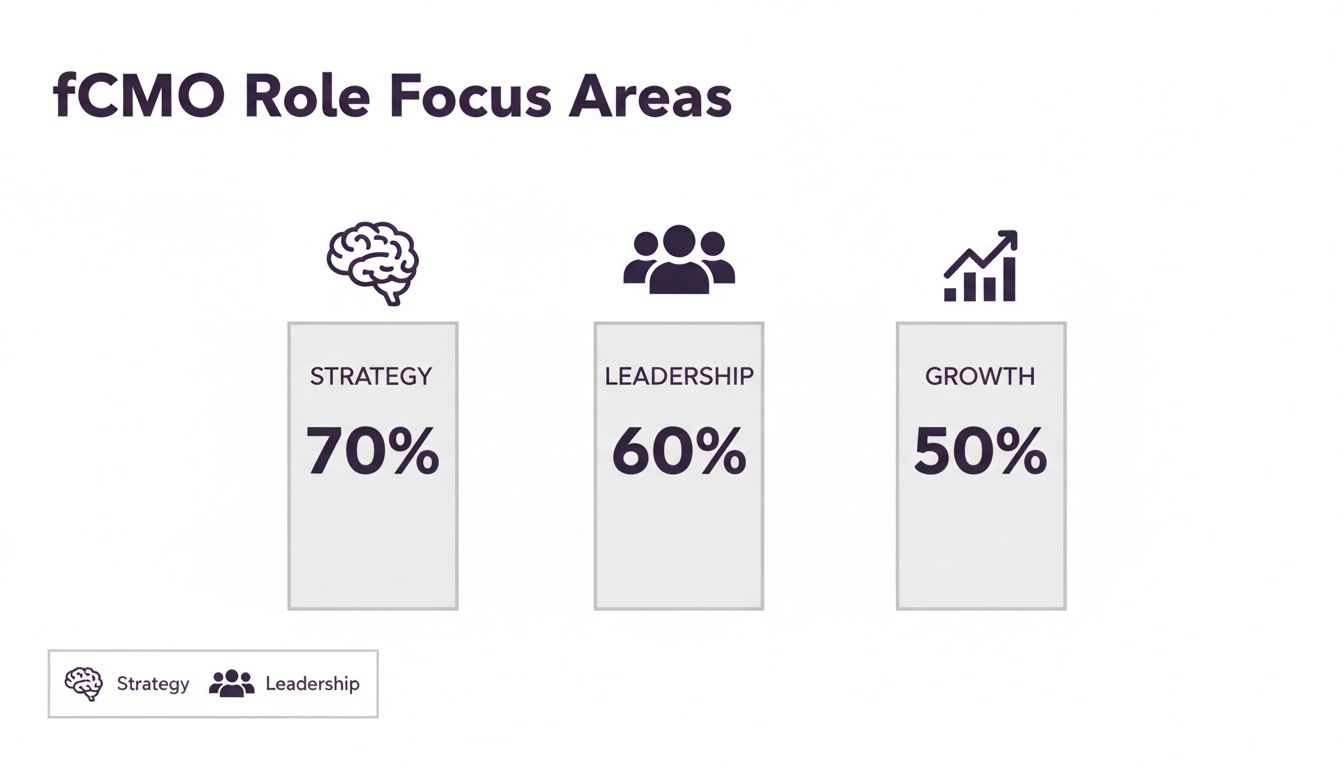
As you can see, the focus is heavily skewed toward high-level strategy and leadership—the exact things that drive long-term, sustainable growth.
Full-Time CMO vs. Fractional CMO Cost Breakdown
The numbers really put the difference into perspective. A full-time hire isn't just a salary; it's a massive bundle of associated costs. The table below shows just how stark the contrast is.
| Cost Component | Full-Time CMO (Annual Estimate) | Fractional CMO (Annual Estimate) |
|---|---|---|
| Base Salary | $250,000 | N/A |
| Annual Bonus (25%) | $62,500 | N/A |
| Health & Benefits | $30,000 | N/A |
| Payroll Taxes & 401k | $27,500 | N/A |
| Recruiting & Onboarding | $50,000 | N/A |
| Equity (Varies) | Significant | N/A |
| Retainer Fee | N/A | $120,000 ($10k/month) |
| Total Annual Cost | $420,000+ | $120,000 |
The bottom line is clear. You can access elite marketing leadership without the C-suite price tag, saving hundreds of thousands of dollars that can be poured back into fueling your company's growth.
This isn't just a niche trend; it's a major financial shift. Recent analysis shows that 73% of growing companies are rethinking their hiring for 2025, with many leaning into fractional roles to slash expenses. The numbers don't lie: a full-time executive's total cost can climb past $800,000 in some markets, while a fractional CMO can deliver savings of over $530,000 in the first year alone.
This kind of financial flexibility is a total game-changer for a startup. If you want to see a more detailed financial analysis, check out our complete breakdown of fractional CMO cost and how it stacks up against traditional hiring.
Why Demand for Fractional Leadership Is Soaring
The rise of the fractional CMO isn’t a passing fad; it’s a direct response to massive shifts in the business world. We're in a perfect storm where economic pressure and a volatile talent market have made flexible, high-impact leadership more valuable than ever. Companies are scrambling for smarter ways to build teams that can roll with the punches.
This surge is driven by two key factors. Widespread tech layoffs have deepened the pool of available senior-level talent. At the same time, budget cuts are forcing companies to ditch expensive leadership models for something more efficient. It’s a classic case of supply meeting a new kind of demand.
A Fundamental Shift in Business Strategy
The fractional model has taken hold in fast-moving industries like tech, healthcare, and e-commerce. These sectors are dealing with unique challenges—from navigating a maze of regulations to leveraging new AI tools—that demand specialized, proven expertise. A fractional executive brings that knowledge to the table without the long-term, hefty price tag of a full-time hire.
The move toward fractional leadership is a fundamental change in how modern businesses think about growth. It's no longer about just filling a seat in the C-suite; it's about getting the right expertise at the exact moment you need it most to solve a specific problem.
This approach lets a company stay nimble, which is critical when the economy feels shaky. Instead of getting locked into a massive executive salary, a business can invest in strategic guidance on a flexible basis, scaling the help up or down as things change.
Demand for fractional CMOs is exploding, with some projections showing a 50% rise in these roles by 2025. This boom is fueled by tech layoffs, tighter budgets, and the need for agile leadership. In fact, major tech layoffs in 2023-2024 poured gasoline on the fire, pushing companies toward flexible talent as they faced marketing budget cuts averaging 15%. You can get a deeper dive into why fractional CMOs are becoming so critical by checking out these key trends and future insights on cnvcmo.com.
Unlocking Strategic Benefits Beyond Cost Savings
Sure, the financial argument for a fractional CMO is a big one, but focusing only on cost savings is missing the point. The real value is the strategic firepower it brings to a growing business. It’s about parachuting in immediate, C-suite expertise right where you need it, when you need it.
A fractional executive walks in with a playbook built from years of experience across different industries. This lets them sidestep the internal politics and lengthy learning curve that can bog down a full-time hire. They see your challenges with fresh eyes and can spot opportunities (and problems) that are often invisible from the inside.
This is what a fractional CMO really means: not just a marketing manager, but a strategic partner building you a resilient engine for growth.

Driving Impact Through Specialized Expertise
One of the biggest wins is getting specialized knowledge on demand. Need to crack a new market? Launch a complex product? Overhaul your digital strategy? You can bring in a leader who has done exactly that, multiple times over.
This flexibility is a game-changer. As your business evolves, you can scale their time up or down without the friction and risk that comes with hiring (or firing) a full-time executive.
And the data backs this up.
Fractional CMOs are completely changing the executive playbook. They achieve 80% better performance outcomes and stick around for an average of 71 months, compared to just 42 for traditional hires. A staggering 91% of companies are satisfied with them, which is a world away from the 42% failure rate of full-time CMOs within their first 18 months.
The core benefits aren't just about running campaigns better. They’re about fundamental business improvements:
- Objective Leadership: An outsider isn't swayed by company history or internal relationships. They make tough, data-driven calls that are right for the business.
- Accelerated Growth: They don’t need to reinvent the wheel. They implement proven systems from day one, helping you sidestep common mistakes and get to results much faster.
- Team Mentorship: A great fractional leader doesn't just do the work; they level up your entire marketing team. They provide mentorship that builds your in-house capabilities for the long haul.
This mix of flexibility, lower risk, and immediate impact is why so many startups and scale-ups are moving to fractional leadership. When you connect with the right executive, you’re not just filling a role—you’re gaining a powerful partner dedicated to your success.
Knowing When Your Business Needs a Fractional CMO
Recognizing the right moment to bring in senior marketing leadership can feel like a high-stakes guessing game. You know you don't need another full-time executive salary on the books, but the lack of a coherent strategy is becoming painful.
The good news is, there are clear signals that it's time to bring in a fractional CMO. These triggers usually pop up during periods of rapid change or, more commonly, frustrating stagnation. If your growth has flatlined despite your team’s best efforts, it's a huge sign that your current tactics just aren't cutting it anymore. An experienced fractional leader can step in, diagnose the real problem, and build a new engine for growth.
Common Triggers for Hiring a Fractional Leader
Think of these scenarios as smoke signals pointing to a deeper need for strategic direction. If one or more of these feel familiar, the fractional CMO meaning for your business becomes crystal clear: it’s the solution to a critical problem you're facing right now.
-
Preparing for a Funding Round: Investors need to see a clear, data-driven marketing plan that proves you can scale efficiently. A fractional CMO builds that strategy and presents it with C-suite credibility.
-
Your Marketing Feels… Random: If your marketing looks like a collection of disjointed activities without a unifying vision, you’re likely wasting money. A real leader connects every action back to core business goals.
-
You Need to Build a Marketing Team: Hiring marketers without a leader to guide them is a recipe for chaos. A fractional executive can define the right roles, help you hire the best talent, and mentor them to be effective.
-
Entering a New Market: Whether you're expanding into a new territory or launching a new product, you need a proven playbook. Bringing in a fractional leader who has done it before minimizes risk and speeds up your time-to-market.
If your business is navigating these kinds of inflection points, you’re not just missing a marketer—you’re missing a strategist. A fractional CMO provides that temporary, high-impact leadership needed to get you to the next level without the long-term cost and commitment.
These are the moments when bringing in an expert isn’t a luxury; it’s a necessary move to unlock your company’s potential. If these challenges sound familiar, it’s probably time to explore how a vetted fractional executive can provide the clarity and direction you're looking for.
How to Find and Onboard Your Fractional Leader
Okay, so you’ve decided a fractional leader is the right move. Now comes the real question: where do you find the perfect one?
You could go the old-school route and hunt for independent consultants. But that path is often a massive time sink. You’re left spending countless hours vetting their experience, checking references, and trying to figure out if they’ll vibe with your team culture.
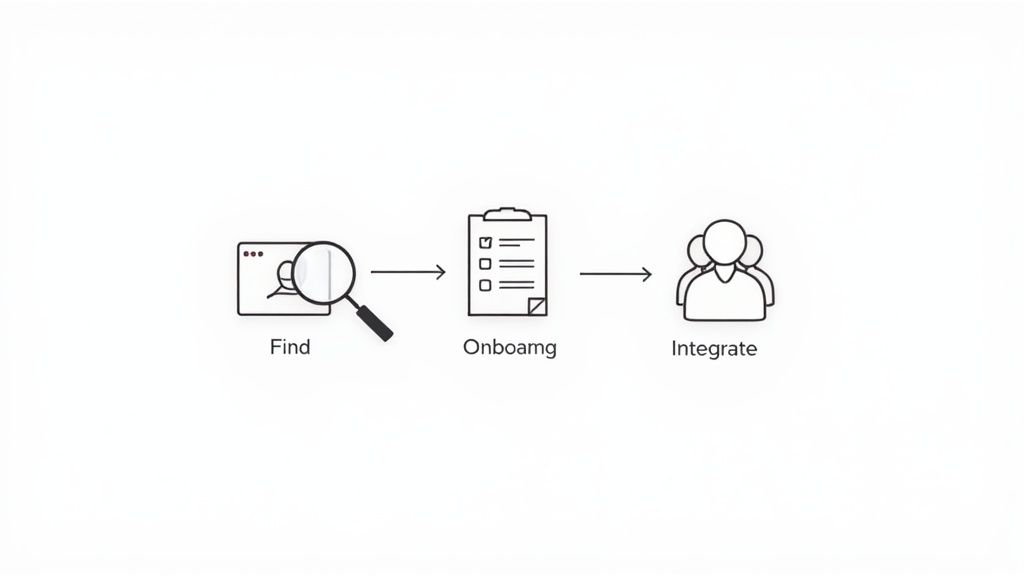
A much faster and more reliable approach is to partner with a curated talent platform. Think of it as a shortcut to the best people. These platforms have already done the heavy lifting, offering a pre-vetted network of proven executives. They match you with leaders who have specific, relevant industry experience, connecting you with someone who can start making a difference right away. This eliminates the risk of a bad hire and gets you to ROI faster.
Setting Your New Leader Up for Success
Getting your new leader onboarded smoothly is absolutely critical to maximizing your investment from day one. It’s all about alignment and integrating them seamlessly into your team's rhythm. Success here boils down to crystal-clear communication.
To make sure the transition is seamless, focus on these key steps:
- Define Clear Expectations: Document the scope of their role, key responsibilities, and decision-making power. What are the absolute must-win battles for their first 90 days?
- Establish Success Metrics: Work together to set specific, measurable Key Performance Indicators (KPIs). This ensures everyone is on the same page about what winning looks like.
- Foster Open Communication: Set up a regular meeting schedule from the start. Make warm introductions to key stakeholders they'll be working with across the company. This helps them build the relationships and gather the context they need to be effective.
A great fractional partnership is built on two things: trust and clear goals. The onboarding period is your golden opportunity to establish both. This is how you turn a new hire into a genuine strategic partner who gets your business inside and out.
If you want to get into the nitty-gritty, our guide breaks down exactly how to hire a fractional CMO and the key traits to look for in a top candidate.
Fractional CMO FAQs: Your Questions Answered
It's natural to have a few questions as you consider how a fractional CMO would work for your business. Let's tackle some of the most common ones we hear from founders.
How Much Time Does a Fractional CMO Actually Work?
This is the beauty of the model: it's completely flexible and built around your current needs. Most fractional CMOs work somewhere between 10 to 20 hours per week, but that's just a ballpark. A startup gearing up for a big product launch might need more hands-on time initially, while an established business might just need a senior leader for a few hours a week to provide high-level strategic oversight.
Isn't This Just a Fancy Term for a Marketing Consultant?
Not at all, and it's a crucial difference. A consultant typically parachutes in for a specific project, delivers recommendations, and then leaves. Their job is to advise.
A fractional CMO, however, becomes an integrated part of your leadership team. They don't just advise; they take ownership. They are accountable for results, they manage and mentor your marketing team, and they are fully responsible for the entire marketing function's success. Think of them as a true executive, just on a part-time schedule.
Can They Really Manage My Existing Team?
Absolutely—in fact, that's one of their most important jobs. A great fractional CMO isn't just a strategist who sits in an ivory tower. They get in the trenches with your team. They mentor your junior marketers, help optimize your team's structure, and ensure the day-to-day work is perfectly aligned with the big-picture business goals. Their goal isn't just to execute a strategy, but to build up your internal team's skills for the long haul.
Ready to see how fractional leadership can drive your growth? At Shiny, we understand the challenges of scaling a business. We specialize in connecting companies like yours with a network of over 3,000 vetted executives ready to make an immediate impact. Let us help you find the strategic partner who can unlock your next stage of growth. Find your perfect match today.