How Fractional Leadership Can Transform Your Customer Experience
Improving your customer experience isn't about a single magical fix. It's about building a complete system—a machine that runs on seamless digital interactions, genuine personalization, proactive support, and a constant feedback loop. The goal is a world where every interaction reinforces how much you value a customer's business.
But who designs and builds that machine? For many growing companies, the answer lies in fractional leadership. A seasoned executive can provide the strategic blueprint and operational discipline needed to turn good intentions into a powerful competitive advantage, all without the cost of a full-time hire.
Your Blueprint for a Winning Customer Experience
In a crowded market, startups can't win on price or features alone. The real battleground is the customer experience (CX).
When a staggering 73% of customers say that experience is a major factor in their purchasing decisions, it becomes clear: how you make people feel is your most powerful competitive edge. Great CX doesn't just create happy customers; it turns them into loyal advocates who become your best marketing channel.
For a startup, this means getting beyond isolated tweaks. A truly effective CX strategy is a deliberate, company-wide commitment baked into your DNA. It's a mindset guiding every decision, from product roadmaps to marketing campaigns. The goal is a customer journey so smooth that people feel seen and appreciated.
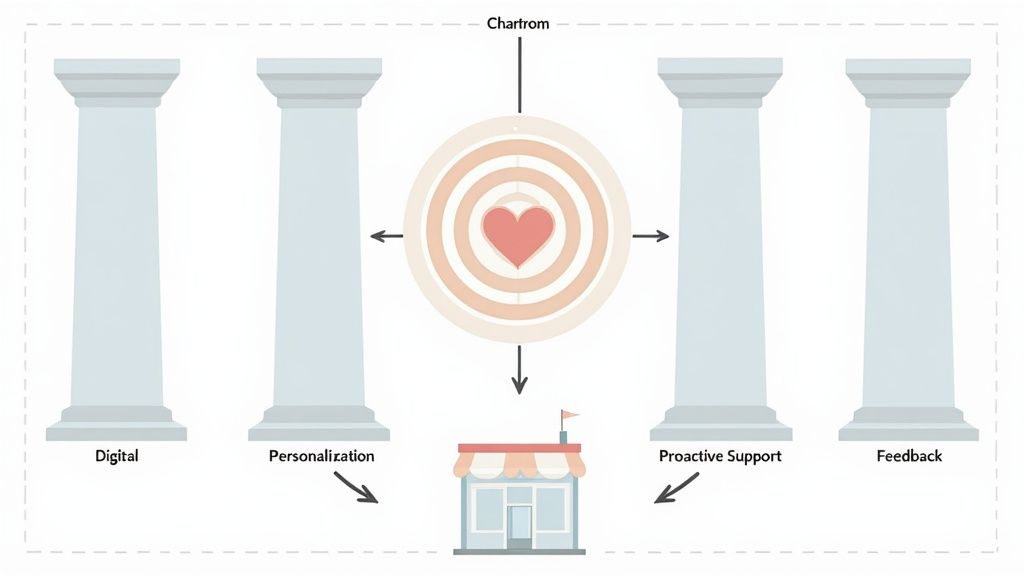
The Four Pillars of Modern Customer Experience
To build a winning system, your startup needs to nail four key areas. Think of them as the foundation for scalable growth and lasting customer loyalty.
Mastering these pillars is non-negotiable for any startup looking to create an unforgettable and effective customer experience.
The Four Pillars of Startup Customer Experience
| Pillar | Core Objective | Example Tactic |
|---|---|---|
| Seamless Digital | Make every digital touchpoint intuitive, fast, and frictionless. | Optimize your mobile app for one-click checkout. |
| Authentic Personalization | Use data to anticipate needs and make customers feel uniquely valued. | Send personalized product recommendations based on past browsing history. |
| Proactive Support | Solve problems before they happen and communicate transparently. | Notify users about a potential shipping delay before they have to ask. |
| Continuous Feedback | Actively listen to customers and use their insights to improve. | Follow up on a negative review with a personal call to resolve the issue. |
Each pillar works together to create a holistic experience. They aren't just separate tasks to check off a list; they're interconnected parts of a much larger strategy.
Building this framework doesn't happen by accident—it requires strategic oversight. A fractional executive can bring the seasoned leadership you need to integrate these pillars, ensuring your CX initiatives deliver real business results without the cost of a full-time hire. Explore our guide to developing a powerful strategic roadmap template to see how this kind of leadership can shape your company's future.
Using Technology to Scale Without Losing the Human Touch

As your startup grows, that scrappy, all-hands-on-deck support becomes impossible to maintain. This is a classic growing pain. The answer isn't just hiring an army of support agents—it's using technology to handle repetitive tasks. This frees up your team for the high-value, human interactions that build loyalty.
Smart tech doesn't replace the human touch; it makes it more powerful. Think of it like a master carpenter using power tools. The tools don’t diminish their craft—they allow them to work faster and with more precision, saving their energy for the detailed work that sets them apart.
This is the secret for anyone trying to figure out how to improve customer experience while scaling. It’s about building a system where technology and people work together, each playing to their strengths.
Automating the Routine with AI Chatbots
AI-driven chatbots are one of the best tools for scaling support. Modern chatbots can handle a huge volume of common questions—like order status updates or basic troubleshooting—24/7.
That round-the-clock availability is a game-changer. Customers get instant answers, and your human agents are freed from monotonous work, allowing them to focus on sensitive or complex issues where empathy is essential.
The impact is huge. It’s predicted that 85% of customer interactions will be managed without a human by 2025. This isn't just about cutting costs; it’s about efficiency. Companies using AI for customer service have seen an 87% reduction in resolution times.
Creating a Single Source of Truth with a CRM
While chatbots handle the front lines, a Customer Relationship Management (CRM) system is the command center. A well-integrated CRM breaks down internal silos and gives your team a complete, unified view of every customer.
Imagine a customer reaches out. With a CRM, your agent instantly sees their entire history: purchases, support tickets, and website activity. No more repeating information. This context is the foundation of proactive and personalized support.
A CRM transforms your support from reactive to proactive. Instead of just answering questions, your team can anticipate needs and offer solutions that make the customer feel understood.
This single source of truth empowers your team to deliver a consistent, informed experience. If you're starting from scratch, check out our guide on how to implement a CRM system for a step-by-step approach.
The right tech stack doesn't dehumanize your service; it makes it more human. Automating the predictable and unifying your data creates an environment where your people can deliver exceptional support that builds lasting relationships.
Making Every Customer Feel Valued with Personalization
Generic, one-size-fits-all interactions are the fastest way to make a customer feel invisible. In a world where every brand screams for attention, personalization is a core requirement if you're serious about figuring out how to improve customer experience.
Real personalization goes beyond using a first name in an email. It’s about showing you get your customers. This means using data—purchase history, browsing behavior—to anticipate their needs and make every touchpoint feel tailor-made. When done right, it feels less like marketing and more like a helpful conversation.
This is a classic stumbling block. Many startups collect data but lack a clear strategy to use it. This is exactly where an experienced fractional executive provides immense value, helping build a personalization roadmap that works for both customers and your bottom line.
Beyond the First Name Basis
What does great personalization look like? It's a customer journey that adapts in real time. It's making each person feel like you’ve designed the entire experience just for them.
Let's say you run an e-commerce store. For a customer who frequently buys a specific type of coffee bean, you could:
- Send a timely reminder when your data suggests they're running low.
- Recommend a new, similar blend from a small-batch roaster.
- Offer early access to a limited-edition roast.
These small, relevant gestures prove you're paying attention. It changes the dynamic from a one-off transaction to a trusted relationship, boosting customer lifetime value.
Leveraging Data to Build Custom Journeys
The engine behind any personalization strategy is clean, accessible data. The goal is to build a unified view of each customer by pulling information from sales, marketing, and support tools. This allows you to segment your audience and build custom journeys that resonate.
It's no surprise personalization is a top priority. Nearly half of all companies are focusing their 2025 investments on it. Why? Because 64% of customers will spend more with brands that resolve their issues with a personalized touch. You can dig into more stats like these in this customer experience statistics roundup on Desk365.io.
Practical Steps to Personalize at Scale
You don't need a massive budget to get started. The key is to start small and be smart.
- Segment Your Audience: Group customers based on shared behaviors (e.g., first-time vs. repeat buyers).
- Map Key Touchpoints: Pinpoint moments where personalization delivers the biggest impact, like welcome emails or post-purchase follow-ups.
- Start with Simple Wins: Connect your CRM to your support desk so your team sees a customer's order history. This simple step prevents a frustrating experience.
By focusing on these core areas, you build a system that makes every person feel seen, heard, and genuinely valued. This is the real art of turning data into delight.
Mastering personalization is a huge piece of the puzzle for how to improve customer experience. It's a mix of the right tech, a clear strategy, and a customer-obsessed culture. For startups building this capability, a fractional leader can provide the expert guidance to turn personalization into a powerful engine for growth.
Creating Frictionless Digital and Mobile Journeys

Your website and mobile app aren’t just sales channels—they're your digital front doors. A confusing, clunky, or slow experience slams that door shut. If you’re serious about figuring out how to improve customer experience, engineering a seamless digital environment is non-negotiable.
Think of your website's navigation like the layout of a physical store. If the aisles are cluttered and the signs are confusing, you won't stick around. It’s the same online. Every broken link or slow-loading page erodes trust and sends customers to your competition.
Today, 73% of consumers prefer digital channels. This demand is only growing, a trend you can explore deeper in Verint's comprehensive State of CX 2025 report. Meeting customers where they are with a smooth experience is paramount.
Adopting a Mobile-First Mindset
More than half of all web traffic now comes from mobile devices, yet many businesses treat their mobile site as an afterthought. This is a costly mistake.
A staggering 57% of users won't recommend a business with a poorly designed mobile site. A true mobile-first approach means designing for the smallest screen first, ensuring core features are intuitive, easy to tap, and load quickly.
Why Intuitive Navigation is Non-Negotiable
Your customers should never have to think hard about how to use your website. Navigation should feel natural. Finding contact info or pricing should take seconds.
Here are a few ways to improve your site’s navigation:
- Simplify Your Menu: Cut down top-level menu items. Use clear, simple language.
- Implement a Smart Search Bar: Make your search function prominent and ensure it provides relevant results.
- Test with Real Users: Use tools like heatmaps or run user testing sessions to see where people are getting stuck.
The goal is to make your digital environment so easy to navigate that it becomes invisible. When the user experience is truly frictionless, customers can focus on what they came for.
Page Speed Is a Core Part of the Experience
In an age of instant gratification, speed matters more than ever. A slow-loading website feels unprofessional. Even a one-second delay in page load time can cause a significant drop in conversions.
Tools like Google's PageSpeed Insights can give you a clear picture of your site's performance and offer actionable recommendations. This often involves simple fixes like optimizing images and cleaning up code.
Creating a frictionless digital journey is about removing barriers and respecting your customer's time. A seasoned leader can provide the strategic oversight to audit your digital presence, prioritize high-impact improvements, and ensure your tech investments deliver a truly seamless experience.
Build a Culture of Customer Obsession
The slickest tech stack and most detailed processes only go so far. If you're really wondering how to improve customer experience, the secret is your people—the ones on the front lines. Building a culture of customer obsession is what turns a decent experience into one that people rave about.
This isn't about scripts or SOPs. A customer-obsessed culture is built on soft skills you can't automate: empathy, active listening, and creative problem-solving. It's about getting everyone, from the CEO down, to feel like the customer's happiness is their personal responsibility.
Give Your Frontline Team the Keys
One of the biggest levers you can pull is empowering your frontline team to make decisions. When a support agent has to put a customer on hold to ask for permission to issue a refund, you add friction and send a clear message to your team: "We don't trust you."
Giving your team the authority to solve problems on the spot is a game-changer. Imagine a customer gets a damaged product. The old way involves a chain of emails and approvals. The empowered way? The agent immediately apologizes, ships a replacement, and maybe throws in a small gift card—all in one conversation. That's how you turn a mistake into a win.
This pays dividends. Companies that excel in CX don't just grow revenue up to 80% faster; they build more engaged teams who see the positive impact of their work.
Double Down on Essential Soft Skills
Technical know-how is table stakes. The soft skills your team brings are what move the needle. These skills build real connections and make customers feel human.
- Active Listening: This isn't just waiting to talk. It's truly hearing what the customer is saying, understanding the emotion, and repeating it back before offering a solution.
- Empathy: This is the most important CX skill. Putting yourself in the customer's shoes de-escalates tense situations and builds trust.
- Creative Problem-Solving: Not every problem has a neat answer in a knowledge base. Empower your team to think on their feet and find solutions that fit the customer's unique situation.
A customer-obsessed culture isn’t built with posters on a wall. It’s forged through consistent actions, clear expectations, and celebrating the people who go the extra mile. It’s an operational discipline that has to start at the top.
Set Clear Goals and Celebrate the Wins
If you want customer obsession to be more than a buzzword, you have to define and measure it. Set clear, actionable CX goals. Don't just say "let's improve satisfaction." Get specific: "Let's increase our CSAT score by 10% this quarter."
And just as crucial—celebrate the wins. Loudly. When a team member gets a shout-out in a review, make sure the whole company hears about it. This positive reinforcement shows everyone what your values look like in the real world.
For busy founders, building this culture from scratch can feel overwhelming. A fractional executive brings the seasoned leadership needed to sharpen your CX vision, roll out effective training, and build systems that empower your team to delight customers.
Turn Customer Feedback into Your Greatest Asset
The smartest startups don't just build a product and hope for the best. They build a powerful system for listening, learning, and adapting based on what customers tell them every day.
If you really want to know how to improve customer experience, you have to stop guessing. It's time to build a customer feedback loop that becomes the heartbeat of your company. This isn't about passively collecting reviews; it's about actively hunting for insights and wiring them directly into your decision-making.
This continuous cycle ensures your product, marketing, and service strategies evolve in lockstep with the people you’re trying to serve.
From Raw Data to Actionable Insights
Collecting feedback is the easy part. You can use simple tools like Net Promoter Score (NPS) surveys, post-support CSAT questionnaires, or informal user interviews.
The real magic happens when you turn that raw data into clear, actionable direction.
The key is to zoom out from individual comments and look for patterns. Are multiple customers mentioning the same confusing feature? Are support tickets constantly popping up about a specific billing issue? These recurring themes are goldmines, pointing you directly to the biggest points of friction.
Don't just collect feedback—show your customers it matters. When you act on their suggestions, you close the loop and demonstrate that their voice has a real impact. This simple act builds immense trust and transforms customers into loyal partners.
By categorizing feedback and spotting trends, you can shift from a reactive, "firefighting" mode to a proactive strategy. You're fixing the root cause and improving the experience for everyone.
Building Your Feedback-Driven Flywheel
An effective feedback system isn't a one-off project; it's a cultural flywheel that gains momentum. The infographic below shows a simple process for embedding this into your operations.
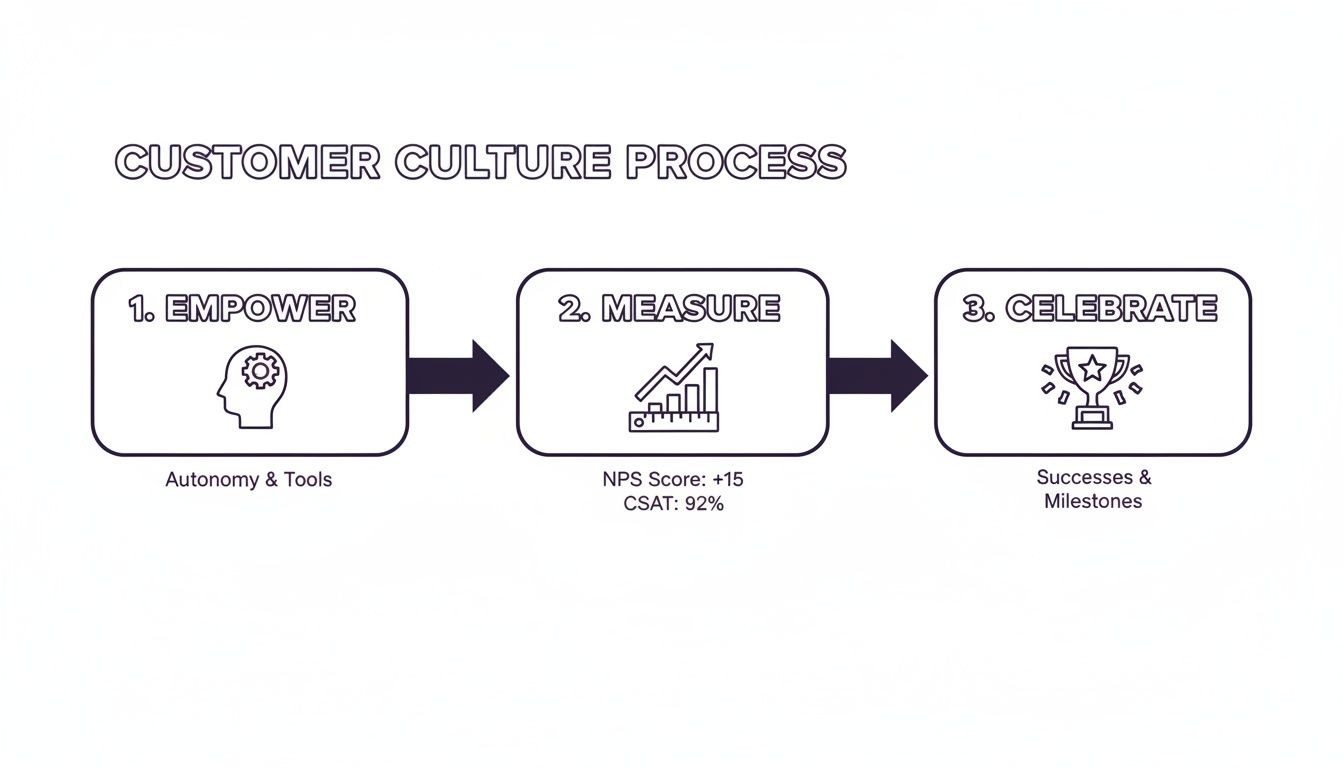
This visual breaks down a customer-centric culture into three core actions: empowering your team, measuring the impact, and celebrating the wins. This continuous cycle ensures that feedback gets translated into meaningful improvements.
Turning insights into action requires operational discipline and strategic vision. This is precisely where experienced leadership makes a huge difference. A fractional executive can provide the guidance to create these systems, ensuring feedback drives tangible growth.
If you want to dig deeper into the tactics, explore these customer success best practices to see how the top teams operate.
Ultimately, your customers are offering you a roadmap to success—for free. By building a systematic way to listen, analyze, and act, you create an unbeatable competitive advantage.
Common Questions About Improving Customer Experience
Jumping into a mission to improve customer experience can feel overwhelming. It often brings up more questions than answers, especially for lean startups.
Founders often ask us the same key questions when they're ready to get serious about building a customer-centric culture. Let's tackle them.
What Is the First Step for a Startup to Improve Customer Experience?
The single most impactful first step is to create a direct, unfiltered feedback loop with your earliest customers. Forget about fancy tools for a minute.
Just start talking to them. Send personal emails. Hop on brief interviews. Dig through every support ticket and look for patterns. This hands-on approach gives you the raw, honest truth about their pain points and expectations.
Doing this not only helps you make immediate fixes but also shows your first users that you're listening. That builds incredible goodwill and sets the foundation for a culture that scales with your company.
How Can We Improve CX on a Tight Budget?
Great CX has little to do with a huge budget. It’s about focusing on low-cost, high-impact actions that build trust.
- Empower your team. Give them the autonomy to solve problems without needing approval. This resolves issues faster.
- Be brutally honest. When there's an outage, get out in front of it. Proactive communication costs nothing but builds massive loyalty.
- Master the basics. Simple things, like using a customer's name and referencing past conversations, go a long way.
These human touches are often more powerful than expensive software. They make customers feel seen, not just processed, without draining your bank account.
The biggest ROI in early-stage CX doesn’t come from shiny, expensive tools. It comes from operational discipline. A seasoned leader knows how to implement the right processes to get the most out of your team, making sure every dollar you spend on CX actually moves the needle.
How Do You Measure the ROI of Improving Customer Experience?
Measuring the return on your CX efforts means connecting them to business metrics that matter. You're looking for tangible shifts in numbers directly influenced by how customers feel.
Keep an eye on metrics like:
- Customer Retention Rate: Are happier customers sticking around longer?
- Customer Lifetime Value (CLV): As satisfied customers buy again, their lifetime value increases.
- Net Promoter Score (NPS): An improving NPS correlates with lower churn and more word-of-mouth referrals.
Also, look at operational metrics. A drop in support ticket volume or a faster resolution time are clear signs your CX improvements are working. When you can draw a straight line from CX initiatives to these improvements, you have a clear case for ROI.
Navigating these challenges is about having the right strategic leadership. Shiny connects you with fractional executives who know how to build a customer-obsessed culture from the ground up. If you're ready to make customer obsession your biggest competitive advantage, Explore our marketplace or schedule a consultation to see how the right leader can light the way.