
Part Time CMO Services to Grow Your Business
A part-time CMO brings executive-level marketing strategy and leadership to your company on a flexible, as-needed basis. This model, a core part of fractional leadership, provides access to C-suite expertise without the hefty price tag of a full-time, six-figure salary.
Why Smart Companies Choose On-Demand Marketing Leadership
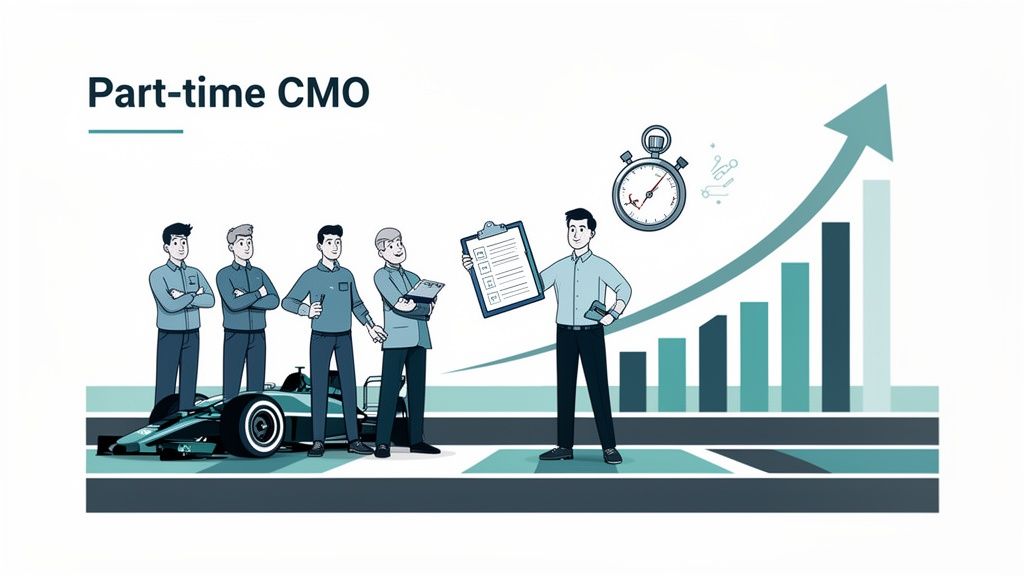
Has your company's growth hit a wall? It’s a common pain point. You have ambitious goals that demand top-tier marketing strategy, but the budget for a full-time Chief Marketing Officer just isn't there yet. This classic dilemma is pushing founders to look beyond traditional executive hiring.
Think of it like a Formula 1 team. For a critical championship season, they might bring in a world-class race strategist. They get immediate, game-changing expertise exactly when it counts, without needing a permanent contract. That’s the core idea behind a part-time CMO—it’s a modern, agile solution for businesses that need to move fast.
Turning a Barrier into a Competitive Edge
This fractional approach gives you access to elite strategic talent on your own terms, flipping a huge financial hurdle into a real competitive advantage. A part-time CMO is much more than a consultant who drops off a plan and disappears. They become a genuine part of your leadership team, accountable for driving the entire marketing engine.
This model is a key pillar of a bigger trend in modern business, which you can read more about in our guide to fractional leadership.
A part-time CMO does more than just advise; they take ownership of outcomes. They’re on the hook for building the strategy, mentoring your team, managing the budget, and ultimately, delivering measurable growth.
With this integrated leadership, companies can tap into a level of experience that would otherwise be completely out of reach. Instead of making do with junior-level strategy or stretching a founder too thin, you get a leader who’s already solved the exact problems you’re facing.
The Real Value of Flexible Expertise
The perks go way beyond just saving money. A part-time leader brings in a fresh set of eyes, unburdened by internal politics, allowing them to make objective decisions focused purely on results. This is a game-changer for businesses trying to:
- Launch a new product and nail the go-to-market strategy.
- Enter a new market where specialized industry knowledge is crucial.
- Build a scalable marketing function from the ground up.
- Mentor an existing team to elevate their skills and performance.
When you bring on a part-time CMO, you’re not just plugging a hole. You're making a strategic investment in sustainable, intelligent growth. As your needs change, the engagement can change right along with them, ensuring you always have the right leader at the right time.
What a Part-Time CMO Actually Does
It's a common mistake to lump a part-time CMO in with marketing consultants. Think of them less as an advisor and more as the architect of your company's growth engine. They don’t just hand you a blueprint; they oversee its construction, ensuring every moving part—from brand to demand gen—works together to build a predictable revenue machine.
This is a true leadership role. It's about taking full ownership of the marketing function. A part-time CMO doesn't just toss ideas over the fence; they're on the hook for the outcomes. They plug into your leadership team, making strategic calls that tie marketing directly to your big-picture business goals.
Core Strategic Responsibilities
The day-to-day of a part-time CMO is all about high-level strategy and executive leadership. While they aren't the ones executing every last task, they're responsible for making sure the right tasks get done, by the right people, at the right time. Their focus is squarely on building a foundation for growth that lasts.
- Strategic Planning: Crafting a comprehensive marketing strategy aligned with business objectives.
- Team Leadership: Mentoring and developing your existing marketing team or helping you build one.
- Budget Management: Creating and overseeing the marketing budget to maximize ROI.
- Performance Measurement: Establishing KPIs and reporting on progress to leadership.
A part-time CMO operates above the tactical weeds, providing genuine strategic leadership. You don’t measure their value in hours clocked, but in the clarity, direction, and measurable growth they bring to the entire business.
This model is catching on, and fast. The broader CMO-as-a-Service market hit a valuation of around $1.8 billion in 2024. Professionals are leaning into this identity, too. LinkedIn data shows that users identifying as "fractional" leaders shot up from a mere 2,000 in 2022 to 110,000 in early 2024—a massive 5,400% jump. You can explore the latest statistics on the fractional CMO industry to get the full story.
Tangible Deliverables and Outcomes
So, what do you actually get when you bring on a part-time CMO? Their work is both strategic and tangible, designed to build momentum and deliver results you can see. Common deliverables include:
-
A Comprehensive Marketing Strategy and Roadmap: A living plan that maps out your target audience, competitive positioning, core messaging, and a prioritized timeline of initiatives for the next 12-18 months.
-
Budget Development and Financial Oversight: A detailed marketing budget that allocates resources intelligently and a system for tracking ROI, ensuring every dollar works for you.
-
Key Performance Indicator (KPI) Dashboard: A clear dashboard that tracks the metrics that truly matter—like Customer Acquisition Cost (CAC), Lifetime Value (LTV), and marketing-sourced revenue—keeping everyone aligned.
-
Team Leadership and Mentorship: Clear goals and professional guidance for your existing team, helping to level up their skills and structure the department for future growth.
Ultimately, engaging part time cmo services is about bringing in a leader who not only casts a vision but also builds the systems, processes, and team needed to make it a reality.
Part-Time CMO vs. Full-Time Hire
Choosing your marketing leadership is a huge moment for any growing company. Do you go all-in with a full-time executive, or do you opt for the surgical precision of a part-time CMO? It all comes down to your company's stage, immediate goals, and resources.
Think of it like building a custom race car. A full-time engineer is with you every day, living and breathing the project. But a part-time expert? They're the world-class aerodynamicist you fly in for a few intense weeks to perfect the chassis, delivering a massive, specialized impact right when you need it most. Both are critical, but they solve very different problems.
The True Cost of a Full-Time Hire
That six-figure salary for a full-time CMO? That’s just the starting line. The actual total cost of employment often balloons by 25-40% once you pile on necessary overhead. For a company trying to stay lean, these hidden costs can be a serious drain on capital.
A full-time hire brings a list of financial commitments beyond base pay:
- Benefits: Health insurance, retirement contributions, and other perks.
- Equity and Bonuses: C-suite roles almost always command a meaningful equity stake and performance bonuses.
- Recruitment and Onboarding: Finding and training a senior executive can easily cost over $50,000.
- Severance and Risk: If the hire doesn't work out, the financial and cultural costs are massive.
In sharp contrast, part-time CMO services run on a simple retainer or project fee. You get C-suite brainpower without the long-term financial handcuffs, making it a much more capital-efficient way to grow.
To figure out which model makes sense for you right now, this decision path can cut through the noise.
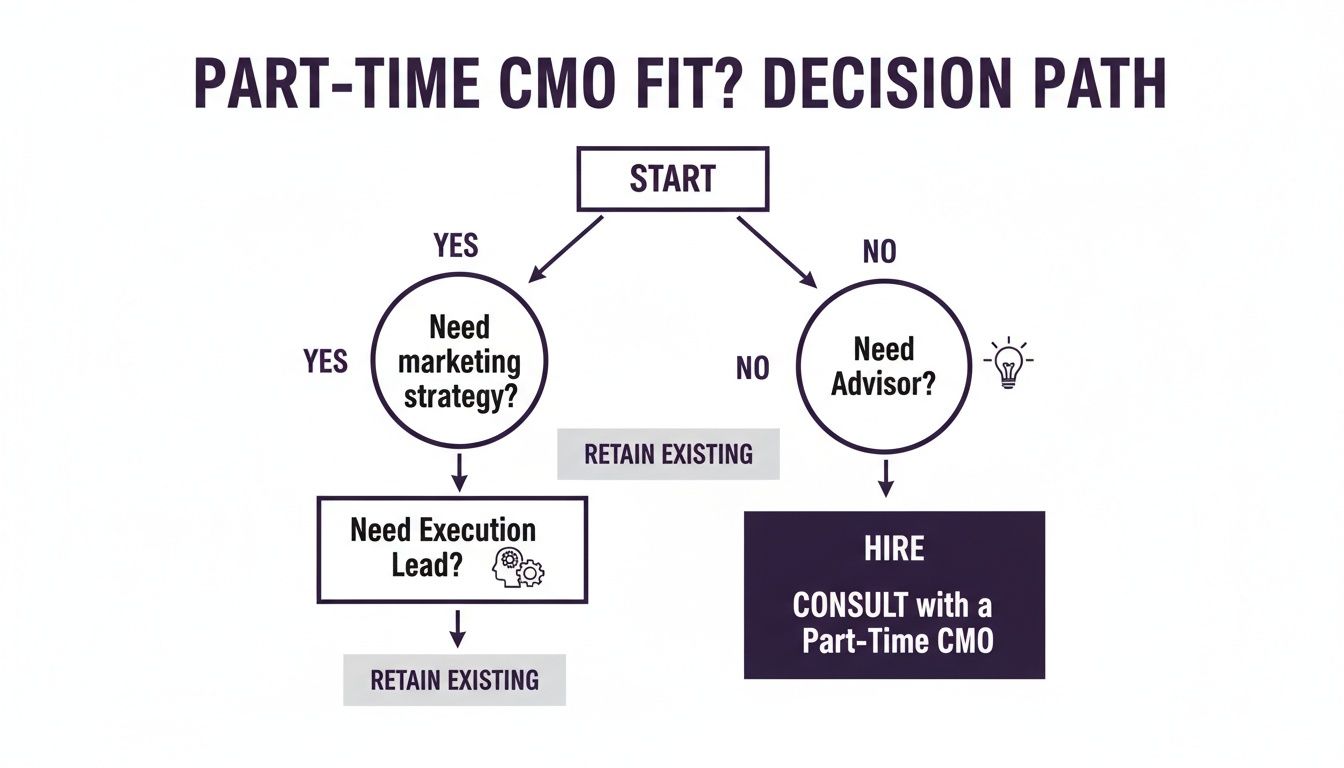
As the flowchart shows, the decision often boils down to a simple question: Do you need high-level strategic direction, or are you looking for hands-on daily management?
Part-Time CMO vs. Full-Time CMO: A Head-to-Head Comparison
Sometimes the best way to make a decision is to see the options laid out side-by-side. When you directly compare the two models across cost, speed, and flexibility, the right choice for your business often becomes clear.
| Attribute | Part-Time CMO | Full-Time CMO |
|---|---|---|
| Total Cost | A fraction of a full-time salary, with no benefits, equity, or overhead costs. | High six-figure salary plus benefits, bonuses, equity, and recruitment fees. |
| Speed to Impact | Can onboard and start delivering strategic value within weeks, often in under 30 days. | Lengthy hiring process (3-6 months) followed by a 90-day onboarding period. |
| Flexibility | Engagements are scalable and can be adjusted or concluded as business needs change. | A long-term commitment with significant financial and legal ties to the company. |
| Breadth of Experience | Brings diverse experience from multiple industries and business challenges. | Deep knowledge of one company's specific context, but potentially narrower experience. |
| Risk Profile | Lower financial risk; easier to pivot if the fit isn't perfect. | High financial and cultural risk if the hire proves to be a poor fit. |
This table gets to the heart of it. For a startup that needs to overhaul its go-to-market strategy or a scale-up prepping for a product launch, a part-time CMO delivers that perfect mix of high-impact expertise and low-risk flexibility.
A large, stable enterprise, on the other hand, might be better served by a full-time leader who can dedicate themselves to long-term team management and navigating complex internal politics. If you're wrestling with this, our guide on how to hire a CMO offers a deeper dive into crafting the ideal role.
How Much Does a Part-Time CMO Cost?
What’s the real cost of bringing a part-time CMO on board? It's less like hiring an employee and more like subscribing to C-suite expertise—you pay for the exact level of strategic guidance you need, when you need it.
This approach sidesteps the long-term financial weight of a full-time salary, benefits, and equity. The most common pricing models are built for flexibility, letting you scale your investment up or down as your business needs change. This financial agility is one of the biggest draws of part-time CMO services.
Common Ways to Structure an Engagement
Pricing for a part-time CMO usually fits into one of three buckets, each designed to match the executive’s contribution to a specific business need.
- Monthly Retainer: The most common model. You get consistent, ongoing strategic leadership for a fixed monthly fee, perfect for businesses that need an integrated leader to own the marketing function.
- Project-Based Fee: Ideal for a specific, time-sensitive initiative like a product launch or brand overhaul. The fee is set for the project, giving you total cost certainty.
- Advisory Retainer: A lighter-touch option focused purely on high-level guidance, such as serving as a strategic sounding board for the CEO or mentoring a marketing lead.
What Factors Influence the Price?
The price tag for part-time CMO services isn't one-size-fits-all. A few key factors determine the final cost, ensuring you’re paying a fair rate for the value you’re getting.
A part-time CMO's fee is a direct reflection of their impact. The investment is tied to the complexity of your challenges, the leader's proven track record, and the strategic depth required to achieve your goals.
Key variables that move the needle include:
- Scope of Work: Building a marketing function from scratch will command a higher fee than providing advisory support to an established team.
- Company Stage: The strategic needs of an early-stage startup are different from those of a company scaling from $10M to $50M in revenue.
- Executive Experience: A CMO with deep, specialized experience in your niche—like B2B SaaS or e-commerce—brings knowledge that can fast-track your growth and comes at a premium.
When you look at the numbers, the value is clear. The average salary for a full-time CMO in 2024-2025 is $250,000 or more, before benefits and equity. In contrast, most fractional CMOs charge between $10,000 and $20,000 per month, delivering executive-level impact for a fraction of the cost. You can discover more insights about fractional CMO pricing models to see a full breakdown.
The Real-World Impact of Part Time CMOs
Strategy sessions and roadmaps are great, but the real test of leadership is its impact on the bottom line. So, what kind of return are businesses actually seeing when they bring on a part-time CMO? This is where the model shines, turning expert guidance into measurable growth.
The impact isn't just a vague feeling of "better marketing." It's about seeing the metrics that matter move up and to the right. An experienced leader brings a disciplined, data-driven approach that ties every marketing dollar directly to revenue, profit, and market share.
From Strategy to Tangible Business Outcomes
A seasoned part-time CMO is a catalyst for growth. They don't just run campaigns; they build a scalable growth engine that creates predictable success.
This strategic focus delivers impressive results. Companies working with fractional CMOs typically report ROI jumping by 25% to 35%. Many also see a significant boost in revenue growth, often averaging around 29%. These aren't just numbers on a spreadsheet; they're the signs of real business momentum. You can dig deeper into the data behind fractional CMO performance to see for yourself.
The impact on pipeline is especially stark. We've seen these engagements generate 40% increases in leads for clients, proving that strategic leadership directly fuels the sales engine.
Real-World Success Stories
Let's look at a few common situations where a part-time CMO makes a game-changing difference. These snapshots show how fractional leadership cuts through specific business challenges with precision.
-
The SaaS Scale-Up: A B2B software company had a fantastic product but was bleeding cash on customer acquisition. A part-time CMO with deep SaaS experience rebuilt their demand gen strategy. The result? A 100% increase in qualified leads within six months and a much shorter sales cycle.
-
The E-commerce Brand: An online retailer struggled with customer lifetime value (LTV). A part-time CMO with a strong DTC background built a sophisticated retention program. This shift boosted LTV by 30% and sent repeat purchase rates soaring, dramatically improving profitability.
-
The B2B Product Launch: A services firm wanted to launch a new product but lacked go-to-market expertise. Under a part-time marketing leader, they nailed their messaging, channels, and campaign. The product blew past its first-year revenue target by 50%, securing a foothold in a new market.
These examples make one thing clear: a part-time CMO isn't a temporary band-aid. They are a high-impact investment in your company's future, building sustainable systems for growth that pay dividends long after their engagement.
These outcomes don't happen by accident. They're the direct result of bringing in an executive who has solved these exact problems before. They know how to sidestep common pitfalls, make smarter bets with your resources, and fast-track your path to profitability.
How to Find Your Ideal Marketing Leader
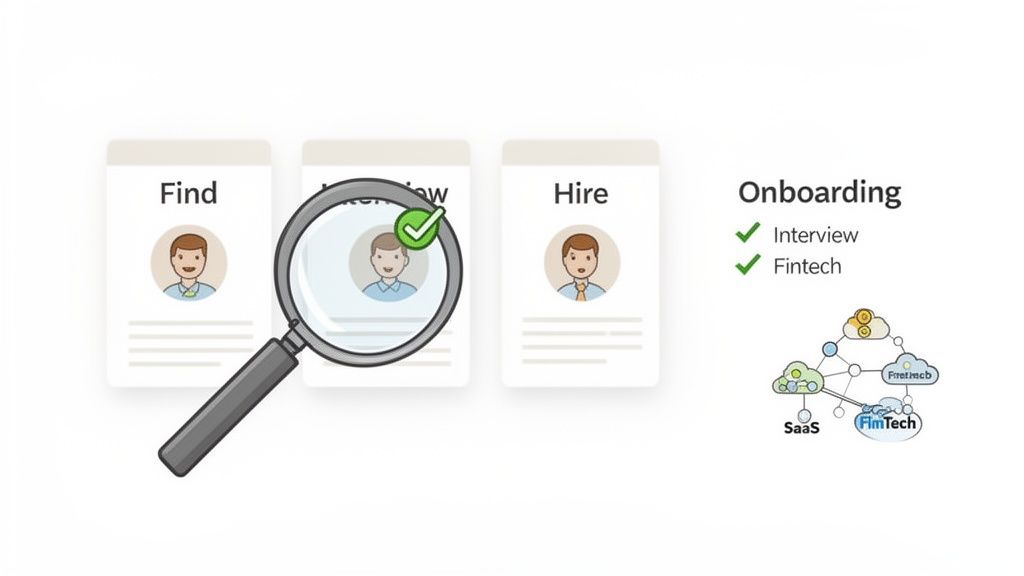
You see the value. You get how a real marketing leader can reshape your company's trajectory. Now for the tricky part: finding that person.
This isn't like hiring for a tactical role. You’re looking for a strategic partner who can see the big picture, challenge your assumptions, and draw a clear map from where you are to where you need to be.
Defining Your Strategic Needs
Before you write a job description, get brutally honest about what you want this leader to accomplish. "We need better marketing" is a wish, not a plan.
Dig deeper. What's the real business problem you're trying to solve? Are you struggling to find product-market fit? Is your customer acquisition cost killing your runway? Answering these questions first is how you pinpoint the exact expertise you need.
Finding the right part-time CMO begins with a deep understanding of your business's unique challenges. The goal is to find a leader whose past successes are a direct blueprint for your future growth.
Once you know the why, you can map out the what. Create a focused list of priorities and measurable outcomes for the first 90 days and six months. It could look something like this:
- First 90 Days: Conduct a full marketing audit and deliver a 12-month strategic roadmap.
- First Six Months: Launch one new demand generation program and build a KPI dashboard.
The Vetting and Interview Process
With your needs clearly defined, the search can begin. You need to get past standard questions and dig into a candidate's strategic mind, leadership style, and how they solve real-world problems.
Focus your questions on how they think, not just what they've done. Asking the right questions is the only way to separate a true strategist from a tactician who talks a good game. For a deep dive, check out our guide to the most insightful Chief Marketing Officer interview questions.
A Simpler Path to the Right Leader
Let's face it: finding and vetting executive-level talent is a full-time job. It's slow, expensive, and risky. Leaning on a trusted partner like Shiny can be a game-changer. A curated network of vetted executives cuts through the noise and solves the biggest hiring headaches.
Instead of drowning in mismatched résumés, you get immediate access to a pool of proven leaders with deep, hands-on experience in industries like SaaS, FinTech, and HealthTech. This modern approach gives founders back their most valuable asset—time—while dramatically lowering the risk of a bad hire.
Got Questions? We've Got Answers.
Making a leadership decision is a big deal. Let's tackle some of the most common questions founders and CEOs ask before bringing a senior marketing leader into the fold.
How Many Hours a Week Is This, Really?
There’s no one-size-fits-all answer, and that’s the beauty of it. A part-time CMO engagement is built to flex with your needs, typically falling somewhere between 5 and 25 hours per week.
An early-stage startup might just need 5-10 hours a week for high-level strategy and mentorship. A company gearing up for a major product launch might ramp up to 15-25 hours for more hands-on leadership. The key is that you can scale the hours up or down as projects demand.
Isn't This Just a Fancy Title for a Consultant?
Not at all. The difference comes down to one simple thing: ownership.
A marketing consultant is typically brought in to solve a specific, isolated problem. They deliver recommendations, and then their work is done. They give you the map.
A part-time CMO, however, becomes a true member of your leadership team. They take ownership of your entire marketing function—they build the strategy, manage the team, own the budget, and are accountable for the results. They don't just hand you a plan; they get in the car and drive.
A consultant gives you expert advice. A part-time CMO provides expert leadership. One diagnoses the problem; the other owns the solution and the results.
How Do I Know if We're Ready for a Part-Time CMO?
You're probably ready if any of these pain points sound familiar. Maybe your growth has flatlined, and the tactics that used to work aren't cutting it anymore. Or perhaps you have a great team of doers, but they're missing senior strategic direction.
Here are a few other dead giveaways:
- As the founder, you're spending way too much time stuck in the marketing weeds.
- You're about to launch a huge initiative—like entering a new market—and lack the executive experience in-house to nail it.
- You see a massive growth opportunity but need C-suite-level strategy to capture it, without the cost of a full-time hire.
If you found yourself nodding along, it’s likely time to see what a part-time CMO could do for your business.
Ready to connect with the strategic leader who can ignite your growth? At Shiny, we've built a curated network of over 3,000 vetted executives ready to make an immediate impact. Find your ideal part-time CMO and start building your future today by exploring our fractional executive marketplace.